

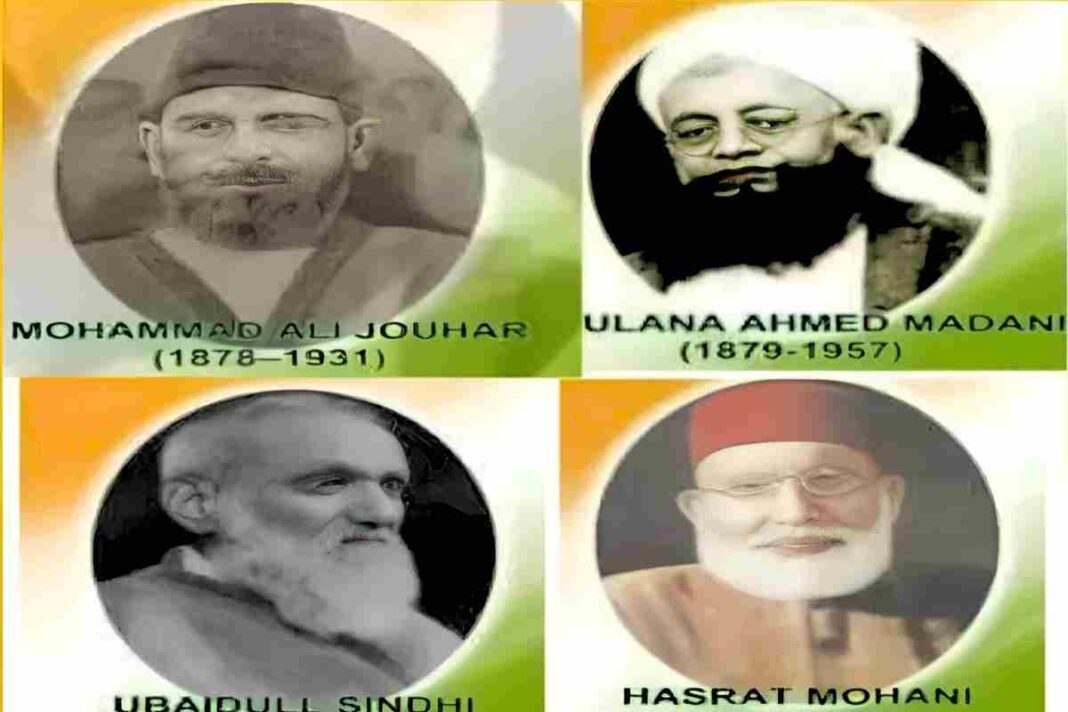

Over the past 76 years since India’s independence, the number of Muslim Scholars in the country has steadily grown. Amid this backdrop, India has witnessed the emergence of a host of notable scholars and mystics who have represented the nation on the international stage in matters about Islam.
Figures like Maulana Arshad Madani, Mahmood Madani, Maulana Wahiduddin Khan, and Maulana Rabia Hasani Nadvi have garnered substantial support from millions of Muslims; their efforts focused on fostering peace and harmony throughout India. These scholars have advocated that India is the homeland of Muslims, where every individual is a brother, transcending religious distinctions. Their endeavors have been pivotal in nurturing Muslim unity and preventing religious disputes from escalating.
Despite these endeavors, specific contentious issues have arisen within the Indian Muslim community. Debates on practices like raising hands during prayer (Rafa-e-Yadain) and variations in hadith acceptance have led to the formation of distinct sects. Movements such as Ahl-e-Hadith, Barelvi, Jamaat-e-Islami, Deobandi, Khanqahi, and Salafi have gained prominence, each influencing the Indian Muslim landscape.
India’s society emphasizes national identity over religious affiliations, nurturing an atmosphere of inclusivity. This has led Indian scholars to prioritize unity and peaceful coexistence, as seen in the Shia-Sunni relationship, where joint prayers and shared platforms symbolize a commitment to national unity.
Over the past 76 years, India’s Muslim scholars have significantly enriched the global Islamic community. Works by luminaries such as Maulana Syed Sulaiman Nadvi, Maulana Abul Kalam Azad, and Maulana Abul Hasan Ali Nadvi have enriched Islamic literature. Khanqahs like Khanqah-e-Kutchochha and Ajmeri Khanqah have propagated principles of peace, harmony, and love among India’s Muslims.
In conclusion, India’s Muslim scholars have played a vital role in promoting interfaith unity and global harmony. Their dedication to fostering peace, even amid differences, showcases a remarkable model of coexistence for the world to emulate.
For a detailed story, please visit: Awaz the voice
Also Read: Unveiling the Soul of Fateh Manzil: Kaifi Azmi’s Timeless Legacy
You can connect with DNN24 on Facebook, Twitter, and Instagram and subscribe to our YouTube channel.