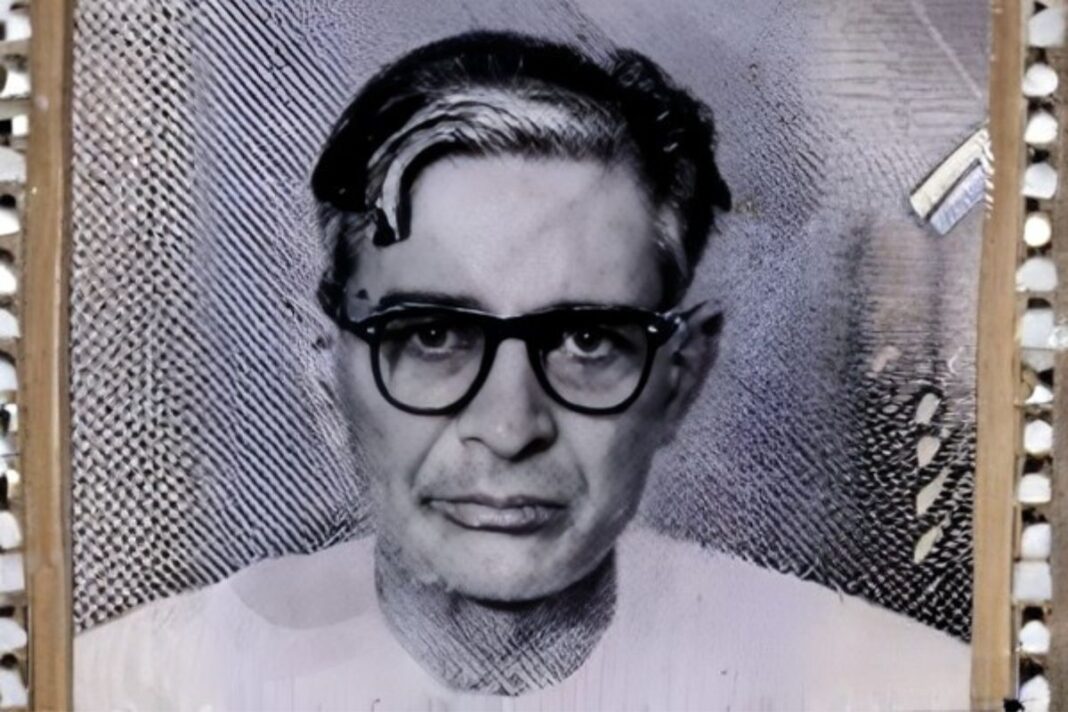

Damodar Thakur Zaki carries a name that does not quite fit the world he chose to enter. Damodar is a name you hear in temple courtyards, not in Urdu poetry gatherings. Thakur points to a Hindu family, and Zaki, his pen name, sounds like something a Muslim shayar would use.
un ke milne ka ba-zahir to yaqin koi nahin
Damodar Thakur Zaki
wo agar chahen koi shak hai nahin koi nahin
Put them together, and you have a quiet rebellion: a man who refused to let religion decide which language he could love. In a country where people fight over who owns Urdu, his very name is a peaceful answer.
naqsh-e-qadam mile jo tere chal ke sar se hum
Damodar Thakur Zaki
aksar guzar gae hain teri rahguzar se hum
We know almost nothing about where he was born, when he lived, or what he did for a living. No one has written a thick book about him. No university thesis carries his name in the title. His personal life stays hidden, and perhaps that is how he wanted it.
buland zist ka apni waqar ho na saka
Damodar Thakur Zaki
teri nazar mein mera pyar pyar ho na saka
What we do have are his ghazals, preserved on websites like Rekhta and UrduPoint, sitting quietly next to poems by more famous writers. His work is small in number but large in feeling. It speaks of loneliness, dignity, and the long walk a person takes when the world does not understand them.
The Poetry of Walking Alone
Damodar Thakur Zaki wrote ghazals, the traditional form that deals with love, loss, and the ache of being human. On Rekhta, his profile lists about eight ghazals and a few individual couplets, available in Urdu, Hindi, and Roman scripts so that more people can read them.
zamana zindagi ka sazgar ho na saka
Damodar Thakur Zaki
jiye zarur magar e’tibar ho na saka
One of his famous shers talks about the path of love becoming so narrow that only he remains on it, with no one else from the earthly world around him. It is a picture of total inner solitude, the kind that comes when you choose a difficult road and find yourself completely alone on it.
tera waqar mukammal waqar ho na saka
Damodar Thakur Zaki
kisi se tujh ko zamane mein pyar ho na saka
In another couplet, he imagines a future in which people will walk along the path he has created with his footsteps. But today, he says, he is alone in a vast desert with no companion in sight. It is a painful hope: that someday his loneliness will mean something, that his struggle will become a road for others. This is not the language of victory or celebration. It is the language of waiting, of trusting that meaning will come later, even if it does not come now.
zamana sara hua hai tumhaara mahram-e-raaz
Damodar Thakur Zaki
na ho saka to mera e’tibar ho na saka
One of his ghazals, titled “Buland Zist Ka Apni Waqar Ho Na Saka,” appears on UrduPoint. The title itself tells a story: the high life he wanted to live could not protect his own dignity. Many sensitive people carry this hurt silently. They want to live with honour, but circumstances push them down, and the world neither notices nor cares. Zaki put that hidden pain into words, giving voice to countless others who feel the same but do not know how to say it.
A Poet Without a Biography
When you search for Damodar Thakur Zaki online, you will not find birth certificates, detailed essays, or interviews. You will find his lines floating in the digital air with little context around them. Unlike the great Urdu masters whose lives are recorded in thick tazkirahs and research books, Zaki exists mainly as a whisper in online poetry archives. His name appears in lists of Delhi poets, sometimes mentioned alongside names like Dildar Dehlvi, but without the heavy documentation that comes with fame.
le liya wada un ke aane ka
Damodar Thakur Zaki
ab muqaddar gharib-KHane ka
This does not mean he was unimportant. It simply means he lived and wrote in the half-light, known to a few people, remembered in small circles. Many poets like him exist in every language and every time. They write because they must, not because they expect applause. They leave behind a handful of verses, and if those verses are good, someone somewhere will hold onto them.
khul gaya raaz muskurane ka
Damodar Thakur Zaki
tum ko nukta mila bahane ka
Today, digital platforms like Rekhta and UrduPoint act as caretakers for such poets. They gather whatever can be verified, the ghazals and couplets that still exist, and they keep them safe so that future readers can find them without stumbling into rumour or false stories. In Zaki’s case, this careful work allows us to read his poetry honestly, without inventing dramatic tales about his life that no archive can prove.
Why His Name Matters Today
India is loud with arguments about language and identity. People claim that Urdu belongs to Muslims, that Hindi belongs to Hindus, that you must choose a side and stay there. Into this noise walks the name Damodar Thakur Zaki, and it quietly refuses the whole argument.
roz hi inqalab aate hain
Damodar Thakur Zaki
kya bharosa kisi zamane ka
A Hindu man writing Urdu ghazals under a Muslim-sounding pen name shows that literature does not care about such boundaries. It shows that language is a house with open doors, and anyone who feels deeply can walk inside.
ek sayyaad ek main ek barq
Damodar Thakur Zaki
sab ko arman hai aashiyane ka
His poetry about walking alone in the desert, about paths forming beneath his feet, resonates with what many young people feel today. They live in crowded cities, scroll through busy social media feeds, yet feel completely isolated. When they come across his lines online, the distance between poet and reader disappears, even though we know almost nothing about the man himself.
dil mein bhi kuchh hai ai jabin-e-niyaz
Damodar Thakur Zaki
tu to hai naqsh aastane ka
In a time when everyone is told to live their life in public, to share everything, to build a personal brand, Zaki’s half-hidden life and evident poetry offer another way: let the work speak, keep the self quiet, and trust that the right words will find the right people.
A Small Light in a Long Tradition
Urdu poetry is like a long hallway filled with thousands of lights. Some are massive chandeliers with famous names attached. Others are small oil lamps that burn quietly but sincerely. Damodar Thakur Zaki belongs to the second kind. He is not a headline name. He did not shake the literary world. But his lamp has stayed lit, keeping a part of the hallway from going dark.
tum to hone lage ho sanjida
Damodar Thakur Zaki
ab main aansu nahin bahane ka
His work, just a handful of ghazals and couplets, touches deep questions. What does it mean to walk alone? How do you keep your dignity when life tries to take it away? Will your struggle mean something to the people who come after you? These are not small questions, and his modest poetry does not give easy answers. It simply holds the questions with care and lets the reader feel them too.
jaanen anjam barq ya sayyaad
Damodar Thakur Zaki
hai to aaghaz aashiyane ka
For those who study literature, Zaki is a reminder to look beyond the famous names. The side shelves of archives hold voices that are just as sincere, just as human. In classrooms and interfaith discussions, his name can serve as a living example of how one person can carry many cultural threads without making a fuss about it. He did not write essays defending his right to write in Urdu. He simply wrote, and the writing itself became the answer.
What Remains
Damodar Thakur Zaki’s story is less about facts and more about a feeling. It is the feeling of a single gentle lamp burning where different traditions meet. It invites anyone passing by to pause, to read a sher, to carry a little warmth forward. We do not know when he was born or when he died. We do not know if he was happy or sad in his daily life. We do not know if he had readers who loved him or if he died thinking his work would disappear.
ham-rang-o-ham-KHayal mera dil nahin raha
Damodar Thakur Zaki
main dil ke aur dil mere qabil nahin raha
What we know is this: his words are still here. They still speak to loneliness, to dignity, to the hope that our footsteps will become a path. In a divided and noisy time, that is not a small thing. It is enough to make his name worth remembering, even if we place it quietly, the way he seems to have lived.
Also Read: Badr Mohammadi: The Poet Who Made Heartbreak His Home
You can connect with DNN24 on Facebook, Twitter, and Instagram and subscribe to our YouTube channel.