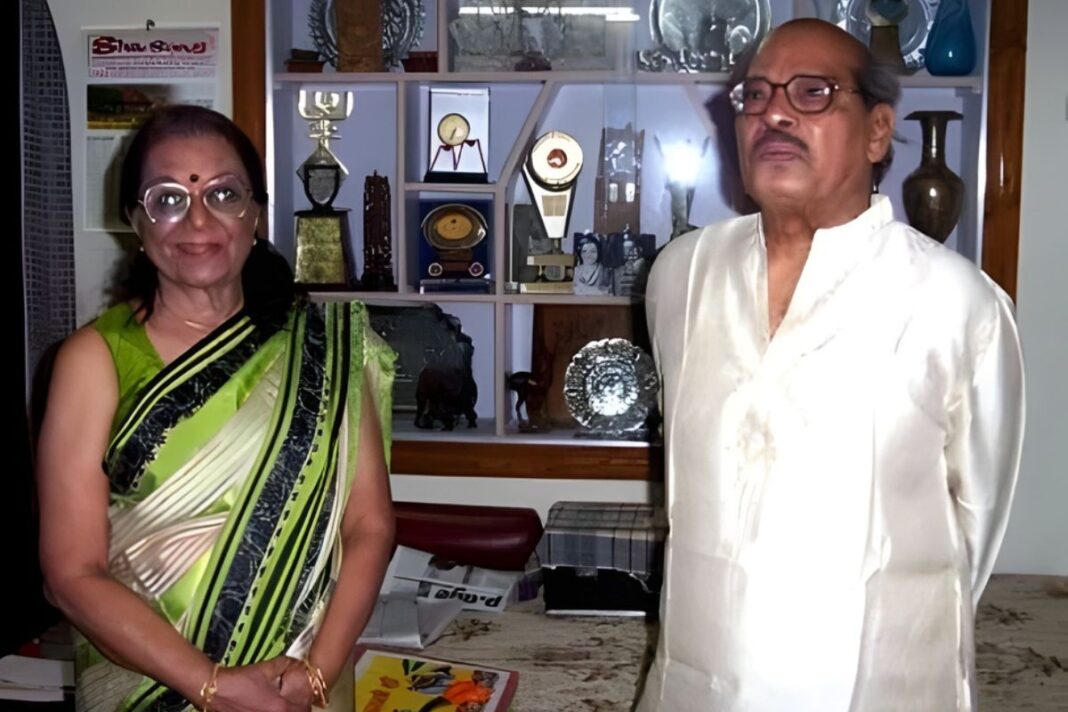

Four thousand songs. Sixty years of music. A voice so versatile it could make an elderly character dignified and a hero passionate in the same breath. Manna Dey did not simply sing for Indian cinema. He became its soul, its classical conscience wrapped in popular melody. When he dared to compete musically with Pandit Bhimsen Joshi and emerged victorious, the world knew this was no ordinary playback singer. This was an artist who bridged generations, languages, and musical traditions with effortless grace.
From Kolkata’s Streets to Musical Stardom
Prabodh Chandra Dey arrived in the world on May 1, 1919, at 9 Madan Ghoshal Lane in North Calcutta. His father, Purna Chandra, and mother, Mahamaya, raised him in a musical environment. Still, the real architect of his destiny was his youngest uncle, Sangeetacharya Krishna Chandra Dey, better known as KC Dey. This man would transform young Prabodh into the legend the world would call Manna Dey.
By age ten, Prabodh was singing at school functions. He attended Scottish Church College and later Vidyasagar College for his graduation, but books never held the same appeal as melody. His friends at Scottish Church would watch him tap rhythms on the last bench, lost in musical reverie. When they told the principal about his talent, everything changed.
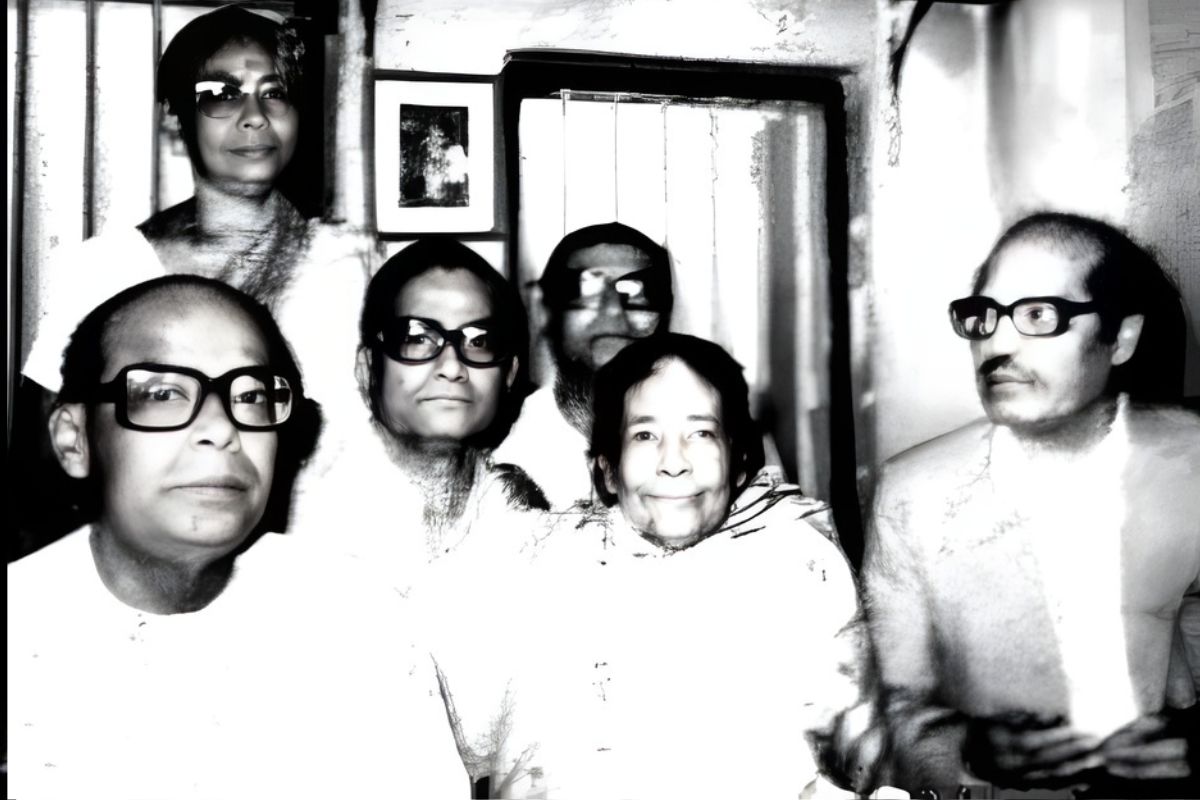
The principal called Prabodh to his office. An intercollege competition was approaching. Would he participate? The young man hesitated. My uncle will not permit it, he said. The principal promptly wrote to KC Dey. After reading the letter, KC Dey questioned his nephew about the competition categories. Dhrupad, khayal, thumri, tappa, and baal kirtan were included in the list. KC Dey’s response was simple and devastating: Enter every category.
The twelve-year-old obeyed. He competed in every single category. He won first place in every single category. Overnight, Prabodh became his college’s brightest star. That day revealed what India would spend decades discovering: this was a voice without limits.
Bombay Dreams and Unexpected Destiny
In 1942, Prabodh reached Bombay with KC Dey, dreaming of becoming a music director. He assisted his uncle, then the great SD Burman, absorbing everything while training under Ustad Aman Ali Khan and Ustad Abdul Rahman Khan. The classical foundation he built during those years would later make him unbeatable.
But the film Tamanna, released in 1942, offered him playback singing instead. The music director became a singer. Then came Ramrajya in 1943, directed by Vijay Bhatt. The song was beautiful. The character was elderly. Manna Dey sang it perfectly. Praise poured in. So did the problem.
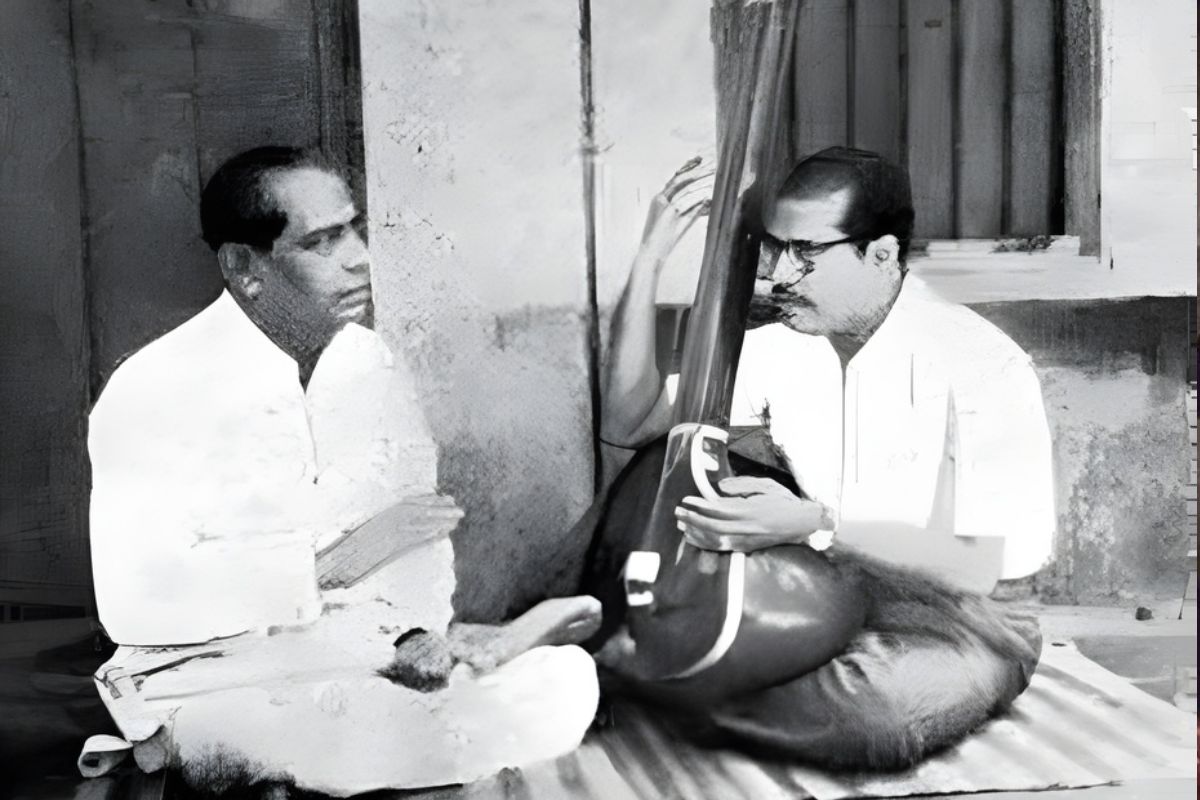
Every subsequent offer came for elderly characters. At twenty-two, Manna Dey was voicing only older adults. Film after film reinforced the pattern. He wanted to sing for heroes, for main characters. Instead, producers heard his voice and thought of grandfathers and uncles. The frustration became unbearable. He decided to quit singing entirely, convinced his voice would never suit a hero.
Then fate corrected its mistake. Offers for hero songs started arriving. Bharat Bhushan, Raj Kapoor, and Rajendra Kumar began lip-syncing to his melodies. The man who nearly abandoned his craft became one of Indian cinema’s most versatile voices.
When Love Arrived Through Tagore
Rabindranath Tagore was Manna Dey’s spiritual guide. He possessed notations of every Rabindra Sangeet composition, humming them constantly. When friends asked him to organize a Tagore Jayanti celebration, he agreed without hesitation. While preparing for the event, he encountered Sulochana Kumaran.
Born in Kerala but educated in Bombay, Sulochana captivated him instantly. The attraction was mutual. They began meeting. Affection deepened into love. She became his strength, his muse. When he sought his family’s blessing to marry her, resistance emerged.
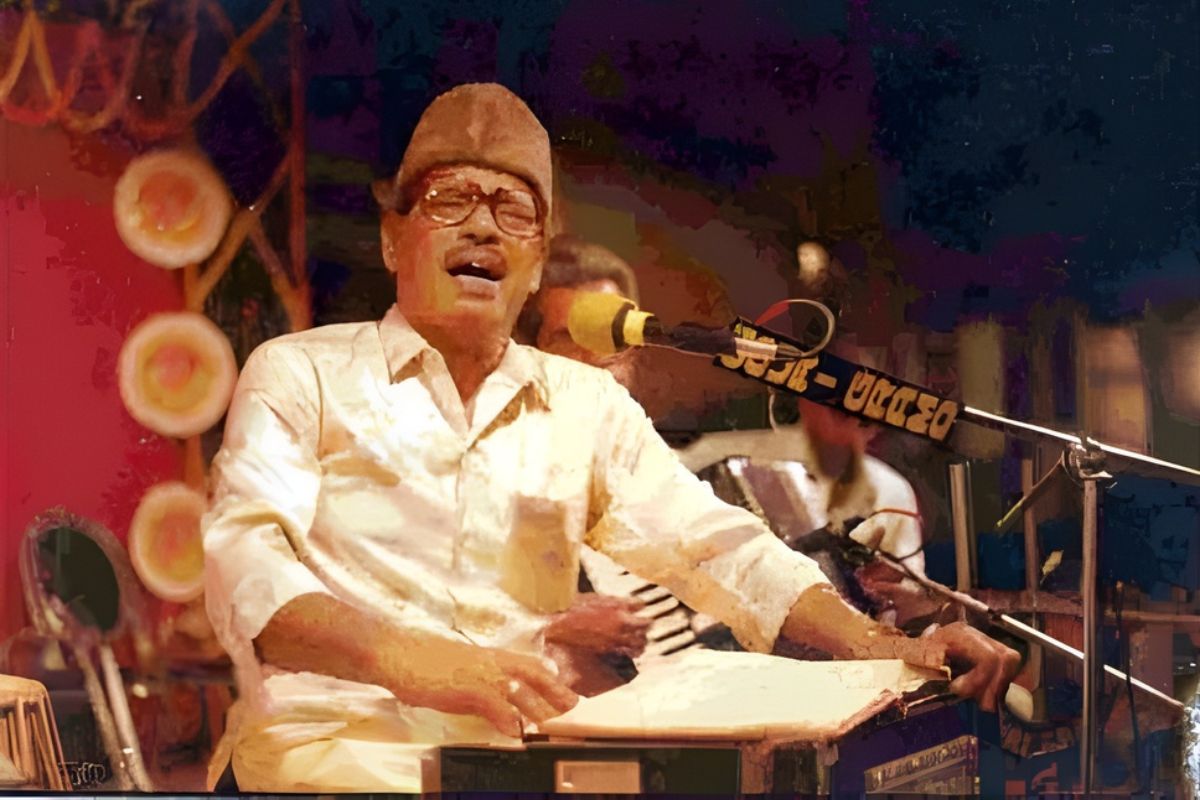
In Calcutta, his father sharply questioned: “Could you not find a Bengali girl?” Manna Dey stood firm. She is no less than any Bengali girl. She sings Rabindra Sangeet beautifully. His father expressed surprise. Where did she learn this? Wherever she knew it, she sings, Manna Dey replied. I like her. She likes me. Why create obstacles?
His father refused to budge. Then his mother stepped forward. Go, she told her son. This is your marriage, not your father’s. My blessing goes with you. On December 18, 1953, Manna Dey married Sulochana Kumaran. Their daughters, Shuroma and Sumita, arrived in 1956 and 1958.
Everyone called her Sulu Aunty. Manna Dey’s dependence on her was total, absolute, unshakeable. Where is Sullu? He would ask about everything. She was his anchor in every storm. When she died, close friends wondered how he survived even months without her.
The Battle of Titans
Shankar of Shankar-Jaikishan summoned Manna Dey for an unusual project. A film required a musical competition scene. Manna Dey would voice the hero, Bharat Bhushan. His opponent? Pandit Bhimsen Joshi. And crucially, Manna Dey had to win because heroes always triumph in films.
Hearing Bhimsen Joshi’s name drained Manna Dey’s confidence completely. This is wrong, he protested to Shankar. I cannot defeat Bhimsen Joshi in classical singing. I refuse this assignment. He returned home and told Sulochana they should leave Bombay for two weeks.
Sulochana’s response altered everything. Shankar is correct, she insisted. You are the hero’s voice. You must win. Work with complete dedication. Forget you, face Pandit Bhimsen Joshi. Remember only that you represent the hero.
Her words ignited his determination. He began intensive training with Ustad Abdul Rahman Khan, telling Shankar he needed one month. When recording day arrived, Manna Dey delivered a performance that earned Bhimsen Joshi’s handshake and praise. You should perform classical concerts, the maestro suggested. Manna Dey’s humble reply revealed his character: Pandit ji, spending a week perfecting one taan exceeds my capacity. Let me sing light music.
A Musical Legacy Beyond Measure
Between 1942 and the 1990s, Manna Dey recorded approximately four thousand songs. One hundred sixty duets with Asha Bhosle. One hundred thirteen with Lata Mangeshkar. One hundred one with Mohammed Rafi. Twelve hundred sixty-two Bengali songs, including extensive Rabindra Sangeet. His multilingual range astounds: thirty-five Bhojpuri songs, fifteen Punjabi, eighty-five Gujarati, seventy Marathi, seven Oriya, five Assamese, two Kannada, plus songs in Magadhi, Maithili, Konkani, and Nepali.
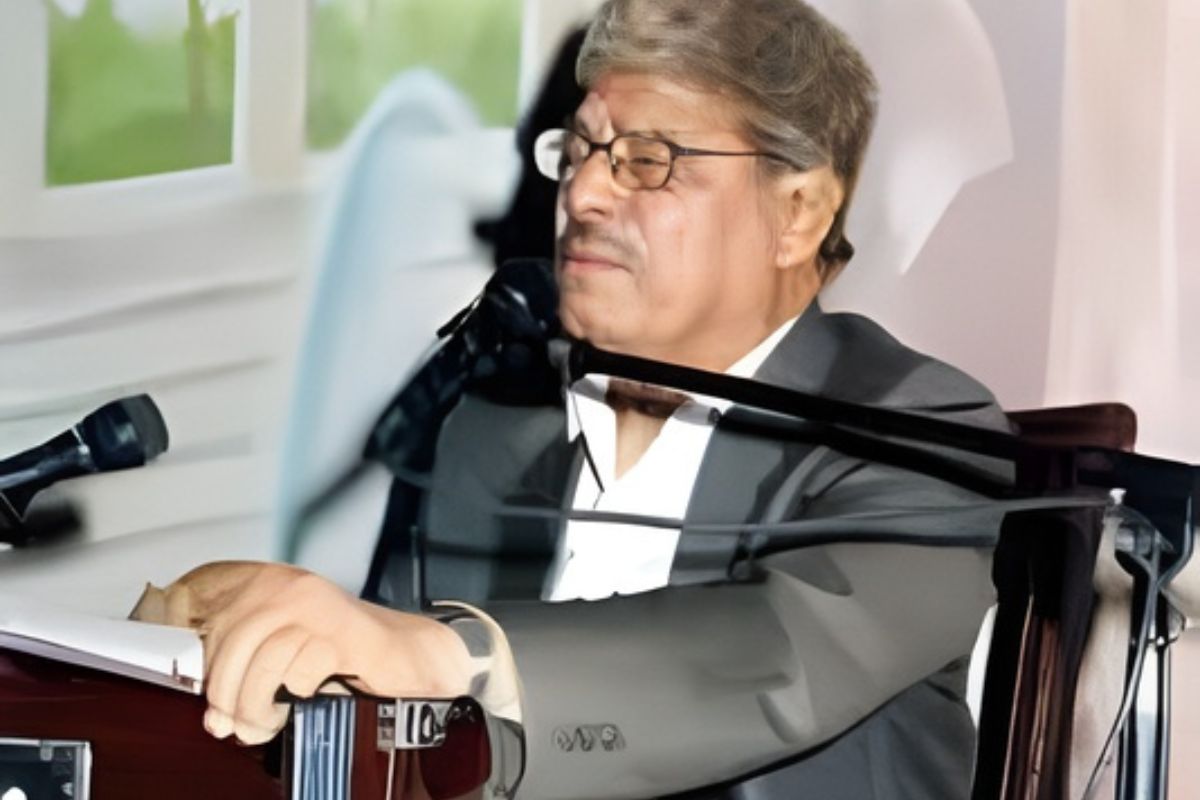
Music directors conducting talent hunts across India report that even seven and eight-year-old children instinctively select Manna Dey songs when asked to demonstrate profound ability. His compositions became the foundation for teaching classical techniques within popular music. Patriotic song collections feel incomplete without his voice.
The Government of India honored him with the Padma Shri in 1971, Padma Bhushan in 2005, and Dadasaheb Phalke Award in 2007. Rabindra Bharati University granted him a Doctor of Letters in 2004. The 1969 National Award recognized his song from Mere Huzoor, a Raag Darbari composition demonstrating his classical mastery.
The Eternal Voice
On October 24, 2013, at ninety-four, Manna Dey’s physical journey came to an end. But what remains transcends loss. Sixty years of devotion produced four thousand songs across languages. A voice equally comfortable with elderly dignity and heroic passion. A student who swept every competition category and captured an entire nation’s heart. A husband whose love defined his existence. An artist who trained under classical masters yet chose popular music because it brought millions of joy.
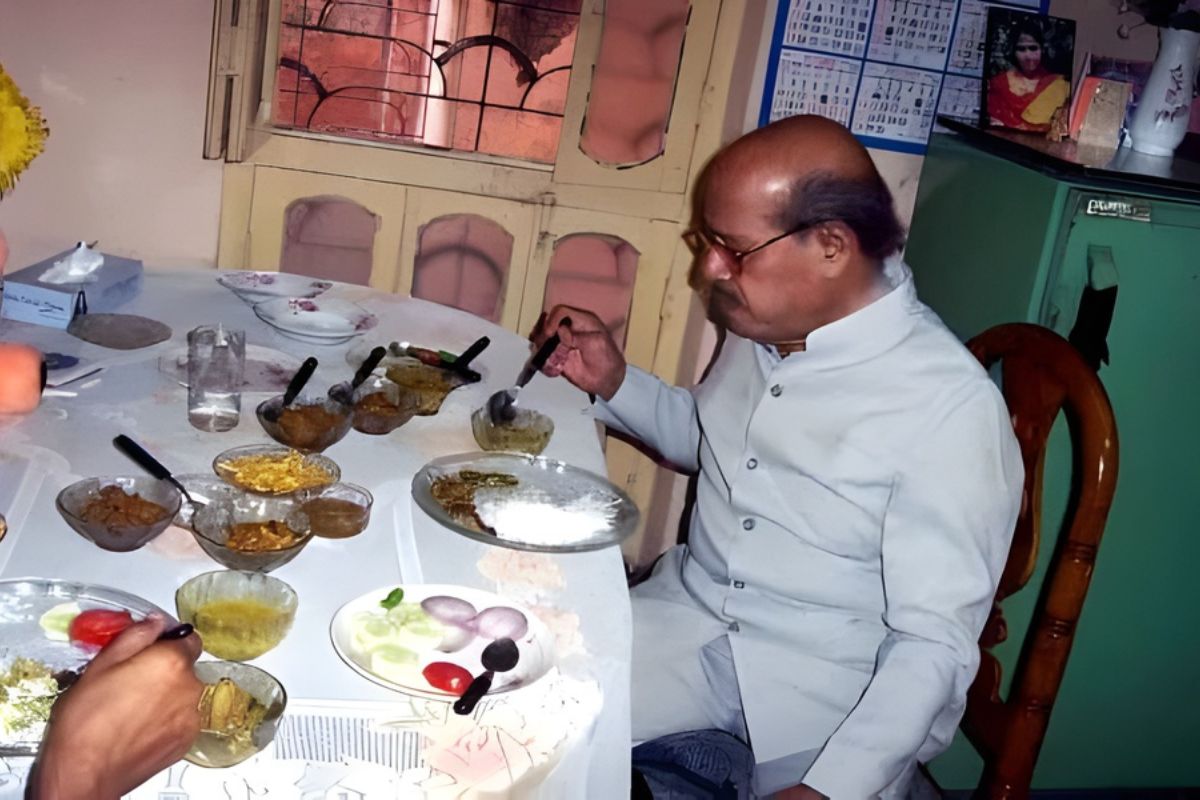
When children in distant villages select his compositions to showcase their skills, when teachers use his recordings to explain classical techniques, when hearts swell with patriotism or melt with emotion, hearing his voice, Manna Dey lives. His voice has not faded. It has become eternal, woven permanently into Indian music’s fabric. That measures an artist who sang not for glory but for melody’s pure love itself.
Also Read: Sadhana Shivdasani: The Fashion Icon Who Gifted Bollywood Its Most Famous Hairstyle
You can connect with DNN24 on Facebook, Twitter, and Instagram and subscribe to our YouTube channel.