

The traveller who arrives in Old Goa expecting a quiet backwater finds something quite different. The air is still, the streets nearly empty, and yet all around stand buildings of such deliberate grandeur that the silence feels less like neglect and more like reverence. Seven churches and convents line this stretch of former Portuguese territory on India’s western coast, and in 1986, UNESCO declared them a World Heritage Site. They have earned that designation for nearly 500 years.
Old Goa was called the Rome of the Orient, and the name was not mere flattery. When the Portuguese designated it the capital of their Asian territories in 1530, they brought with them the full ambition of Counter-Reformation Europe. Religious orders arrived in succession. Franciscans, Augustinians, Dominicans, and Theatines each left behind a monument. The city grew into something that astonished travellers from both hemispheres. At its height, its population exceeded Lisbon’s. Then malaria came, and the capital was moved south to Panaji, and Old Goa shrank back to the laterite soil from which it had risen.
What remained were the buildings.
The Seven Monuments
The heritage ensemble consists of seven structures, each from a different decade and a different religious order. The Chapel of St. Catherine dates to 1510, the earliest of the group, built on the very ground where the Portuguese commander Afonso de Albuquerque defeated the Bijapur Sultanate. Pope Paul III raised it to cathedral status in 1534. The Church of Our Lady of the Rosary followed in 1549, the oldest surviving Manueline structure, a distinctly Portuguese architectural language decorated with maritime motifs drawn from the age of exploration.
The Church and Convent of St. Francis of Assisi, originally founded in 1517 and rebuilt in 1661, features a facade with two octagonal towers and a statue of St. Michael above the entrance. Inside, the walls carry oil paintings depicting scenes from the life of St. Francis, framed by gilded woodwork of considerable refinement. The floor holds tombstones of Portuguese governors, their epitaphs worn but legible.
The Sé Cathedral, completed in 1652, is the largest Christian church in Asia. Its Tuscan exterior and Classical proportions were designed to communicate permanence and authority. The bell housed in its surviving tower is the biggest in Goa and was once heard across the river. One of the original towers collapsed in 1776 and was never rebuilt, giving the facade an asymmetry that the original architects would not have intended, but time has made its own.
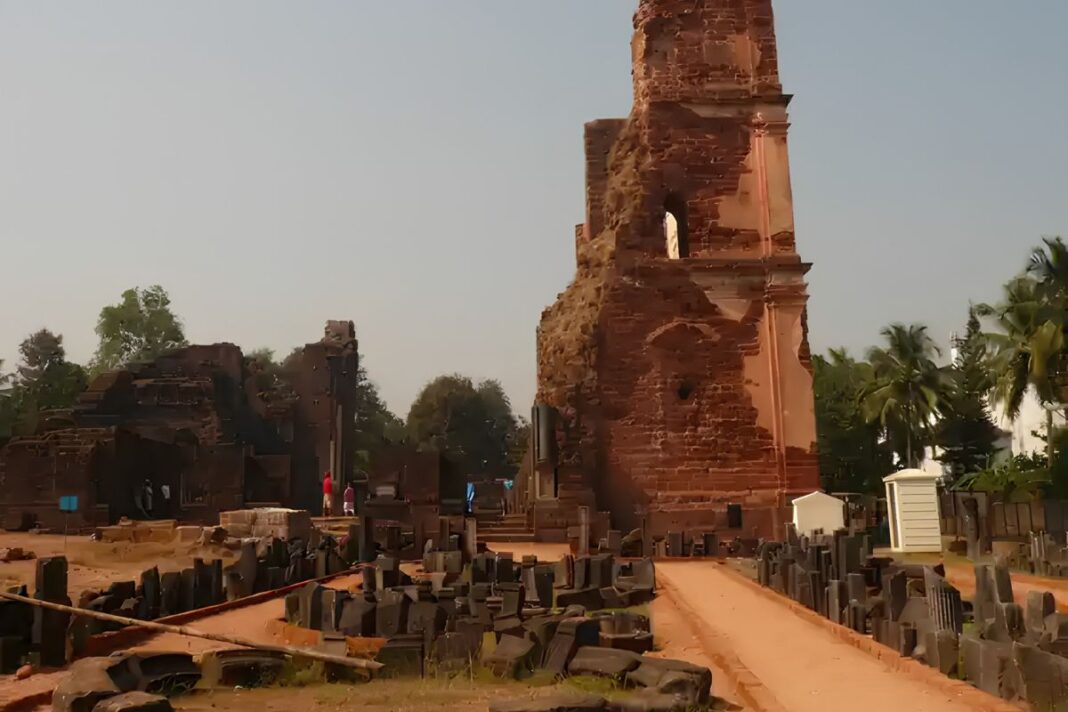
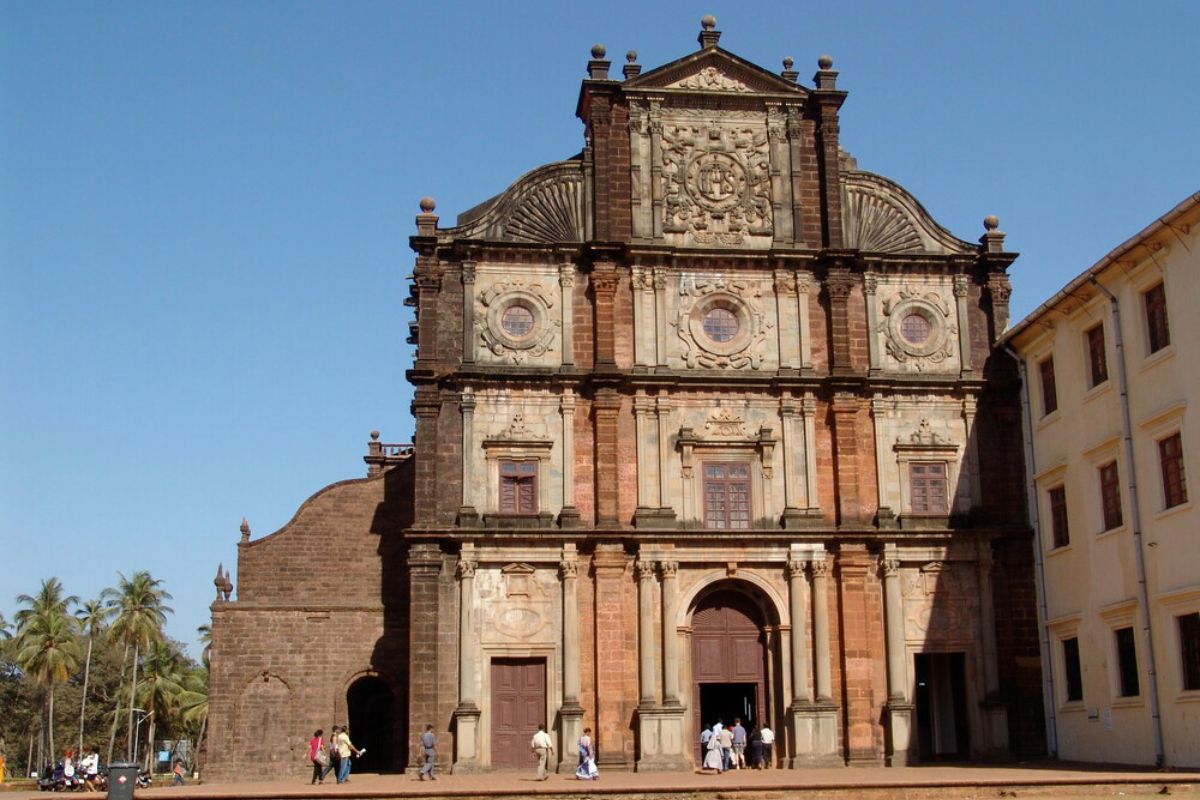
The Basilica of Bom Jesus, consecrated in 1605, is the most visited of the group. The Church of St. Augustine, once the largest in Goa, now survives only as a ruin, a single section of its 46-metre bell tower still standing. The Chapel of St. Cajetan, built by Theatine friars in 1661, was modelled on St. Peter’s Basilica in Rome, a replica made modest by necessity but faithful in its Corinthian columns and ceremonial proportions.
The Tomb in the Basilica
No element of this heritage site draws more attention than the silver casket inside the Basilica of Bom Jesus. It holds the remains of Francis Xavier, the Navarrese Jesuit priest who sailed east in 1541 and spent eleven years converting, travelling, and arguing with colonial administrators whom he believed were undermining his work among local populations. He died in 1552 on the island of Shangchuan, off the coast of China, attempting to enter the mainland.
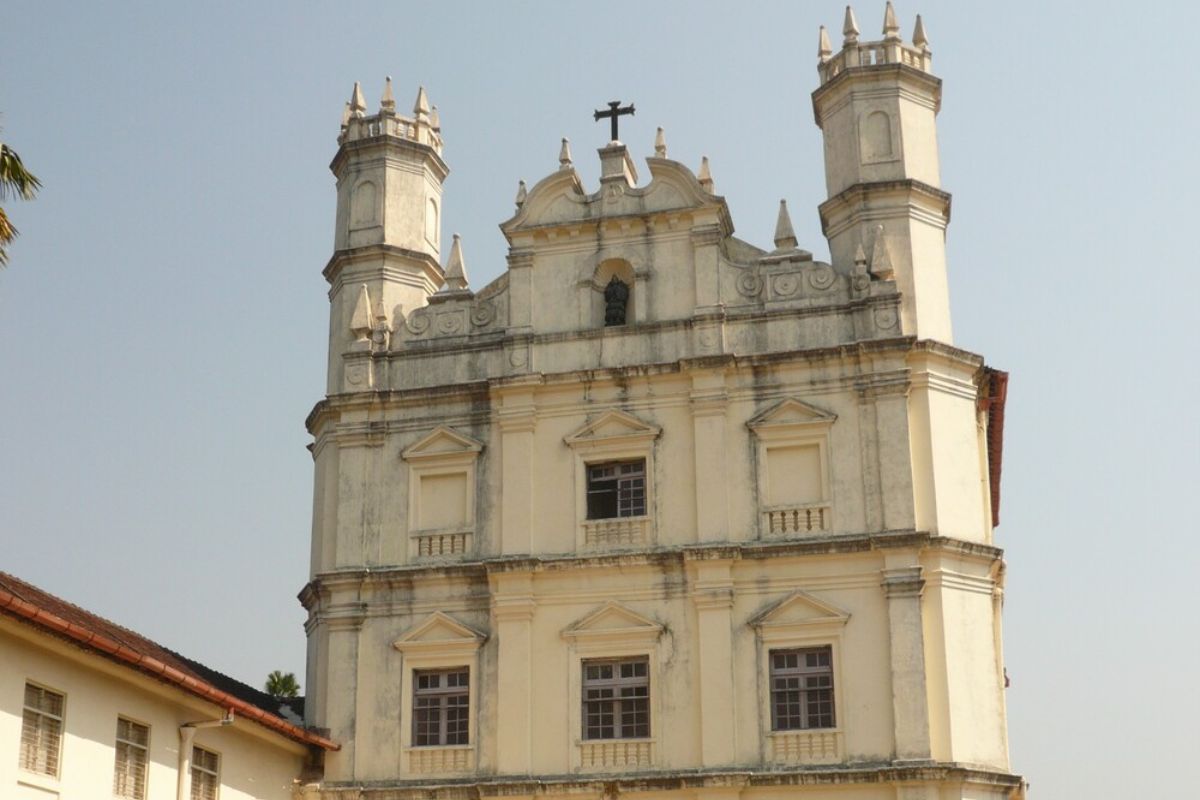
His body was brought to Goa in 1554. It drew pilgrims immediately and has not stopped drawing them since. The casket itself was commissioned in 1665 by Grand Duke Ferdinand II of Tuscany and executed in Florence by Giovanni Battista Foggini in bronze and silver. The work took some years and arrived in Goa well after the duke’s death. The craftsmanship is exceptional by any standard, and the casket’s presence in a building on the Indian coast is one of those facts that takes a moment to absorb fully.
The exposition of the relics, when the casket is opened and the body displayed to the public, takes place every ten years and draws enormous crowds. The last several expositions drew hundreds of thousands of pilgrims. The practice dates back centuries and remains unchanged.
An Architecture Born from Two Worlds
The buildings of Old Goa were designed according to the fashions of contemporary Europe, Manueline, Mannerist, and Baroque in turn. However, they were built by Indian craftsmen using local laterite stone and local techniques. The results show both sides of that process. The proportions and structural ambitions are European. The ornamentation, in many cases, is not entirely so.
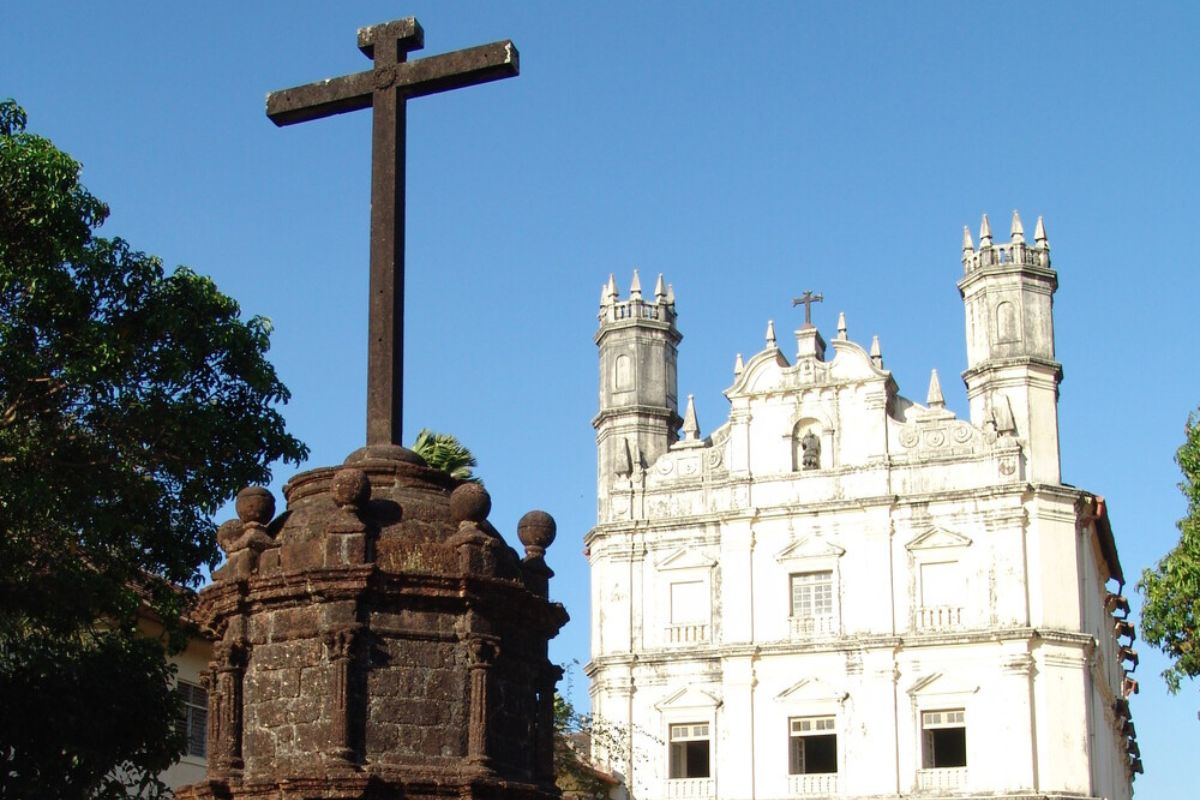
What emerged from that combination was something that could not have been produced in either Lisbon or in the Deccan Sultanate. Art historians refer to it as Indo-Portuguese, though the term slightly understates its complexity. The gilded altar screens of several churches feature motifs without precedent in European ecclesiastical carving. The panel paintings in St. Francis of Assisi use pigments and techniques that reflect both local practice and Flemish influence.
This architectural tradition spread. Churches built by Portuguese missionaries from Japan to Mozambique reflect Goa’s architectural style. The heritage site in Old Goa is, in this sense, the origin point of a visual language that reached across the early modern world.
Conservation and Continuing Use
The Archaeological Survey of India administers the property under the Ancient Monuments and Archaeological Sites and Remains Act of 1958. Within a hundred metres of each monument, construction is prohibited. The two-hundred-metre buffer zone is regulated but not entirely restricted. Annual conservation programmes address weathering of laterite surfaces, capillary moisture damage, and termite infestation of wooden carvings and painted panels.
At the ruined St. Augustine complex, excavation continues. Archaeologists working the site discovered the relics of St. Ketevan of Georgia, a queen martyred in Persia in 1624, who had apparently been buried there by Augustinian friars who brought her remains east. The discovery added an unexpected dimension to a site already dense with history.
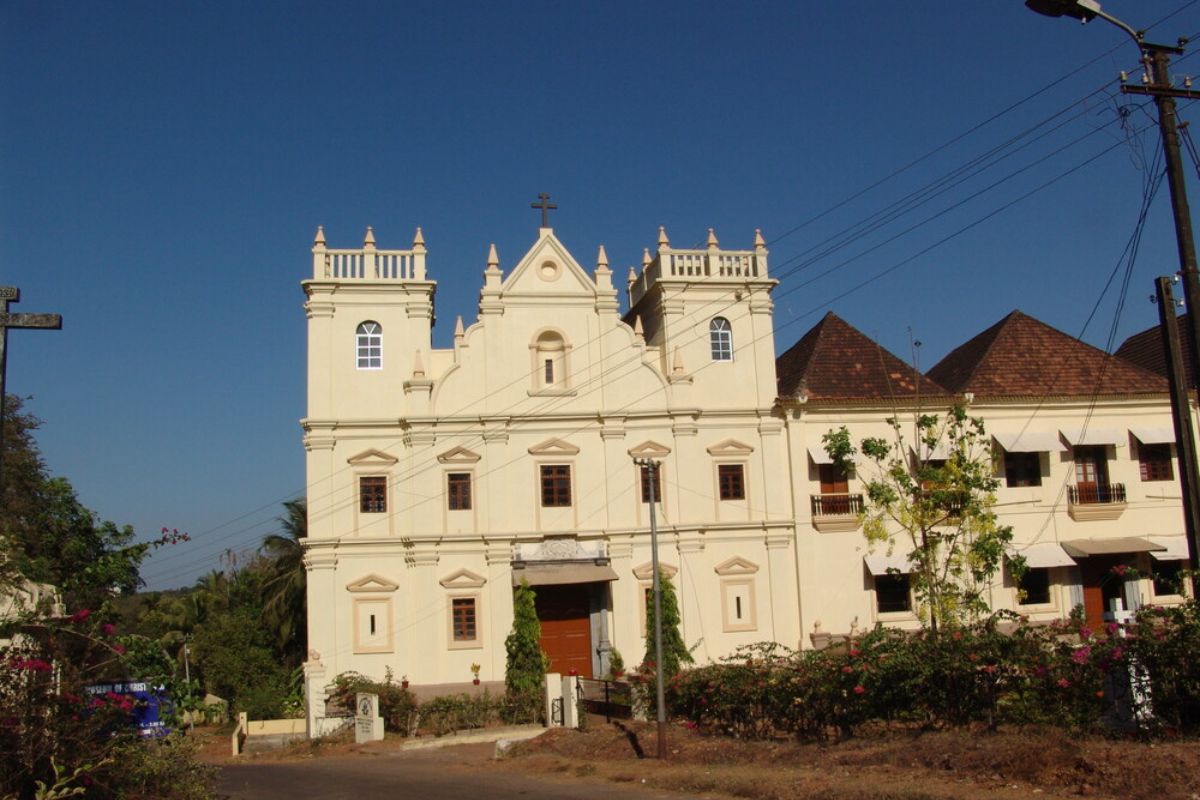
The functioning churches hold regular services. Weddings and funerals take place in buildings that have served those purposes for four centuries. The feast of St. Francis Xavier, held each December, fills the streets around the basilica with traders, pilgrims, and tourists in proportions familiar to seventeenth-century visitors. There is nothing performative about any of this. The buildings are used because the communities around them have used them continuously.
What These Buildings Actually Tell Us
The Churches and Convents of Goa are not straightforward monuments to celebrate without thought. They were built during a period of colonial rule, funded by trade revenues, and used as instruments of religious conversion that disrupted existing social orders. That history is part of what they carry.
They are also, without qualification, extraordinary works of architecture and craft. They document a period when the world’s trade routes were reshaping every aspect of culture, when European, Indian, African, and East Asian influences met on the Konkan coast and produced something genuinely new. They have survived wars, epidemics, fires, monsoons, and centuries of institutional indifference.
Entry is free. The buildings are open most days. November through February offers the most agreeable climate for a visit. For anyone with any interest in the history of the early modern world, in religious architecture, in the movement of artistic ideas across continents, or simply in buildings that have earned their standing, Old Goa rewards the journey.
Also Read:Santiniketan: Tagore’s Dream Campus
You can connect with DNN24 on Facebook, Twitter, and Instagram and subscribe to our YouTube channel.