

Dr. Purnima Devi Barman built a 20,000-strong conservation force one village at a time.
A Tree Falls, a Mission Begins
In 2007, a phone call pulled Dr. Purnima Devi Barman away from her fieldwork in the villages of Kamrup district, Assam. A silk cotton tree, bird home to a nesting family of greater adjutant storks, was being axed. By the time she reached the spot, the nest had already broken. Baby storks lie on the ground.
She asked the tree owner why he had done it. His answer was flat and certain: the bird brought disease, bad luck, misfortune. The neighbours standing around her agreed. Someone whistled. The crowd pressed in. Barman, a young PhD researcher who had come to study the species, found herself surrounded by people who thought her concern for the bird was absurd.
She bent down and picked up one of the fallen chicks. She felt its heartbeat against her palm.
That was the moment, she said, when she understood what she was actually meant to do. She shelved her doctorate; it would not be completed until 2019, and she turned her full attention to the bird nobody wanted.
The Bird the Villages Despised
The greater adjutant stork, known in Assam as the hargila, takes its local name from the Sanskrit for “bone swallower.” It stands nearly five feet tall, feeds near refuse and open water, and builds nests that carry a powerful, unpleasant smell. Its appearance is ungainly. Its habits, to village eyes, seemed dirty and diseased.
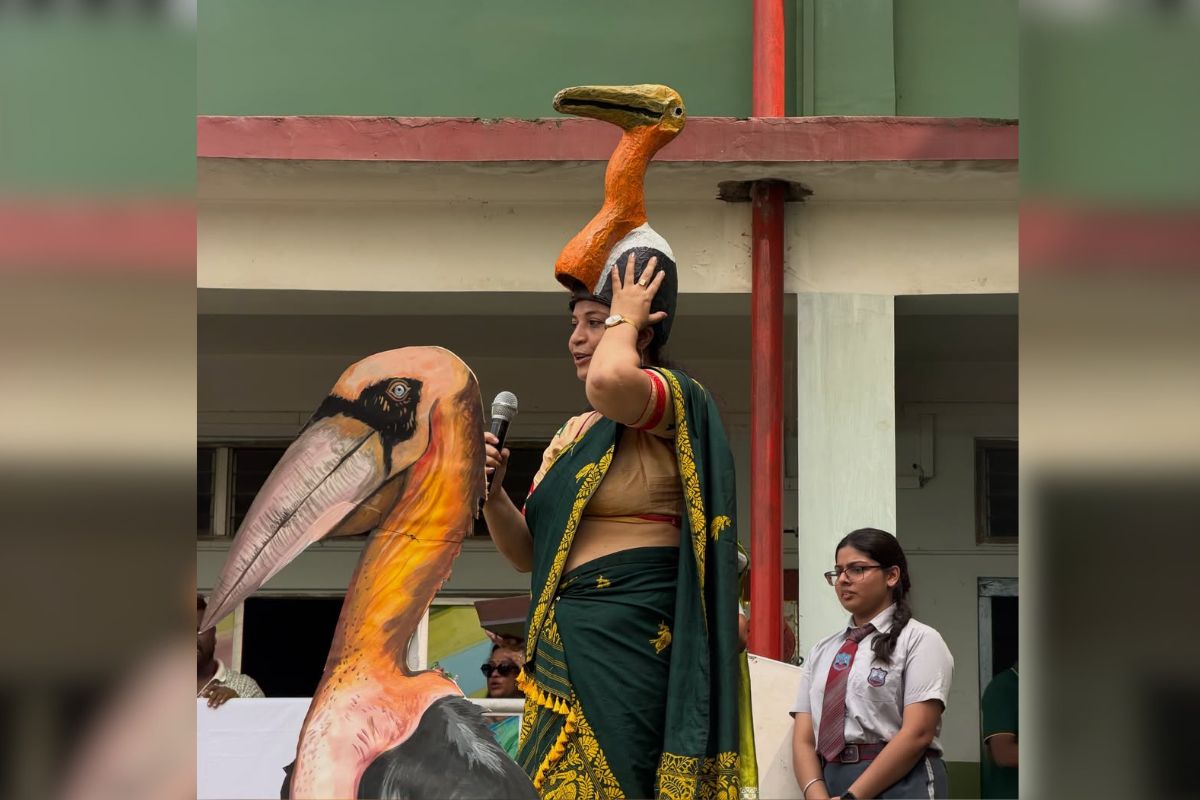
Across rural Assam, the hargila had long been treated as a creature to be driven away or destroyed. Nesting trees were felled. Eggs were broken. The bird appeared in folk speech as a sign of ill fortune. By the time Barman arrived in Kamrup, the global population of the species had fallen to somewhere between 800 and 1,200 mature individuals. In the district where she worked, there were just 28 nesting trees left. The International Union for Conservation of Nature had listed the species as Endangered.
No protected reserve sheltered the hargila’s main breeding grounds. The birds nested in village trees, on private land, within daily sight of communities that did not want them there.
The Method That Changed Everything
The Barman did not open a research station. She did not publish papers and wait for the policy to follow. She walked into the villages and sat with the women.
She had worked out, with some care, why this mattered. In rural Assam, women manage the household, tend the fields, observe the seasons, and pass on the community’s practical knowledge from one generation to the next. If the hargila was going to survive, the women who lived beside its nesting trees had to decide it was worth saving. No government order and no scientific report would accomplish that on its own.
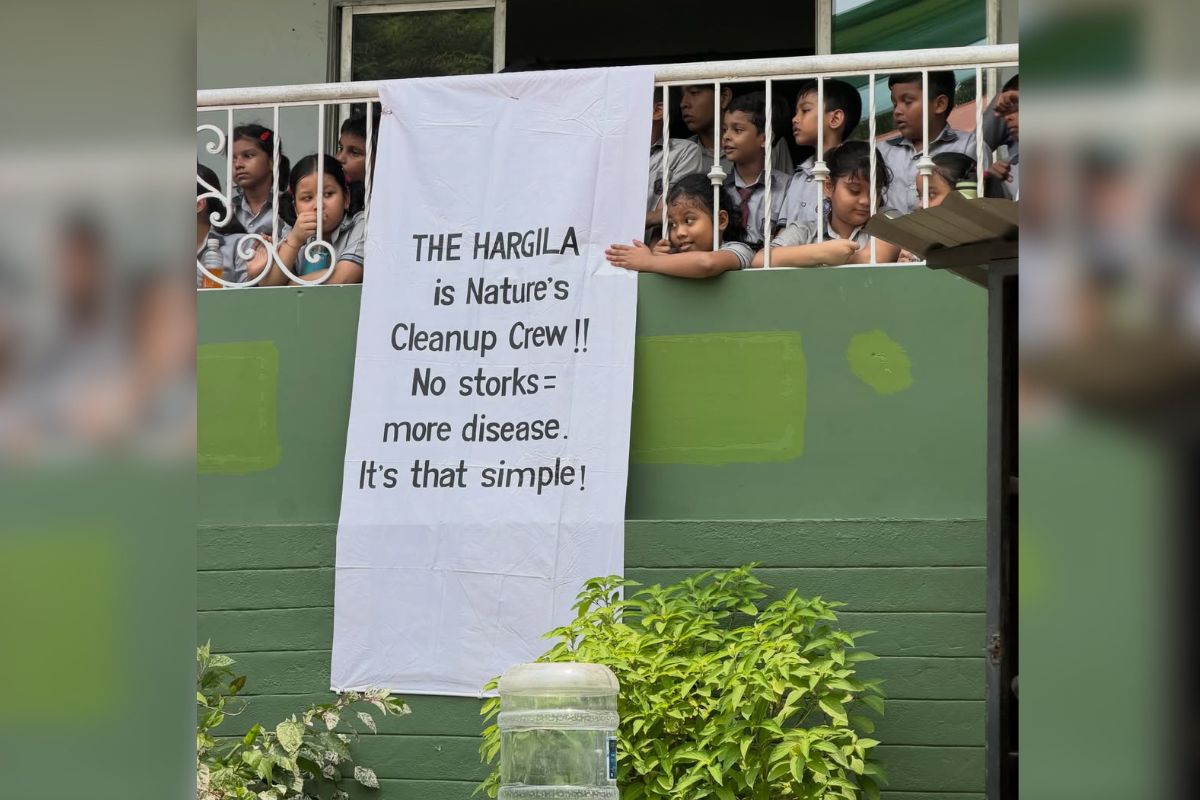
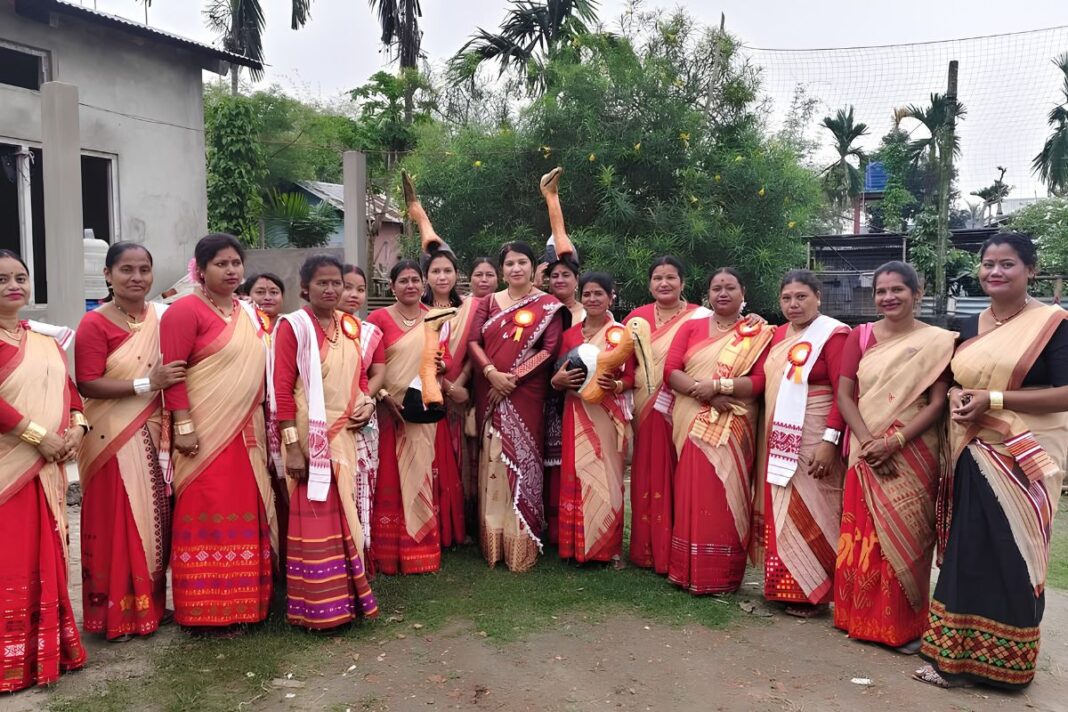
Barman brought conservation messages into the spaces where women already gathered for religious ceremonies, community feasts, and festivals tied to birth and harvest. She commissioned folk songs about the hargila. She arranged street plays. She held cooking competitions. She invited government officials and forest department officers to participate in ceremonies alongside the villagers, not above them.
She also made a practical calculation: tree owners whose land supported a hargila nest would receive public recognition. Their children would be eligible for scholarships. The protection of the bird was reframed not as a sacrifice but as a mark of distinction.
The Hargila Army
In 2007, the same year she first felt that chick’s heartbeat, Barman founded the Hargila Army. The group was all-female from the start. It began with a few dozen women from local self-help groups. Today, it counts more than 20,000 members across the region.
The work the Army does is practical and sustained. Women guard nesting trees throughout the breeding season, reminding neighbours of their legal obligations and the value of the trees they support. Beneath active nests, teams install safety nets to catch chicks that fall before they are old enough to survive the drop. When a chick does fall, members retrieve it, stabilise it, and coordinate with the Assam Forest Department’s wildlife rehabilitation centre, where injured birds are cared for until they are fit to return.
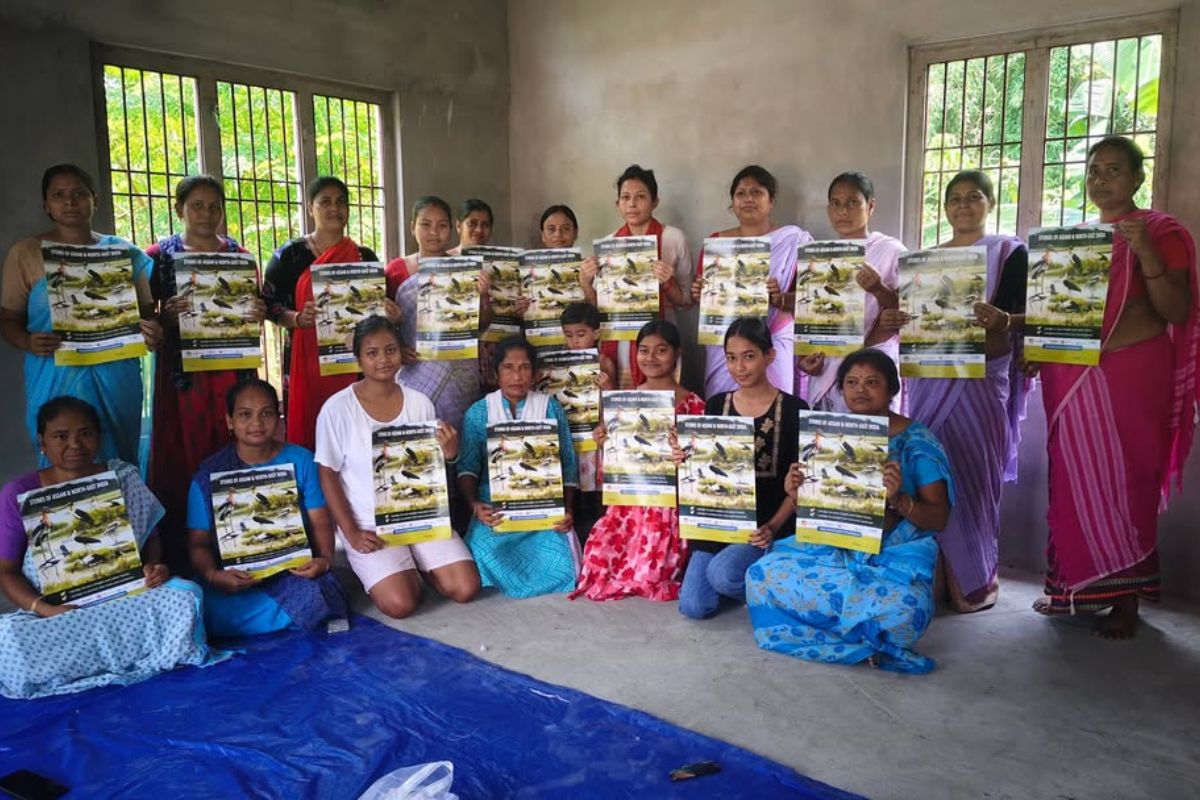
The Army has planted more than 45,000 trees, kadam and shimul, both favoured by the storks for nesting, and set a target of replanting across 500 hectares of degraded land near colony sites. Members use GPS mapping to record where nests are located and track changes in nesting patterns, which have begun to shift as rainfall and temperature patterns alter across the region.
At the beginning of each breeding season, the women hold a ceremony for the hargila that follows the same ritual structure as a baby shower in Assamese tradition. They gather at the temple, sing prayers, and seek blessings for the nestlings. The ceremony is called the Panchamrit. It has been performed every year since Barman introduced it.
What the Numbers Show
The results of this work are not ambiguous. When Barman began, there were 28 nesting trees in the Kamrup district and roughly 450 birds in Assam. As of the early 2020s, there are more than 200 nesting trees in the district. The Assam population has grown to over 1,800 birds.
The Kamrup colony is now the largest greater adjutant breeding colony in the world. Since 2007, more than 500 birds have been rescued and returned to nesting sites. No nesting tree in the district has been cut since 2010.
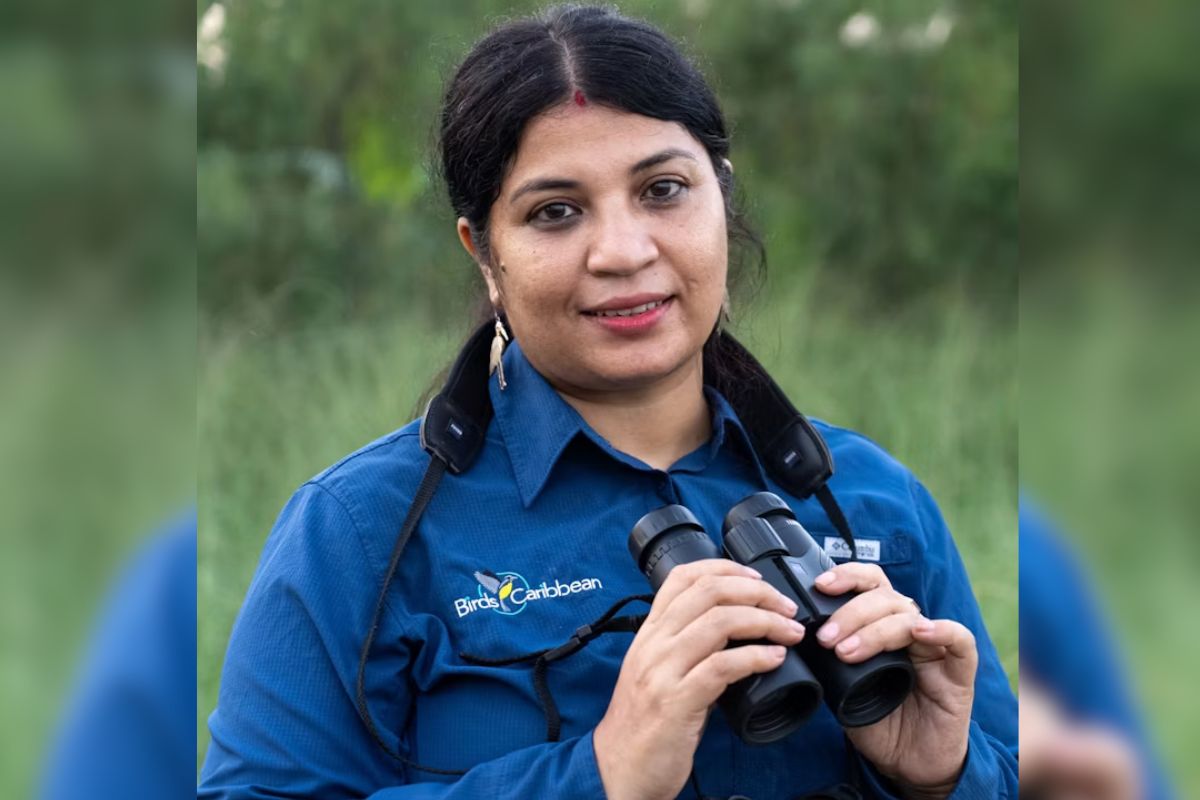
The IUCN has revised its assessment of the species. The greater adjutant stork, once Endangered, is now classified as Near Threatened.
The February 2 community celebration of Greater Adjutant Day, established by BBarman, is observed each year by villages that once drove the bird away. The hargila’s image now appears in wedding textiles, in songs sung at births, and in the decorative motifs women weave into cloth for sale. The women of the Hargila Army generate income from this craftwork, adding an economic dimension to what began purely as conservation.
Recognition
Barman has received the Nari Shakti Puraskar, India’s highest civilian honour for women, presented by the President of India in 2017. That same year, she received the Whitley Award from the Whitley Fund for Nature, presented by Anne, Princess Royal. In 2022, the United Nations Environment Programme named her a Champion of the Earth in the Entrepreneurial Vision category. In 2024, she received the Whitley Gold Award, carrying a grant of £100,000, worth 1,24,69,030.00 in Indian rupees. Time magazine included her on its 2025 Women of the Year list.
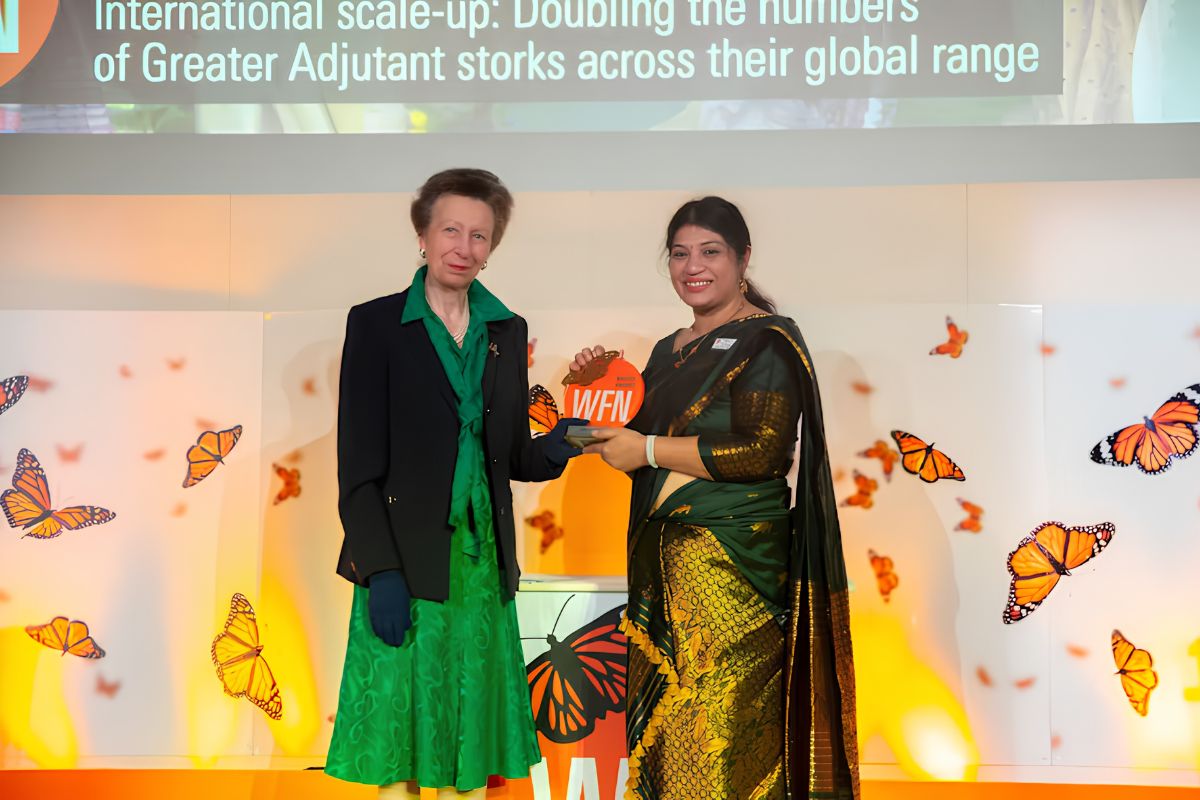
She has also received recognition from the Conservation Leadership Programme, UNDP India, and the Royal Bank of Scotland, among others.
What Was Actually Saved
There is a temptation, in stories of this kind, to focus on the awards or the numbers and lose sight of what Barman actually did.
She walked into villages where people thought she was foolish and stayed long enough to change what they believed. She understood that the hargila would not survive as long as it remained, in the minds of those who lived beside it, a creature of bad omen. So she changed her mind, not just the policy. She gave the bird a place in the birth ceremonies, the wedding songs, and the seasonal rituals that hold a community together. She made the stork, in the fullest possible sense, one of them.
The 20,000 women who now guard the hargila did not join a conservation programme. They joined a movement that gave them standing in their own communities and a form of work that connected ecological purpose with economic life and cultural pride. That is what Barmanbuilt. It took years of fieldwork, delayed credentials, and a willingness to stand before hostile crowds.
The bird still flies over the silk cotton trees of Kamrup. The nests are still there each season. Moreover, the women are still watching.
Also Read: Kerala Duo Converts Household Waste Into Thriving Garden
You can connect with DNN24 on Facebook, Twitter, and Instagram and subscribe to our YouTube channel.