
History rarely declares itself. It unfolds quietly through silent struggles, patient perseverance, and convictions accumulated across generations. Only when society begins to look different do we turn back to understand how that transformation became possible.
For those of us who have spent decades associated with the Pasmanda movement, the political changes unfolding in India today represent precisely such a moment. What appears sudden to many is, in reality, the culmination of a long historical journey.
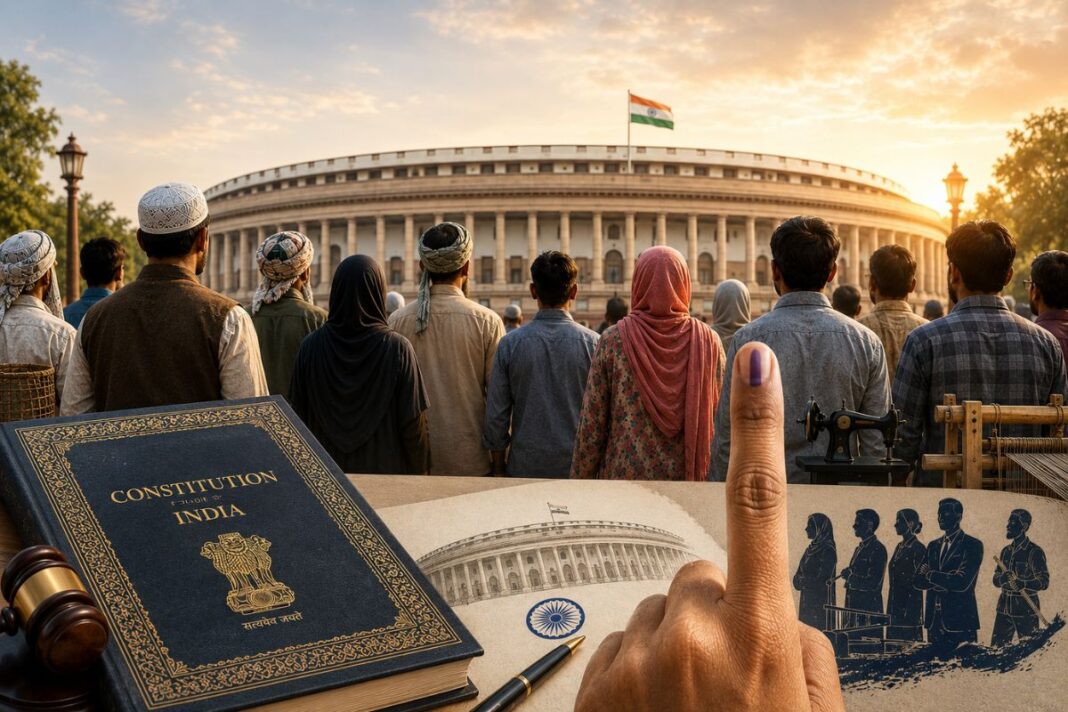
The appointments of leaders such as Danish Azad Ansari, Kaiful Wara, Mehtab Saif, and several other Pasmanda Muslims to significant political positions are not isolated developments. They are visible expressions of a much deeper historical current. They symbolise the entry of weavers, artisans, labourers, and other marginalised occupational communities into the corridors of political decision-making, from which they had long been excluded.
The very fact that political parties are now entrusting leadership responsibilities to individuals from these communities, people who, only a generation ago, were seldom considered for such positions, demonstrates that the discourse surrounding Indian Muslim politics is undergoing a fundamental transformation.
Change Does Not Arrive on Its Own
Transformations of this nature do not occur spontaneously. They require individuals and movements willing to speak even when no one is prepared to listen. In 2017, when the Pasmanda discourse had almost disappeared from mainstream political conversation, and when the overwhelming majority of Indian Muslims belonging to backward, artisan, and Dalit communities remained largely invisible to policymakers, political parties, and the media, I wrote a formal representation to the Hon’ble Prime Minister Shri Narendra Modi.
The purpose was straightforward: to seek recognition for the realities and concerns of Pasmanda Muslims. This was not a politically convenient intervention. There was no expectation of recognition, nor was public opinion moving in that direction. It was simply an act of conviction.
That conviction rested on one fundamental truth: nearly 88 per cent of India’s Muslim population belongs to backward, artisan, and Dalit communities, and that their realities deserved to reach the highest office in the country, regardless of whether the political establishment was ready to acknowledge them.
When Dialogue Entered the National Conversation
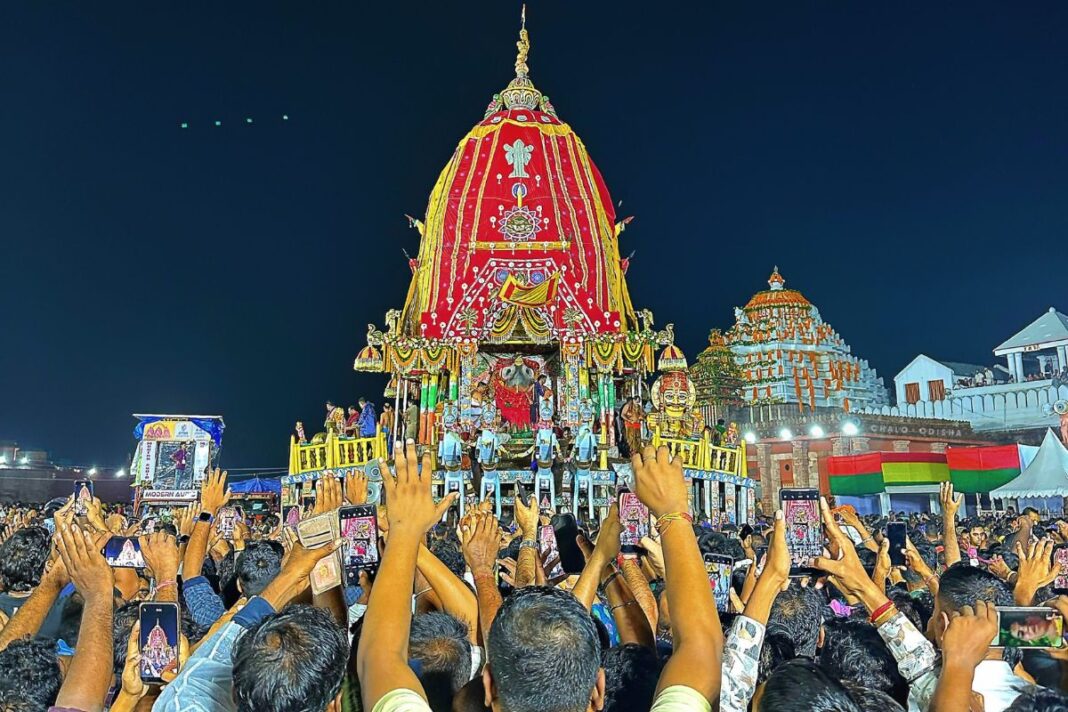
It remains to Prime Minister Narendra Modi’s credit that this representation was not ignored. During the BJP Parliamentary Party meeting in Bhubaneswar, Odisha, the Prime Minister publicly referred to Pasmanda Muslims, a community that had long remained absent from India’s mainstream political discourse.
That moment was historically significant. For perhaps the first time in recent political history, the country’s highest political leadership was openly discussing a social reality that my late father, Abdul Majeed Adeeb Ansari, had devoted his life to bringing into public consciousness. I did not regard that moment as the culmination of the journey.
I continued writing to the Prime Minister’s Office, consistently presenting the lived realities of Pasmanda communities and emphasising that the 88 per cent of Indian Muslims who are weavers, cobblers, farmers, labourers, and artisans whose hands have helped shape India’s material civilisation could no longer remain absent from serious discussions on Muslim welfare and representation.
These communications were not merely appeals. They were evidence-based interventions rooted in constitutional principles and supported by decades of documentation painstakingly developed by an earlier generation of Pasmanda scholars and activists.
Understanding the Structure of Exclusion
The exclusion of Pasmanda communities was never codified in law. Instead, it functioned through an inherited social hierarchy, a deeply embedded assumption that political representation within the Muslim community naturally belonged to the Ashraf elite. The contributions of many individuals from those communities deserve acknowledgement and respect.
However, the remarkable diversity within Indian Muslim society, including artisan groups, Dalit Muslims, and the vast backwards-class population, is rarely found in meaningful reflection in political leadership. Indian democracy often continued speaking in the name of an entire community while overlooking its internal social diversity.
The Core Philosophy of the Pasmanda Movement
The Pasmanda movement emerged precisely to challenge this contradiction. Its central argument has always been remarkably simple: If the overwhelming majority of Indian Muslims are Pasmanda, then any politics claiming to represent Muslims while ignoring Pasmanda realities remains incomplete and disconnected from social truth. This was never a call for division.
It was a call for honesty. The movement argued that genuine inclusion must be grounded in social realities rather than in symbolic claims of representation. For years, the All India Pasmanda Muslim Mahaz pursued this objective through public advocacy, intellectual engagement, grassroots organisation, and sustained dialogue with policymakers.
Even during periods when mainstream political recognition remained absent, the movement continued to uphold this principle with consistency and determination.
A New Era of Political Recognition
Today, that recognition is steadily growing. Political parties across ideological spectrums increasingly understand that meaningful Pasmanda participation is not merely a gesture of inclusion; it is a democratic necessity.
The recent decision of the Uttar Pradesh Congress to appoint a Pasmanda leader to an important organisational responsibility is one among several encouraging developments that deserve appreciation beyond partisan political boundaries. Every genuine expansion of representation strengthens democratic institutions.
Narendra Modi’s Role in Expanding the Debate
Any discussion of the growing visibility of Pasmanda Muslims in contemporary politics would remain incomplete without acknowledging Prime Minister Narendra Modi’s contribution. People may differ on various aspects of his politics.
However, it is difficult to deny that his public interventions on the Pasmanda question compelled political parties, journalists, academics, and administrators to engage with a social reality that had previously remained confined to activist circles. As a result, the national political discourse expanded. The Pasmanda question could no longer be dismissed as a peripheral issue.
It is equally important to recognise that this evolving dialogue was also shaped by years of sustained documentation, memoranda, and policy representations submitted by the movement itself.
The Journey Is Far From Complete
Yet this should be viewed only as the beginning.Political appointments are important, but they are not sufficient. Representation that fails to produce policy transformation risks becoming symbolic.
Symbolism, however satisfying it may appear, cannot feed families, build schools, or create opportunities for generations of Pasmanda youth who have waited decades for full recognition within their own country.
Substantial work remains in the areas of education, skill development, employment, social mobility, and dismantling caste-based discrimination within Muslim society. These challenges demand the same seriousness and persistence that brought the movement to its present stage.
A Personal and Intellectual Journey
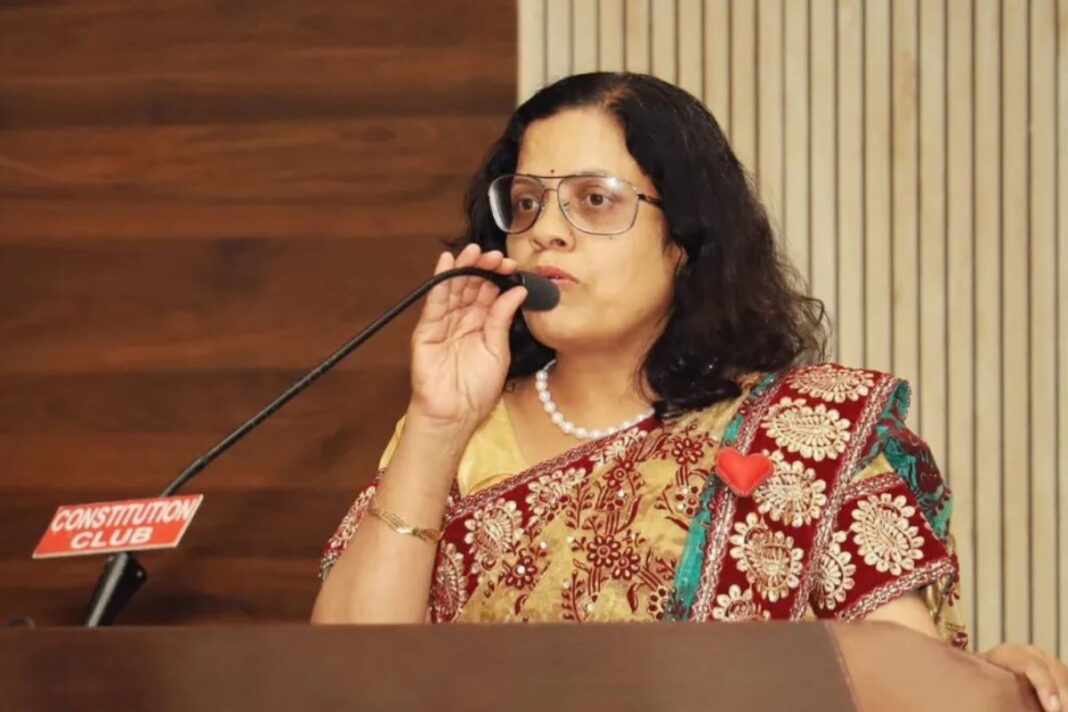
I write these reflections not merely as an observer, but as someone whose life has been deeply intertwined with the Pasmanda movement. My late father, Abdul Majeed Adeeb Ansari, dedicated his entire life to this cause.
He helped establish the term “Pasmanda” as a broader social and political identity, laid the institutional foundations of the movement, and carried its intellectual torch during years when it received little public recognition.
To witness today the gradual realisation of the vision for which he struggled to see a discourse that began on the margins entering the centre of national politics is not simply a matter of political satisfaction. It represents a profound moral victory.
It belongs not to any single individual but to the countless ordinary men and women who continued believing in this cause even when very few imagined such a day would arrive.
The Responsibility Ahead
That moment has now arrived. And it demands far more responsibility than celebration. It calls for continuous vigilance, sustained effort, and an unwavering commitment to ensuring that symbolic progress never becomes a substitute for structural change.
The Pasmanda movement was built on the refusal to mistake partial justice for complete justice. That principle must continue to guide its future. The winds of change are real. But lasting institutions are not built by favourable winds alone.
They are built through patient organisation, sustained public advocacy, principled dialogue, and an enduring faith in the constitutional promise of the Indian Republic. The foundations have been laid through years of correspondence, public engagement, and unwavering conviction.
The task before us now is to build, with the same patience, courage, and determination, a democracy that is more representative, more inclusive, and more just for every citizen.
Also Read: Nolan’s The Odyssey Pushes Cinematography to New Limits
You can connect with DNN24 on Facebook, Twitter, and Instagram and subscribe to our YouTube channel.