
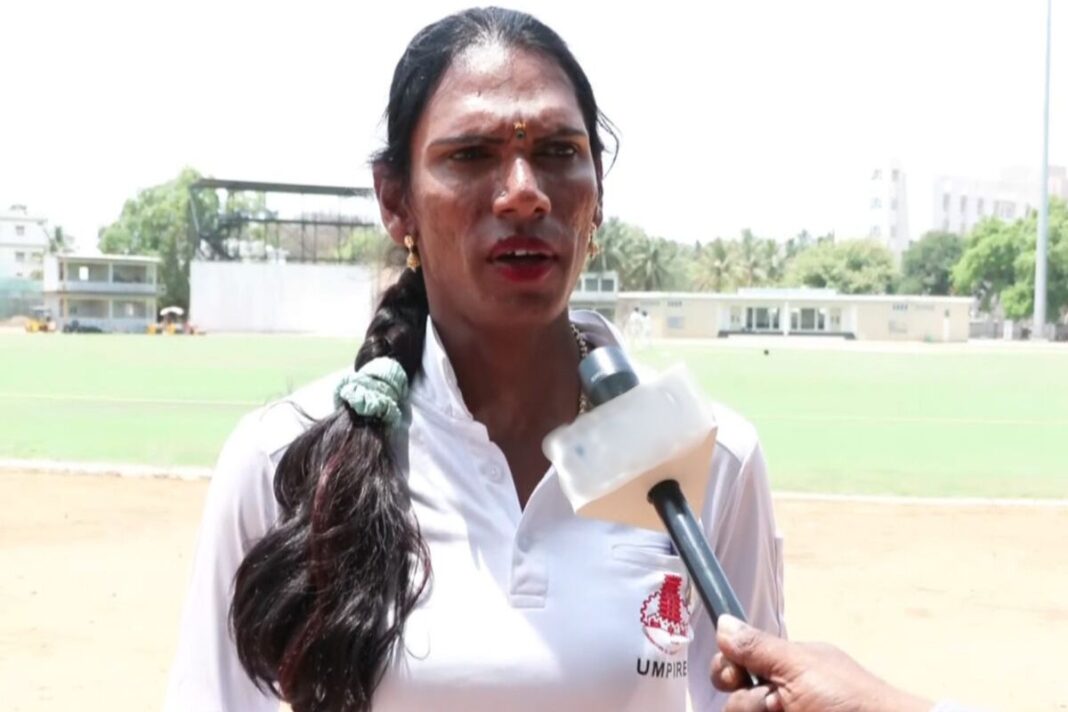

She arrived at a cricket ground in Coimbatore to umpire a game, cap on, rulebook memorised, and a security guard would not her first through the gate. That single, humiliating incident captures the whole arc of Rithika Sri’s story better than any highlight reel could. It is a story about a woman who learned the rules of cricket before the world was ready to let her in, and who eventually forced that world to make room.
A Secret Kept in Plain Sight
Rithika was born R. Muthuraj in Salem, Tamil Nadu, into a household where questions of gender identity were not discussed. She trained as a mechanical engineer and later took a job at a call centre in Mohali, a city with no particular connection to cricket, let alone to the person she would eventually become.
It was there, during long shifts and longer nights, that she began watching Indian Premier League matches on television. Most viewers kept their eyes on the batters. Rithika found herself drawn instead to the umpires standing quietly at the crease, reading the game and making decisions under pressure without ever raising their voices. Something about that composure spoke to her. She told herself, privately, that this was the work she wanted to do. At the time, she was still presenting to the world as a man, and the thought stayed where it began, tucked away and unspoken.
A Pandemic and the Return Home
The year 2020 upended plans for millions of people, and Rithika was no exception. She lost her job in Mohali and returned to Salem with little money but, for the first time in years, plenty of time to think.
She approached the local district cricket association and asked to train as an umpire. She was still living as Muthuraj then, still guarding the truth of her identity even from most of the people she worked alongside. Senior umpires in Salem, including Shanthipooshan and Parthasarathy, took her seriously and taught her the finer points of the craft: field placements, playing conditions, the small judgement calls that separate a competent umpire from an average one. Their advice was blunt and, in a way, protective. Build your reputation first, they told her. Let people see your skill before they ever have reason to question anything else about you.
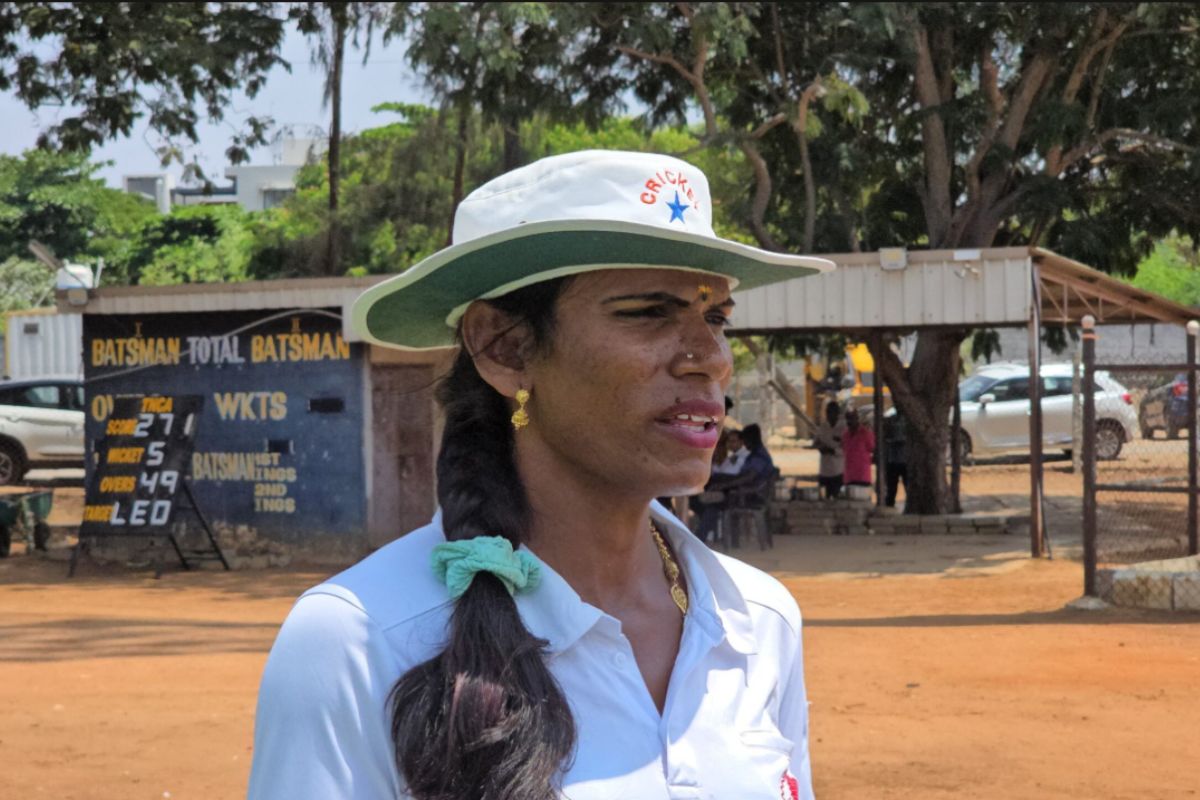
By 2021, she was officiating matches across the Salem and Coimbatore circuit. Over the following years, she stood in more than three hundred games, quietly compiling a record that would later matter far more than anyone could have predicted.
Two Lives on the Same Field
For years, Rithika carried a weight that had nothing to do with cricket yet everything to do with it. Each match demanded her full attention to overs, dismissals, and the mechanics of the game, while privately she was working through her own transition, uncertain whether being honest about who she was might cost her everything she had built.
She spoke about it to a small circle of mentors and friends, describing what she called the transformation happening inside her. On the field, though, she remained someone else. It was an exhausting kind of double life, match after match, for years.
Coming Out, and Finding the Gates Closed
In 2024, Rithika moved to Coimbatore to undergo her transition and began living openly as a transwoman. The process kept her away from cricket for close to a year, a painful pause just as her umpiring career had begun to gain real momentum.
When she wanted to return, she discovered that stepping back onto the field would not simply be a matter of picking up where she left off. At a respected educational institution where she had been scheduled to officiate, a security guard refused to let her enter and questioned aloud why a transwoman had any business being there at all. She later described going home in tears after an hour of hurtful remarks, though not before standing her ground. She has pointed out, more than once, the particular cruelty of a society that accuses trans people of having no respectable options while actively blocking the doors that lead to them.
She did not walk away. Instead, she returned to umpiring with an even greater resolve.
A Form With No Box for Her
The biggest obstacle she faced was not a person stopping her at a gate but a printed form. When Rithika applied to sit for the Tamil Nadu Cricket Association’s State Panel Umpire examination, she found that the gender section offered only two options: male or female. There was simply no category that described her.
Rather than misidentifying herself to get past the paperwork, she raised the matter directly with TNCA officials. The result was a quiet victory. TNCA added an “Other” or “Third Gender” category to its umpire application forms, a change made in the absence of any national policy from the Board of Control for Cricket in India. Tamil Nadu, in this small but meaningful way, moved ahead of the rest of the country.
The First of Her Kind
With that barrier cleared and a solid officiating record already behind her, Rithika became the first registered transgender cricket umpire in Tamil Nadu, and by most accounts, the first in India. She continues to officiate matches across Salem, Coimbatore, and neighbouring districts, bringing the same steady judgement that first caught her attention during those late-night broadcasts years ago.
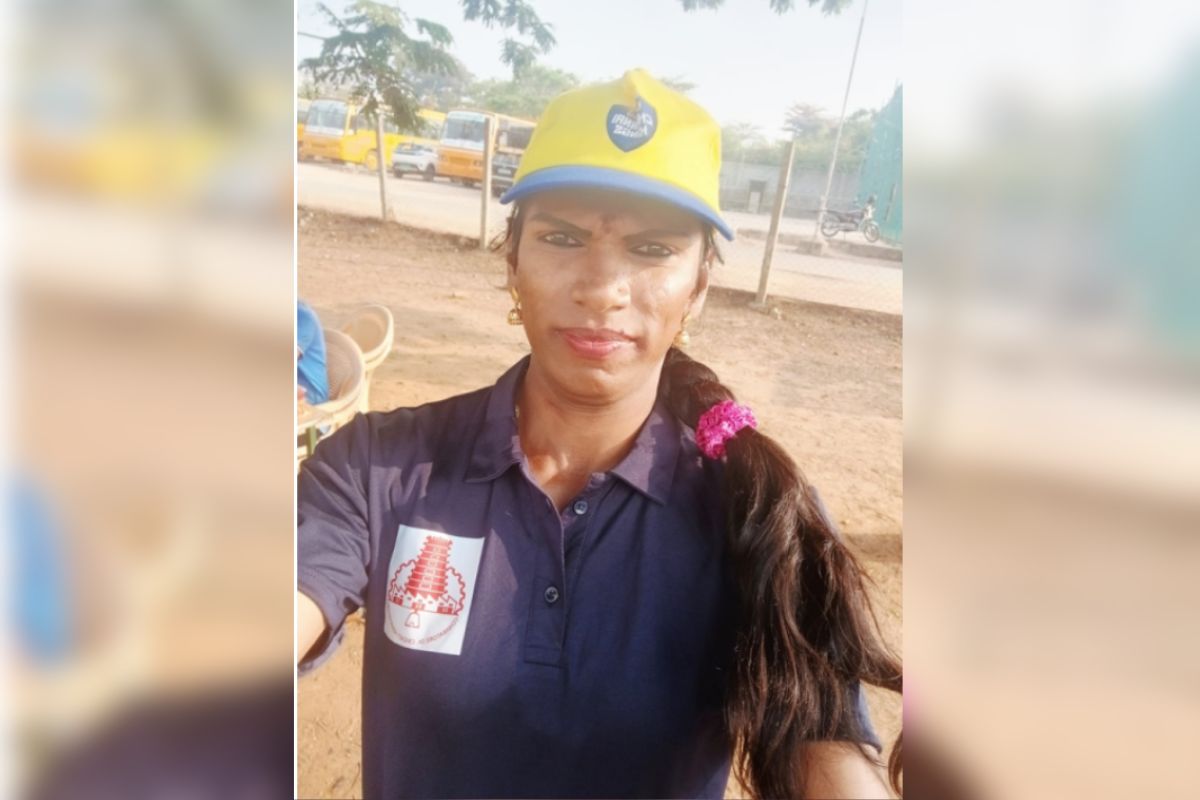
Her achievement did not appear out of nowhere. Tamil Nadu had formally recognised a third gender category for welfare purposes as far back as 2008. Cricket has only now begun to catch up with that recognition.
An Exam Cleared, and Bigger Ones Ahead
In February 2026, Rithika passed the Coimbatore District Cricket Association’s umpiring examination, a formal step that confirmed what her three hundred matches had already shown on the field. Officials at CDCA, including secretary R. Chandramouli and joint secretary K. Mahalingam, have publicly backed her, at times shifting matches away from venues unwilling to let her officiate.
Her next targets are the TNCA State Panel exams, and beyond that, the BCCI’s national umpiring panel, though no formal BCCI policy yet addresses transgender officials directly. She speaks of that goal not as personal ambition alone but as proof, for anyone watching, that trans people can succeed in fields long assumed to be closed to them.
What Passing an Exam Actually Requires
State panel umpiring exams in India generally combine a written test on the Laws of Cricket, questions built around real match scenarios such as rain interruptions or dangerous pitch conditions, and a practical assessment of signalling and communication with players and scorers. Candidates are expected to arrive with district-level experience already under their belt, not to learn the basics from scratch.
By that measure, Rithika was better prepared than many applicants twice her seniority. Three hundred matches hone instincts that no textbook can. What remained uncertain, until she pushed the issue herself, was whether the system would let her register as who she actually is.
Why It Matters Beyond the Boundary Line
Rithika Sri did not arrive through a viral clip or a celebrity endorsement. She arrived through years of study, hundreds of ordinary matches, and a willingness to keep showing up even when a gate, a form, or a stranger’s cruelty tried to tell her she did not belong. She has said in interviews that she wants people to understand trans lives as something broader than the narrow roles society tends to assign them. Engineers, call centre workers, umpires, artistes- she counts herself among a much longer list than most people are used to seeing.
Every time she takes the field now, she offers a quiet answer to that old question at the gate in Coimbatore. She does not reply in words but in the simple, disciplined act of calling the game correctly, over after over, match after match, until the only thing left to notice is the game itself.
Also Read:Stories Behind the Making of Bollywood Legends
You can connect with DNN24 on Facebook, Twitter, and Instagram and subscribe to our YouTube channel.