
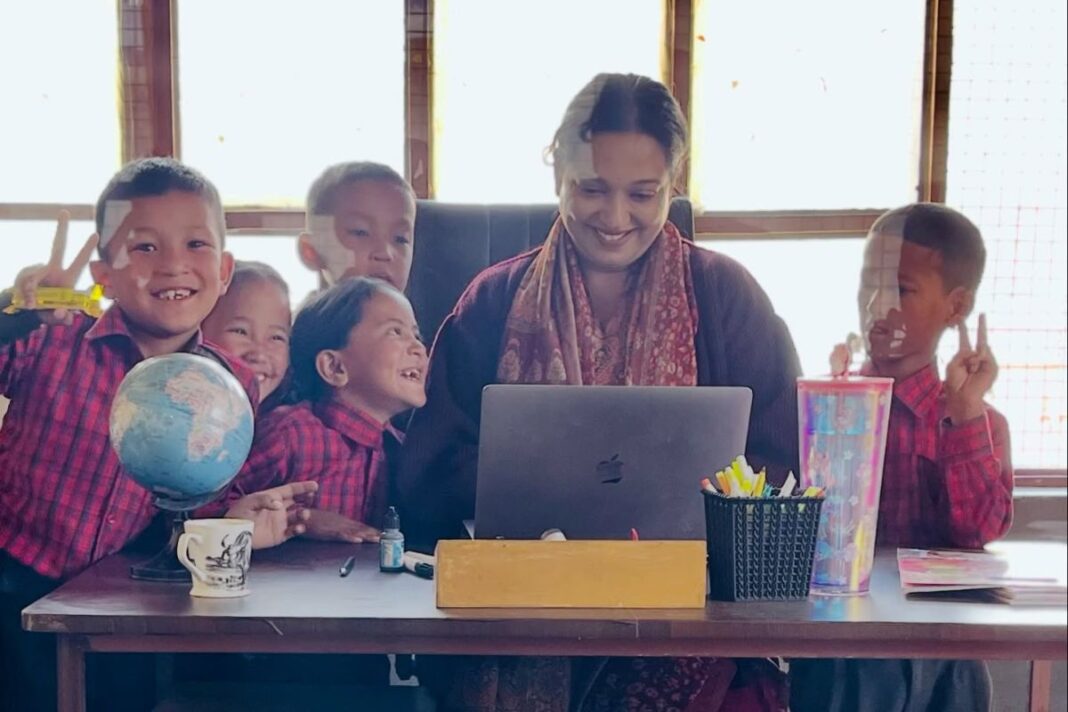

A teacher stands at 15,500 feet, and around her a handful of children wait for their morning meal before lessons begin. This is Komic, one of the highest villages in the world that a car can reach, and the woman who runs this school is not from the mountains at all. She came from a newsroom in Mumbai, carrying grief instead of a business plan, and somehow turned both into a home for children who had almost nothing.
A Life Interrupted by Loss
Portia Putatunda spent years working as a journalist in Mumbai, moving through the noise and deadlines of a city that rarely pauses. Her father, Ramkrishna Putatunda, had spent much of his life quietly helping children from low-income families. When he passed away, Portia found herself unable to settle back into her old routine. Grief pulled her inward, and for a while she struggled with depression, searching for something that might bring her closer to the man she had lost.
She kept returning, in her mind, to what he had cared about most. Her father’s devotion to underprivileged children had never been loud or public, yet it left a lasting mark on her. In 2018, she felt what she later described as a calling from the Spiti Valley, a place she had visited before and could not quite forget. Two years later, in 2020, she left her job altogether, packed her belongings, and moved to Kaza, a small town in the valley. She began teaching three children under a tree, with no building, no funding structure, and only a conviction that education could change the course of a life.
Finding Komic
During a later visit to Spiti, Portia came across a rundown building in Komic that struck her as the right place to build something lasting. Komic sits close to 15,500 feet above sea level in the Lahaul and Spiti district of Himachal Pradesh, and its population barely reaches into the hundreds. It is cold for most of the year, cut off by snow for long stretches, and often described as the highest village in the world connected by a motorable road.
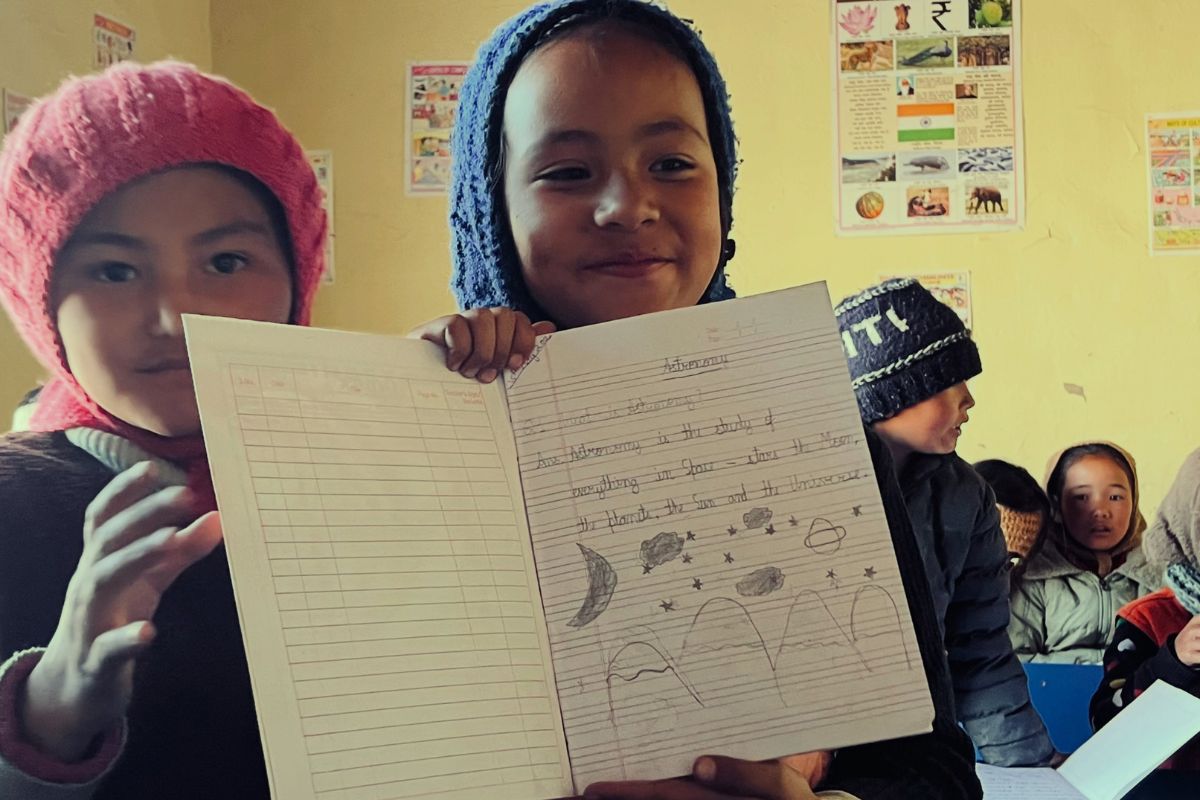
In 2022, she rented a plain six-room building there and opened the Planet Spiti Residential School under her organisation, the Planet Spiti Foundation, which she had registered a year earlier. The makeshift classes she once held under a tree in Kaza moved into this new home, and what had started as an idea born from mourning became a functioning institution.
More Than a Classroom
For families scattered across remote parts of Spiti and Lahaul, sending a child to school is rarely simple. Villages sit far apart, roads close in winter, and many children would face hours of difficult travel to attend a regular day school. Portia’s answer was to remove the commute altogether by building a boarding school where children live, eat, and study under one roof.
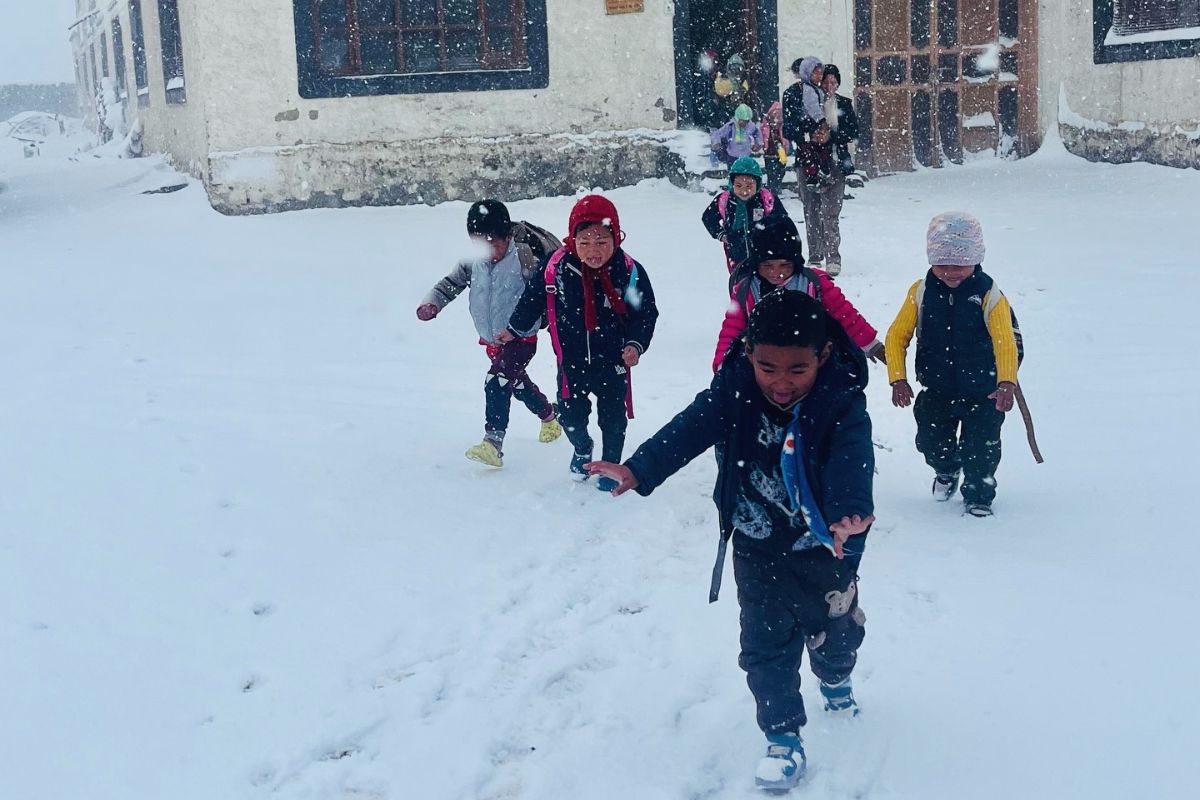
The school follows an ICSE-style curriculum up to the fifth standard, and it is entirely free. Every child receives food, shelter, clothing, stationery, a school bag, a uniform, shoes, and comfortable clothing for daily wear. Given the brutal cold of Himalayan winters, the school also provides warm bedding and firewood, along with transportation for children who live in distant villages such as Sumdo, Kyomo, Lalung, Langza, Lossar, and Hikkim. Regular health checkups, dental visits, and counselling sessions round out the support offered to every student.
What began with three children under a tree has grown into roughly ten students, ranging in age from about two and a half to ten years old, during the current academic year. The number sounds small against the scale of India’s education system, yet for a school built at this altitude and against this kind of isolation, it represents years of steady, patient work.
A Mother in the Mountains
To the children in her care, Portia is known simply as mother. She is teacher, caretaker, and guardian in one person, making certain the children eat five meals a day, stay warm through freezing nights, and feel looked after in ways that go beyond textbooks. For many of them, this six-room building is the first place that has ever felt stable.
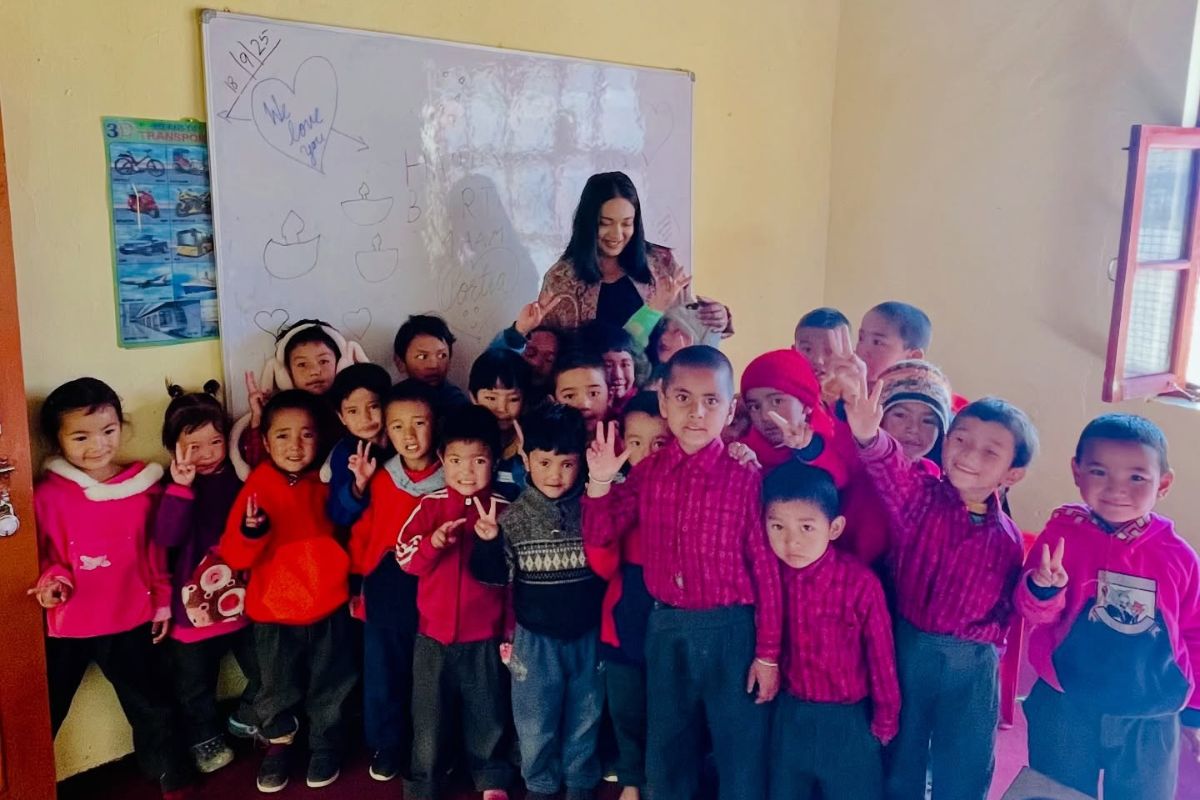
Portia often checks on more than homework. She asks about their health, their sleep, their worries. In a region where opportunities are scarce, and families often struggle to get by, her steady presence has become something the children can count on, day after day.
Funding a Dream Without a Safety Net
Portia has funded most of the school through savings built up over a decade of journalism work in Mumbai. Individual donors and sponsors have stepped in over time, helping cover costs for specific students or contributing toward monthly expenses. Government support has been limited to a single donated mobile toilet unit, and Portia has said openly that there has been no meaningful financial backing from official sources.
Running a boarding school at this altitude is expensive by any measure. Heating alone could cost close to sixty thousand rupees a year if firewood were the only option, so the school instead relies on cow dung gathered from the surrounding mountains, a cheaper and more practical alternative in a landscape with few trees. Keeping the number of students modest has also helped Portia manage costs without compromising on the quality of care each child receives.
Why It Matters
Education in high-altitude regions like Spiti often collides with geography. Schools may shut for months during winter, and children without nearby options lose access. By building a residential school that operates through the cold season, Portia has created continuity where there was none, along with a rare form of equity for children whose families could never have afforded a similar setup elsewhere.
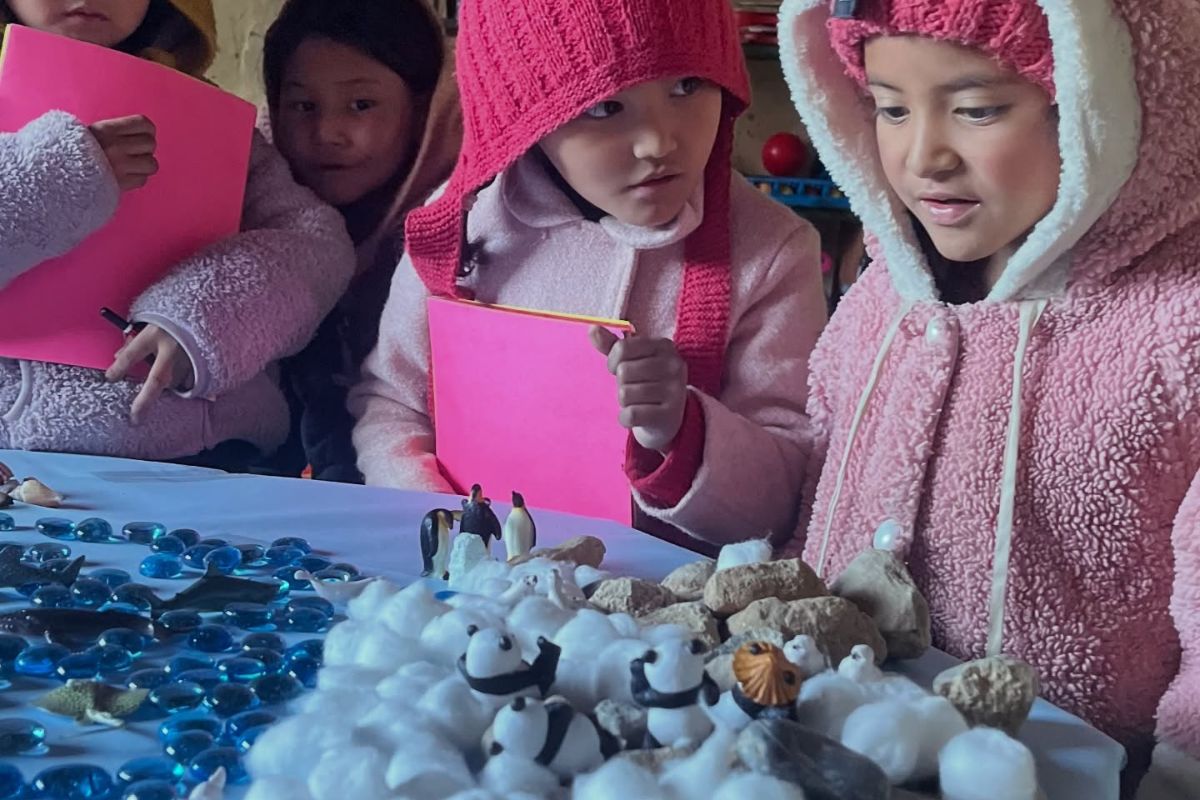
Whether this kind of grassroots schooling changes long-term migration patterns in Spiti remains an open question. Broader research suggests that education in the valley has historically pushed young people toward cities in search of work, rather than keeping them local. Still, place-based efforts like Portia’s, rooted in community and free of the usual financial barriers, offer children a foundation and a choice they might not otherwise have had.
Carrying Her Father Forward
Portia often says her father remains her greatest source of inspiration. Every meal served, every uniform stitched, and every child who learns to read in that small building in Komic becomes, in her words, a way of honouring his memory. Those who wish to support the school can reach her at 93680 68121, with WhatsApp preferred given the limited network in Komic.
What Portia built is not simply a school. It is proof that care, patiently given, can become its own kind of infrastructure, strong enough to hold a community together even at the roof of India.
A Journey Few Would Choose
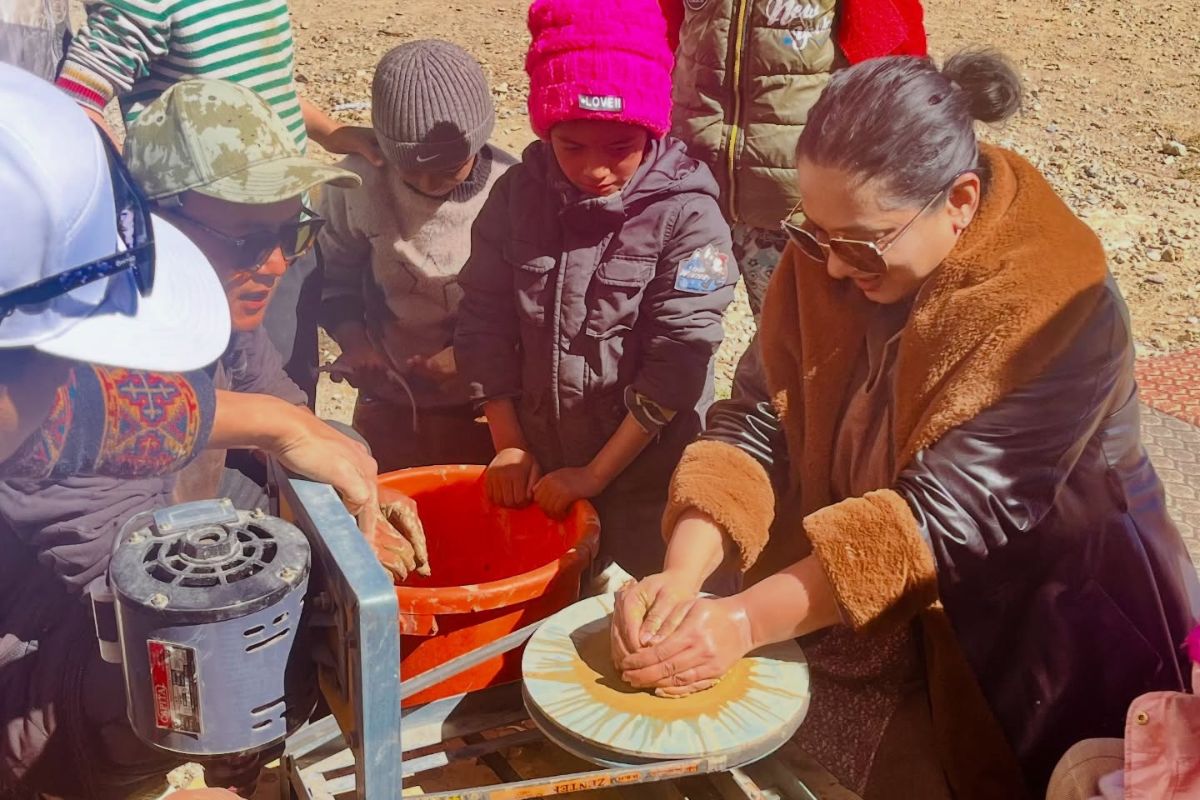
It is worth pausing on how unlikely this path was. Portia had built a career in a profession that rewards speed and detachment, chasing stories rather than raising children. Nothing in that world prepared her for cooking meals for toddlers or sourcing firewood substitutes in a village where trees barely grow. Yet she has spoken about her work with a calm that suggests she never really doubted the decision, even in the months when she was unsure how she would afford vegetables for the week.
The local community in Spiti has, by most accounts, embraced her presence rather than treated her as an outsider. Neighbours help where they can, and the collaborative spirit of the valley has become part of what keeps the school running when funds are tight. In a place this remote, that kind of trust is not easily earned.
Portia rarely frames her work as heroic. She describes it instead as an extension of something her father began long before she thought to follow it. In that sense, the school in Komic is less a monument and more a continuation, a quiet insistence that his values did not end when he did.
Also Read: How Homemaker Turned Sarpanch Lata Devi Helped Reduce Drug Abuse Across Five Himachal Villages
You can connect with DNN24 on Facebook, Twitter, and Instagram and subscribe to our YouTube channel.