
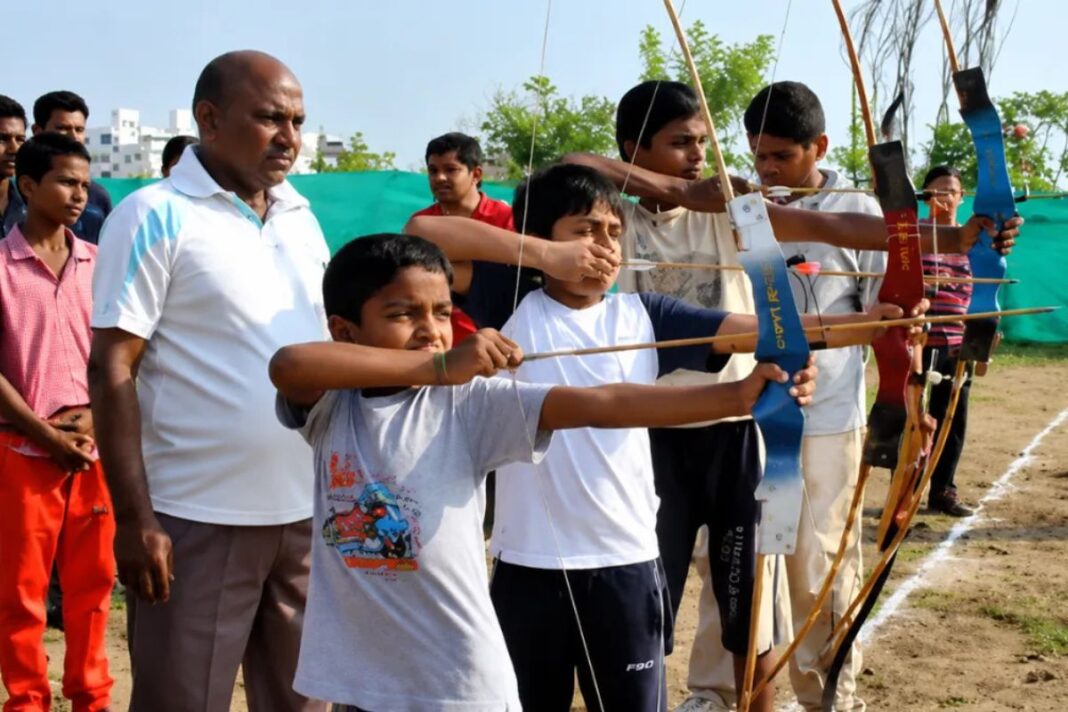

Forest bows, national gold. That combination sounds unlikely until you visit the erstwhile Khammam district of Telangana, where a skill once used to hunt and defend has quietly built one of India’s most productive archery pipelines. More than 150 archers from this district have won national-level gold medals, and this year alone, 400 students showed up for summer training camps hoping to join that list. What began as a means of survival in dense forest terrain has become a serious pathway to sporting glory, and the story behind it says as much about community resilience as it does about sport itself.
A Skill Learned Before It Was Ever Taught
For the Koya and Gond families who live across this region, archery was never something picked up in a school gymnasium or introduced by a coach with a whistle. It was simply part of growing up. Children in these communities often held a bow before they held a cricket bat or a football. The weapon fed families through hunting and protected them from wild animals roaming close to their villages. It carried weight and purpose long before anyone thought to measure it in medals.
That early, almost unconscious familiarity with the bow gave these children something formal training rarely can. Their stance, their grip, the way they draw the string and release it all trace back to lessons absorbed from parents and grandparents rather than diagrams in a coaching manual. When sports authorities eventually introduced them to regulation equipment and competitive rules, many discovered they were already halfway to mastery.
Numbers That Speak for Themselves
The scale of what this district has produced is worth pausing on. According to the local archery association, the erstwhile Khammam district has produced more than 150 national-level gold medallists and over 500 gold medal winners at the state level. These are not numbers drawn from one elite academy or a single celebrated school. They come from a wide network of tribal ashram schools and modest rural coaching centres scattered across the district, many of them led by coaches who fit hours of training around their own farm work.
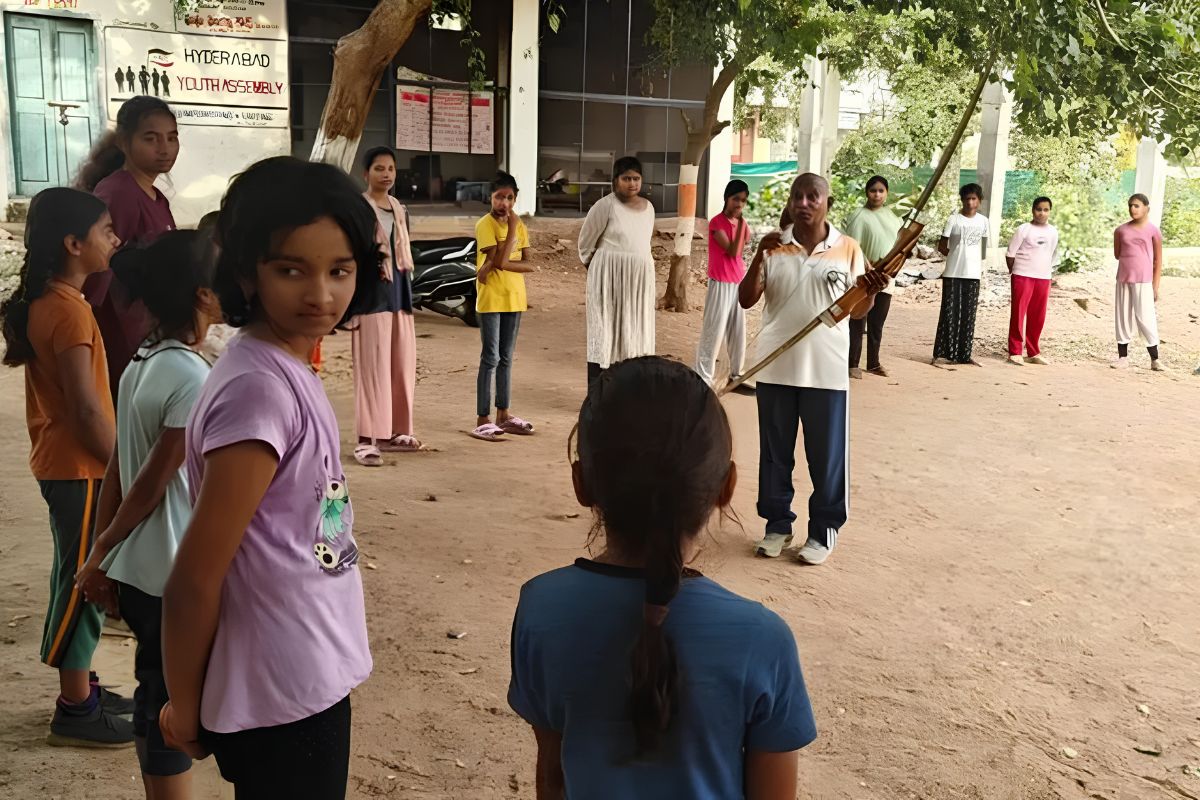
That detail matters. This is not a story of well-funded academies producing champions through expensive infrastructure. It is a story of coaches who train children for two or three hours before sunrise and again in the evening, often without much recognition, simply because they see promise worth nurturing.
Camps That Widened the Door
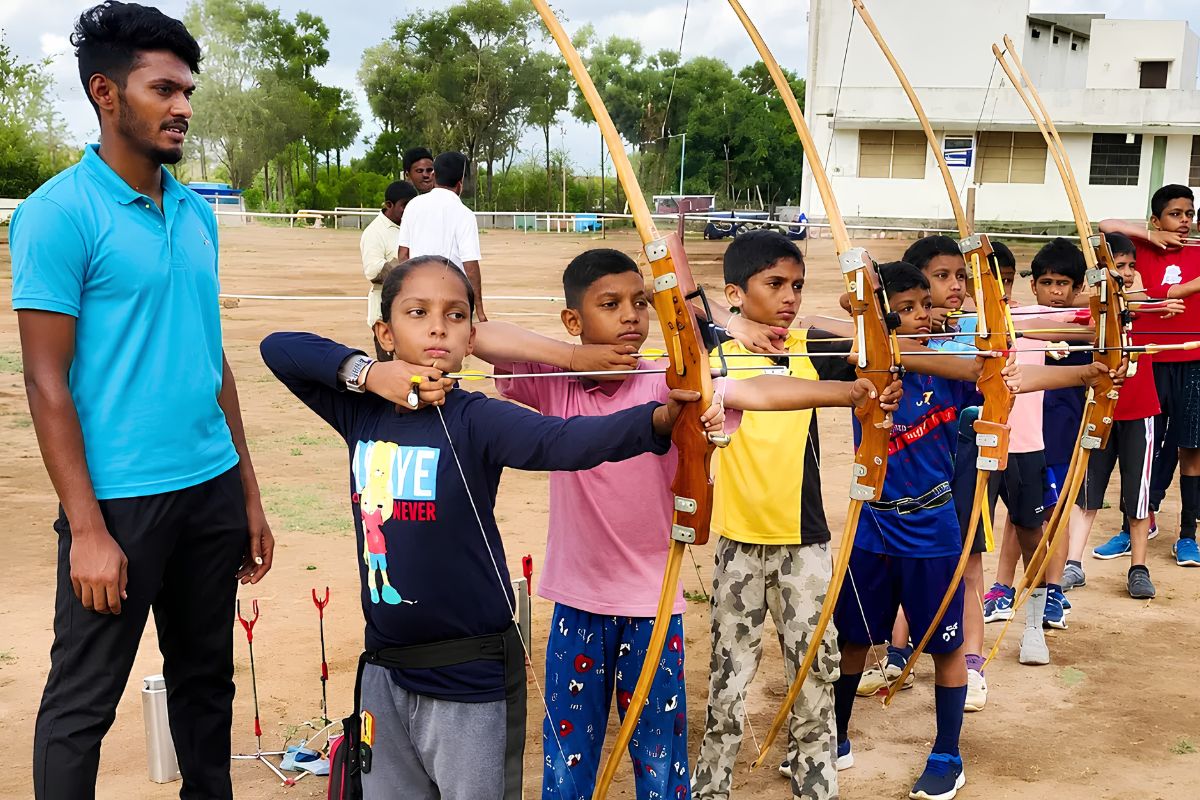
This year, that quiet tradition received a formal push. Archery summer camps were organised across the erstwhile Khammam district, and the response surprised even the organisers. More than 400 students signed up, and a striking number of them were girls stepping onto a proper archery range for the first time in their lives. Until then, many had only ever handled a homemade bow crafted for use in the forest, not a modern recurve model built for competition.
The camps were backed by the Integrated Tribal Development Agency and the Sports Authority of India, a partnership that signals something important. Tribal archery is no longer being treated as a folk skill or curiosity. Institutions are beginning to view it as a genuine sporting pipeline worth investing in, one capable of feeding talent into state and national squads for years to come.
Beyond Khammam, Into the Wider Tribal Belt
Khammam may be the best documented example, but it is far from alone. In the broader tribal belt of Telangana, including the erstwhile Adilabad district, young archers from Particularly Vulnerable Tribal Groups have begun to make their own mark.
At Chinchughat Ashram School, a student named Tekam Laxmi has already claimed gold medals at School Games Federation of India tournaments and at Tribal Welfare sports meets across several distance categories. Her schoolmates Pendur Rupa and Siddam Srija have collected national- and state-level medals of their own, competing in cities as far away as Chennai and in the state of Gujarat.
These young athletes point to one consistent factor behind their progress: coaching. At Chinchughat, a trainer named Kathle Maruthi offers free instruction for two hours each morning and evening, fitting the sessions around his own agricultural responsibilities on the school grounds. It is a modest arrangement by any standard, yet it has produced results that many better-resourced programmes would envy.
The Story Behind the Medal Count
What makes this achievement genuinely moving is not simply the tally of gold medals. It is the circumstances under which those medals were won. Many of these children come from families with very little money and even less access to formal sporting infrastructure. The road to a national podium usually runs through private academies and paid coaching. Yet, these students have reached it through inherited skill, community support and coaches willing to work without much reward.
Their ambitions have grown accordingly. Several young archers from these ashram schools now speak openly about wanting to represent India at the Olympics, and they say they are prepared to put in whatever effort that dream requires.
Why This Story Deserves Wider Attention
What is happening in Telangana’s tribal belt is more than a pleasant sporting anecdote. It is a demonstration of how indigenous knowledge, when given even modest institutional backing, can translate directly into national achievement. A skill once dismissed as tradition or folklore has become a legitimate route to opportunity for children who might otherwise have had few options beyond farm labour.
It also raises a fair question about sporting policy more broadly. Tribal communities across India have long carried skills and physical traditions that rarely receive formal recognition. Khammam suggests what becomes possible when that gap is finally addressed with proper coaching, equipment and encouragement.
Ashram Schools as the Bridge
Much of this progress traces back to the ashram schools themselves, which serve a very practical function. They take a skill inherited at home and convert it into structured training, without forcing children to give up their education to pursue it. Students study during the day and train in the early morning and evening, guided by coaches who often identify raw talent long before any formal trial takes place.
These schools also connect students to the competitions and selection trials that turn promise into results, moving them steadily from local practice fields to state and national tournaments. In Khammam specifically, this work is reinforced by a wider support network that includes dedicated sports schools, Eklavya institutions and Khelo India centres, giving the district an unusually strong foundation for producing talent year after year.
A Future Still Being Drawn
With more than 400 students now training in this year’s camps and a legacy of over 150 national gold medallists already behind them, the erstwhile Khammam district shows little sign of slowing down. The bow that once put food on the table is now aimed at something far larger, and for a growing number of young archers, that target includes the Olympic stage itself.
Local officials and coaches describe this moment as a turning point rather than a peak. The infrastructure built around archery in this district, from ashram schools to dedicated sports centres, did not appear overnight. It grew slowly, year after year, as more children proved that talent inherited from the forest could survive the transition to a modern playing field.
There is also a quieter lesson buried in this story, one about patience and continuity. None of these medals arrived through a sudden burst of funding or a single breakthrough. They came from generations of families passing down a practical skill, followed by a smaller group of adults who recognised that skill and gave it structure. Other tribal belts across the country hold similar traditions waiting for the same kind of attention. If Telangana’s example spreads, the next wave of national champions may already be practising with a bow somewhere in a forest clearing, long before anyone hands them a medal.
Also Read: How Homemaker Turned Sarpanch Lata Devi Helped Reduce Drug Abuse Across Five Himachal Villages
You can connect with DNN24 on Facebook, Twitter, and Instagram and subscribe to our YouTube channel.