
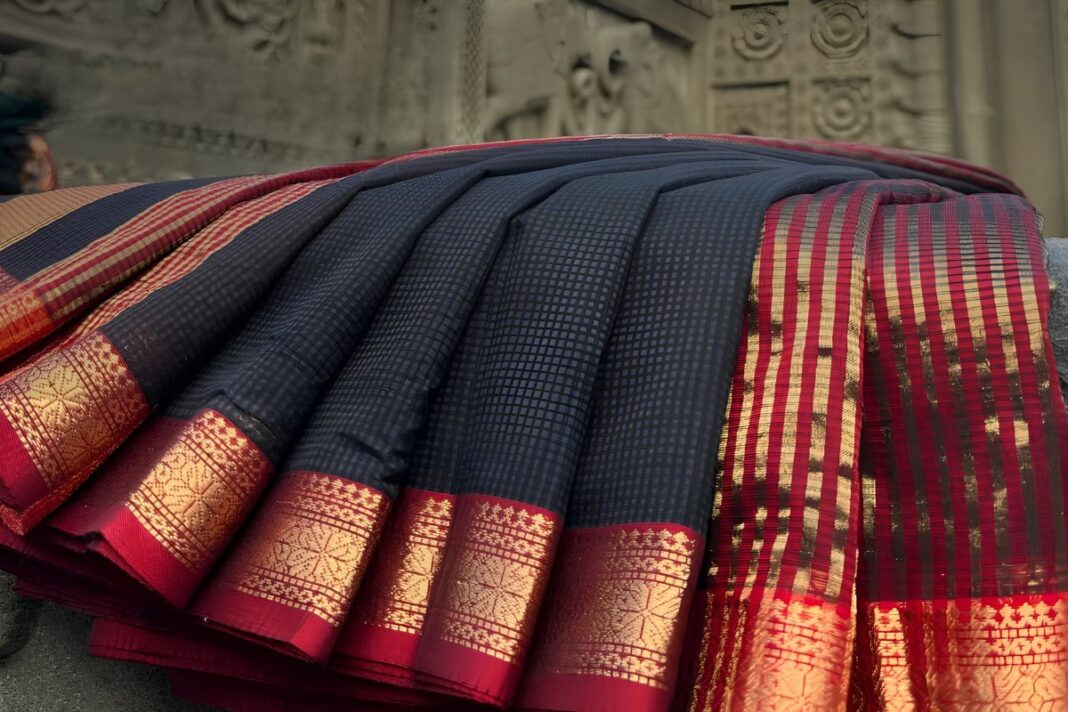

There is a saree with a secret border, and the government of India had to protect it by law. That saree comes from a small town on the banks of the Narmada called Maheshwar, and its story is stranger and richer than most people realise.
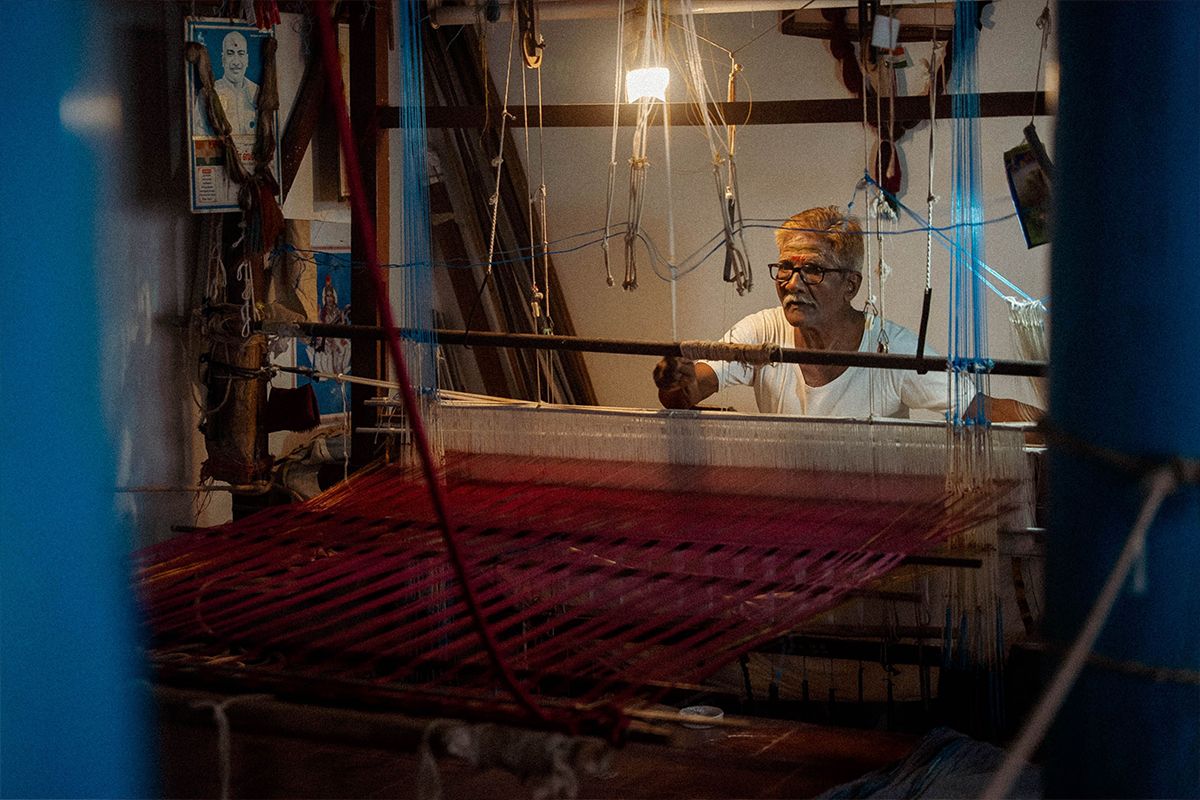
Walk through Maheshwar today, and you will hear the same sound that has filled its lanes for more than two centuries: the steady click and pull of the handloom. What emerges from those looms is the Maheshwari saree- a fabric so light it seems to float and a pattern so understated that its beauty reveals itself only upon a second glance. Its charm lies in balance: a delicate weave, a graceful border, and a history that has survived war, famine, and the arrival of the powerloom.
A Queen Who Built More Than Temples
The story begins with Ahilyabai Holkar, the 18th century ruler of the Holkar kingdom, who made Maheshwar her capital. She is remembered for temples, ghats and public works, but her quieter legacy runs through the town’s textile trade. According to the Rehwa Society, many of the weavers who settled in Maheshwar carried skills passed down from Mandu’s weaving tradition, a town once known for producing fine cloth for the Mughal court.
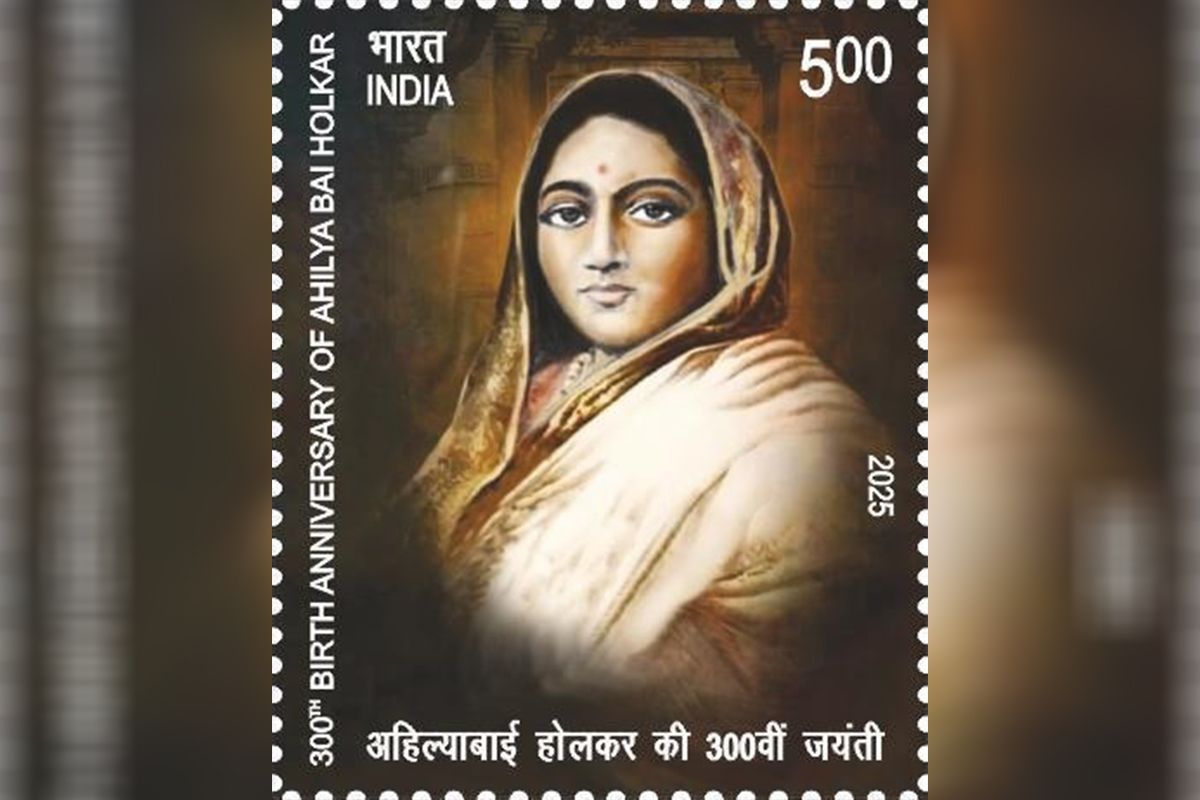
The Madhya Pradesh Tourism Department records that weavers from Mandu and Surat were invited to Maheshwar to make turban cloth and the nine-yard nauvari sarees worn by women of the Malwa court. These textiles doubled as royal gifts for visiting dignitaries. Popular legend often credits Ahilyabai herself with designing the first Maheshwari saree. That claim belongs more to folklore than to documented history, but her role in bringing weavers together and giving them steady patronage is well recorded.
What made her contribution lasting was not just royal taste. She linked craft to livelihood. By giving weavers a dependable market, she turned Maheshwar into a working centre of textile production rather than a passing fashion. That decision still supports thousands of families today.
What Makes the Fabric Different
Traditional Maheshwari sarees were woven purely in cotton. Over time, weavers began blending cotton with silk, producing a fabric that felt light yet carried a gentle shine. Today, the saree comes in pure cotton, pure silk, cotton-and-silk blends, and other combinations, depending on the design and the weaver’s choice.
The texture stays smooth and airy, ideal for warm weather, without the heavy brilliance seen in some richly embroidered silk sarees. That balance lets the saree move easily between a temple visit, a wedding and an office event.
One detail sets it apart from almost every other regional weave in India. Many Maheshwari sarees carry a reversible border, traditionally known as bugdi, which can be worn from either side. The Government of India’s Incredible India portal names this reversible border, along with the lightweight texture and architectural motifs, as a defining feature of the craft.
The pallu carries its own signature too. It commonly shows a pattern of three coloured stripes and two white stripes, sometimes finished with red, white and gold zari. The border and pallu are not decoration for their own sake. They give the saree its identity and its clearest link to Maheshwar’s architecture.
Patterns Borrowed From the Town Itself
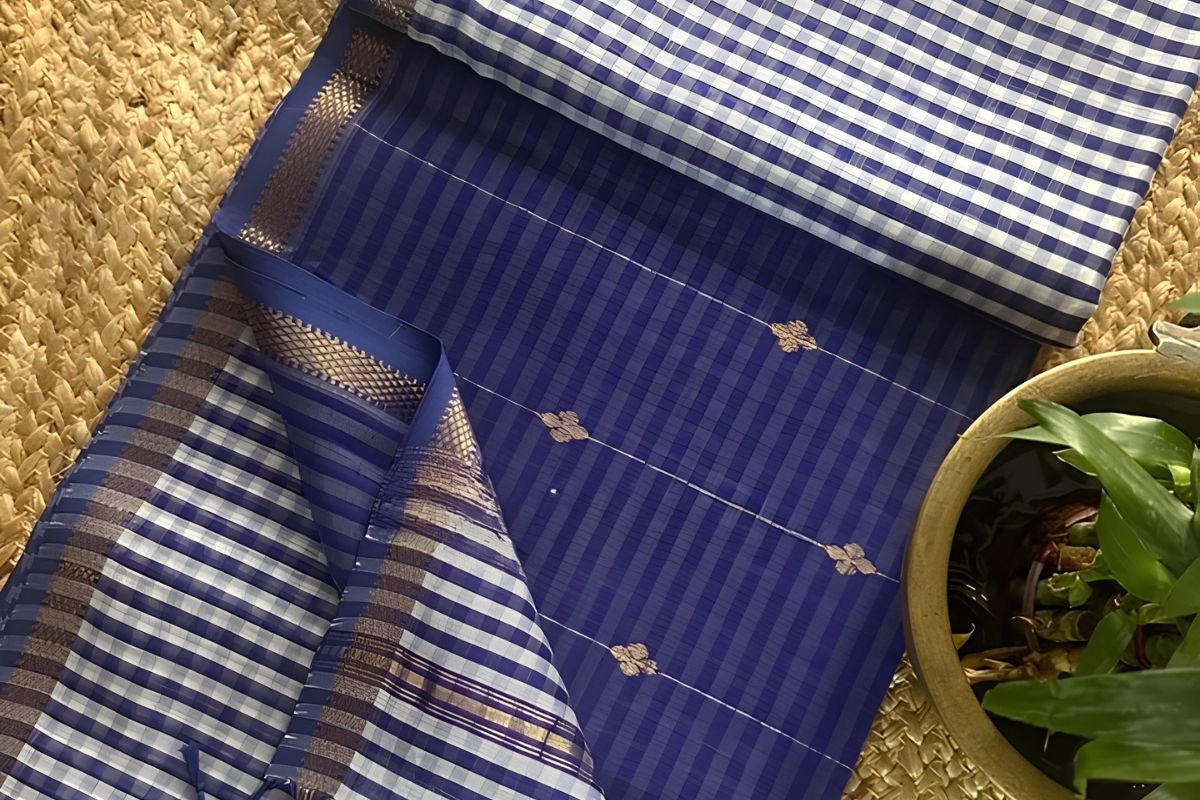
Weavers did not need to look far for inspiration. The carved walls of Maheshwar Fort and the flowing Narmada River gave them a full visual language. Some of the most recognised motifs include the leheriya, or wave pattern drawn from the river; the rui phool, inspired by the cotton flower; the chameli, representing jasmine; the diamond-shaped heera; the brick pattern called eent; the woven mat design known as chatai; and the graceful hans, or swan.
The district administration of Khargone describes these sarees as plain woven fabric given character through checks, stripes and additional threads rather than dense embroidery. That restraint is the whole point. Instead of covering the body in ornamentation, the saree lets its border, pallu and colour choice speak.
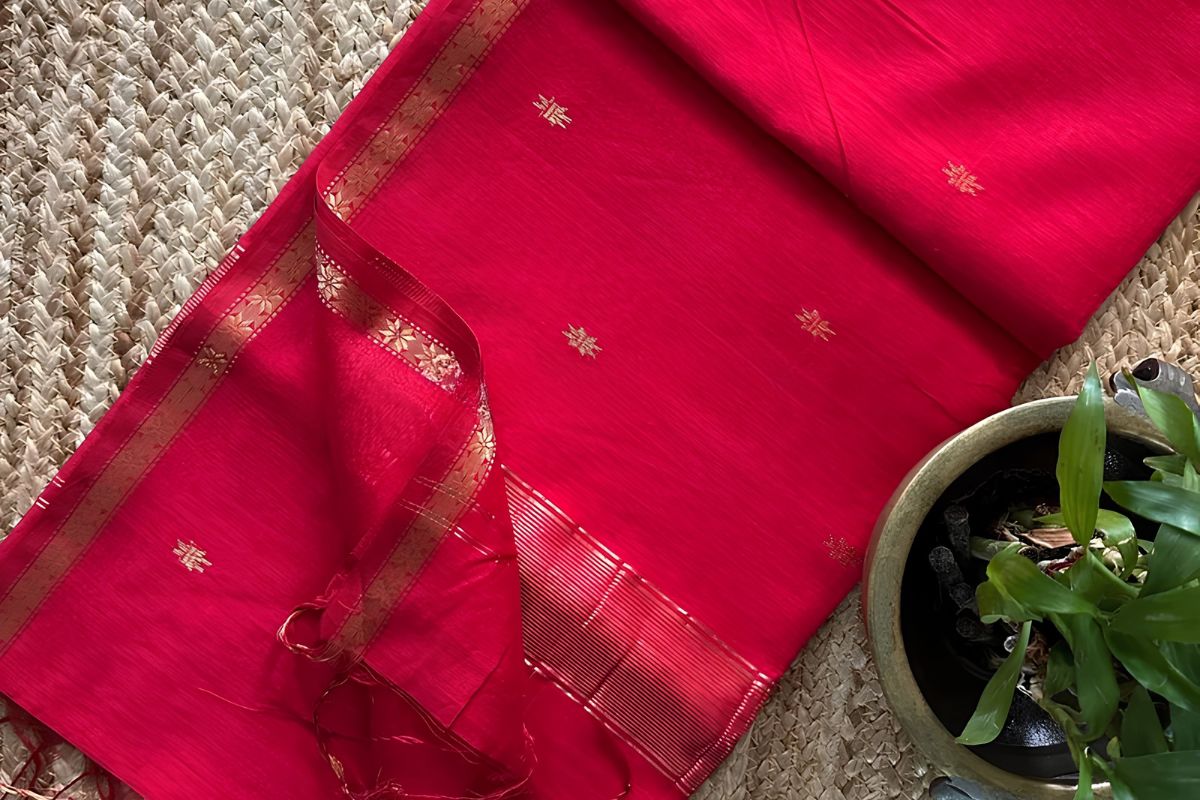
Colour carries its own history here. Traditional names include tapkeer- a deep brown; aamras- a golden yellow; and angoori- a grape-like green, alongside peacock blue, forest green and Indian red. Modern weavers have added pink, mauve, orange and purple to meet changing demand.
From Thread to Loom
Making a Maheshwari saree begins long before anyone sees fabric on a loom. Cotton, silk and zari threads are chosen, dyed and prepared with care, since even a small misalignment in the warp and weft can throw off the pattern of checks or border.
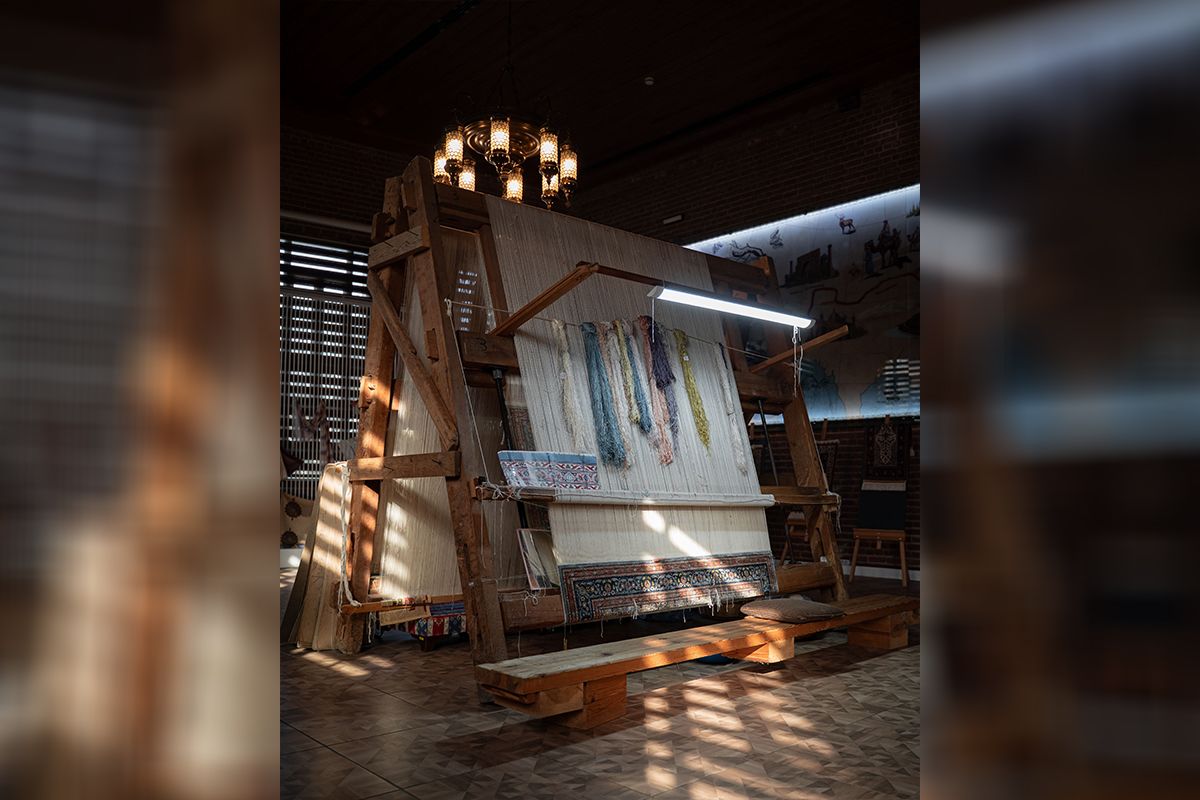
Weavers once worked on pit looms sunk into the ground. Frame looms are common now, and iron has largely replaced wood because timber has grown expensive and harder to source. Madhya Pradesh Tourism notes that lightweight metal fly shuttle looms are widely used in current production.
A plain-bodied saree can be finished fairly quickly, but one with detailed checks, stripes, or zari work demands far more patience. Depending on the design, a single saree can take between three and ten days to complete. The pallu alone, with its layered pattern, can take three to four days. Every finished piece therefore carries not just cotton and silk but years of accumulated skill.
Weaving as a Way of Life
Handloom weaving nearly lost its footing when cheap mill-made cloth flooded the market. Its survival owes much to the Rehwa Society, founded in 1979 by Richard and Sally Holkar, with the specific aim of creating work for women and reviving the Maheshwari tradition. The idea was simple but effective. Give artisans raw material, design guidance and access to buyers, and a fading craft can become a stable livelihood again.
The scale of that effort today is considerable. Khargone district records count 3,120 functioning handlooms and about 9,360 people engaged in the trade, producing roughly 3.20 lakh metres of cloth every month and close to 38.50 lakh metres a year.
The Law Steps In to Protect a Name
Because the Maheshwari name carries real economic value, it also needed legal protection. In 2010, Maheshwari sarees received Geographical Indication status under registration number 197. A more detailed GI listing, filed jointly by the Maheshwar Hathkargha Vikas Samiti and the District Handloom Training Centre of the Madhya Pradesh government, was formally certified on 17 July 2012 and remains valid until 7 February 2030.
This registration gives the Maheshwari name a legal identity tied to its region and its weaving community. Authorised producers gain the right to use the name and can take action if it is misused. The law also blocks sellers from suggesting that ordinary machine-made cloth with similar checks is a genuine Maheshwari product, a protection built into India’s Geographical Indications of Goods Act of 1999.
What the tag does not do is guarantee that every saree sold under the name is handwoven or made of a particular fibre. It protects the identity of the tradition, not the specifications of every product carrying it. A buyer still has to ask direct questions. Is the saree handwoven? What is it made of? Who wove it? Reliable cooperatives and transparent sellers, along with the India Handloom Brand promoted by the Ministry of Textiles, offer a safer starting point.
Caring for a Living Heritage
A Maheshwari saree rewards gentle handling. Avoid harsh detergents, vigorous wringing and long exposure to direct sunlight, especially where zari or delicate dye is involved. Air the saree after wearing it, fold it with care and store it in a breathable cotton or muslin cover in a dry place.
To wear a Maheshwari sari is to carry a fairly complete story on your shoulder. There is Ahilyabai’s early patronage, the steady presence of the Narmada, the carved stone of Maheshwar Fort, and the patient hands still working the loom today.
Also Read: From Guns to Glamour: Surrendered Naxal Women Walk Fashion Ramp
You can connect with DNN24 on Facebook, Twitter, and Instagram and subscribe to our YouTube channel.