

In the hills of Meghalaya, a piece of cloth remembers everything a family has ever been. Long before photographs or written records, women in the Khasi and Garo communities kept an archive, one thread at a time. The jainsem and the dakmanda, two traditional garments worn across these hills, carry lineage, self-respect, and centuries of quiet negotiation with the outside world. Looking closely at either one is like reading a story never written down anywhere else.
What the Jainsem Says About a Khasi Woman
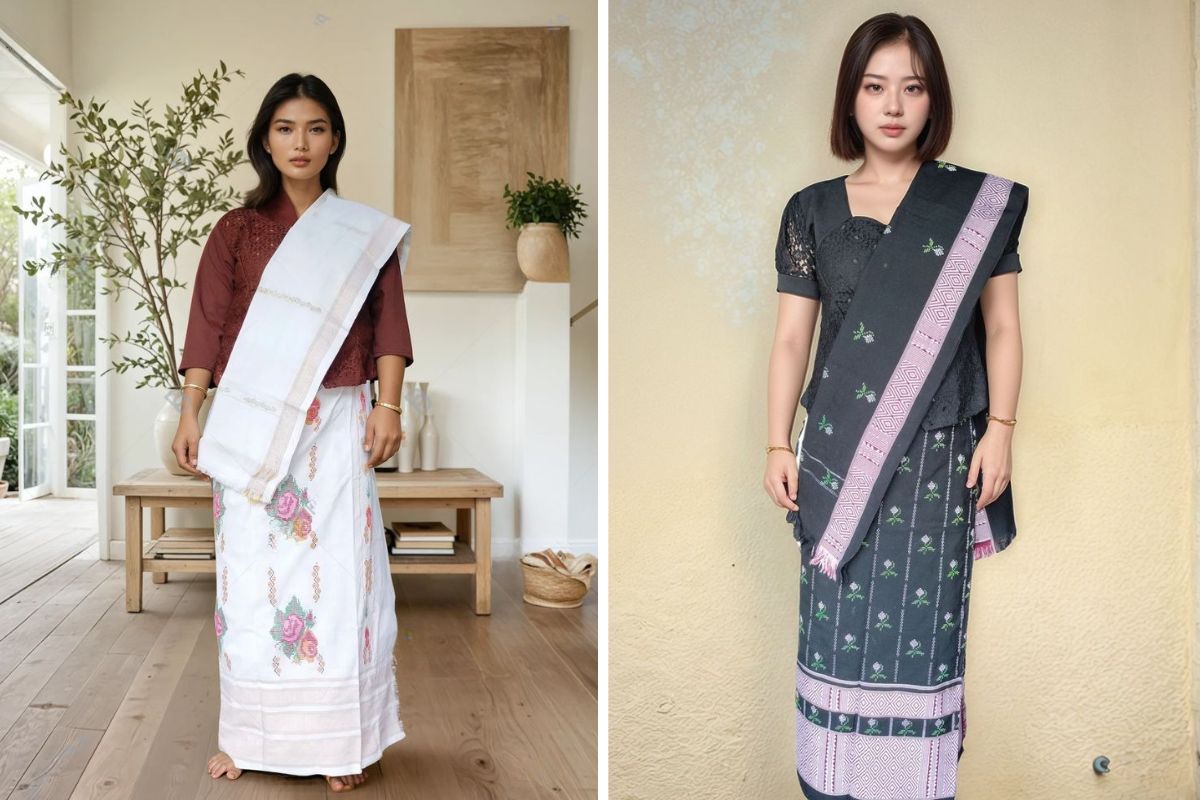
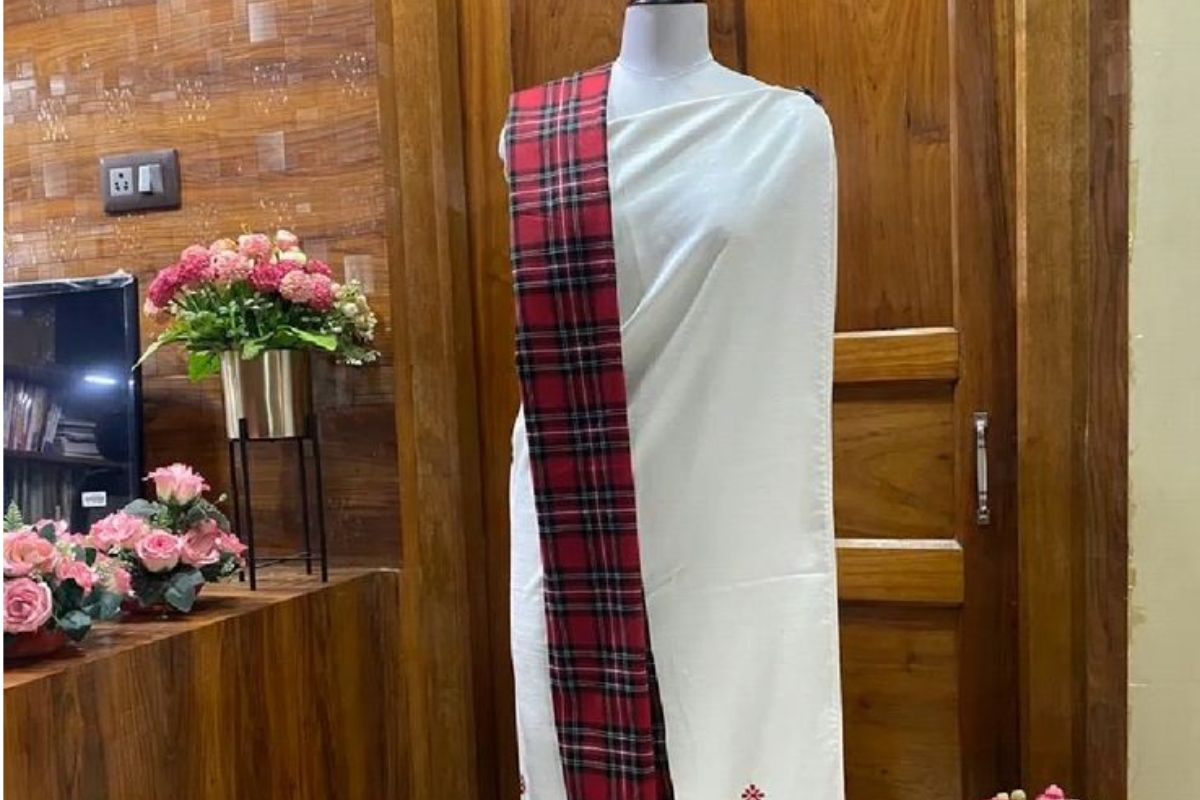
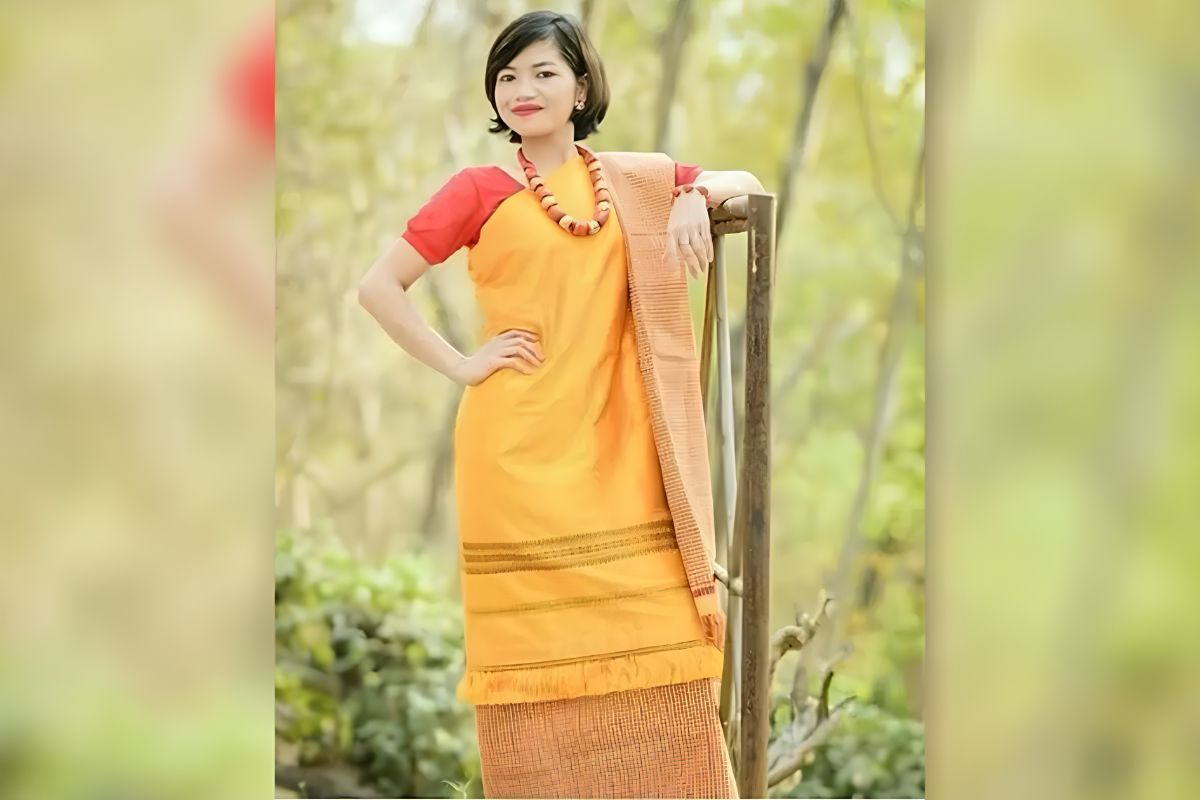
The jainsem belongs to Khasi women and is made from two unstitched pieces of cloth pinned or knotted at the shoulders. The fabric hangs loose from the waist down to the knees or ankles, giving the wearer room to move without being confined by tailoring. A woollen or checked shawl called tap moh khlieh is often draped over the top, especially in colder months. On ordinary days, a blouse and petticoat go underneath. On festival days, the cloth changes character entirely, sometimes woven from Assam’s muga silk or from local mulberry and eri silk, in a variant known as jainsem tara.

Khasi society traces descent through the mother’s line, and this matters enormously to how the jainsem is understood. It is not simply an item of clothing. It marks a woman’s place in her family’s lineage and her role in keeping that lineage visible. During festivals such as Shad Suk Mynsiem and the Nongkrem dance, the jainsem takes on a ceremonial weight, worn alongside gold and silver jewellery and strings of coral beads. In these moments, the garment stops being personal and becomes communal, a visible thread tying one woman to an entire people.
The Dakmanda and the Weight of the Garo Border
Among Garo women, the equivalent garment is the dakmanda, a thick, unstitched wraparound worn at the waist. What sets it apart is its border, usually six to ten inches wide, woven with a diamond-shaped motif called muikron, the Garo word for eye. This is not decoration for its own sake. The pattern carries meaning that predates any fashion trend, and it still does.
The dakmanda was traditionally woven from khildip cotton, a long-fibered variety native to the Garo hills. Over time, acrylic yarn and silks such as mulberry, eri, and muga entered the weaving too, changing the texture without erasing the design. Garo women once wore a shorter loincloth called eking. Still, the longer hemline of the dakmanda eventually became the norm, a shift that some accounts connect to the influence of Christian missionaries who encouraged more covered clothing. Today the dakmanda appears in daily life and at festivals, most visibly during Wangala, the harvest celebration that remains central to Garo identity.
How the Cloth Is Actually Made
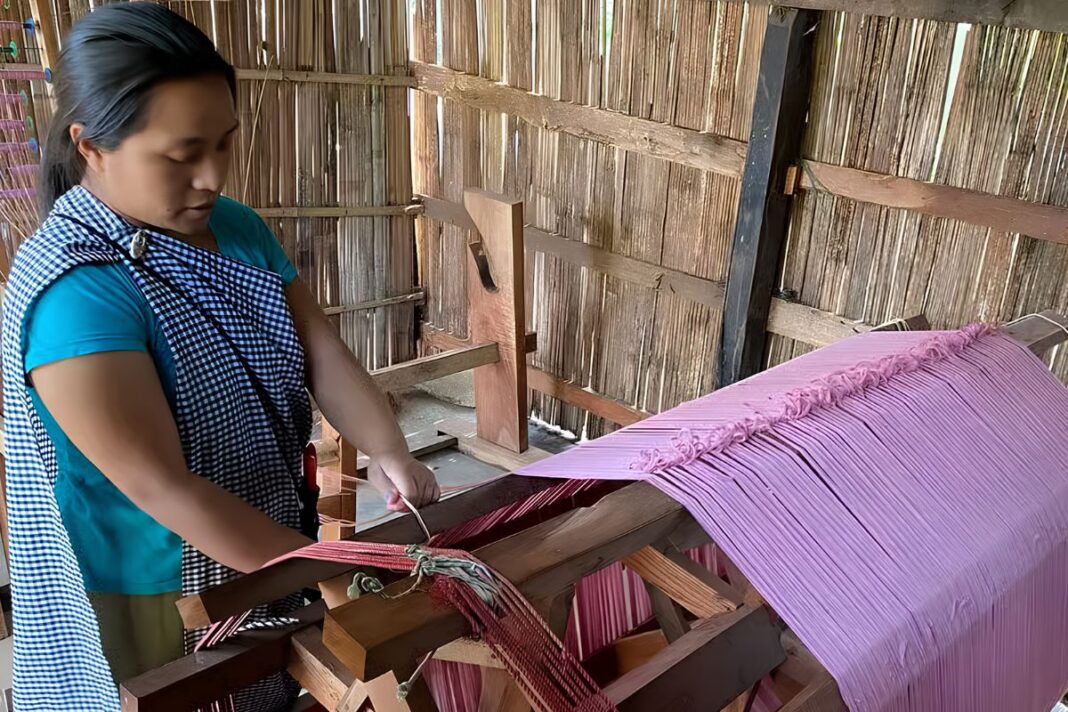
Weaving in Meghalaya is largely women’s work, and both the jainsem and the dakmanda are handwoven on backstrap looms. The warp threads are tied to a wall or a wooden post, and the weaver keeps tension using a belt fastened around her own waist. The shuttle passes back and forth by hand, and the yarn is beaten down using wax or a fine powder made from leaves. Colours come from natural sources used for generations: turmeric for yellow, indigo for blue, and madder root for red, with patterns emerging from how these colours are arranged in the warp and weft.
A skilled weaver needs roughly ten hours to complete a plain strip of cloth, and closer to thirty hours for a finished garment. That is not a small commitment of time, and it says something about why these textiles carry the value they do. Nobody spends thirty hours on something meant to be forgotten.
Cloth as Quiet Rebellion
During the colonial period, these garments took on a meaning that had little to do with fashion. Clan stripes and local motifs became a subtle form of resistance, a way of saying we are still here without saying it out loud. After independence, craft cooperatives and local initiatives worked to keep these weaving traditions alive, and that groundwork helps explain why jainsem and dakmanda are not museum pieces today. They show up in modern fashion, in eco-conscious clothing lines, and in how younger people in the region choose to present themselves.
From Heritage to Runway
In cities like Shillong and Tura, younger women are reworking the jainsem and dakmanda rather than setting them aside. Sometimes the cloth becomes a body scarf worn over jeans and a T-shirt. Sometimes it appears in fusion tops, or as evening wear paired with traditional jewellery. This is not simply a style choice. It reflects a deliberate rereading of heritage, pairing natural dyes and the slower pace of handloom weaving with community enterprises that connect local skill to wider markets. Collective efforts such as Meghalaya Weaves have begun linking weavers from the Jaintia and Garo regions to e-marketplaces, supporting both economic stability and cultural continuity.
The Eye That Watches Over the Cloth
Return to that diamond-shaped motif on the dakmanda border, the muikron, and its meaning becomes even more specific. In Garo, the word means eye, and that is not incidental. Within Garo tradition, muikron functions as a protective symbol, something closer to an eye that wards off harm than a simple design flourish. Weavers and researchers describe it as representing the watchful eyes of the Garo spirit, looking after women’s safety and the community’s integrity, which is why it is sometimes called God’s eye.
One local story traces the motif’s origin to the Mangsang area of East Garo Hills, once known for its abundance of peafowl. Weavers are said to have drawn inspiration from the striking beauty of a peacock’s eye, and over time the design settled into the precise diamond shape recognised today, a marker of Garo identity, status, and social standing.
A New Market for an Old Motif
Garo handloom is no longer confined to festival wear. Designer-led showcases such as Re Imagining A Way Back To Us have placed Garo textiles alongside other indigenous fabrics in contemporary fashion contexts, treating handloom as a design language rather than a costume from the past. Local entrepreneurs have driven much of this shift on the ground. Tapashree Hadu founded Hadu’s Handloom in North Garo Hills, connecting more than forty weavers to produce scarves, stoles, and garments for modern buyers. Weaver entrepreneurs like Lakme Marak and brands such as Nengminja Industries are doing similar work, turning traditional outfits and home furnishings into products that reach well beyond the hills.
Government and community programs have also begun archiving traditional motifs through projects like Heritage Motif Revival, run in partnership with Meghalaya’s textile department, aiming not just to preserve old patterns but to make them usable in new products. Eri silk, sometimes called peace silk because the process does not kill the silkworm, has also become a significant part of this shift, appealing to buyers who care about how a fabric is made, not just how it looks.
Real obstacles remain. Market access is limited, technical support for design innovation is thin, and younger weavers need real economic incentive to stay with the craft rather than leave it behind. Even so, through designer collaborations, local branding, and digital marketplaces, Garo handloom is steadily moving beyond festival wear into everyday fashion and home decor.
The jainsem tells a Khasi woman’s maternal story. The dakmanda carries a Garo woman’s woven pride. When either garment is worn, it carries more than fabric. It carries roots, a community’s memory, and a quiet claim to belonging. That is the moment when clothing stops being clothing and becomes history, breathing quietly through the ordinary days of the people who wear it.
Read: IFFJK 2026 Brings the best of World Cinema to Kashmir
You can connect with DNN24 on Facebook, Twitter, and Instagram and subscribe to our YouTube channel.