
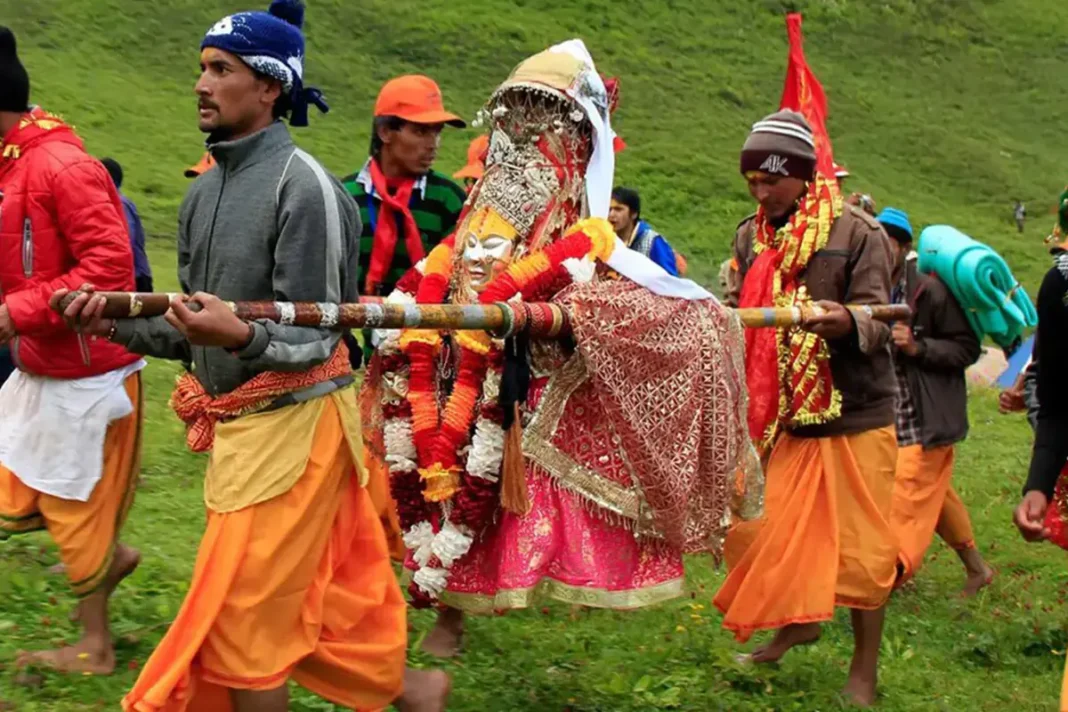

In Uttarakhand, the land of the gods, there is a pilgrimage that is completed not merely by walking, but through faith. The Nanda Devi Raj Jat Yatra is often described as the Mahakumbh of the Himalayas. Held once every twelve years, the journey takes devotees deep into the Himalayan landscape. One of its most distinctive traditions is that the procession is led not by a person, but by a four-horned ram known as the Chausingya Khadu.
The pilgrimage brings together faith, local traditions and the cultural connection between Goddess Nanda and the Himalayan region.
The Journey Begins in Nauti
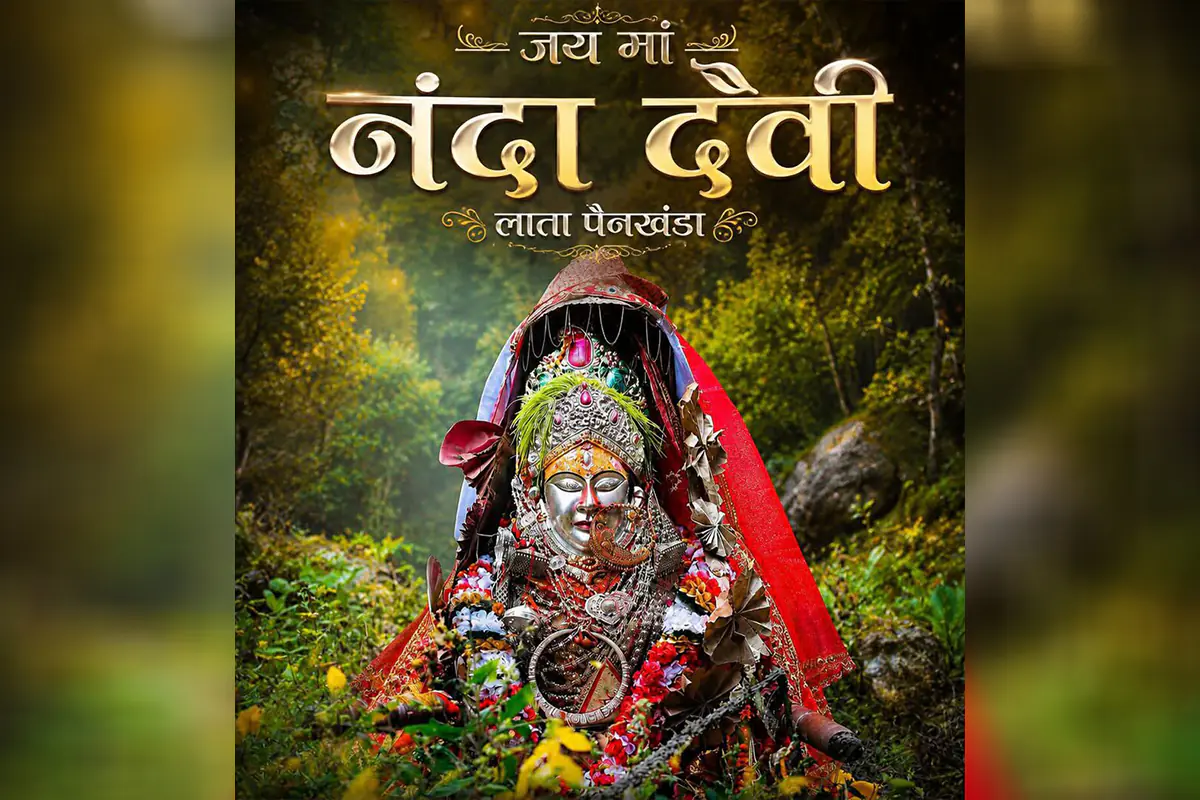
The sacred pilgrimage begins at Nauti village in Chamoli, where a golden image of Goddess Nanda is installed, and the traditional ringal ki chhantoli is worshipped.
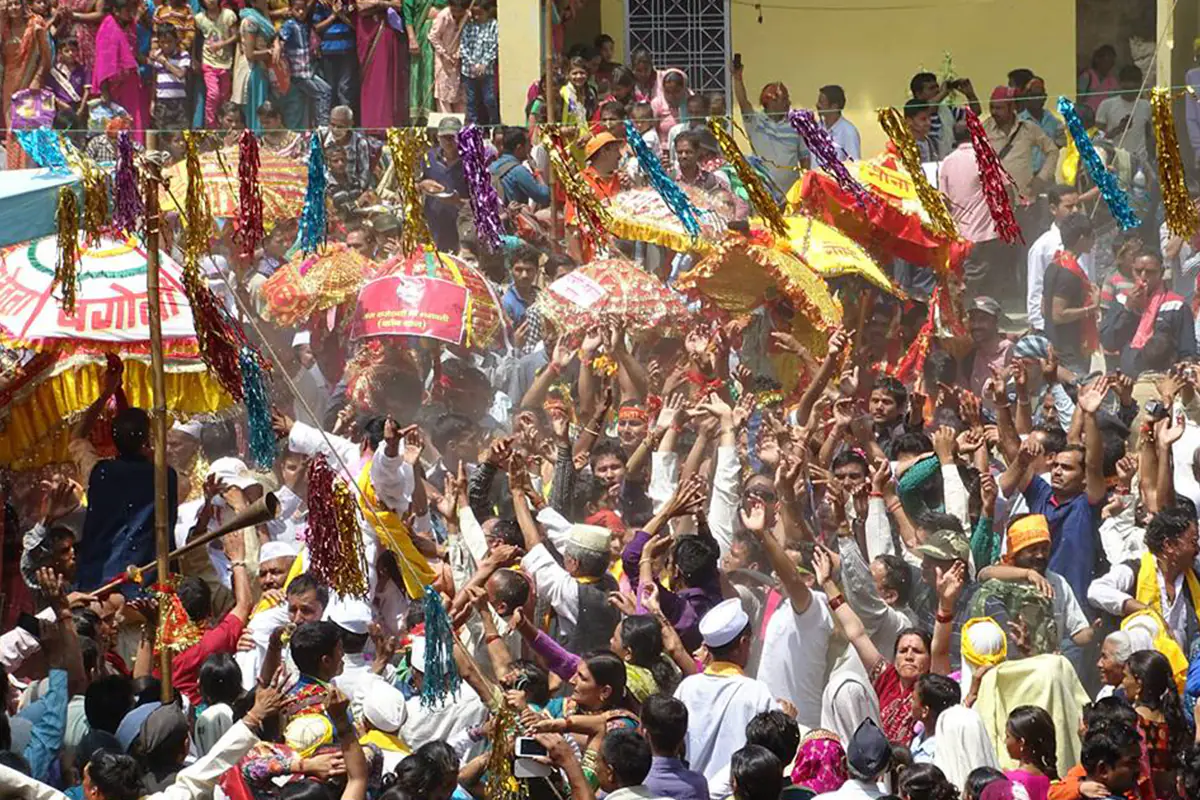
The Rajput Kunwars of Kansua make a traditional resolution for the successful completion of the journey. Devotees then offer jewellery, clothes, sweets and other items to Goddess Nanda before bidding her farewell as she begins her journey towards the Himalayas.
The pilgrimage traditionally continues for around 18 to 22 days, with devotees travelling on foot. The Chausingya Khadu walks at the front of the procession. Each night, it rests near the sacred umbrella associated with Goddess Nanda.
The Four-Horned Khadu
The Chausingya Khadu occupies a special place in the traditions surrounding the Raj Jat. It is considered an assistant or companion of Goddess Nanda.
According to local belief, a four-horned ram is born only once in twelve years. Because of this belief, the search for the animal begins before the pilgrimage. In 2014, a black lamb was born in Ladoli village, following which the journey was announced.
During the pilgrimage, the jewellery, adornments and other offerings associated with Goddess Nanda are carried on the ram’s back. When the procession reaches Hemkund, the animal is worshipped. According to the belief associated with the tradition, the Chausingya Khadu then continues towards Kailash and is never seen again.
The Story of Goddess Nanda
The Raj Jat is also connected with the traditional story of Goddess Nanda. According to the belief, Nanda was the youngest daughter of Himavant and Maina and was married to Shiva, who is associated with Mount Kailash.
The story says that when her father did not inquire about her for twelve years, Nanda called out to her parents. Her tears fell upon the earth, and turmoil came to her father’s land.
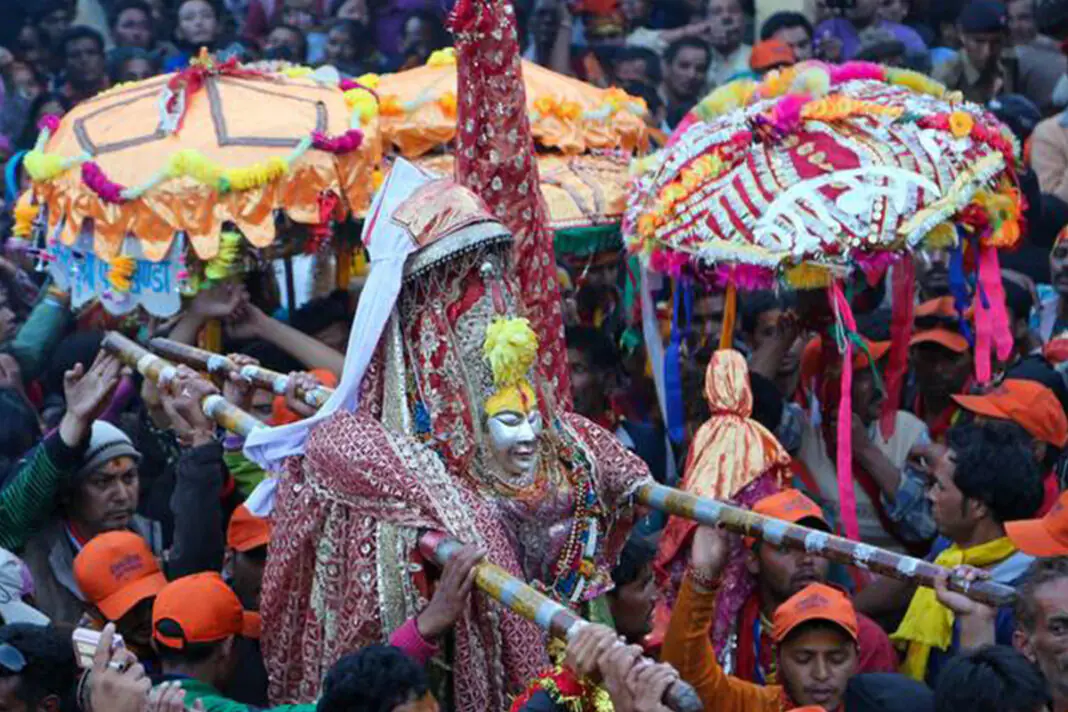
Following the advice of Narada Muni, the tradition of taking gifts to Nanda during the winter season began as a way of seeking her return and blessing. The Raj Jat is associated with this tradition.
Different traditions describe Nanda in different ways. Some regard her as the sister of Parvati, while others identify Nanda with Parvati herself. Within Chamoli, the Patti Chandpur and Shri Guru areas are traditionally regarded as Nanda’s maternal home, while the Badhan region is considered her marital home.
A Pilgrimage Through the Mountains
The journey is therefore not simply a long walk through the Himalayas. It represents a traditional farewell to Goddess Nanda as she is believed to return towards her husband’s home in the mountains.
The devotees carry offerings and travel through the Himalayan landscape, following customs that have been passed down through generations. At the centre of the procession is the Chausingya Khadu, whose presence gives the Raj Jat one of its most distinctive features.
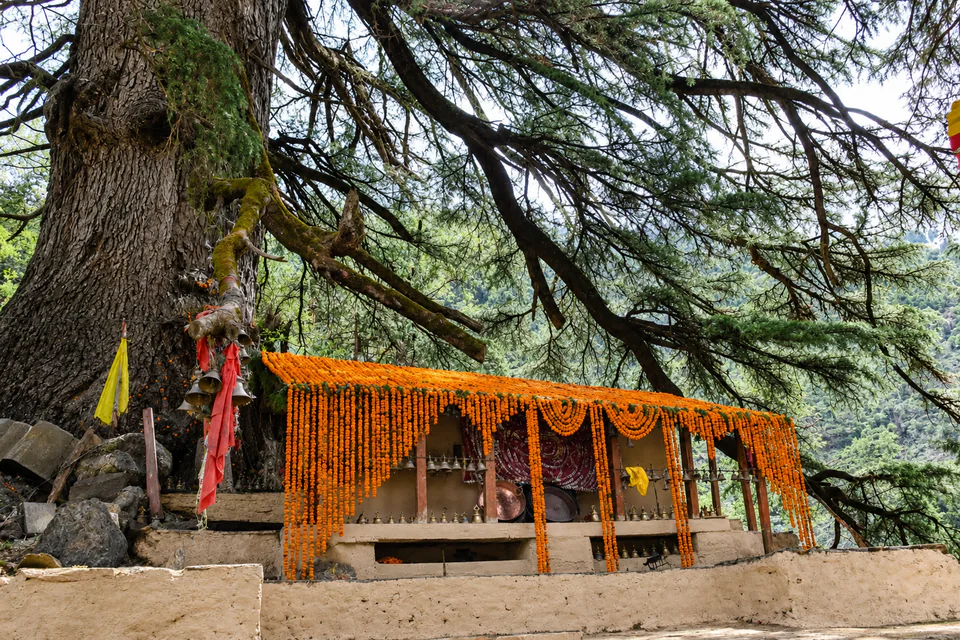
The journey combines religious belief with the traditions of the communities through which it passes, making it an important part of the cultural life of Chamoli and the wider Himalayan region.
The 2026 Raj Jat
According to the information in the source, the Nanda Devi Raj Jat has so far been held in 1843, 1863, 1886, 1905, 1925, 1951, 1968, 1987, 2000 and 2014.
In 2026, after another twelve-year wait, the pilgrimage has begun again. The source states that Goddess Nanda has departed from Kurud Nanda Dham in Chamoli towards Kailash, with the Chausingya Khadu leading the 296-kilometre walking journey.
The journey is deeply connected with the faith and traditions of the people of the region. For devotees, every stage carries its own religious significance, while the mountains provide the setting for a pilgrimage that has continued through generations.
The Nanda Devi Raj Jat is thus presented as a meeting point of faith, tradition and the Himalayan landscape. Its distinctive rituals, the story of Goddess Nanda and the presence of the four-horned Khadu together make it one of Uttarakhand’s most significant traditional pilgrimages.
Disclaimer: The information in this article is based on religious beliefs, folk traditions and publicly available information provided in the source. For official information regarding the dates, route and traditions of the Nanda Devi Raj Jat Yatra, readers should refer to the Uttarakhand government or the concerned religious committee.
Also Read: Libia Lobo:102-Year-Old Lawyer Who Ran Secret Jungle Radio During Goa’s Liberation
You can connect with DNN24 on Facebook, Twitter, and Instagram and subscribe to our YouTube channel.