
Every year, a festival arrives in Kerala that no single religion can claim as its own. Onam is often introduced as a Hindu celebration built around an old legend, yet the way it actually unfolds across the state tells a different story. Temples fill with lamps and flower offerings, but so do churches, mosques, schools and government offices, all preparing for the same ten days of feasting, singing and celebrating. To call Onam a purely religious observance is to miss what it has become. To call it entirely secular, with no mythological weight at all, would be equally wrong. The truth sits somewhere between those two claims, and that middle ground is worth exploring.
A King Who Never Really Left
The most repeated story behind Onam concerns Mahabali, also known as Maveli, an Asura king remembered in Kerala as fair, generous and deeply loved by his subjects. According to the legend, his rule ushered in a golden age. Nobody went hungry. Nobody was cheated. Wealth and dignity were within reach of every household.
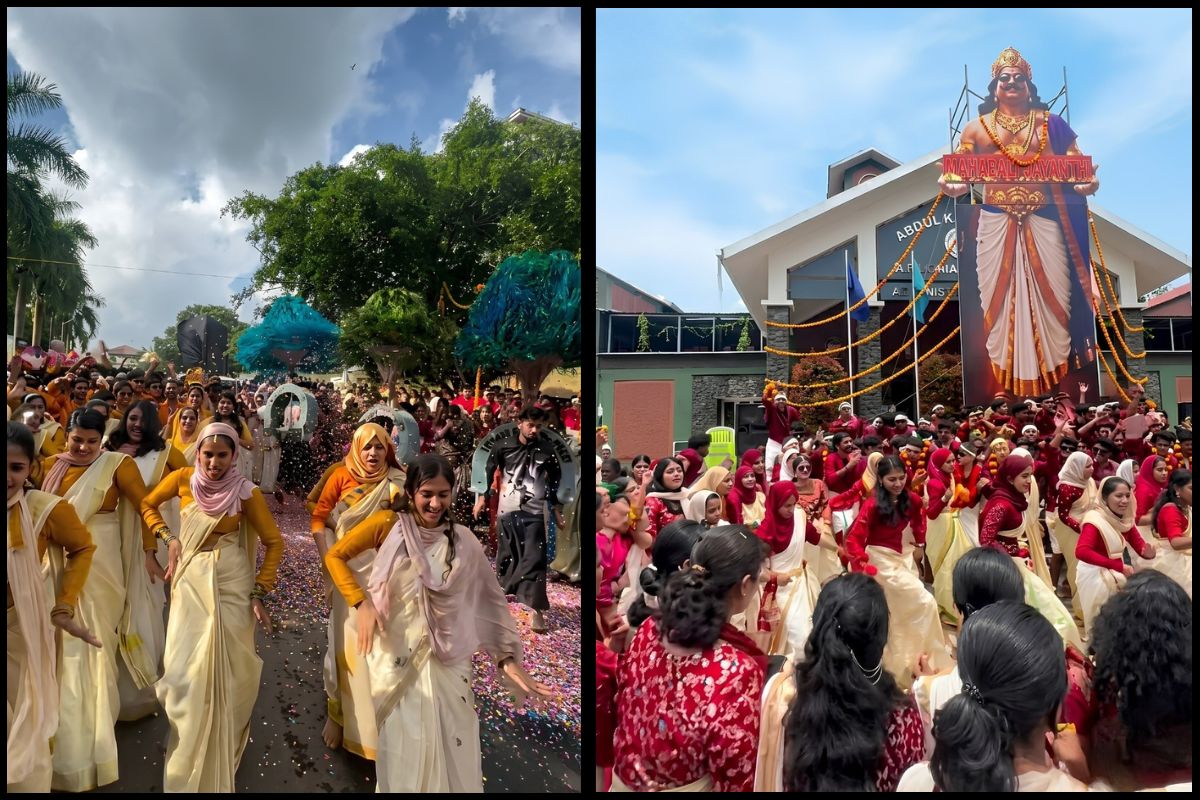
Kerala Tourism traces Mahabali’s lineage to Prahlada, the well-known devotee of Vishnu, making the king his grandson. Despite belonging to the Asura line, Mahabali is remembered for his virtue rather than his ancestry. His growing popularity worried the Devas, the celestial beings who felt threatened by a mortal king so widely adored. They turned to Vishnu for help.
Vishnu answered their prayers by taking the form of Vamana, a small Brahmin ascetic. He approached Mahabali while the king was performing a sacred ritual and had promised to grant any request. Vamana asked for something that sounded almost too modest to matter- only as much land as he could cover in three steps. Mahabali agreed without hesitation.
It was a test disguised as a favour. Vamana grew into a towering form, often identified as Trivikrama. His first step spanned the earth. His second reached across the heavens. There was nowhere left for a third. Recognising Vishnu at once, Mahabali kept his word and offered his own head as the final resting place for that last step. Vishnu accepted, sending the king into the netherworld, but was moved enough by his humility to grant him one gift in return. Mahabali could come back once a year to see the people he once ruled.
Onam marks that homecoming. In Kerala’s imagination, Mahabali remains the ruler people still long for, and the festival exists to welcome him back, if only for a few days.
Roots in the Land, Not Just in Myth
Strip away the mythology and Onam still stands on its own as a harvest festival. It falls in the Malayalam month of Chingam, right after the exhausting monsoon stretch of Karkidakam, and marks a turn toward renewal and a more hopeful farming season.
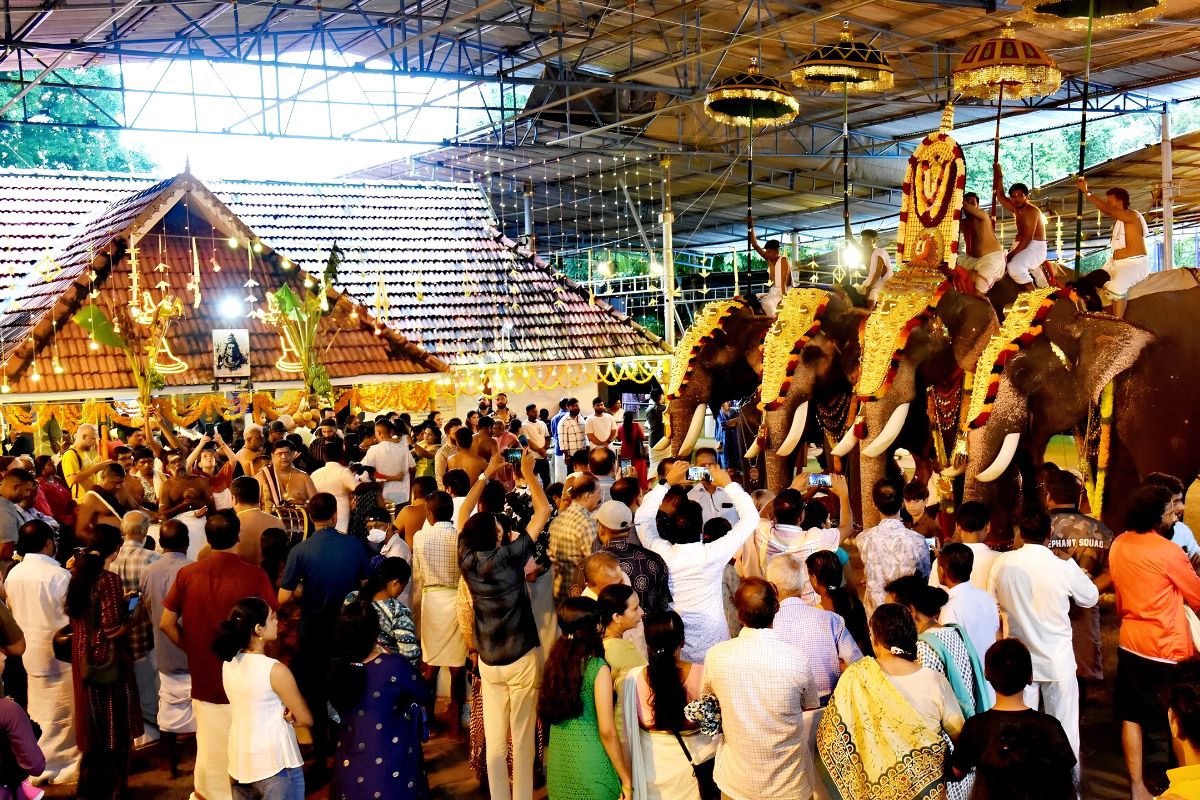
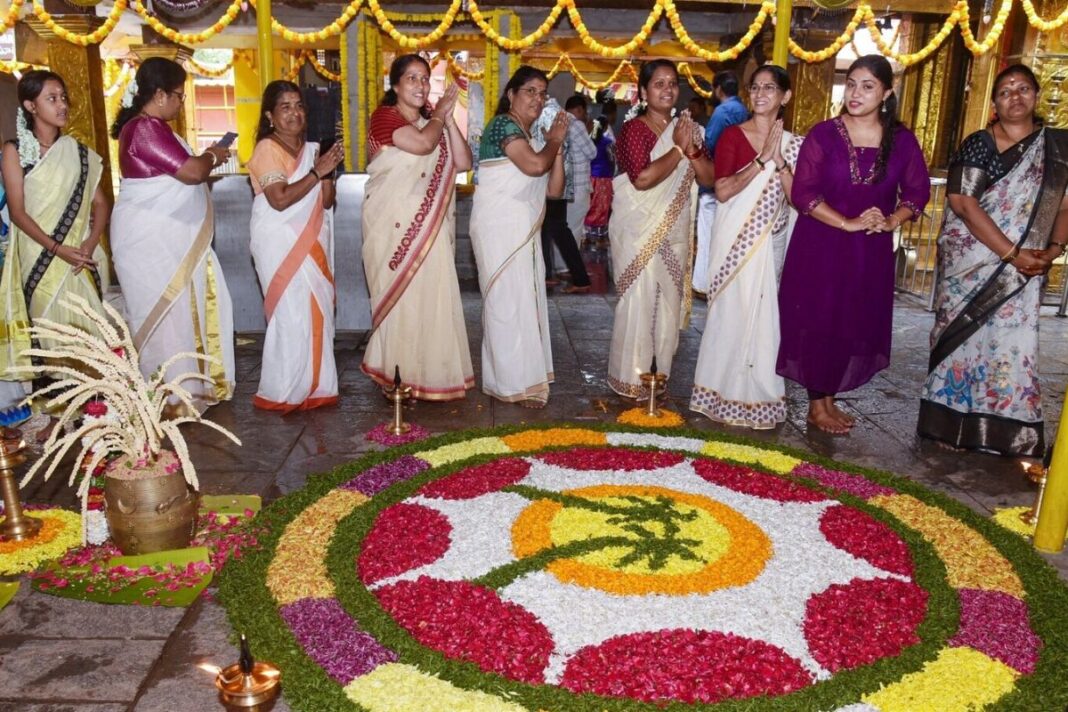
The celebration traditionally runs ten days, beginning with Atham and building toward its peak on Thiruvonam. Homes are cleaned, courtyards are decorated, and anticipation grows with each passing day. The clearest symbol of that buildup is the pookalam, a floral design laid out at the entrance of homes. It starts small and grows more detailed as Thiruvonam approaches, often described as a kind of doormat meant to reassure Mahabali that his people are thriving.
Food carries the same spirit. The Onasadya, served on a banana leaf, typically includes rice, avial, sambar, thoran, olan, pickles, chips and payasam among other dishes. What matters is not the variety of the menu but the act of everyone eating the same meal together, regardless of income or status. Kerala’s backwaters add their own flourish through vallamkali, the snake boat races that draw disciplined rowers and cheering crowds, alongside performances like Pulikali, where dancers paint themselves as tigers, and Thiruvathirakali.
The performances surrounding the festival deserve mention too. Kaikottikali, a clapping dance performed mostly by women, and various folk songs passed down through generations give Onam a rhythm that outsiders rarely see in written descriptions of the festival. None of these traditions requires a temple or a priest. They survive because families keep teaching them to their children, which is arguably a more durable form of continuity than any single religious ritual could provide.
One Festival, Several Ways In
What makes Onam unusual is how differently communities approach it while still calling it their own. Hindu households may place small images of Mahabali or Onathappan in their courtyards and offer prayers to Vamana, especially near temples such as the Vamana Moorthy Temple at Thrikkakara, which runs its own ten-day programme of processions and rituals. But most Hindu families also treat Onam as something broader than worship, filling it with new clothes, family visits and shared meals.
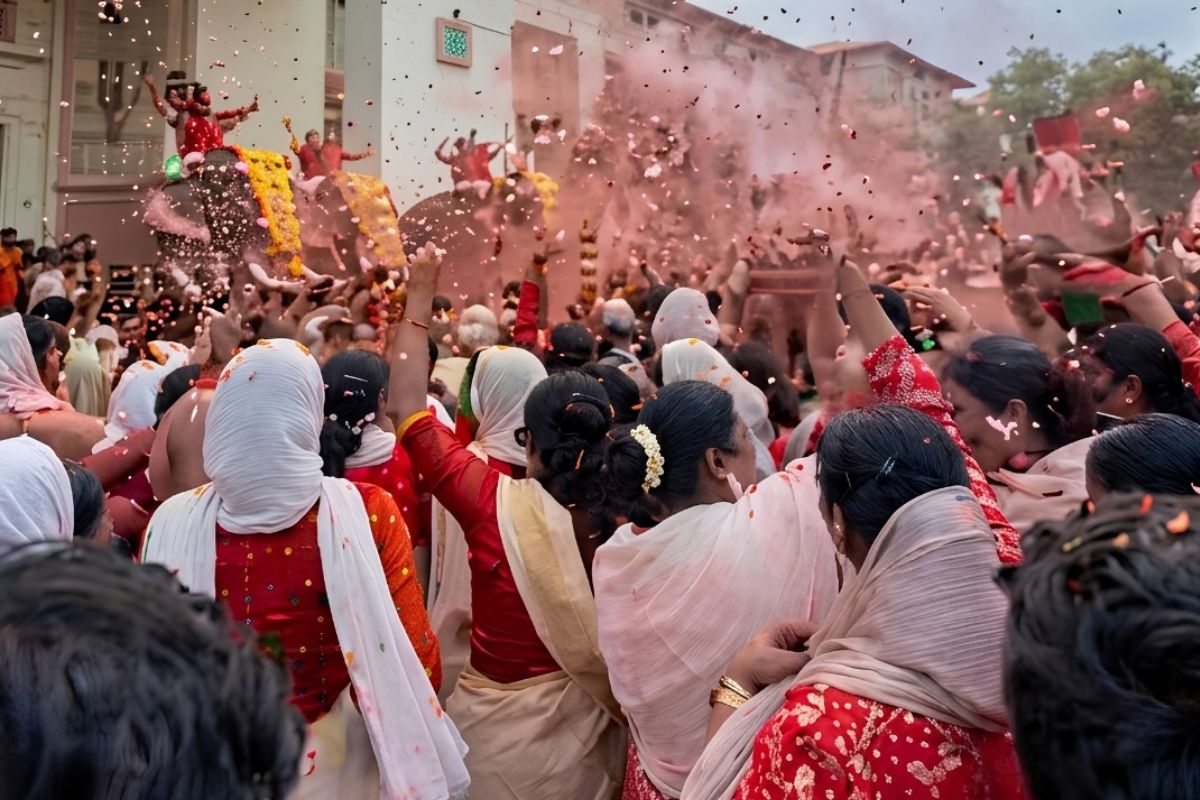
Christian communities across Kerala treat Onam largely as cultural inheritance rather than religious duty. Parishes and Christian schools often organise Onasadya, floral competitions and traditional games, and some churches use the occasion to feed families which cannot otherwise afford the feast. Reports from Christian organisations describe the Mahabali legend being read through the lens of compassion and fairness rather than devotion, values many see as compatible with their own faith.
Muslim participation tends to follow a similar pattern, expressed through culture and charity rather than worship. Students join classmates in building pookalam and performing Onam songs, and some Muslim institutions run their own celebrations entirely. In one widely cited case from Malappuram, children from different backgrounds gathered at a madrasa to create a floral carpet and dress as Maveli. In another, a mosque committee distributed clothing to fifty Hindu families as part of its own Onam effort, describing the gesture as a mark of equality and shared community.
Beyond individual households, Onam becomes a public event through schools, offices and neighbourhood groups, where the pookalam is often built collectively, and the sadya is shared without anyone needing to agree on what the festival technically means.
Why the Question Still Matters
None of this means Onam has no connection to Hindu tradition. It clearly does. Historians point to a second-century Tamil ballad describing an early version of the festival, along with temple records from the ninth and eleventh centuries that mention Vamana-related rituals. Some scholars have also proposed that older, possibly pre-Brahmanical or agricultural customs were absorbed into the festival over time, though these remain interpretations rather than settled fact.
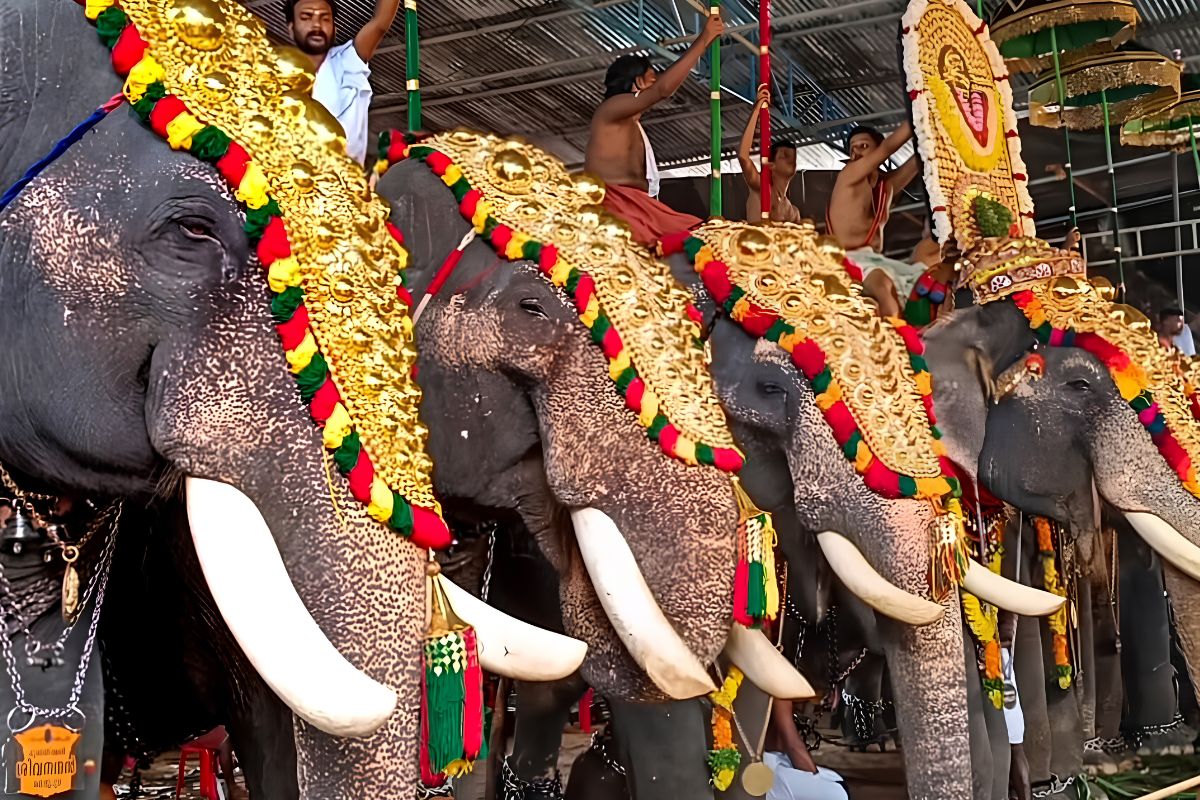
What is clear is that Onam has changed shape repeatedly, moving from a seasonal ritual to a temple tradition to a broad public celebration. Kerala formally recognised it as the state festival in 1961, bringing many local customs under one shared banner.
There is no solid historical evidence that a king named Mahabali ever ruled the whole of what is now Kerala. That absence does not weaken the story. If anything, it explains why the legend has lasted. Each year, when people say Mahabali is returning, they are really asking whether their own society still lives up to the fairness he represents. Are people with low incomes treated with dignity? Is prosperity actually shared? Can people from different faiths sit at the same table without friction?
Onam never fully answers those questions, but it keeps asking them, year after year, through flowers, food and the sound of boats moving across the backwaters. Perhaps that is the festival’s real achievement. It does not force anyone to choose between a shared culture and a personal faith. A Hindu family can honour Vamana in the morning and share a meal with Christian neighbours by afternoon. A mosque committee can hand out clothes to families of another religion without treating the gesture as anything unusual. None of it requires agreement on what Onam ultimately means. It only requires a willingness to sit down together, which is the whole point.
That may be the closest thing Kerala has to a festival that belongs equally to everyone.
Also Read: From Guns to Glamour: Surrendered Naxal Women Walk Fashion Ramp
You can connect with DNN24 on Facebook, Twitter, and Instagram and subscribe to our YouTube channel.