
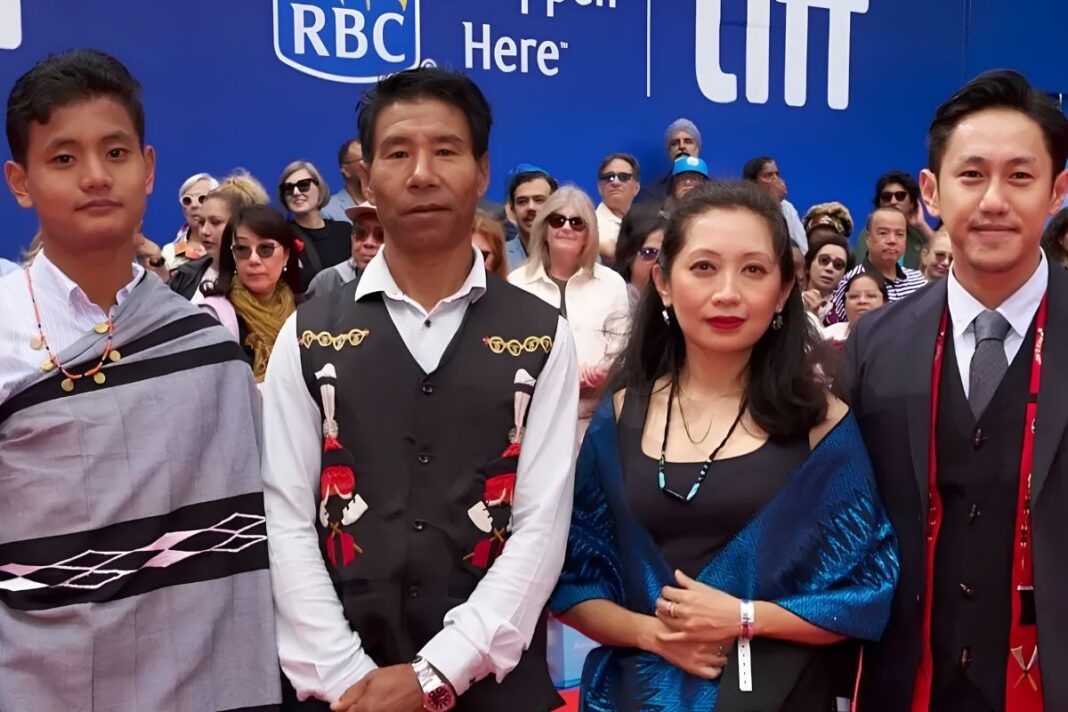

A forgotten Naga village has found its way onto one of the biggest stages in world cinema. On September 20, 2026, a small film shot largely in the Konyak language, with a cast drawn mostly from remote hill settlements, became the first Indian production to win the Platform Prize at the Toronto International Film Festival. The film is called Angh, and its victory has done something few people expected. It has placed a quiet story about faith, memory and a fading way of life on the road to the 2027 Academy Awards.
A Chief Caught Between Two Worlds
Angh is set in the 1960s and follows Anghba, an aging Konyak village chief who watches the world he knows begin to disappear. His village has emptied around him. He is among the last people still holding on to its traditional customs. When an American missionary arrives and begins introducing new religious beliefs, Anghba is forced into a decision that feels almost impossible. Should he defend the faith and practices passed down by his ancestors, or accept the changes reshaping the people around him?
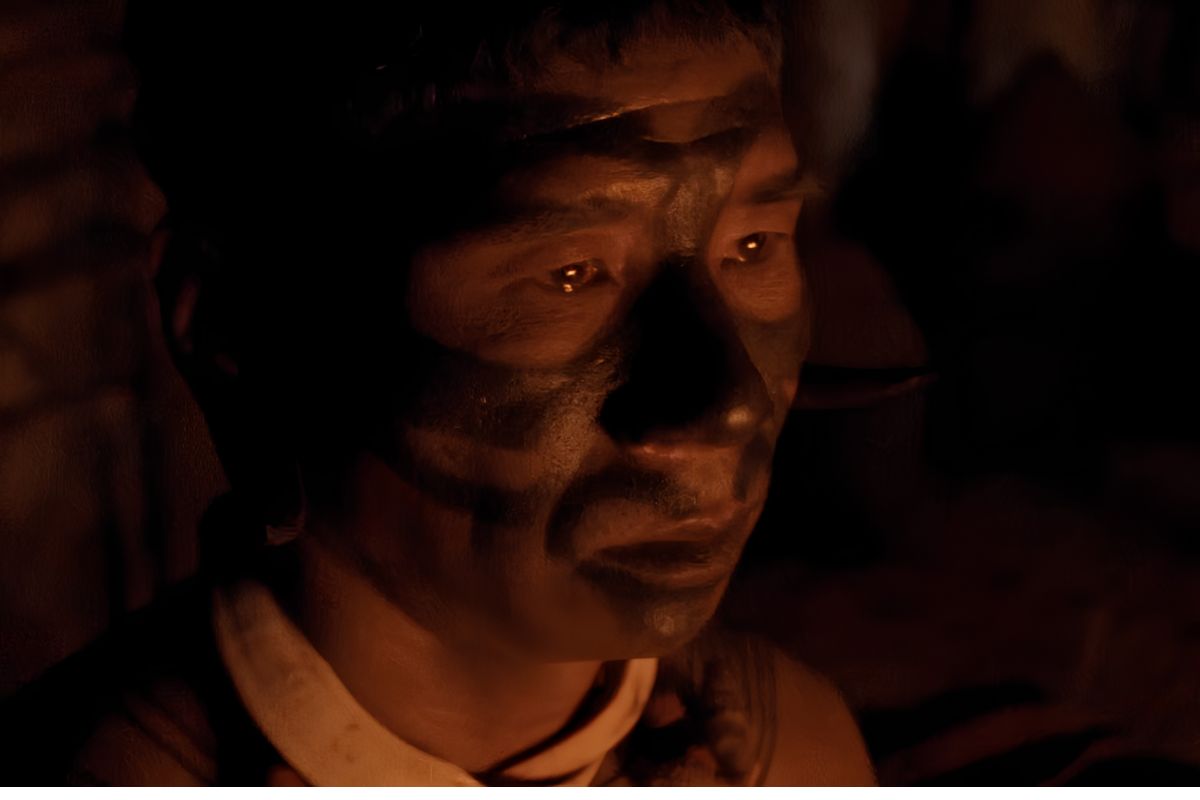
At the center of this dilemma sits a father and a son whose relationship carries the emotional weight of the entire film. Their private tension mirrors something much larger happening across Naga society, where inherited tradition, Christianity, modern life and collective memory collide, often without any easy resolution. Through this small domestic story, director Theja Rio raises a bigger question: what a community loses, and what it keeps, when outside forces test its identity.
A Story Told in Its Own Language
What sets Angh apart from most films about India’s Northeast is that it does not treat the region as scenery. Spoken almost entirely in Konyak, the film gives its characters and their world a voice rather than turning them into background for someone else’s story. The Konyak Naga community, one of Nagaland’s major indigenous groups, has long been associated with the Mon region and carries a cultural tradition built on language, craftsmanship, oral history, and distinctive forms of dress. In Angh, these are not decorative touches. They form the film’s emotional core.
Choosing the 1960s as the setting was not incidental. It let Rio explore a period when older belief systems were being tested by new religious and cultural influences, a moment when questions of identity became urgent and personal. Anghba’s struggle is not simply a disagreement with his son. It represents a wider generational puzzle. Can people accept change without losing the foundation that holds them together?
The film resists giving an easy answer. The film presents change as neither villain nor savior. For Anghba, new beliefs threaten to erase everything he understands as home. For the younger generation, that same change may open a different way of imagining the future. Neither view is treated as entirely right.
Villagers Who Had Never Faced a Camera
One of the most striking choices behind Angh was its casting. Alongside Scottish actor Douglas Henshall, familiar to audiences from the series Shetland, the film features indigenous Naga performers including Anghlong Konyak, Sobino Rengma, Genpai Konyak, Amah Konyak and Wangton Konyak. Many had never stepped onto a film set before.
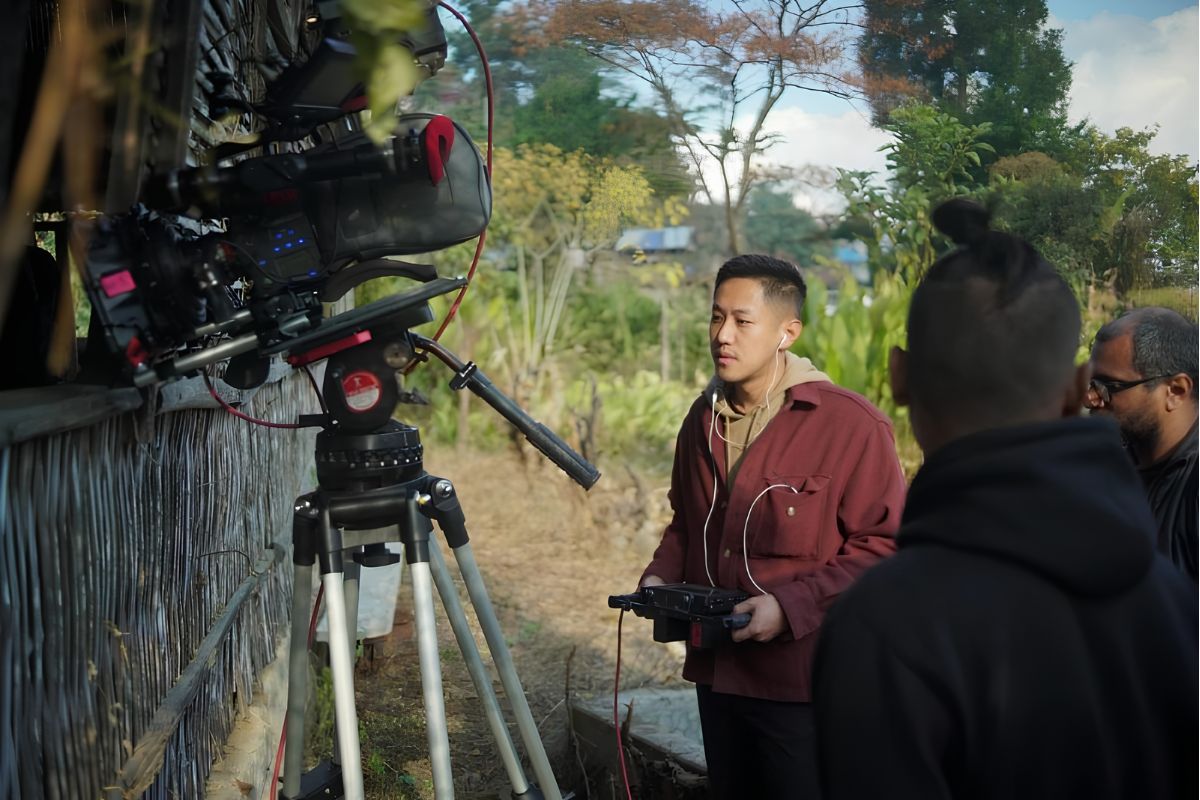
Rio has explained that Nagaland has almost no established film industry, so there was no large pool of trained actors to draw from. His team traveled to villages and cast residents directly, sometimes finding only three or four possible performers in a single location. Most had no idea what working on a film would even involve.
That decision appears to have paid off. The performers did not need to study or imitate the cultural world of their characters. They already lived inside it. Their familiarity with the language, the landscape and the emotional rhythms of Naga life let their performances grow out of lived experience rather than research. Rio has said that working with people culturally close to their roles gave him something a trained actor building a character from scratch could not easily offer: a presence that felt whole rather than constructed.
This approach also raises a question that reaches beyond one film. For decades, outsiders have often made stories about the Northeast, with local communities appearing as subjects but rarely controlling how their own story is told. Angh points toward a different model, one where the community shapes the narrative from within.
From a Short Film to a Feature
Angh’s origins trace back to a personal journey. Rio was born and raised in Kohima, moved away as a schoolboy, studied in Delhi and later trained at the National Film and Television School in the United Kingdom. A visit to Nagaland’s remote Mon district changed the course of his work. He has described the experience as something close to stepping into a time machine, where past and present seemed to exist side by side. He noticed villagers still practicing customs that even he found unfamiliar, including traditional face tattoos, and the encounter forced him to think seriously about how much had shifted in Naga society since Christianity spread through the region.
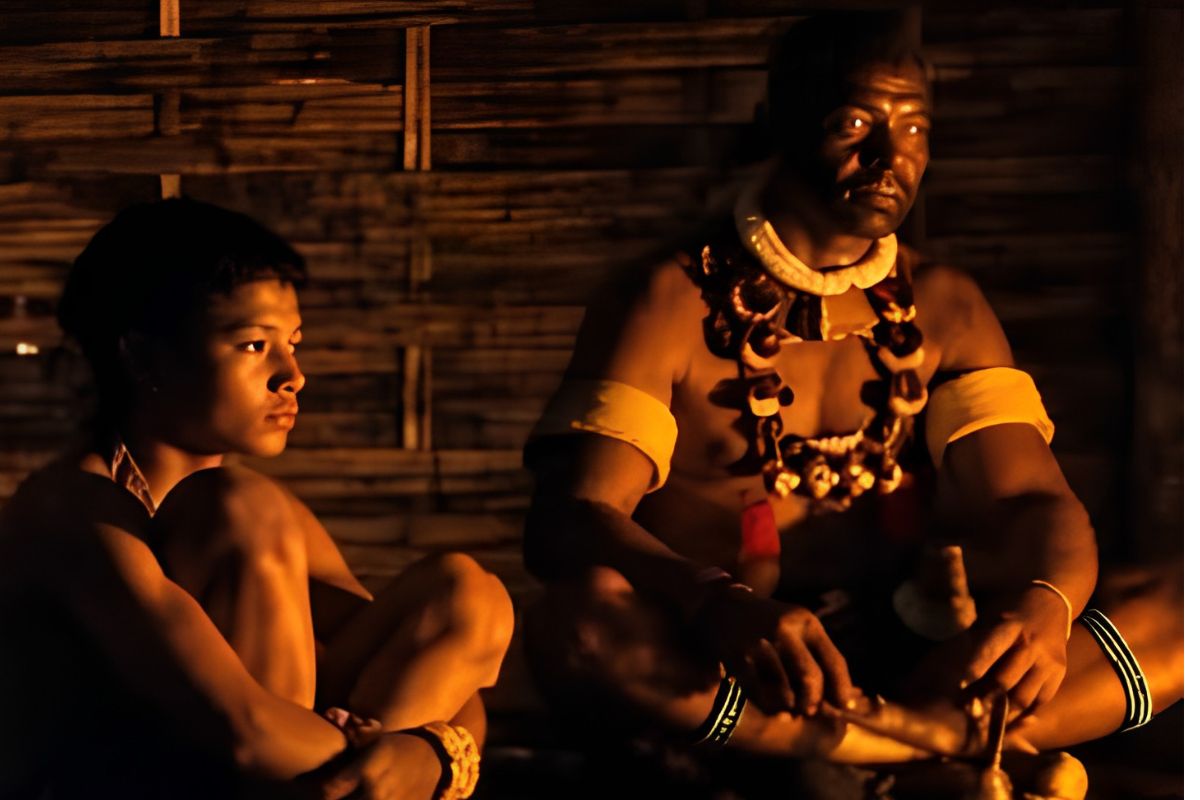
That visit became the foundation for a short film, also called Angh, which Rio made in 2021. It won a Special Jury Award at the Clermont-Ferrand International Short Film Festival in France, giving the project its first taste of international attention. The short established the central premise that would later grow into the feature: a traditional chief confronting the arrival of Christianity and the transformation it brings to his community.
For the feature, Rio expanded that idea considerably. The arrival of a missionary sparks a wider unraveling, as villagers convert and leave the settlement. At the same time, Anghba stays behind, increasingly isolated with only his ailing wife and mute son for company. Rio completed the screenplay in 2024, co-written with James Davis, and shot the film on 16mm across 103 minutes, giving it a textured, period quality suited to its setting along the old border with Burma.
Rio has said he sensed, even while making the short, that a fuller story was waiting to be told. He has also said he wanted to keep the film honest rather than one-sided, acknowledging that the arrival of one belief system inevitably comes at the expense of another. To get the detail right, he worked closely with members of the Konyak community throughout production.
What the Toronto Win Actually Means
The Platform Prize, awarded to films noted for distinctive, director-driven filmmaking, came with a jury citation praising Angh’s fresh perspective and its portrait of a rarely seen world. Beyond the recognition itself, the award carries a practical consequence. Since May 2026, the Academy has allowed films to qualify for Best International Feature consideration through wins at a set list of major festivals, including the Platform Award at Toronto, alongside prizes such as the Golden Bear, the Palme d’Or and the Golden Lion.

This matters because India’s official Oscar submission for 2027 is the Marathi film Gondhal, chosen ahead of Angh and Ikkis in the final stage of selection. Toronto’s award gives Angh a separate path forward, independent of that national selection process. It is worth being precise about what this means. Eligibility is not the same as nomination. The Academy must still validate the submission, after which voting members will narrow the field to a shortlist of fifteen films on December 15, 2026, before five eventually become nominees.
A Wider Story Than an Awards Race
Whatever happens in the coming months, Angh’s significance already extends beyond its awards prospects. It shows that a film does not need to soften its language or setting to reach audiences far beyond its origin. For years, India’s cinematic image abroad has largely rested on Hindi, Tamil, Telugu, Bengali and Malayalam films, leaving the Northeast on the margins despite its remarkable cultural range.
At its heart, Angh is a film about what survives when a world begins to vanish. Its answer is not found in nostalgia. It survives in language, in strained relationships and in the willingness of a community to tell its own story on its own terms. For Nagaland, that alone marks the beginning of something new.
Also Read: Himachal’s Sair Festival: Where a Lemon Predicts Your Fortune
You can connect with DNN24 on Facebook, Twitter, and Instagram and subscribe to our YouTube channel.