
What happens when a god is invited to a fair and accepts? In Chhattisgarh’s forests, you can see the answer every year. Wooden frames and bamboo poles rise on human shoulders, the drums begin, and a village’s guardian deities set off down the road to visit their neighbors.
The festival is called Madai, a word that broadly means a social gathering. In the Bastar region, it is also called Pen Madai, since pen refers to the deities. Behind it lies a plain idea. Gods, like people, need to meet one another.
A festival that waits for the harvest
Madai is usually held after the Kharif harvest, when fieldwork has eased, and families have grain, forest produce, or a little money to spend. Sources that document the festival place it between November and April, though exact dates change from one village and region to the next.
For communities whose lives follow the farm and the forest, the timing matters. The season gives people a reason to celebrate a year of labor, buy household goods, visit relatives and prepare for weddings. Dates are also chosen carefully so one Madai does not fall on top of another. That way deities, traders, performers and visitors can pass from fair to fair, and traders have long carried salt, spices, cloth, utensils and jewelry along the same route.
So the sacred and the practical share one ground. A Madai has prayers and processions, and it also has a market, a meeting place and a public stage.
Carrying the gods
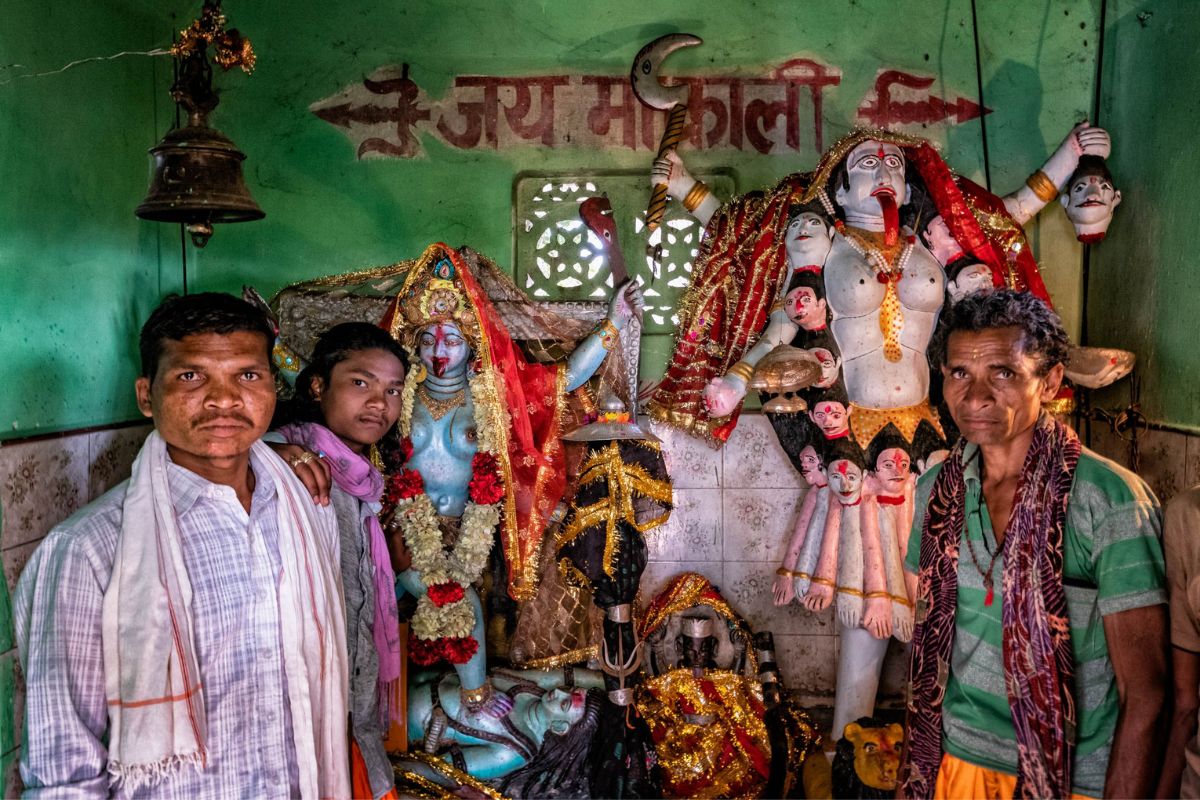
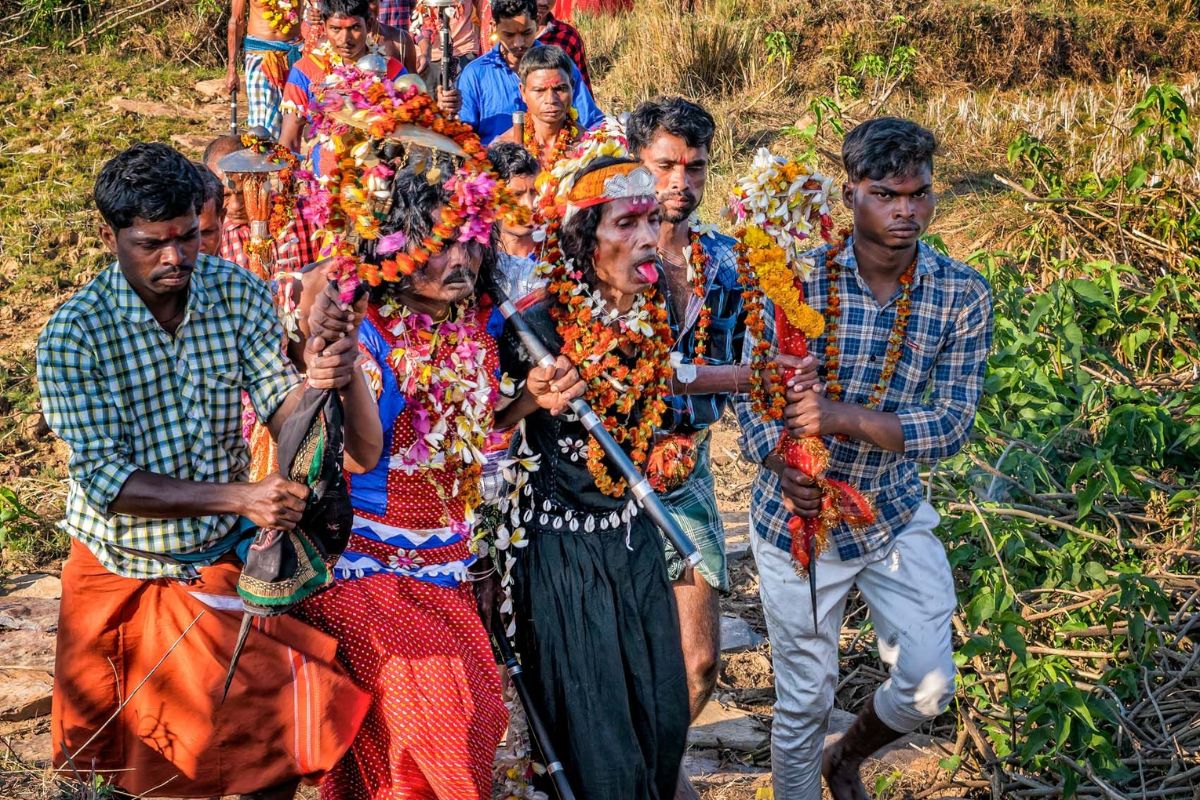
The ritual center of Madai is the procession. Village gods and goddesses are represented by sacred objects called anga and dang. After the proper ceremonies, these objects are understood to hold the presence and power of ancestral and guardian deities.
A dang is commonly described as a long wooden pole with a triangular flag. An anga is a wooden frame linked to the household or clan deity, and in some accounts four women carry it, each holding a corner. Forms and practices differ from one community to another.
The objects arrive from different households and villages at an open space often called the deo sthal. Visitors welcome the deities with flowers, rice, vermilion, and other customary offerings. Then the procession enters the fairground to the sound of drums and traditional instruments. The deities are taken around the market in ritual circles, which people believe protect the gathering and its visitors from harm. Documented accounts say the procession may circle the fair several times before the deities return to their resting place.
The fair becomes sacred because the gods pass through it.
Drums, dance and possession
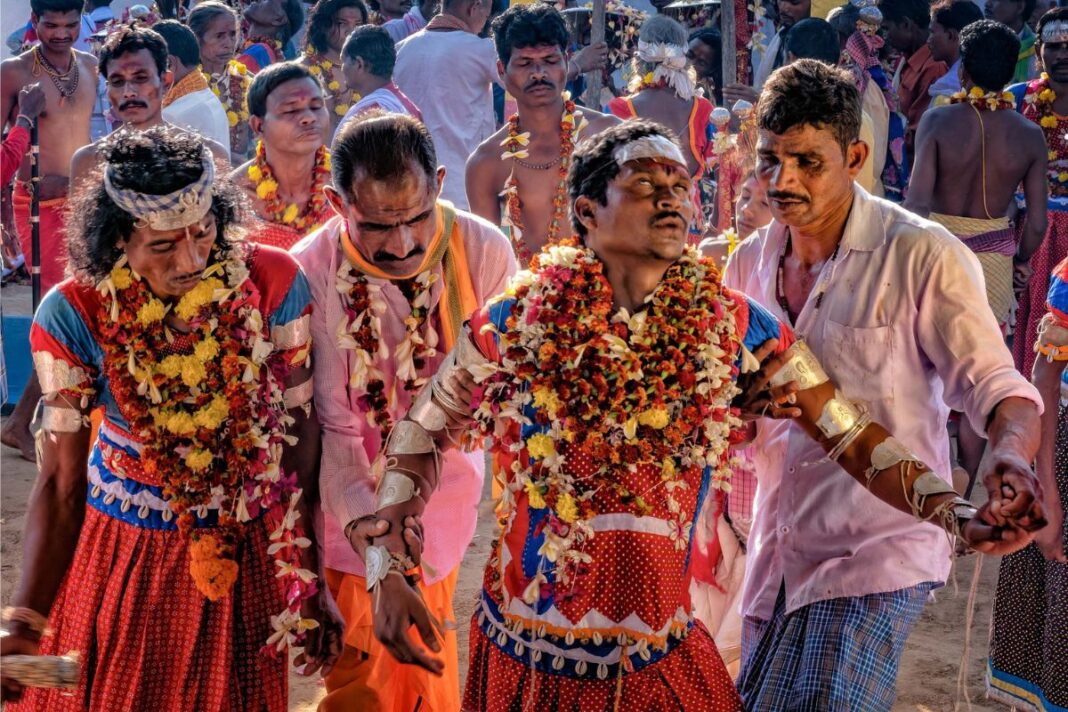
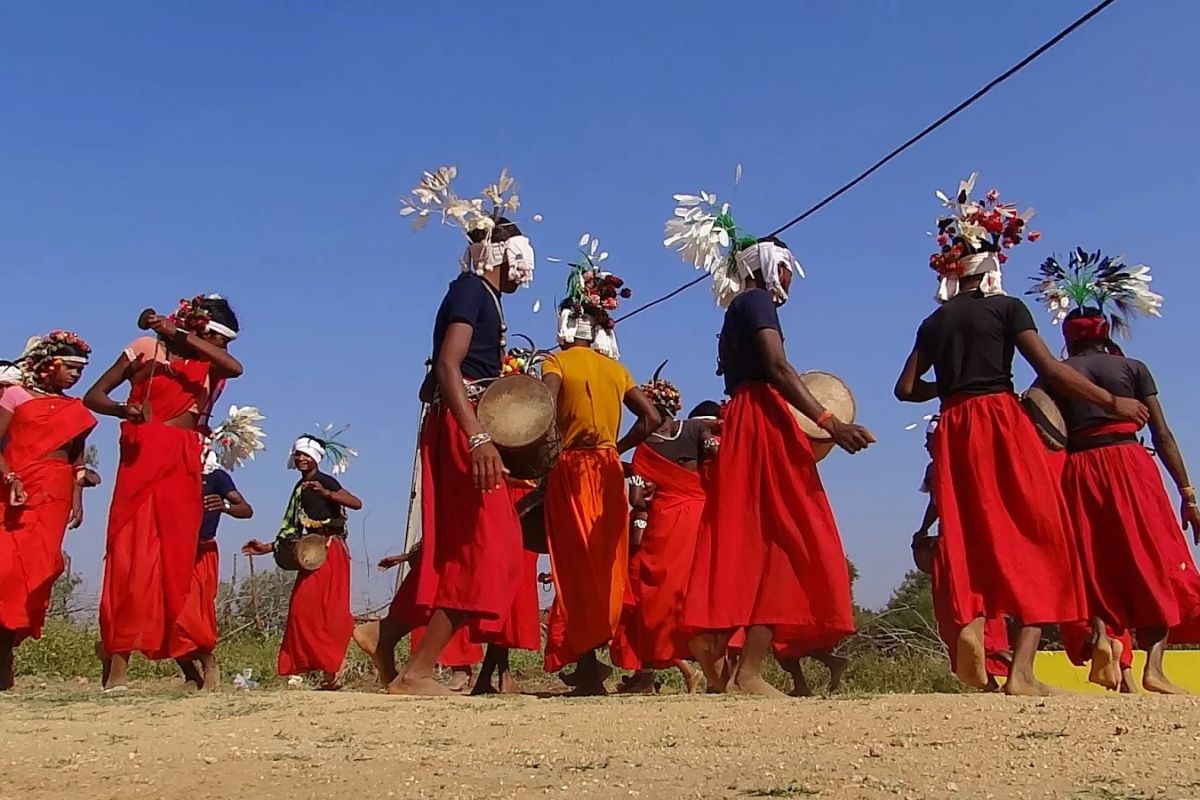
As the procession advances, the drumming grows louder, and people begin to dance. Some devotees enter a state that the community understands as possession by the deity.
An outsider may call this trance. The participants see it differently. To them, the devotee becomes a medium through whom the deity’s power speaks. People treat such moments with respect and may offer flowers to those who carry or represent the divine presence. The carriers take part in a meeting between the village’s visible world and the unseen world of ancestors and guardian powers.
Many hands make this possible. Drummers, flower growers, brewers, artisans, priests, carriers, and householders each have a customary task. Madai documentation records that the ritual cannot be completed without people from different social and ethnic groups. Its religious framework is closely tied to Gond traditions, yet a village fair depends on everyone.
A traveling calendar
In Bastar, Madai has long been held as a series of fairs at many sites. The cycle starts in one place and moves through villages, towns and administrative areas. Sahapedia’s documentation describes fairs traveling through Narayanpur, Antagarh, Bhanupratappur, Kondagaon, Keshkal, Bhopalpattanam and Dantewada, with the season ending at Geedam.
The route has a religious and a practical logic. Visiting deities must go back to their villages, and traders and performers move on to the next gathering. Bullock carts once carried much of this traffic. Modern transport has altered the speed and size of the fairs, but the idea of a festival on the move has survived.
Some accounts name the Raj Madai of Jagdalpur as the first major gathering. It is linked to the older political and ritual order of Bastar, in which rulers supported ceremonies for guardian deities. Afterward, the sacred objects and their attendants return home, and the local Madais begin. Villages become joined by shared ritual duties as well as by roads and markets.
What is bought, sold, and bartered
Madai is a lively rural market. Villagers sell paddy, tamarind, harra, behda, honey, millets and herbs. They buy vegetables, spices, salt, sugar, cooking oil, utensils and clothes. Artisans offer iron farm tools, earthen pots, cookware, metalware and silver jewelry. At larger fairs, traders from outside the region run major stalls. Accounts mention Sindhi and Marwari traders selling daily goods, metalware, and jewelry, along with sweet shops, transport services, and mobile phone stalls.
For a remote household, the fair turns harvest and forest produce into cash, and cash into goods that are hard to find nearby. Older habits remain too. In some places people still swap forest produce for salt, sugar and oil. Communities without metalworking buy iron tools from those who have it, and potters supply the pots. Different occupations and social groups are tied into one regional network.
In recent decades, larger fairs have attracted corporate and state-linked commerce. Traders may sponsor stages or government stalls in return for space to show tractors, motorcycles, farm implements, phones and medicines. Forest products and handicrafts are now also sold to city visitors.
Relatives, matches and a full plate
After months of fieldwork, relatives from distant villages meet, exchange gifts and share meals. For many families, Madai is one of the few dependable occasions in the year to see them.
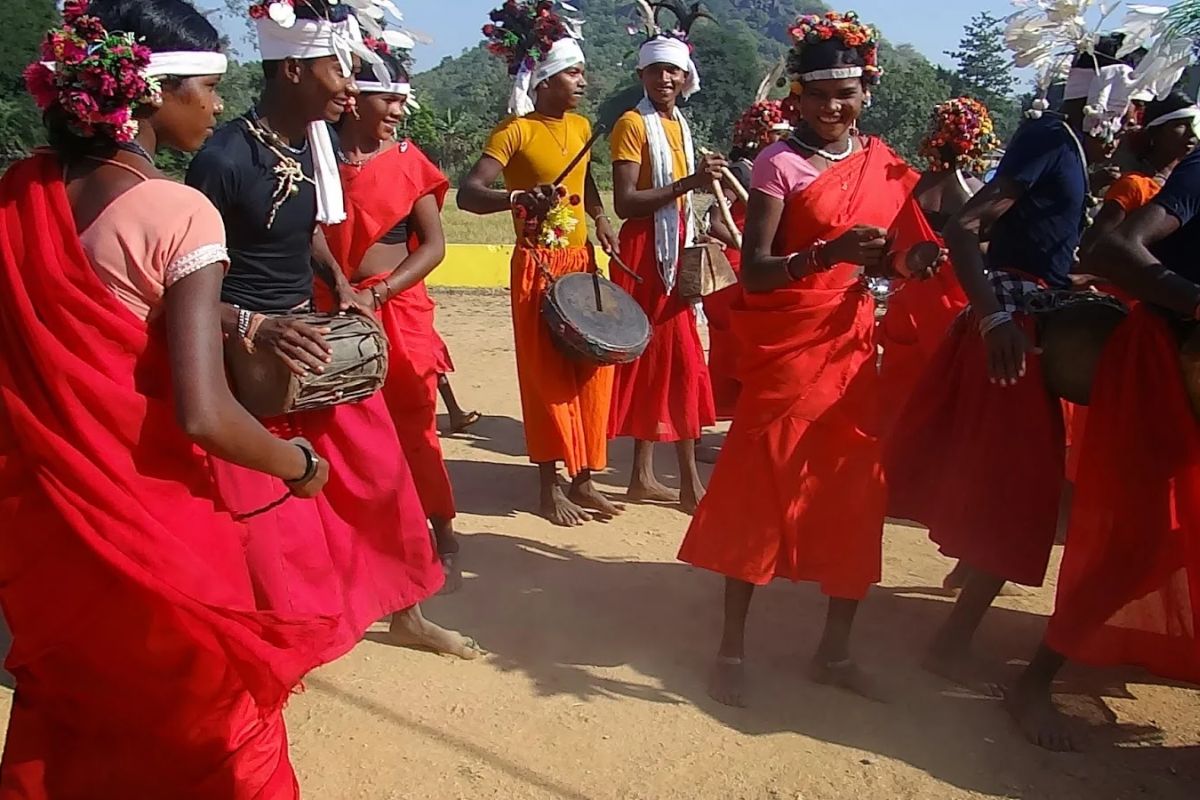
It is also a recognized place for marriage alliances. Young men and women meet, families talk over possible matches, and wedding gifts are bought on the spot. In some documented customs, a man offers betel leaf to a woman he likes, and her acceptance may signal interest. The fair offers a public setting where courtship is socially allowed.
Hospitality is a duty. The day after the main celebration is called basi Madai, when households feed and honor their guests. Families prepare meals of at least five dishes, and guests are treated with a respect that, in local understanding, comes second only to that given to the gods. Preparation starts early. Women clean and paint homes, wash furnishings, arrange food and manage the budget. Families may sell paddy, tamarind and forest produce in advance to pay for hospitality, new clothes and gifts.
Public arrangements fall largely to the men, who collect contributions and prepare the fairground, water, lighting, tents, seating, sound systems and invitations. The host village gathers money from residents and small fees from vendors, and some villages run bhandaras, community meals cooked from grain donated by households. The host village and its neighbors share the work of welcoming deities, visitors and relatives.
Nacha and public debate
Madai is also a main source of recreation. People watch nacha folk theatre, dance and music, eat at food stalls and, in larger towns, enjoy rides and staged shows. Nacha performances may run through the night and often take up dowry, love marriages, education for girls and inequality. In villages with few other public performances, the theatre once supplied entertainment, and it still gives the fair a place for community debate. For families shaped by wage labor and farm work, the festival is a rare break from daily pressure.
Tradition on the move
Roads, transport, commercial entertainment and official support have changed Madai. Village celebrations often keep an intimate ritual character. Fairs in towns and cities draw larger crowds, with amplified music, rides, commercial stalls and modern stage shows. Greater visibility can help local crafts, food and performance, and it brings income to traders and performers. Commercialization may also push the religious core into the background.
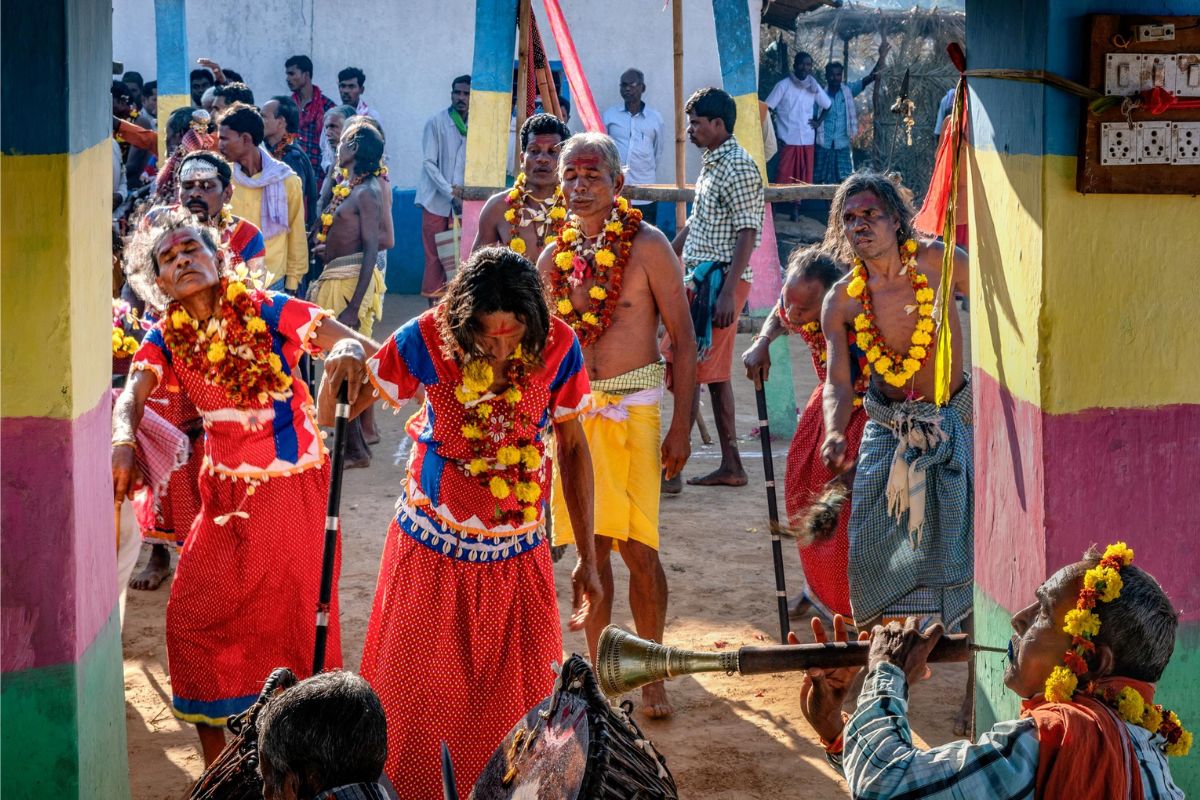
Even so, the central ritual holds. Deities are still invited, carried, welcomed and taken around the fair. Drums still announce their arrival. People still gather to ask for protection, give thanks and renew ties. Madai keeps culture alive by letting it travel with the people who practice it.
In Chhattisgarh, the gods of Madai have no single shrine. They pass through villages, cross social lines, and enter public spaces; along the way, they gather farmers and traders, elders and children, priests and performers, families and strangers. For a few days, each village becomes a meeting place for gods and human beings.
Also Read: Why Nagaland’s Sekrenyi Is More Than a Festival: The Angami Tradition of Purification
You can connect with DNN24 on Facebook, Twitter, and Instagram and subscribe to our YouTube channel.