


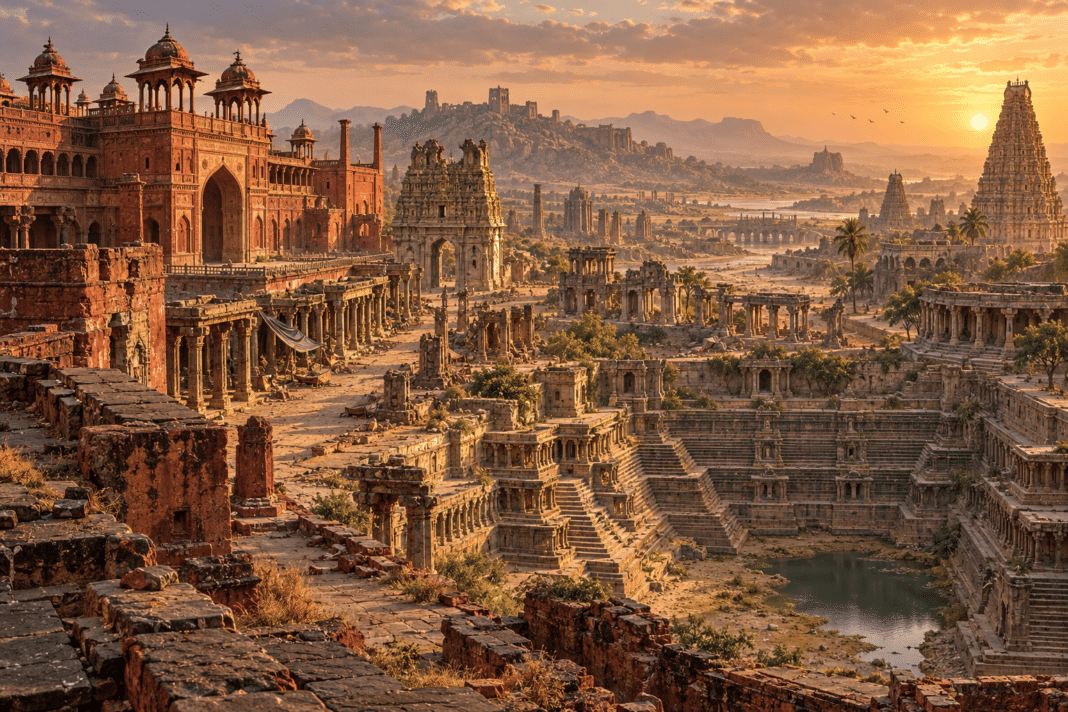

Some cities took generations to build and only months to empty. One emperor raised a magnificent capital and walked away from it within a decade. A river changed its course, and a great stepwell went dry. What happens when a city that seemed built to last begins to fade? The ruins of medieval India give answers that are far more varied than the usual tale of a single defeat.
Cities That Shaped an Age
Between the 6th and 18th centuries, powerful kingdoms rose across India, and each wanted a capital worthy of its name. These cities handled taxes, worship, crafts, learning and trade over long distances. The Cholas built a sea-facing, temple-centred state in the south. The Chaulukyas of Gujarat made Patan a centre of learning. Vijayanagara rose as one of the most admired capitals of its day, and the Mughals planned Fatehpur Sikri as an imperial seat.
None of these places grew by chance. Temples showed the ruler’s authority and faith, stepwells held water, roads led to markets, and forts guarded people and grain. Because so many parts depended on one another, a city seldom fell for one reason. War, thirst, changing trade and the shifting of royal courts usually worked together.
Hampi: Splendour and Sudden Ruin
Start with Hampi, in present-day Karnataka, and ask how a city so rich vanished so quickly. From the 14th to the 16th century, the rulers of Vijayanagara filled it with temples, palaces, aqueducts, markets and military works. Travellers from distant lands wrote of it with wonder. UNESCO calls it the last capital of the Vijayanagara kingdom, a place whose wealth and buildings drew praise far beyond India.
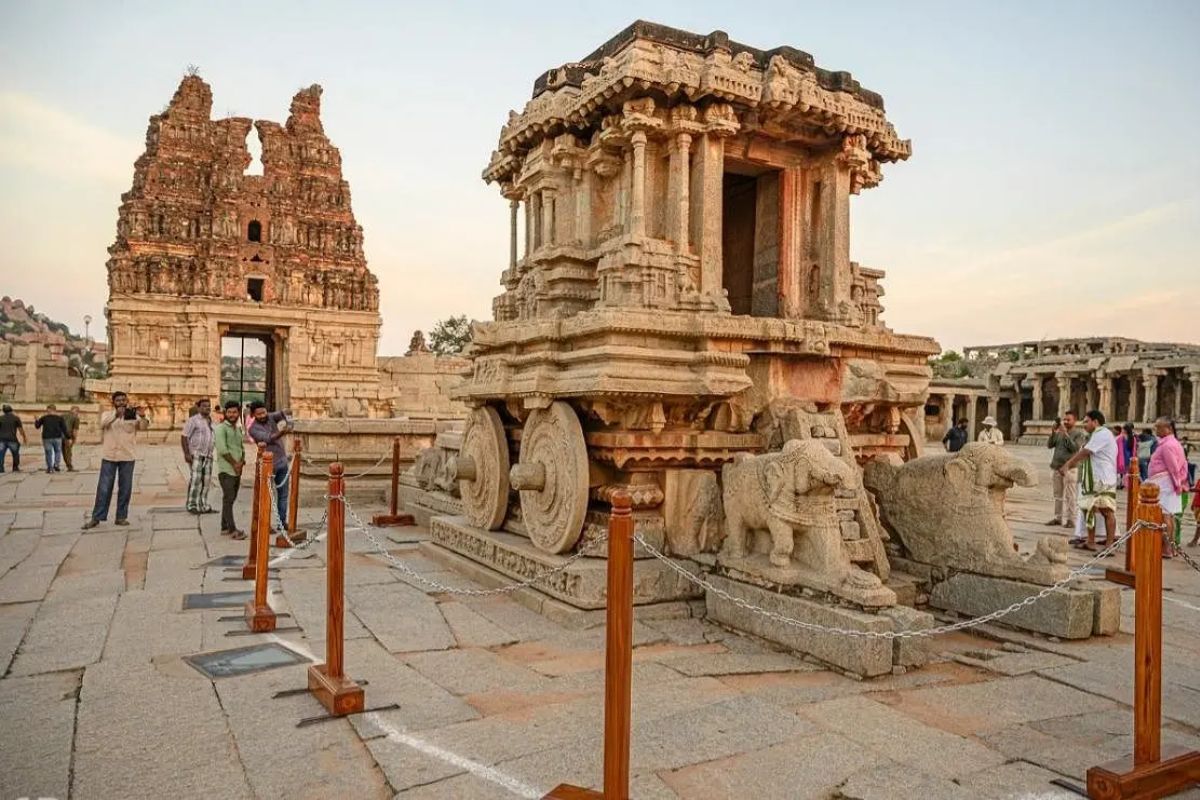
Then came 1565. At the Battle of Talikota, a confederacy of Deccan sultanates defeated Vijayanagara. UNESCO records that the capital was plundered for about six months and then abandoned. The empire’s central authority broke, the patronage that paid for temples and public works dried up, and power passed to successor states and local chiefs.
Hampi’s end was mostly political and military. Yet the ruins hold a wider lesson. The city’s greatness rested on its armies and treasures, and also on the daily work of trade, farming, worship and administration that kept thousands of people fed and governed. When that machinery cracked, the stones stood where they were, but the city vanished.
Fatehpur Sikri: A Capital Built for a Moment
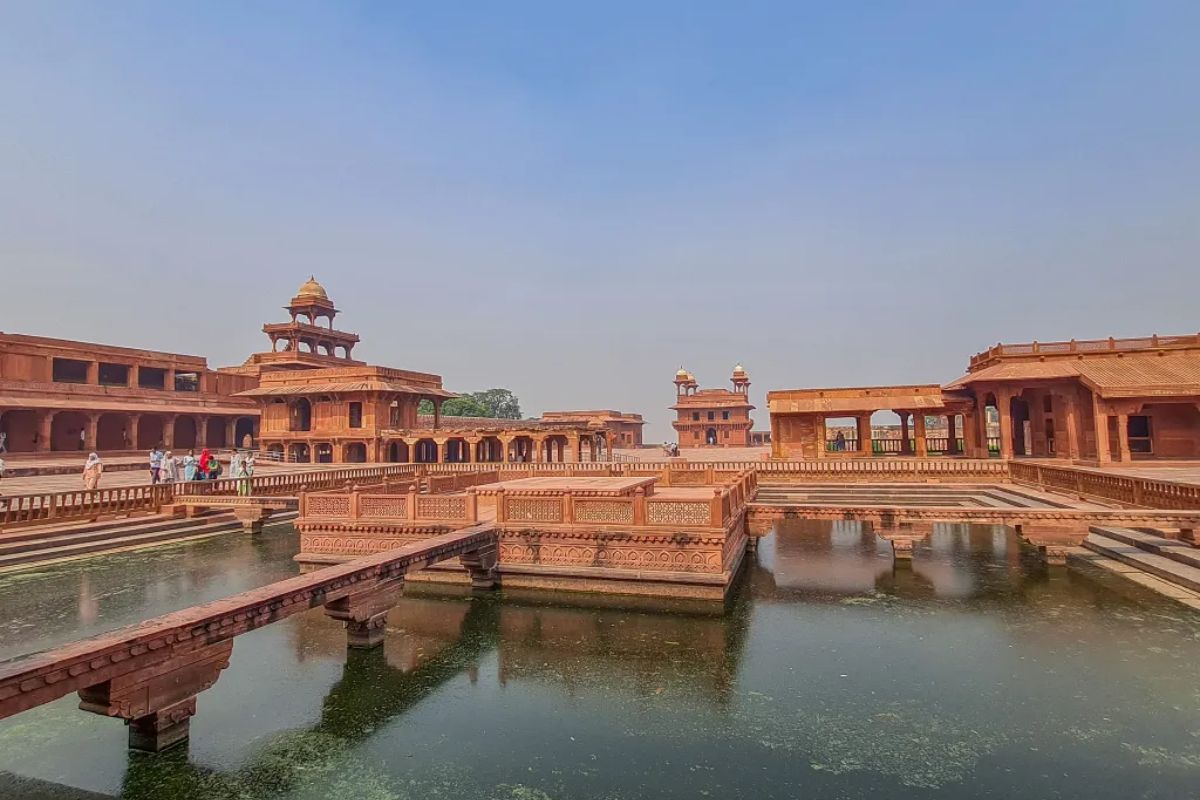
Fatehpur Sikri raises a stranger question. Why would an emperor abandon a city he had only just finished? Akbar built it between 1571 and 1573 near Agra and called it the City of Victory. It served as the Mughal capital for about ten years. In 1585, Akbar moved the capital to Lahore, and Fatehpur Sikri became a place for occasional royal visits.
Its planning drew wide praise. UNESCO notes a rectangular layout, a grid of roads and lanes, and good drainage and water systems. Palaces, courtyards, mosques and public spaces joined Persian, Central Asian and Indian traditions into a Mughal style all its own.
Popular tales blame water alone, and the ridge on which the city stands did have few natural sources. Historians advise caution. Akbar’s campaigns and his need to stay close to the northwest frontier also counted. The fairest reading is that a shortage of water and the pull of politics together prompted the move to another capital.
The story shows how far a ruler’s ambition could reach and where it stopped. Akbar could order a splendid capital into existence, yet he could not order rain, change the rock beneath it or set aside the demands of an empire.
Patan and the Vanishing River
In Gujarat, Anhilwara Patan, the old Chaulukya capital, lost its place in a quieter way than Hampi did. Around 1000 CE it ranked among the largest cities of the subcontinent, with about 100,000 people. It was known for Jain learning, manuscripts and ambitious architecture.
Its best-known surviving monument is Rani ki Vav, a stepwell raised in the 11th century as a memorial on the banks of the Saraswati River. It was built as an inverted temple, with seven levels of stairs and more than 500 principal sculptures showing religious, mythological and everyday themes.
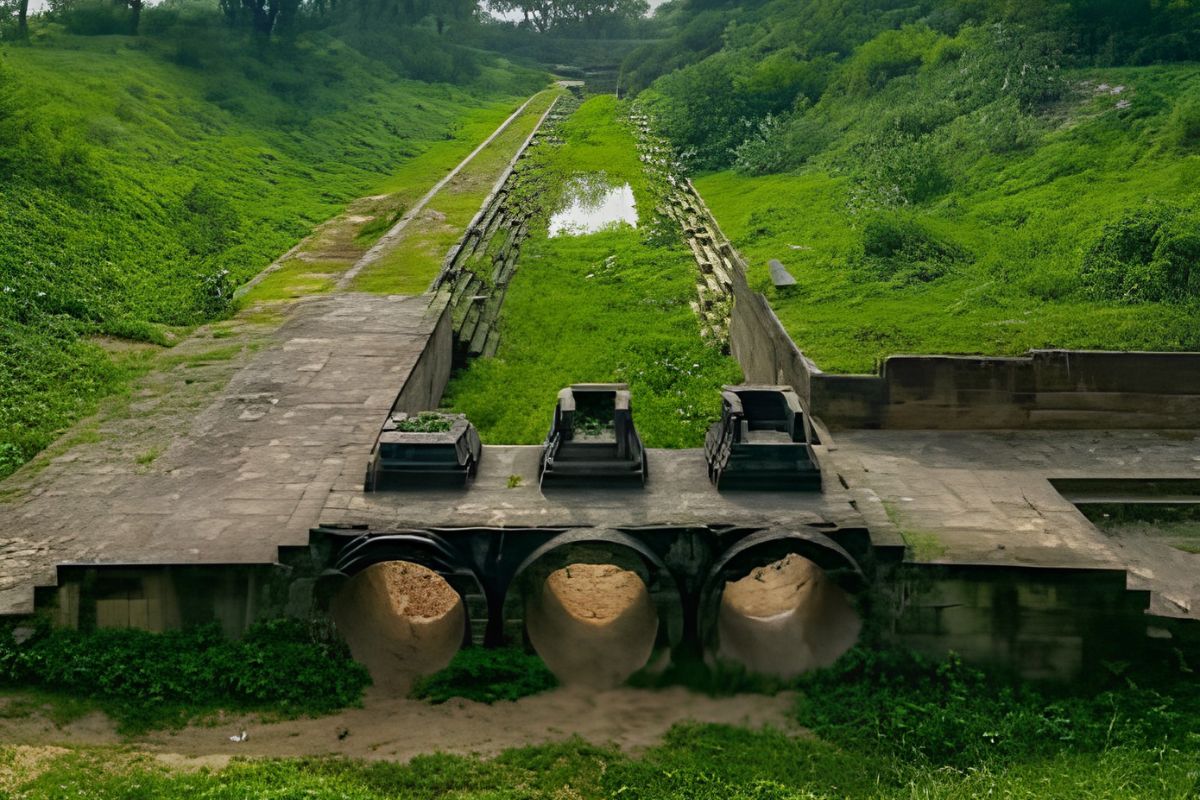
Geotectonic changes in the 13th century altered the bed of the Saraswati, and the stepwell stopped working as a reservoir. In a dry region, this was no small matter. It impacted the base of city life. Patan shows that medieval cities leaned heavily on rivers, tanks, wells and catchments, and that these works mattered as much as any palace or shrine.
Dholavira: Memory of an Older Urban Tradition
Dholavira is older than the medieval age, since it belongs to the Harappan period, but any account of lost Indian cities has to include it. It stood on Khadir Island in the Rann of Kachchh in Gujarat and was inhabited from about 3000 to 1500 BCE. It is among the best-preserved Harappan towns in South Asia.
Its fortified city, reservoirs and careful layout show a people who learned to live in a dry land. UNESCO’s assessment describes a history of growth, a peak and a slow decline, seen in the changing plan of the city and its buildings. Scholars connect that decline with wider pressures from climate and environment, including less rainfall and changes in river systems, which hurt farming and settlement.
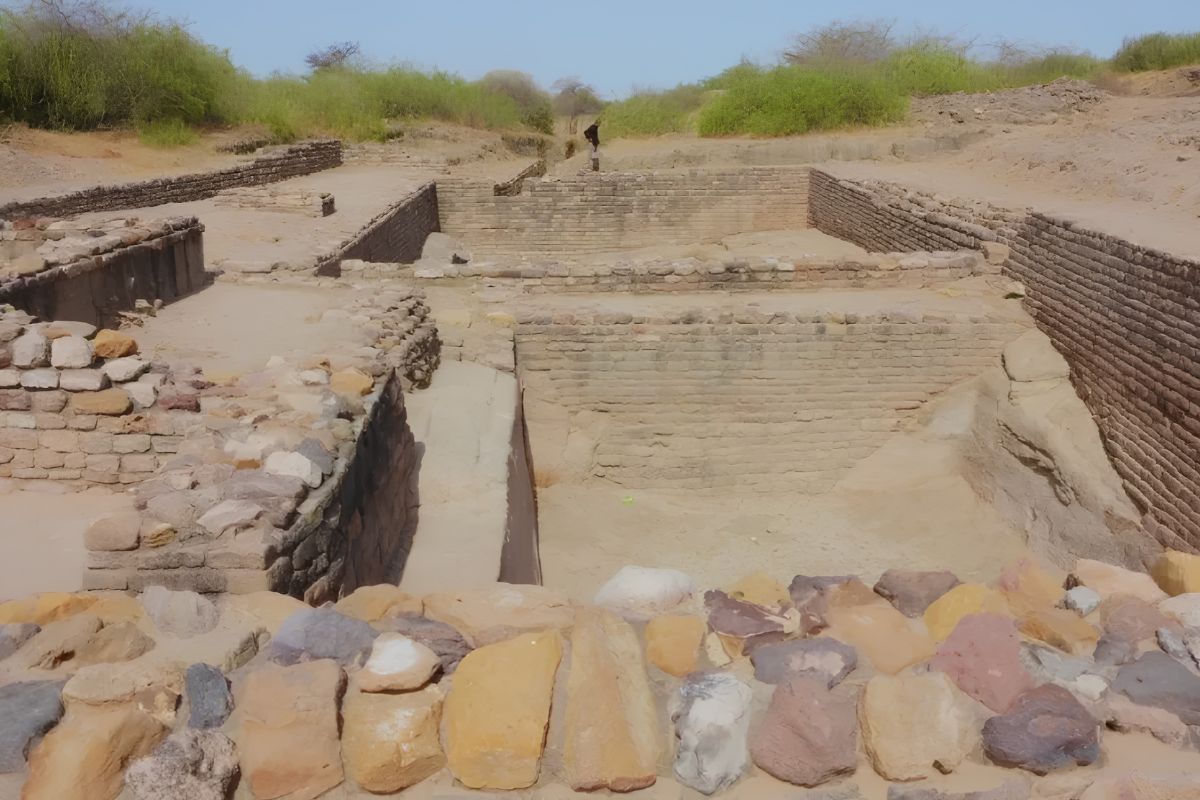
The word “lost” needs care here. The people of Dholavira moved, adapted and joined later cultural landscapes. What ended was a particular way of city life, one that had solved challenges of storing water and surviving in desert country.
Ruins as Living Lessons
These cities deserve more than a sigh. Their remains record the engineering, faith, art, commerce and governance of societies that treated a city as the highest expression of their civilisation. Hampi’s temples, Fatehpur Sikri’s planned streets, Patan’s stepwell and Dholavira’s reservoirs all say so.
Their end also speaks to our own time. Climate stress, falling groundwater, unplanned growth and neglect of old water systems prevailed in medieval India too. Cities do survive when their communities guard their resources, adapt to change and pay for shared works.
A civilisation is judged by what it builds and also by how wisely it keeps what it builds. In ruined arches, dry reservoirs and silent courtyards stands an old invitation to build boldly and to look after the ground beneath every achievement.
Also Read: India Built Underground Palaces of Water Long Before Modern Water Management
You can connect with DNN24 on Facebook, Twitter, and Instagram and subscribe to our YouTube channel.