
The tradition of composing Urdu poems to praise Hindu deities is a cherished part of India’s literary heritage, dating back over a thousand years. Among the revered deities celebrated in these verses are Krishna, Brahma, Vishnu, Mahesh, Rama, Hanuman, Parvati, Ganga, Shakti, Lakshmi, Saraswati, Durga, and Kali.
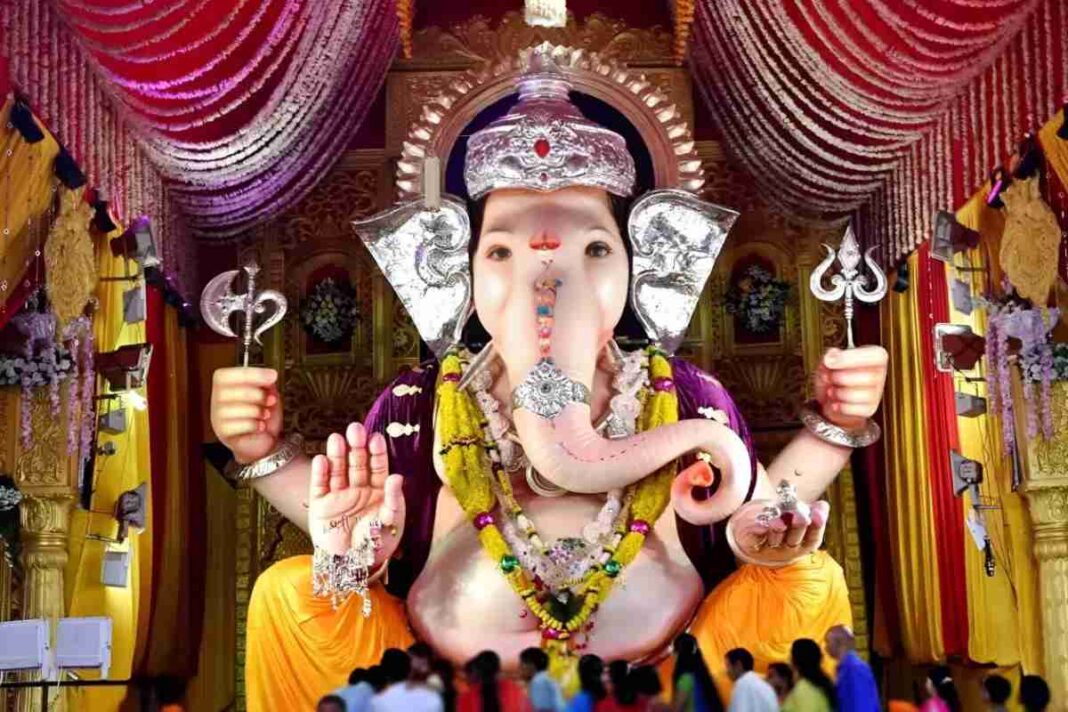
Nazir Akbarabadi, for instance, commenced one of his poems by invoking Lord Ganesh for blessings, symbolizing his profound connection with India’s rich tapestry of gods and goddesses.
Gulzar Dehlvi, an acclaimed Urdu poet, metaphorically alluded to Lord Ganesha in one of his “Hamd” (eulogies) dedicated to the praise of God, emphasizing divine attributes shared between Allah and Ganesha. He beautifully portrays Ganesha as a friend and helper in life’s journey.
Similarly, Nadim Jaunpuri’s verse pays tribute to Lord Ganesha’s uniqueness and the miraculous outcomes of invoking His name. What’s fascinating is the multitude of words by which Lord Ganesha is referred to in Urdu literature, including Samukh, Ekadanta, Kapil, Gajakarnak, Lambodar, Vakata, Viganansh, Vinayaka, Gandhikesh, and Gajananda, each highlighting different facets of His divine nature.
Beyond poetry, Urdu fiction has embraced Lord Ganesha’s symbolism. Saadat Hasan Manto’s character Sugandhi, in the renowned story “Hatak,” exemplifies deep devotion to Lord Ganesha, portraying Him as the ultimate guru.
Writings by Ali Imam Naqvi, Rajendra Singh Bedi, Ismat Chughtai, Qurratul Ain Haider, and Krishna Chandra further explore Lord Ganesha’s significance in various contexts within Urdu literature.
In Maharashtra, during the grand Ganesh Chaturthi celebrations, countless Urdu poets recite poems and Hamd in praise of Lord Ganesha. This occasion becomes a poignant reminder of Lord Ganesha’s valour and devotion to protecting His mother, symbolizing the essence of this rich literary tradition.
For a detailed story, please visit: Awaz the voice
Also Read: India’s Global Leadership: G-20 and Development
You can connect with DNN24 on Facebook, Twitter, and Instagram and subscribe to our YouTube channel.