

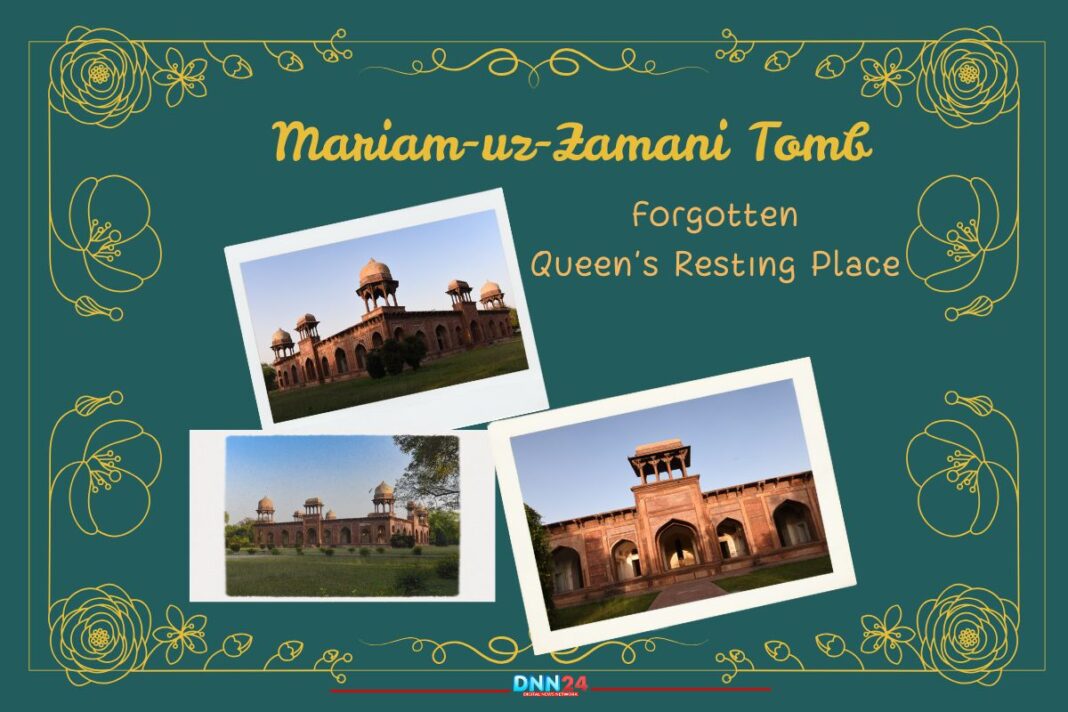

The Mughal era is marked by stories of grandeur, romance, and rulers whose lives profoundly changed the course of history. Yet some monuments remain quietly tucked away, holding secrets that deserve far more attention than they receive. One such place is the Mariam-uz-Zamani Tomb in Agra, a structure that tells the story of a woman whose influence stretched across empires and whose memory was preserved by her devoted son. This is not just another tomb in a city famous for its monuments. It is a testament to a queen who bridged two worlds, a mother whose legacy shaped an emperor, and a building that defied convention by transforming from a pleasure retreat into a sacred resting place.
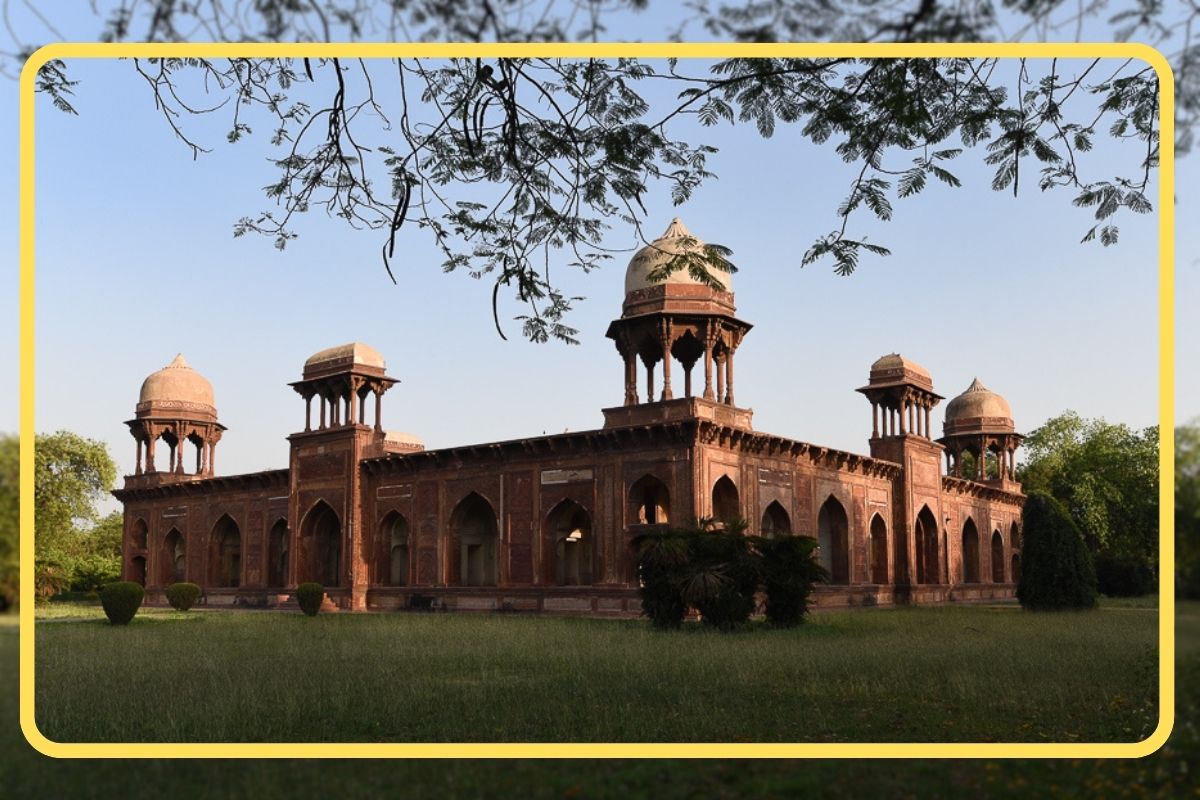
Located near Akbar’s tomb in Sikandra, this monument stands as a reminder of love, respect, and the powerful women who quietly shaped Mughal India. Built between 1623 and 1627 by Emperor Jahangir, the tomb honours Mariam-uz-Zamani, known popularly as Jodha Bai, Akbar’s most cherished wife. Unlike the towering marble structures that dominate Agra’s skyline, this tomb whispers rather than shouts, inviting only those curious enough to seek it out. Its story begins long before the Mughals, weaving together centuries of architectural evolution and cultural fusion.
A Building That Changed Its Purpose: From Lodi Pavilion to Mughal Mausoleum
The journey of this structure reads like a historical fiction novel. Long before it became a tomb, this building served an entirely different purpose. In 1495, during the Lodi dynasty’s rule, it was constructed as a baradari, an open pavilion designed for leisure and pleasure. Imagine nobles gathering under its roof, musicians playing traditional ragas, poets reciting verses while gentle breezes flowed through its open arches. Gardens surrounded it, water features cooled the air, and it stood as a place where people came to escape the summer heat and enjoy cultured conversation.
Then the Mughals arrived, and with them came Akbar, whose reign transformed the landscape of northern India. More than a century after its original construction, this Lodi pavilion caught the attention of Jahangir, who saw in it the perfect resting place for his mother. Rather than building something entirely new, he chose to honour both history and his mother by converting this existing structure into her mausoleum. He created a crypt beneath the central chamber, added decorative elements, and transformed the pleasure pavilion into a place of eternal rest.
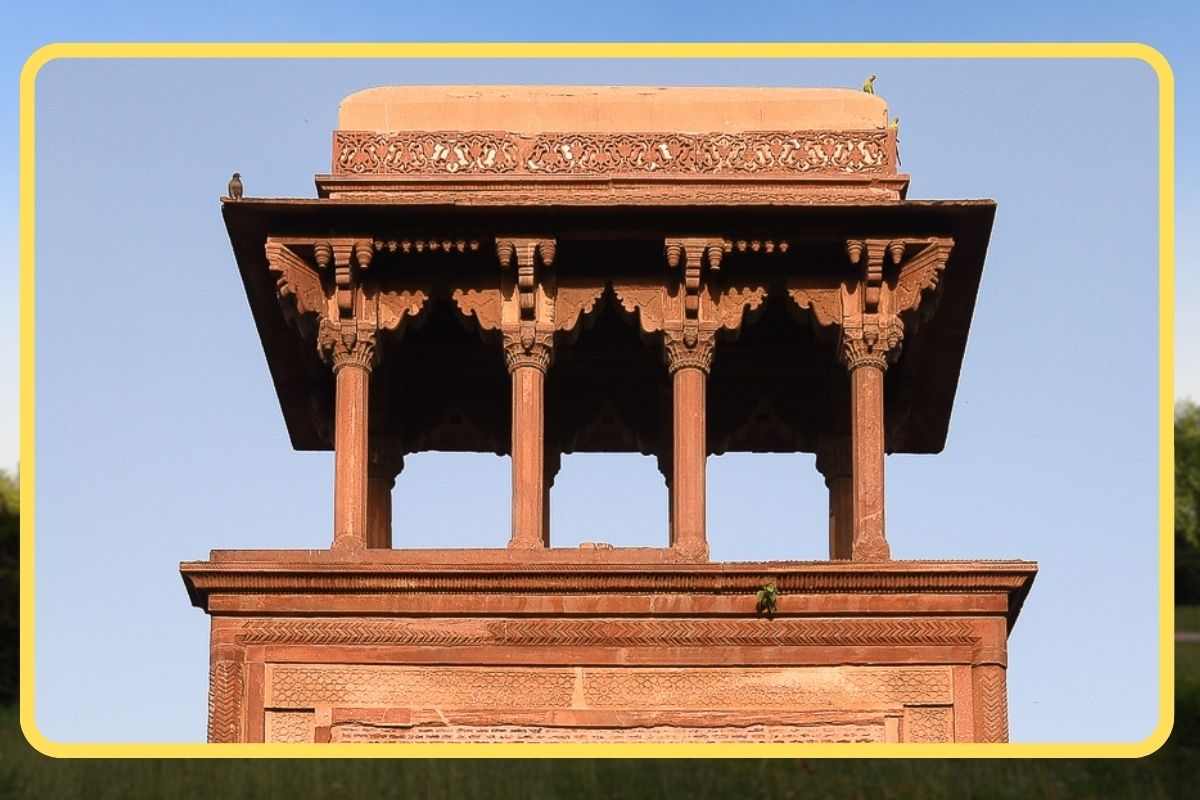
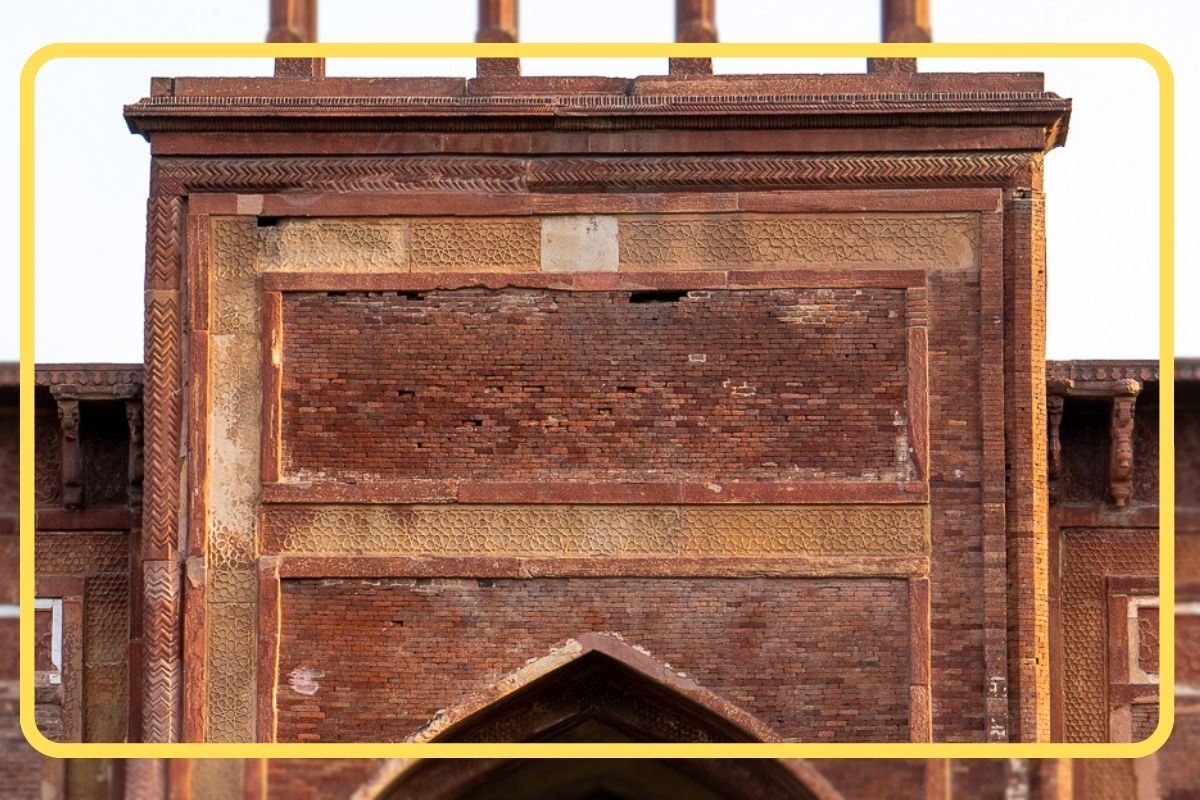
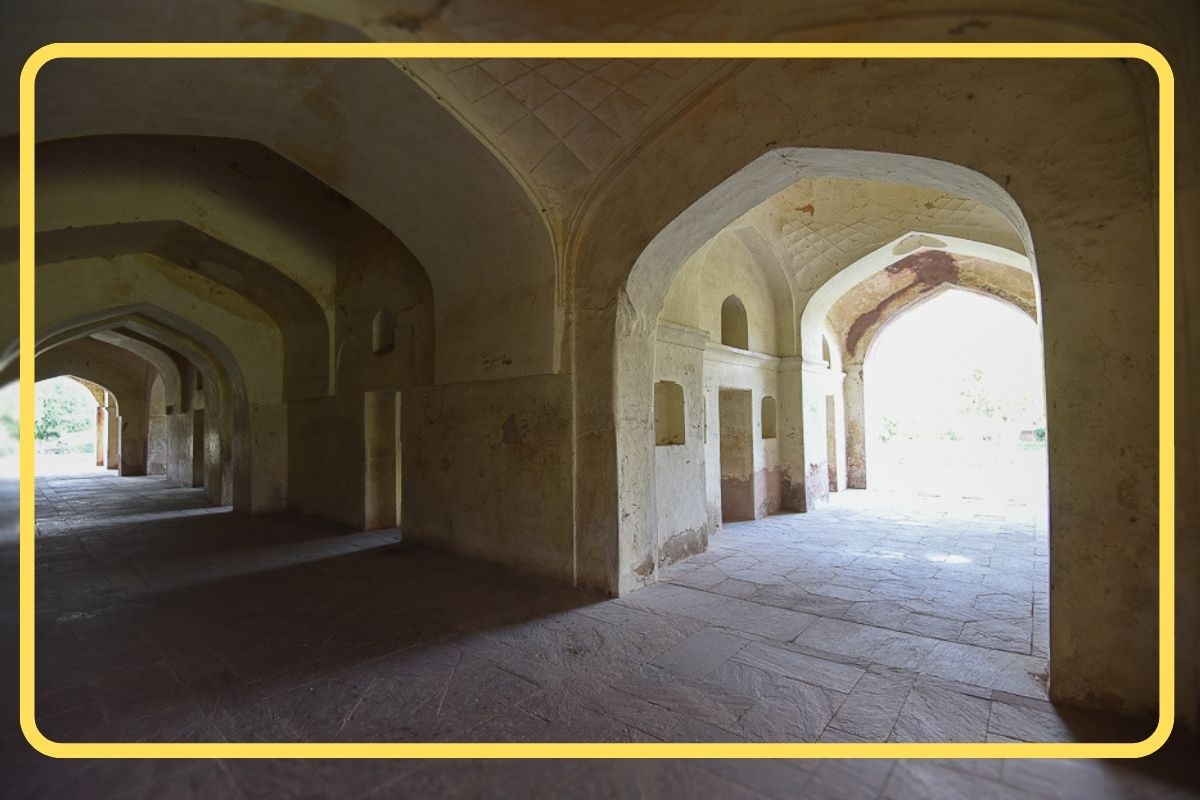
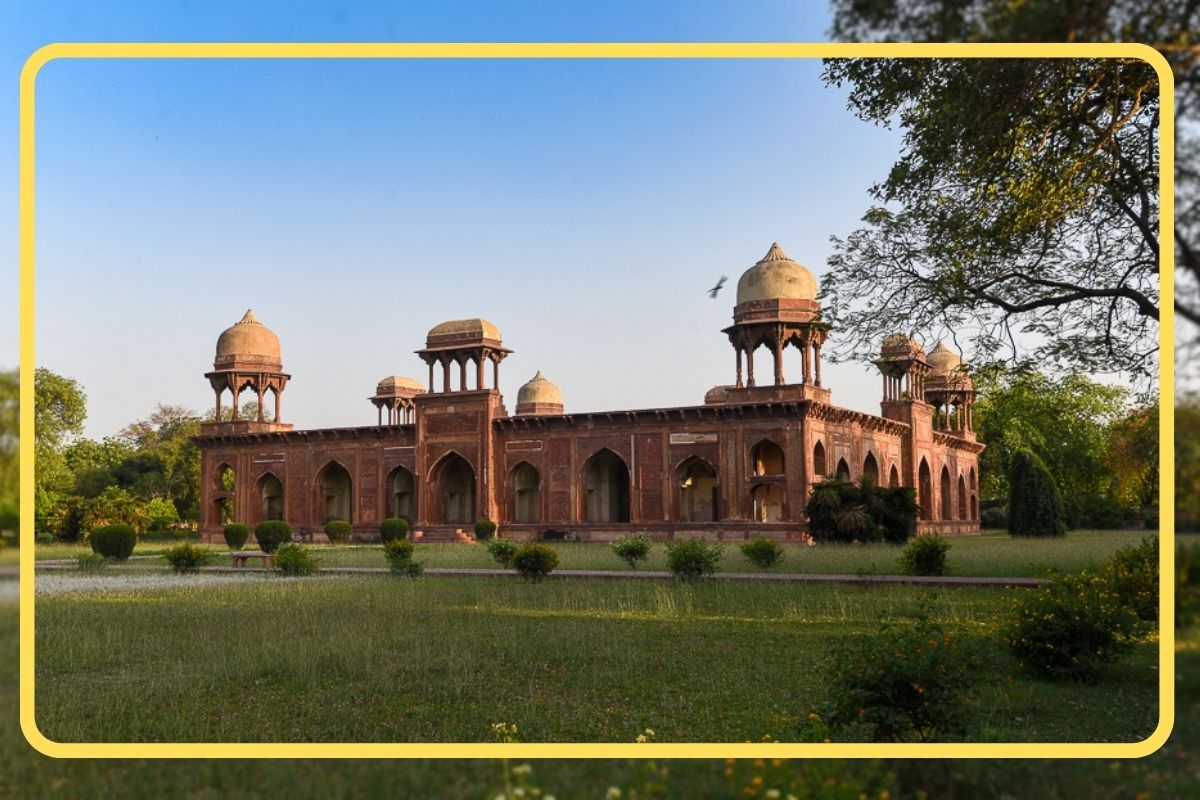
This conversion makes the tomb architecturally unique among Mughal monuments. The structure is situated on a raised platform with staircases on the north and south sides, enabling visitors to ascend into the memorial space. Inside, two corridors divide the building into nine distinct sections, creating an organised yet flowing interior that encourages quiet reflection. The most striking feature is the absence of a central dome, unusual for Mughal tombs of this period. Instead, four octagonal corner towers rise, each crowned with a white dome that contrasts beautifully with the red sandstone walls below. This choice creates a lighter, more open feeling compared to the heavy grandeur of domed mausoleums.
Mariam-uz-Zamani Tomb: Architectural Details That Speak Volumes About Craftsmanship and Care
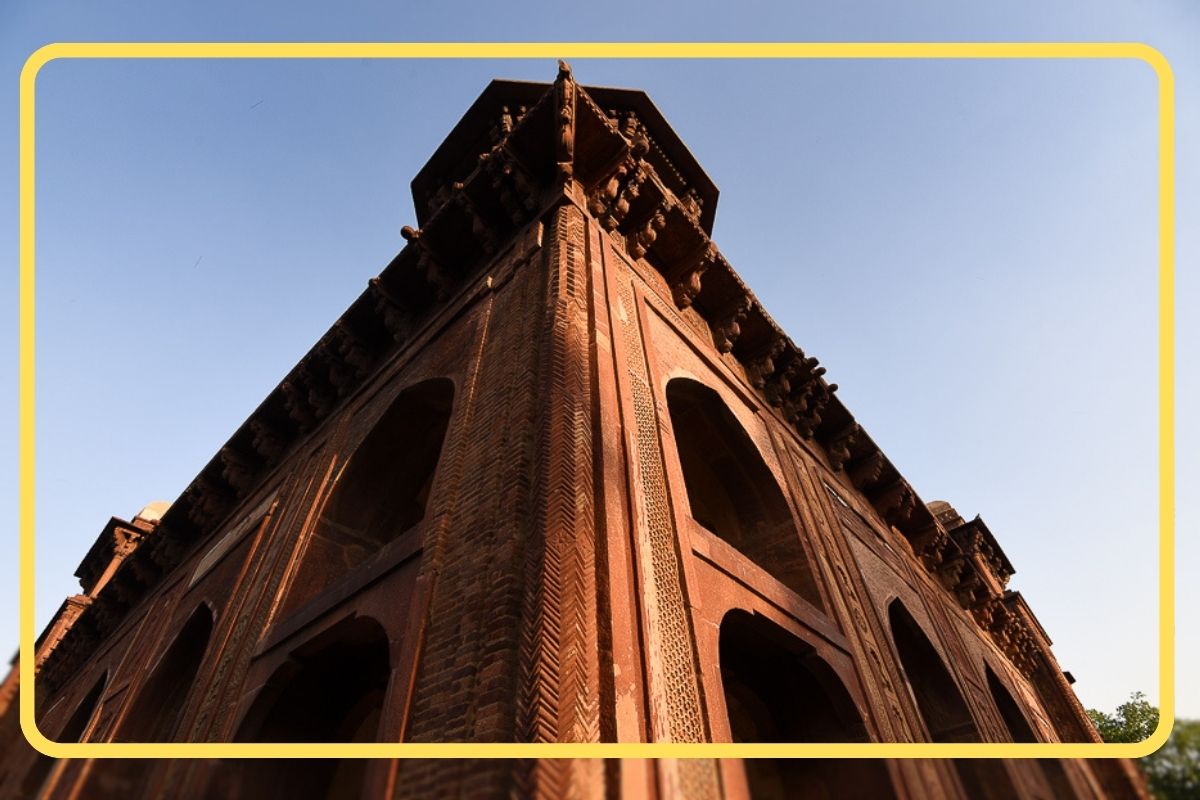
Walking through the Mariam-uz-Zamani Tomb reveals layer upon layer of artistic detail that showcases the skill of Mughal artisans. The red sandstone walls display intricate carvings featuring floral motifs, geometric patterns, and delicate tracery that would have taken months to complete. These are not simple decorations but carefully planned artistic statements that blend Persian, Islamic, and local Indian design traditions. The tomb contains more than forty chambers, each one once decorated with painted plaster that has faded over the centuries.
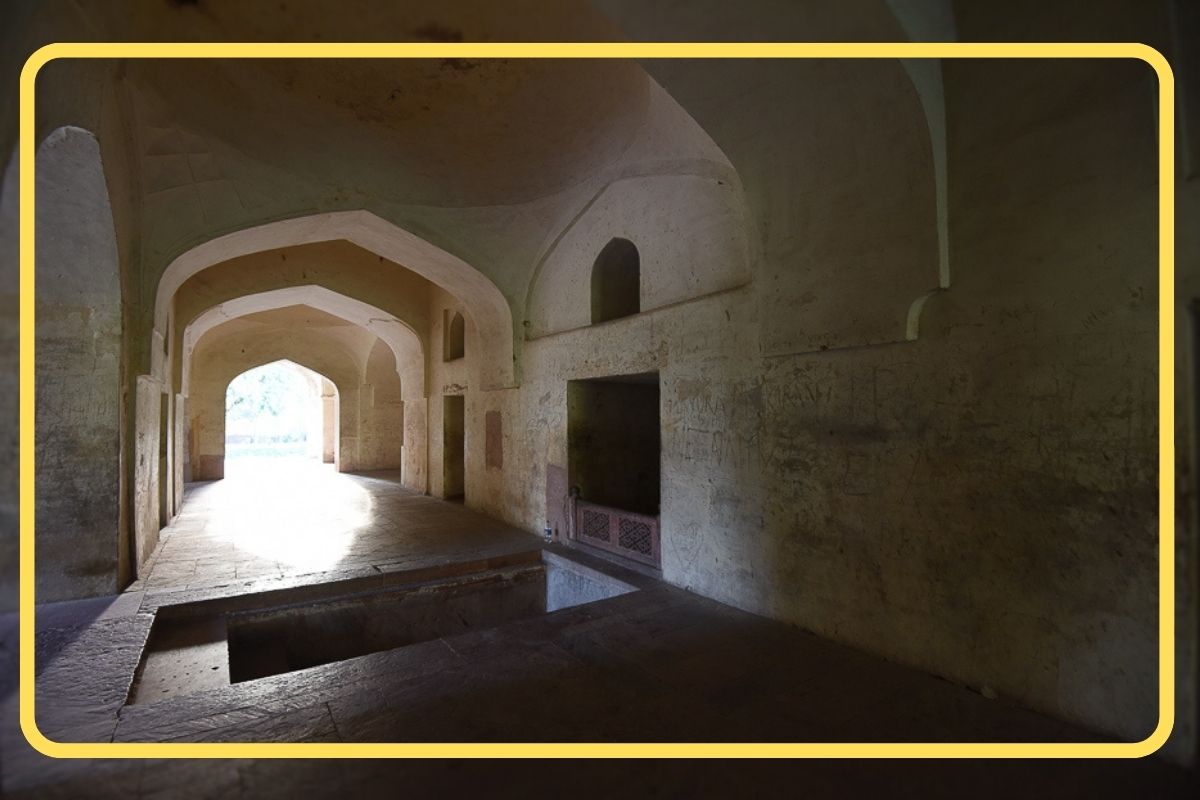
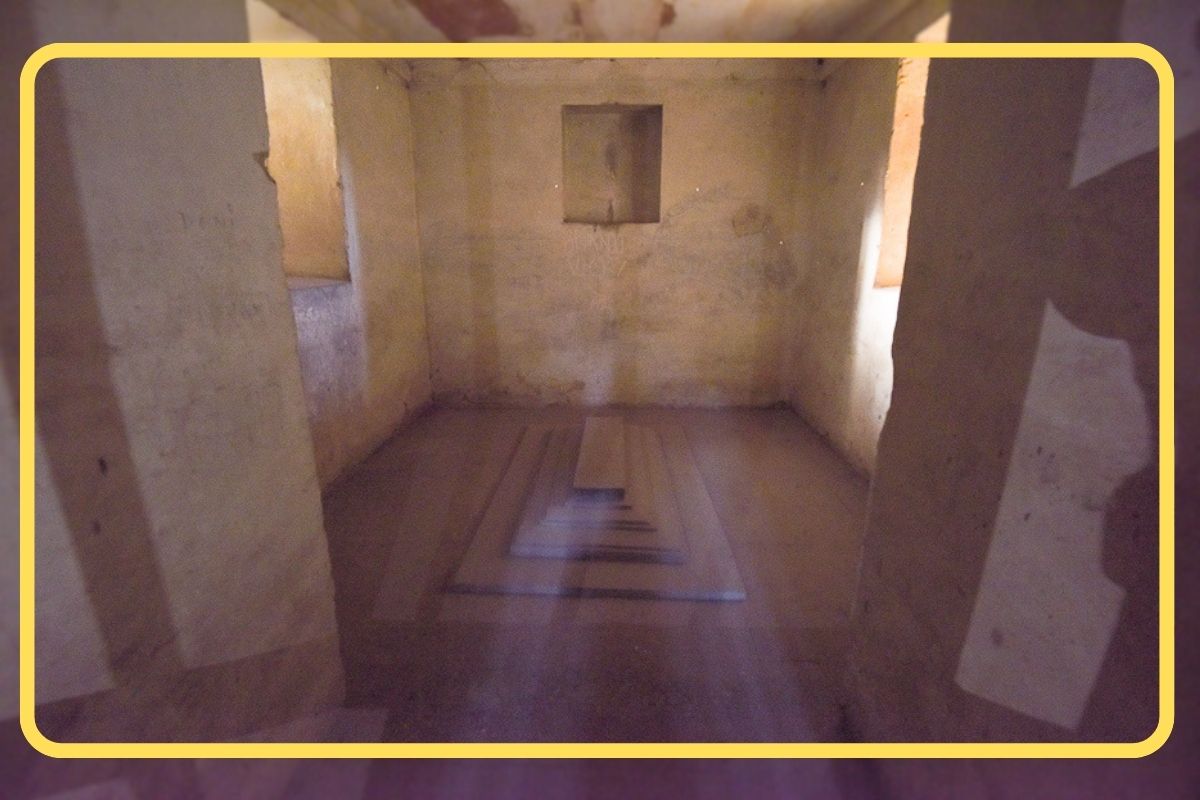
Traces of these frescoes remain, offering glimpses into how vibrant and colourful the interior once appeared. These chambers served various purposes, from prayer spaces to rooms where family members could pay their respects. The architectural style reflects both Mughal sophistication and the earlier Lodi influence, creating a hybrid that stands apart from other monuments. The building’s openness, a remnant of its pavilion origins, allows natural light to flood the spaces, creating an atmosphere quite different from the dim, enclosed feeling of traditional tombs.
The four corner chhatris with their white domes add vertical interest and draw the eye upward, creating visual balance despite the absence of a central dome. The symmetry and proportion demonstrate the mathematical precision Mughal architects brought to their work. Every measurement was deliberate, every decorative element placed with purpose. The tomb proves that transformation can honour both past and present, respecting what existed before while adapting it for new sacred purposes.
Mariam-uz-Zamani Tomb: The Remarkable Woman Whose Memory Lives Within These Walls
Mariam-uz-Zamani remains one of the most interesting figures in Mughal history, though popular culture has sometimes obscured her true story. Born a Rajput princess, she was married to Emperor Akbar, who represented more than just a political alliance. It symbolised Akbar’s vision of bringing together different faiths and cultures under one empire. This union between a Hindu princess and a Muslim emperor was revolutionary for its time, setting the stage for Akbar’s policies of religious tolerance and cultural synthesis.
She was not simply a wife among many but held the title Mariam-uz-Zamani, meaning “Mary of the Age,” a mark of tremendous respect. Akbar’s affection for her is well-documented, and she bore him his successor, Jahangir, thereby ensuring her place in the dynasty’s continuation. But her influence extended beyond her role as mother to an emperor. She participated in court affairs, engaged in diplomatic activities, and was known for her charitable works.
Historical records suggest she commissioned religious buildings and supported various causes. Her position allowed her to act as a bridge between the Rajput nobility and the Mughal court, helping to maintain the delicate balance Akbar worked so hard to achieve. When she died, Jahangir chose to bury her near his father’s tomb in Sikandra, a placement that speaks volumes about her importance. No other wife of Akbar received this honour. This proximity in death mirrors the closeness she shared with Akbar in life and acknowledges her unique status in the imperial family.
Mariam-uz-Zamani Tomb: Why This Monument Matters Today and What It Teaches Us
In a city dominated by the Taj Mahal and Agra Fort, Mariam-uz-Zamani Tomb remains relatively unknown, visited by far fewer people than its famous neighbours. Yet this quiet monument offers something those crowded sites cannot: space for contemplation and a more intimate connection with history. The tomb’s peaceful gardens offer a serene retreat from Agra’s bustling streets, providing visitors with a chance to absorb the stories hidden within its walls. More importantly, the tomb represents values that remain relevant centuries after its construction.
Mariam-uz-Zamani embodied the possibility of harmony between different faiths and cultures. Her life demonstrates that mutual respect and understanding can create powerful bonds that last for generations. At a time when religious and cultural tensions still divide communities, her story offers a historical example of successful integration and tolerance. The architectural choice to convert rather than destroy, to preserve while transforming, also carries meaning for contemporary audiences.
It shows respect for what came before while adapting to present needs, a lesson applicable far beyond architecture. The tomb invites reflection on how we honour the past while moving forward, how we maintain identity while embracing change. For travellers willing to venture beyond the prominent attractions, this monument rewards curiosity with a richer understanding of Mughal India’s complexity and the remarkable women who helped shape it.
Also Read: Tomb of Sher Shah Suri: An Emperor’s Dream Palace Floating On Water
You can connect with DNN24 on Facebook, Twitter, and Instagram and subscribe to our YouTube channel.