

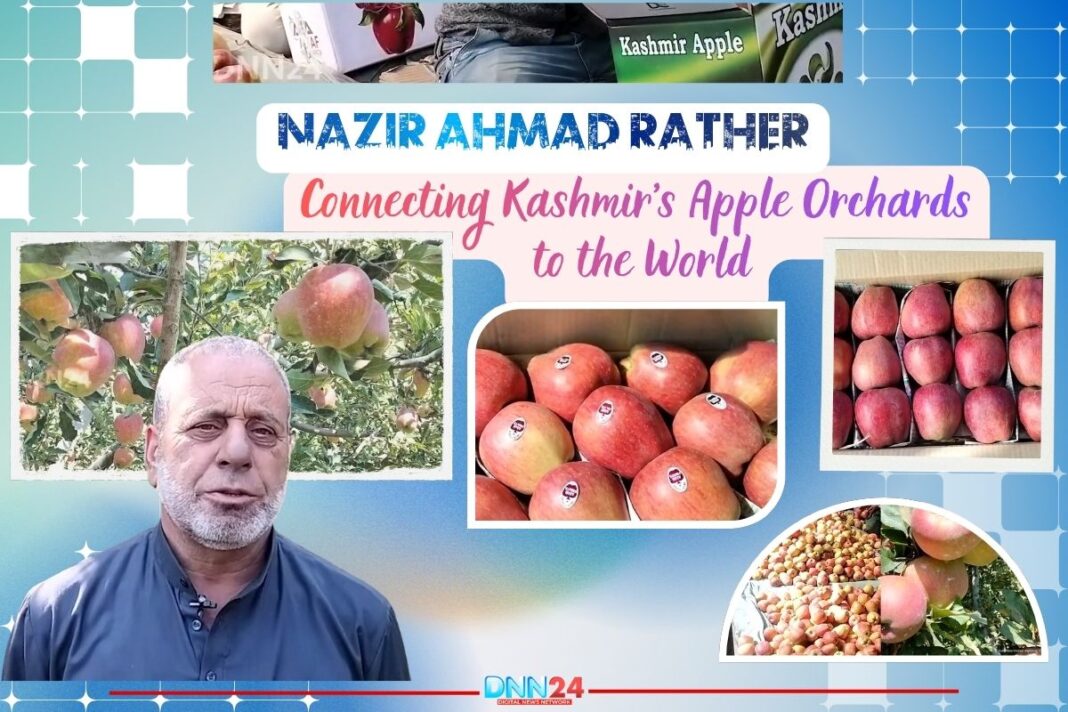

The orchards of Kashmir tell stories older than memory itself, but few have written their chapter with as much determination as Nazir Ahmad Rather from Pulwama’s Dangarapura village.
Kashmir has long been celebrated for its pristine valleys and snow-capped peaks, yet its true wealth lies hidden in thousands of acres of apple orchards that stretch across the hillsides. These trees are not merely agricultural assets but lifelines for countless families who depend on the annual harvest. Nazir Ahmad Rather has spent years cultivating these orchards, watching the seasons change, and the fruit ripen under his careful attention.
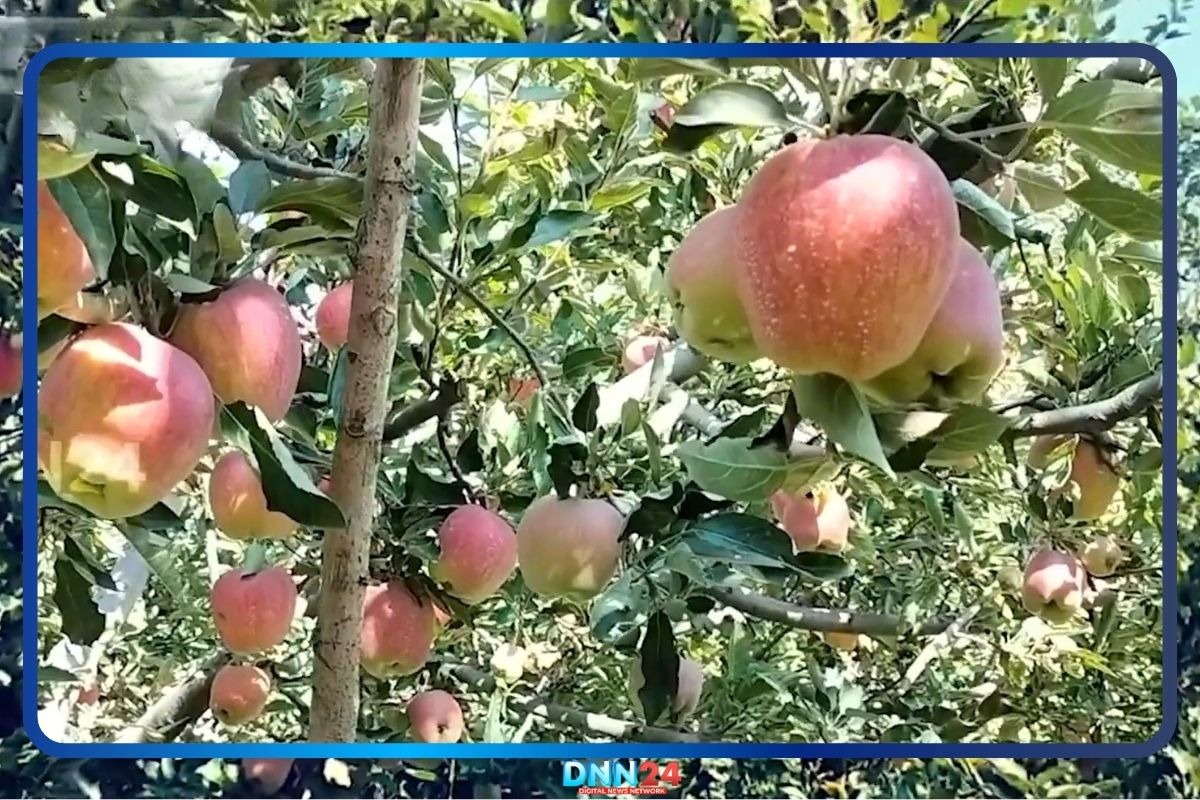
The apples grown here travel far beyond Indian borders, reaching markets in Bangladesh and Gulf countries where their sweetness commands premium prices. This single crop forms the backbone of Kashmir’s economy, supporting entire communities through its production and trade. Nazir Ahmad Rather’s work represents generations of farming knowledge combined with modern techniques, creating a sustainable model that other growers now seek to replicate.
His orchards produce fruit that meets international quality standards while maintaining the distinct flavour that makes Kashmiri apples famous worldwide. The industry employs thousands of workers during harvest season, from pickers to packers to transporters, creating a complex network of economic activity. Each apple that leaves Kashmir carries with it the labour and hope of families who have tended these trees for decades.
Nazir Ahmad Rather:The Rise of High-Density Apple Cultivation
Nazir Ahmad Rather explains that high-density apple varieties have gained remarkable popularity among both growers and buyers in recent years. This cultivation method offers distinct advantages over traditional orchards, primarily because the fruit matures earlier in the season. Harvesting typically begins between August 15 and August 25, giving Kashmiri growers a significant market advantage. Traders arrive directly at the orchards to purchase the crop, eliminating the need for farmers to transport produce to distant markets.
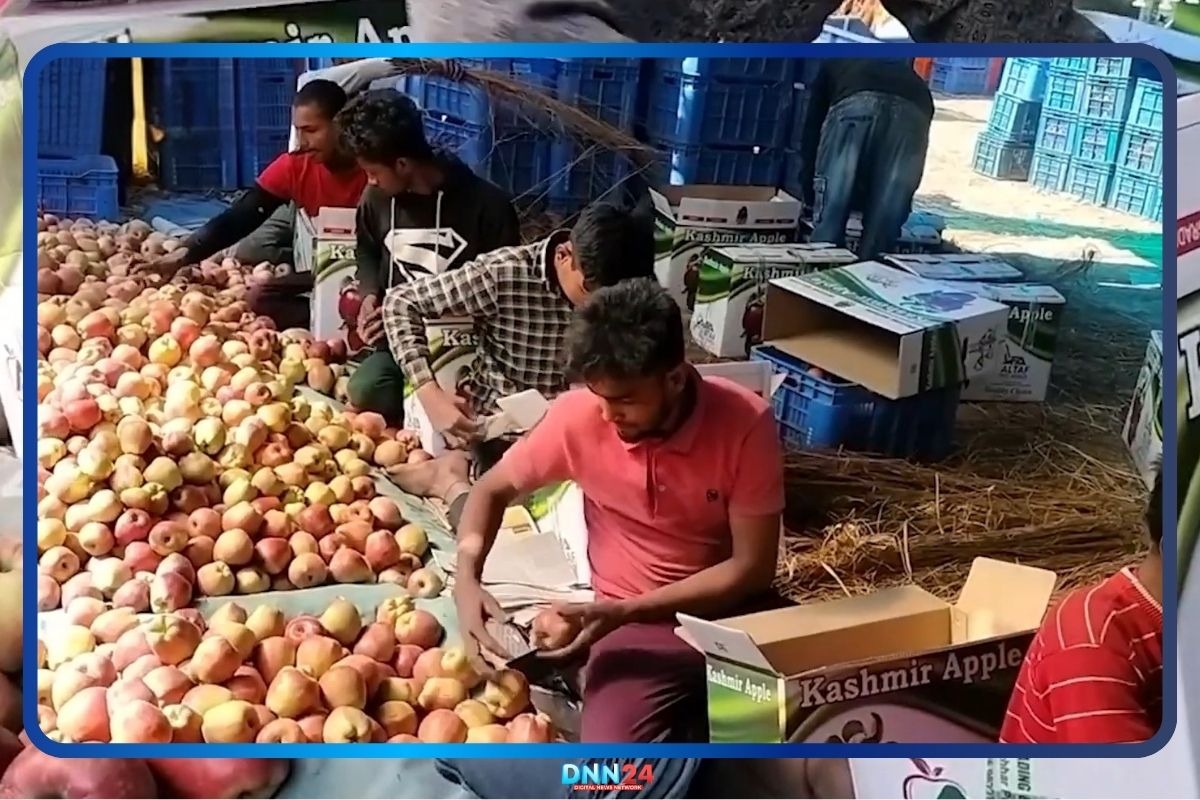
The apples are immediately transferred to cold storage facilities or packing units, preserving their freshness and reducing post-harvest losses. This efficiency saves valuable time and labour while ensuring growers receive fair compensation for their produce. Rather notes that government support has played a crucial role in expanding high-density cultivation across the region. Subsidies and technical guidance help new growers establish orchards using modern techniques and proven varieties.
The early harvest window allows Kashmiri apples to enter markets before competitors from other regions, commanding higher prices. Export demand has grown steadily, with buyers from multiple countries seeking the quality and consistency that high-density orchards provide. The farming method requires careful planning and investment, but the returns justify the initial costs. Rather’s orchards demonstrate how traditional agriculture can adapt to contemporary market demands without sacrificing quality. Training programs organised by agricultural departments have helped hundreds of farmers transition to this more productive system.
September to October Favourite: The Kullu Delicious Variety
After the high-density harvest concludes, attention shifts to the Kullu Delicious variety that ripens through September and October. This apple stands out for its appealing colour, exceptional taste, and uniform size that buyers prefer. Delhi markets were once the primary destination for this variety, but demand has spread across the entire country. Traders purchase large quantities and distribute them to cities throughout India, where consumers recognise the quality.
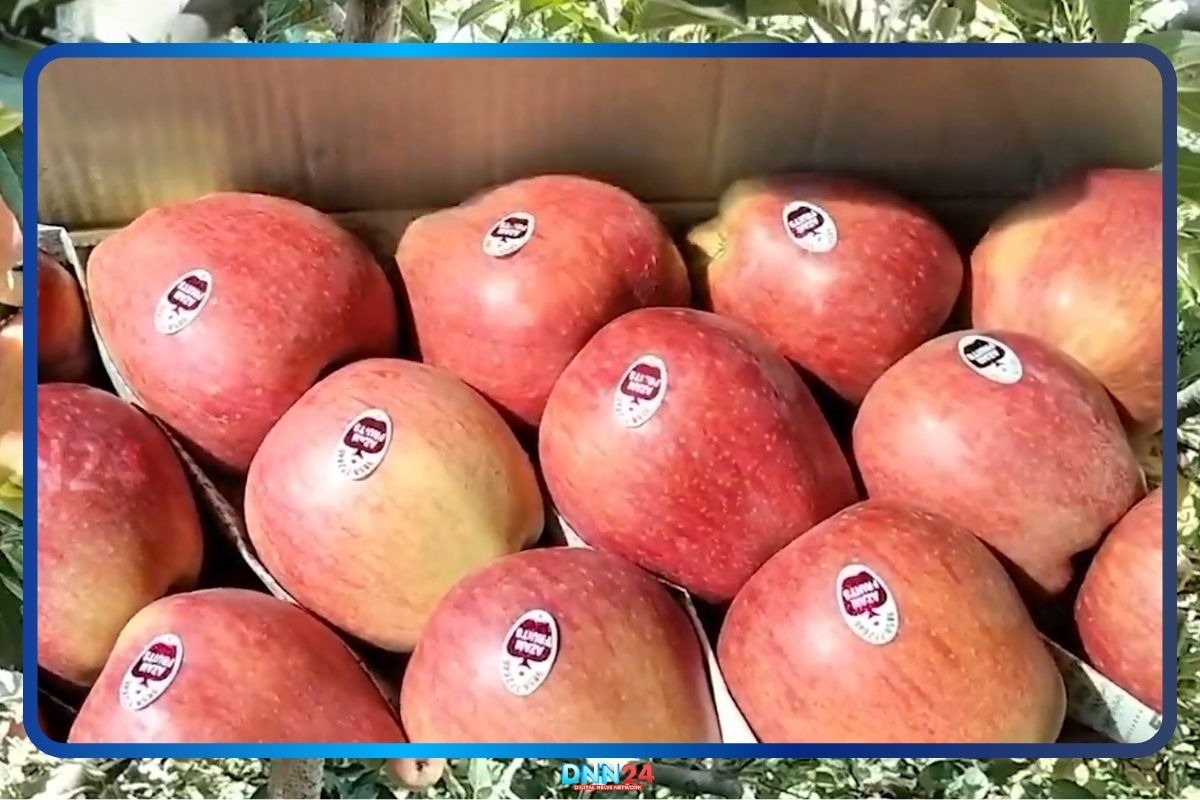
The deep red colouration of well-grown Kullu Delicious apples fetches the highest prices in wholesale markets. Growers whose fruit develops lighter colouring receive somewhat lower rates, creating an incentive for careful orchard management. Rather emphasises that timing the harvest correctly makes an enormous difference in achieving optimal colour and sweetness. Patience during the ripening period allows the fruit to develop its full flavour profile and attractive appearance.
Weather conditions during the final weeks before harvest significantly influence the crop’s final quality. Growers monitor their trees daily, checking for signs that the apples have reached peak maturity. The variety has proven reliable across different elevations and soil types throughout Kashmir, making it accessible to many farmers. Market prices for Kullu Delicious remain stable compared to other varieties, providing growers with predictable income. The apple’s firm texture makes it suitable for long-distance transport without excessive bruising or damage.
Storage Capability of the Delicious Variety
Nazir Ahmad Rather points out that storage capacity represents one of the most valuable characteristics of the Delicious variety. These apples maintain their quality for two to three months when stored under appropriate conditions. Cold storage facilities can preserve the fruit for extended periods, but even household storage with proper packing keeps apples fresh for two months. Market prices typically increase as the season progresses and fresh supplies diminish, benefiting growers who can wait.

This storage advantage makes the variety particularly attractive to farmers who want flexibility in selling their harvest. Apples from higher-elevation areas like Sopian and Keller develop superior colour and size compared to those from lower regions. The colder climate and natural conditions in these zones produce fruit that commands premium prices in markets. Growers from these areas consistently report better returns than their counterparts in warmer valleys.
The temperature differences during the growing season affect sugar accumulation and skin development in measurable ways. Buyers recognise fruit from specific regions and are willing to pay more for the proven quality. Storage capability also allows traders to manage supply throughout the year, maintaining steady availability for consumers. The variety’s resistance to storage diseases reduces losses and improves profitability across the entire supply chain.
Why Proper Harvest Timing Matters Critically
Nazir Ahmad Rather observes that many growers make the mistake of harvesting apples too early, even when only minimal colouring has appeared. This impatience prevents the fruit from developing its full sugar content and characteristic sweetness. Premature apples reaching the market disappoint customers and fetch lower prices, ultimately hurting the grower’s income. Agricultural experts consistently advise waiting until colour, flavour, and sweetness reach their complete development before picking.
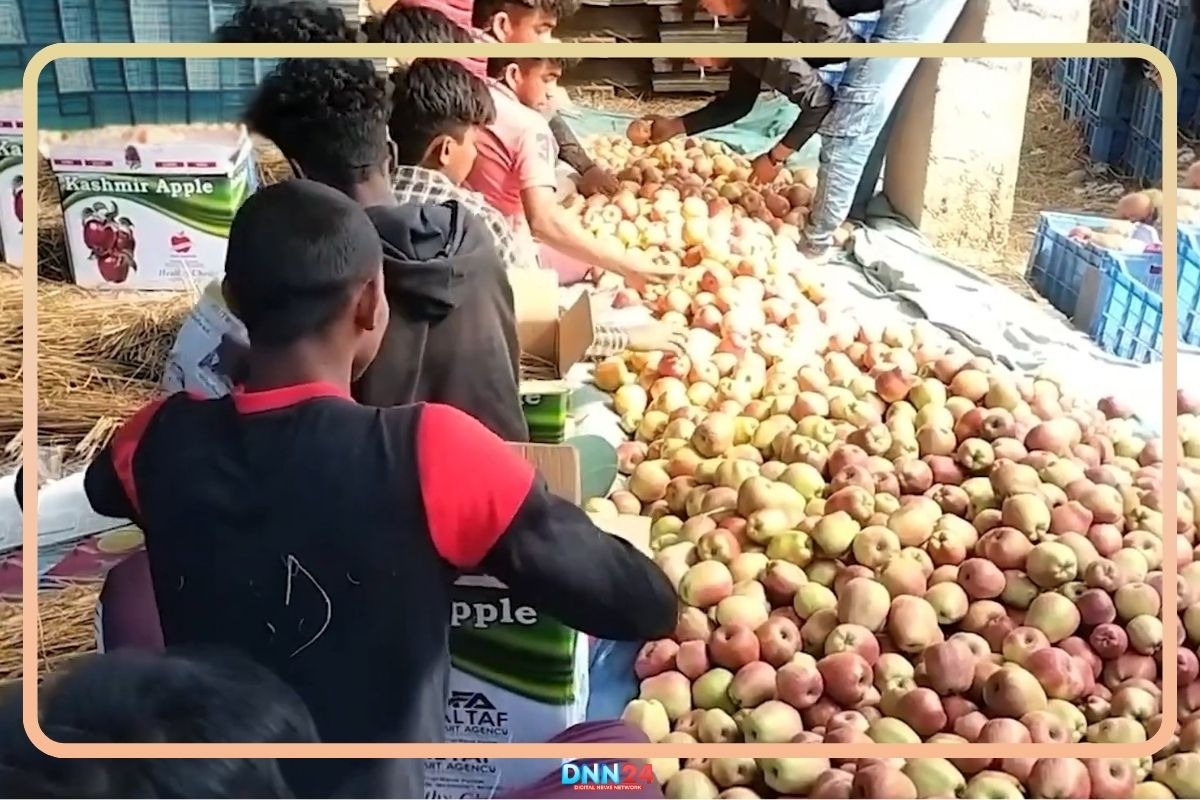
The final weeks on the tree transform an ordinary apple into a premium product that justifies higher prices. Kashmiri apples have earned their global reputation through consistent sweetness, fragrance, and overall quality. Whether high-density, Delicious, or other varieties, each type finds eager buyers when properly matured. The distinctive taste and texture set Kashmiri fruit apart from apples grown in other regions of India and abroad.
Climate, soil composition, and traditional farming knowledge combine to create this unique product. Markets across multiple countries now specifically request Kashmiri apples, recognising their superior qualities. The industry’s success depends on maintaining these quality standards through careful cultivation and harvest practices. Rather’s experience demonstrates that respecting the natural ripening cycle produces the best results.
Hard Work and Dedication Drive the Apple Business
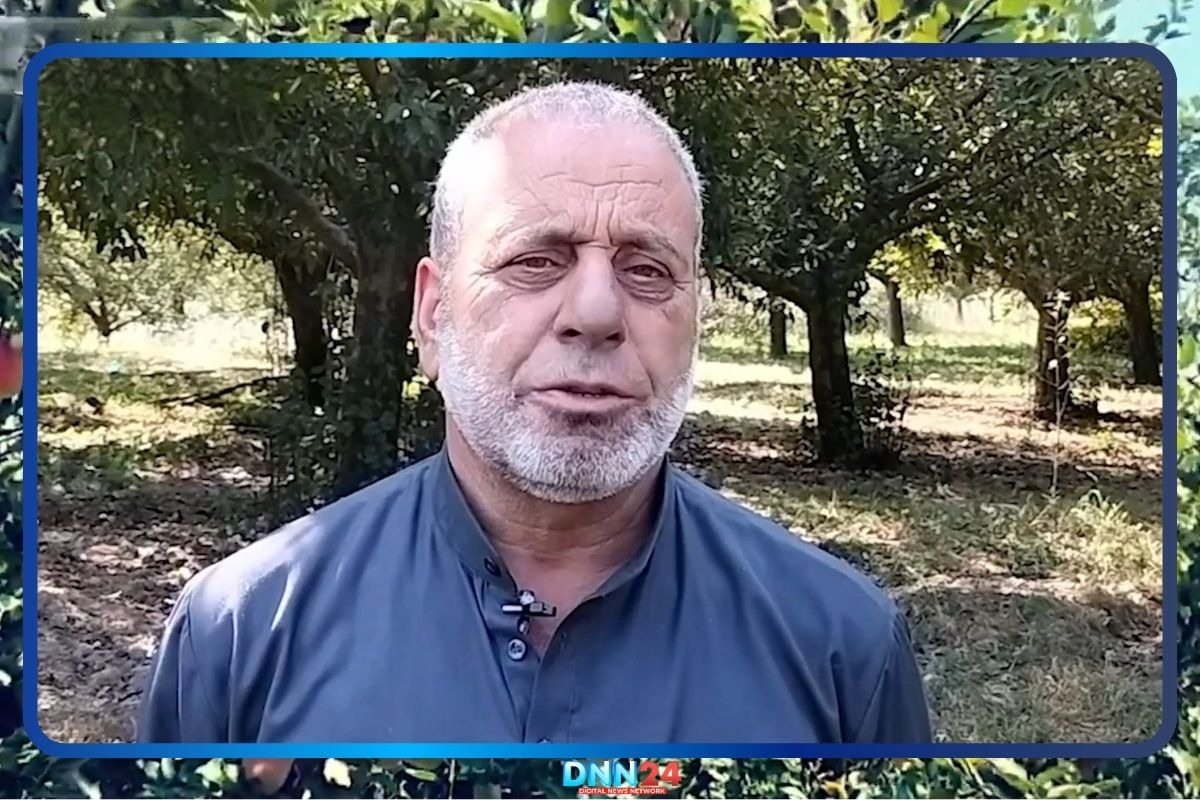
Nazir Ahmad Rather firmly believes that successful apple farming requires unwavering effort and complete dedication to the orchards. Horticulture demands constant attention year-round, not just during harvest season. This single crop provides the annual income for thousands of Kashmiri families who depend on a successful harvest. Government policies and expanding market demand have strengthened the industry considerably over recent years.
Kashmir’s apple sector is moving toward a more secure and prosperous future for all participants. Growers should seize current opportunities by combining modern technology with traditional farming wisdom. The integration of scientific techniques with generations of accumulated knowledge creates the most effective cultivation strategies. Training programs, subsidised inputs, and market linkages all contribute to farmer success.
Nazir Ahmad Rather’s journey from traditional methods to high-density cultivation illustrates the industry’s evolution. His willingness to adopt new practices while maintaining quality standards serves as an example for other growers. The global appetite for premium apples continues growing, creating opportunities for Kashmir’s farmers. Export markets offer significantly higher returns than domestic sales, motivating quality improvements. The next generation of farmers must understand both traditional wisdom and contemporary agricultural science. Kashmir’s apple industry stands ready to expand further, provided growers maintain their commitment to excellence.
Also Read: Tomb of Sher Shah Suri: An Emperor’s Dream Palace Floating On Water
You can connect with DNN24 on Facebook, Twitter, and Instagram and subscribe to our YouTube channel.