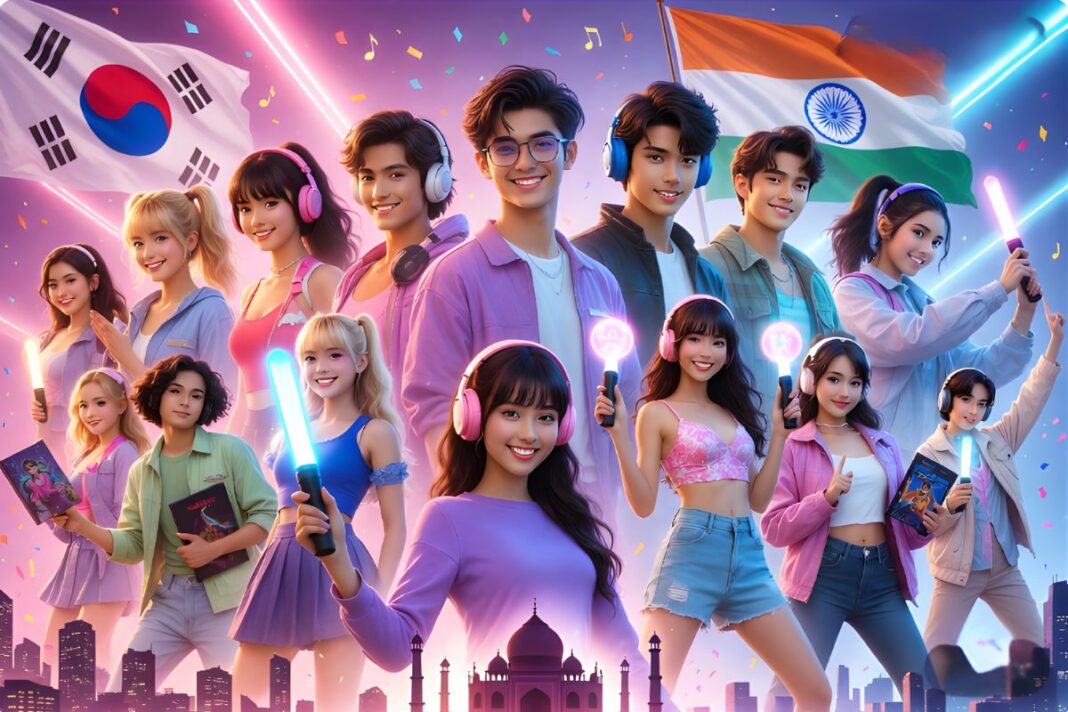

K-Pop has moved far beyond catchy hooks and polished choreography, quietly reshaping how many young Indians dress, speak, form friendships, and even understand emotions, turning global pop culture into a daily influence on identity and aspiration. The numbers tell a story that nobody expected. Between 2018 and 2023, streaming of Korean pop music grew by 362% in the country, making it one of the fastest expansions worldwide. A 2025 survey of 60 young people revealed that 61.7% report moderate influence on their daily lives, reshaping how they see themselves through narratives of escape and aspiration. This analysis examines the statistics across four dimensions: youth identity formation, fashion adoption, music consumption patterns, and social behavioral changes. What emerges is evidence of a genuine cultural pivot taking place among the youngest generation.
How Identity K-Pop Forms Through New Cultural Touchstones
The country’s population is 40% under 30, creating a massive audience of roughly 185 million active streamers engaging with this content. A survey conducted by the Korea Centre found that among respondents aged 19 to 22, who made up 68.3% of participants (predominantly female), 60% directly credited Korean content for inspiring career ambitions in creative fields rather than traditional professional paths. During the lockdown period, songs like “Love Yourself” became anthems for young people managing isolation and anxiety. Fan communities grew exponentially during this time. Data from 2023 showed that one major city recorded 545,000 monthly listeners for a single group on Spotify alone, signalling the formation of deep emotional bonds through music.
Breaking down the influence levels reveals important nuances. While 16.7% of respondents described the impact as “significant,” most fell into a moderate category. The appeal lies in diverse representation in Korean dramas, with shows like “Extraordinary Attorney Woo” featuring characters who challenge stereotypes about ability and success. The 2025 Global Hallyu Survey ranked the nation third worldwide with 84.5% affinity for Korean content, a ranking closely tied to escapism. When asked why they watched Korean dramas, 71.7% cited emotional catharsis as the primary reason, seeking relief from academic pressures and family expectations.
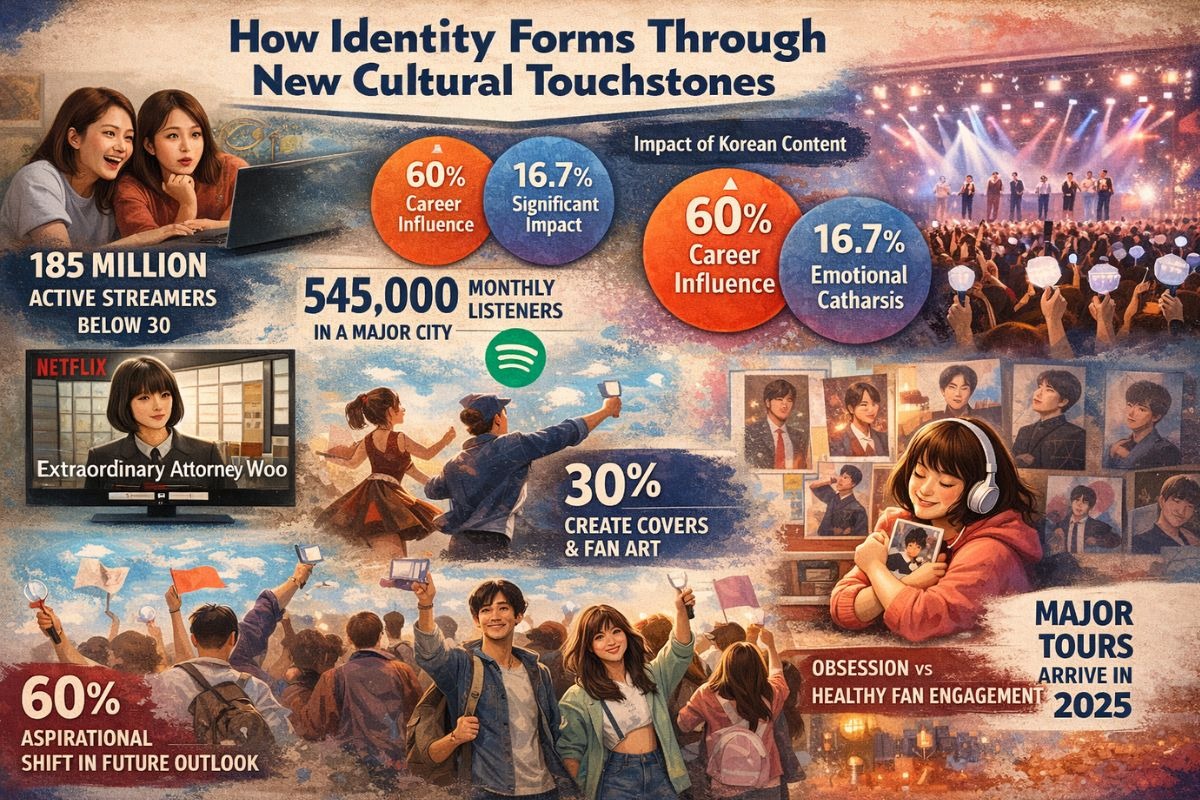
Yet the data also hints at potential psychological costs. The intensity of these attachments can tip into obsession for some individuals, with rare but notable cases of young people prioritising idol worship over family connections or cultural roots. Still, the broader pattern shows healthy engagement. Streaming numbers continue to rise with double-digit year-over-year growth, while 30% of fans actively participate in creating cover performances or artwork. These activities build confidence and skills beyond passive consumption.
Fandoms represent something larger than simple entertainment preference. They blend a global outlook with deeply local emotions, moving from marginal status to mainstream acceptance as major tours arrived in 2025. The statistical portrait shows that 60% of young people are experiencing some aspirational shift in how they view their futures, while 21.7% report minimal impact. The numbers suggest that while not universal, the influence reaches broadly across demographics and geographies.
The Measurable Shift in K-Pop Fashion Choices
Korean aesthetic influences now reach 35% of surveyed youth according to recent data, manifesting through the adoption of minimalist silhouettes, pastel colour palettes, and streetwear elements popularised by performers. Social media platforms accelerate this trend, with certain beauty brands launching Korean-inspired product lines that experienced significant commercial success. Sheet mask routines became commonplace among many young consumers, part of a broader shift in skincare culture. The same 362% growth rate in music popularity appears mirrored in fashion adoption metrics tracked through hashtag usage and engagement rates.
The pathways through which these styles spread reveal interesting patterns. Survey data shows 41.7% discovered Korean fashion through friends and family recommendations, then adapted elements by blending pleated skirts with traditional scarves or mixing modern cuts with local textiles. Online retail platforms made international styles accessible, transforming what people bought at local markets. By 2025, young consumers will increasingly prioritise global trends, with that same 35% exerting direct influence on purchasing decisions. This correlates with noticeable spikes in beauty product sales, as multi-step skincare routines transitioned from novelty to standard practice.
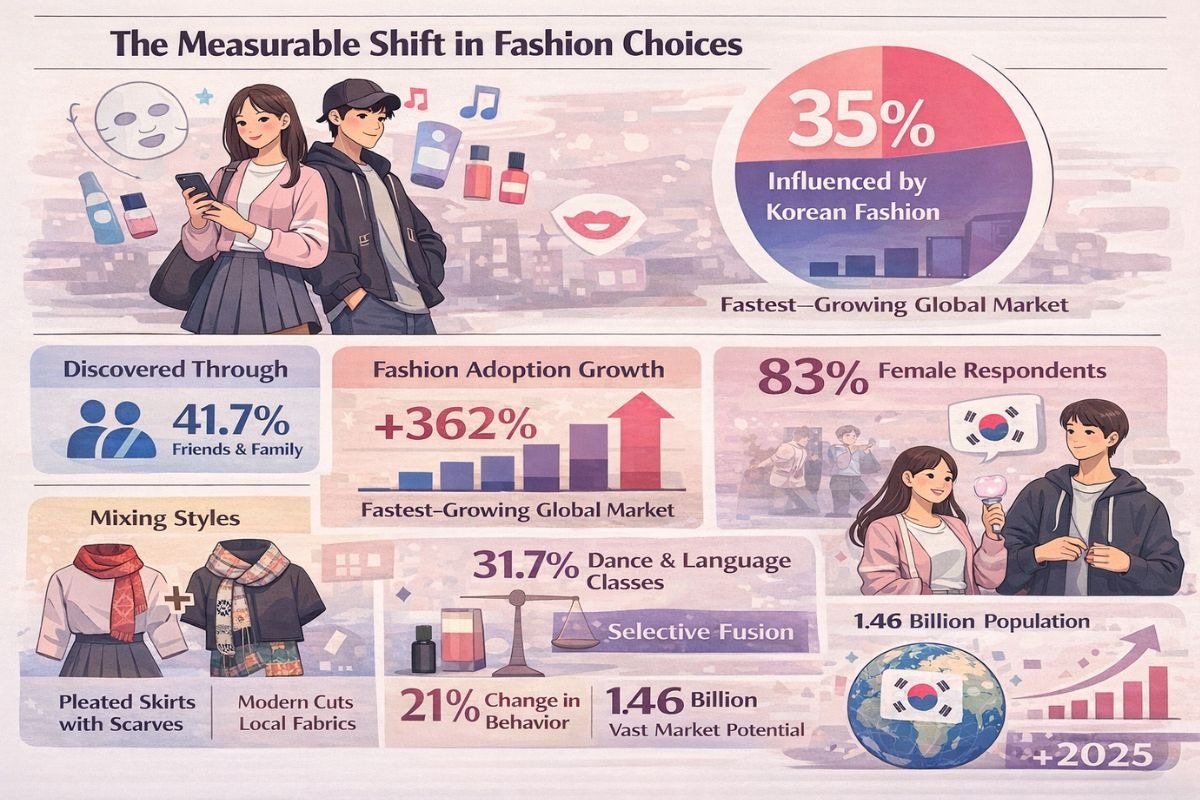
The survey sample showed an 83% female composition, indicating that young women lead this fashion evolution, though male adoption of items like subtle eyeliner continues growing. Comparing Korean minimalism to the traditional vibrancy of mainstream cinema highlights how the fluid aesthetic boosts the wearer’s confidence. Data show that 31.7% of respondents are taking dance or language classes related to their interest in these styles, suggesting that fashion serves as a gateway to deeper cultural engagement.
Market analysts view the country’s 1.46 billion population as the next major frontier after other Asian markets. Statistics confirm a 21% shift in beauty purchasing behaviour, though 68.3% report minimal fashion influence, suggesting selective fusion rather than wholesale replacement of existing preferences. The numbers quantify an evolution in how young people present themselves, using accessible international aesthetics to address personal insecurities and experiment with identity.
Tracking the Explosive Growth in K-Pop Music Consumption
The nation now ranks among the top markets globally for Korean pop music streams, with that documented 362% growth between 2018 and 2023 making it the fastest-growing market according to streaming platform analytics. Generation Z drives this consumption overwhelmingly. Groups like BTS and Blackpink dominate listening habits, with major metropolitan areas showing particularly high engagement. One city logged 545,000 monthly BTS listeners while another recorded 495,000, with hit songs like “Dynamite” topping domestic charts. Survey data indicates 68.3% of respondents actively follow Korean pop music, while 43.3% also watch variety shows featuring these performers.
The lockdown period created a pivot point in consumption patterns. Streaming platforms reported that 30% of new users discovered Korean music during this time, while fan events drew 4,000 contestants to cover dance competitions, demonstrating active rather than passive engagement. Industry reports from 2025 noted that Korean entertainment agencies specifically identified this market as actionable for expansion, reflecting these usage patterns.
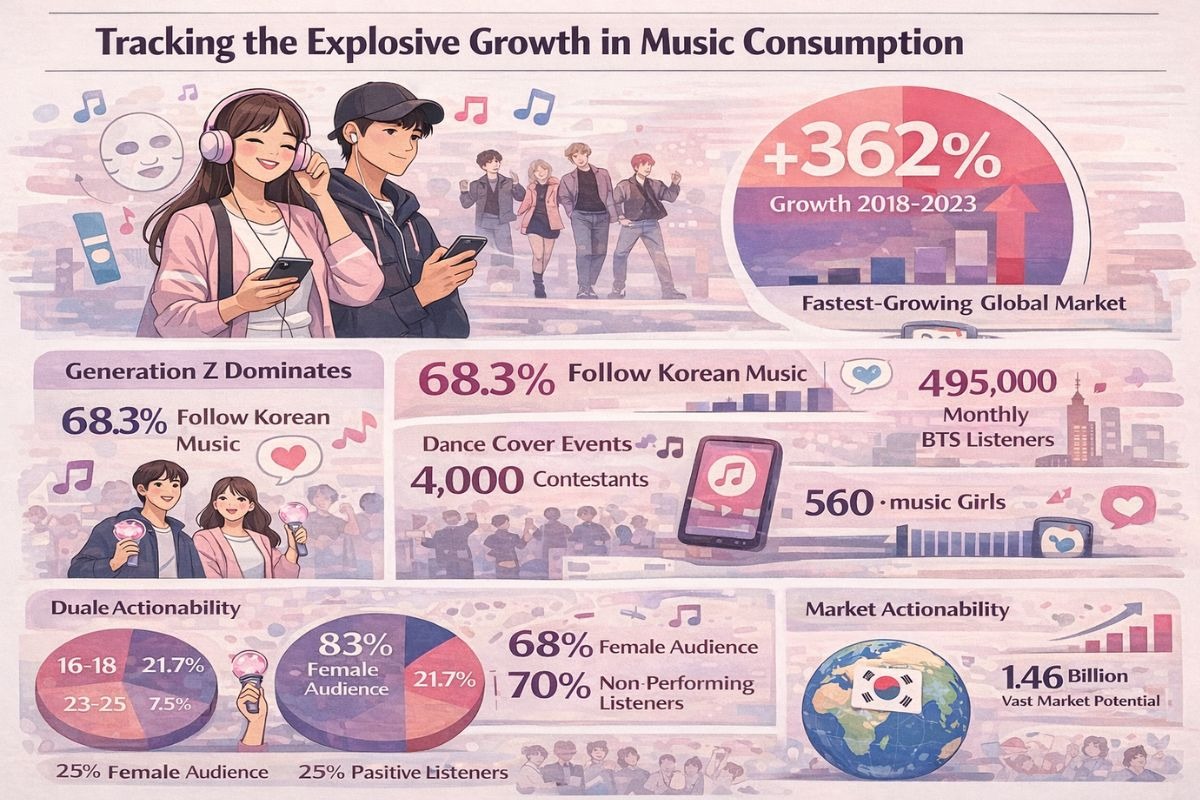
Analysing the depth of engagement reveals that 70% remain non-performing listeners, while 30% create cover content, signalling a shift from purely passive consumption to creative participation. The audience skews female at 83%, though male listenership continues rising. Video view counts progressed from early viral hits reaching billions to a sustained mainstream presence through 2025, with year-over-year growth remaining double-digit.
Musical preferences now blend Korean tracks with local fusion experiments, with playlist analysis showing 60% of selections are Korean-influenced for mood-based listening. The constant release schedule from multiple groups creates sustained engagement but also carries risks of addictive consumption patterns among some users. The data conclusively establishes that what began as a niche interest reached a pivot point, fundamentally remixing listening habits, with the 84.5% content affinity rating reflecting genuine cultural adoption.
K-Pop Quantifying Changes in Social Interactions and Values
Korean pop culture fosters new forms of social bonding, with 30% of survey respondents engaging in dance or artwork creation, while 31.7% enrolled in related classes. Fan interactions build unity across traditional social divides. Among the 60 people surveyed, 71.7% reported that Korean dramas sparked conversations about empathy and emotional openness, topics previously considered difficult to discuss. The content also challenges gender norms by presenting fluid styles and emotional vulnerability in male characters. Online communities using dedicated apps connect to offline gatherings like flash mobs, supported by that 84.5% Hallyu affinity rating.
Escapism emerges as a core driver in the data. Young people describe the polished, idealised worlds in Korean content as providing cathartic relief. However, this same appeal can lead to addictive consumption among individuals who struggle with constant content drops and release cycles. The 61.7% reporting moderate life changes includes increased acceptance of vulnerability and greater awareness of mental health issues addressed in song lyrics. Female audiences dominate at 83%, but the 362% overall growth suggests a broadening demographic reach.
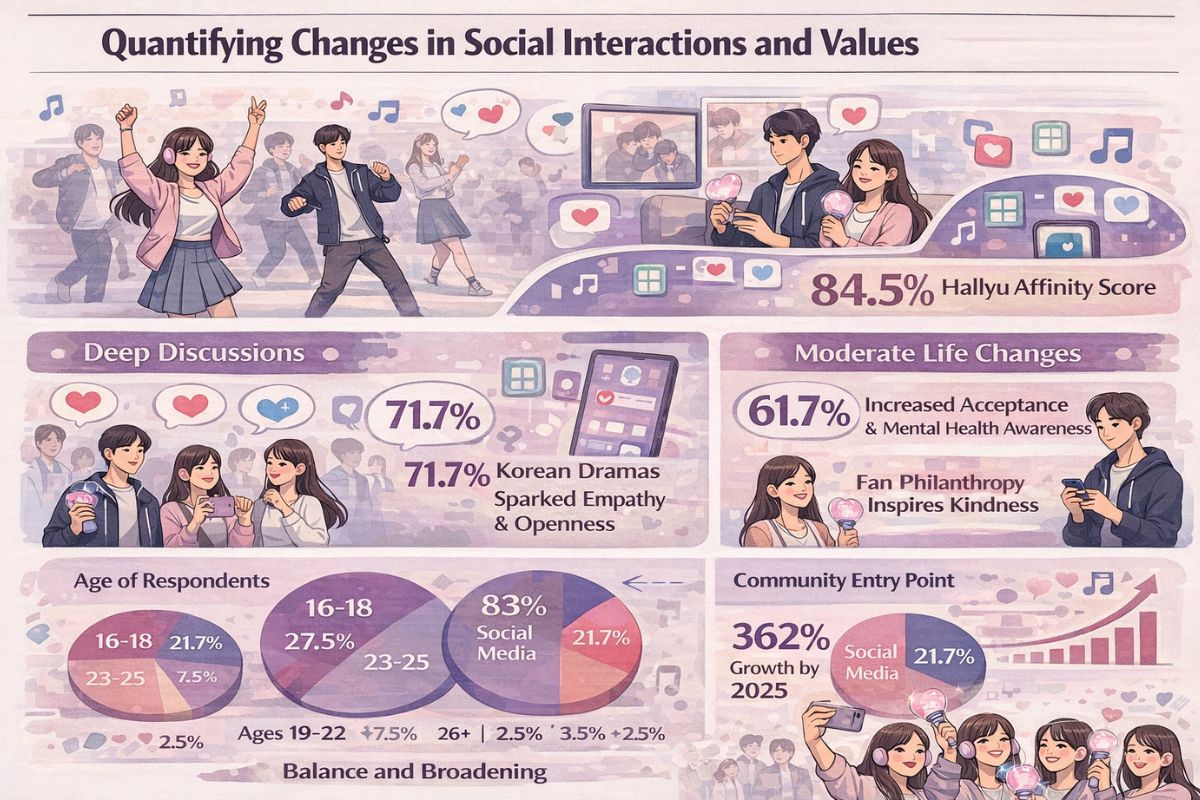
By 2025, the statistical evidence showed fandoms translating into measurable industry presence, with behavioural shifts toward kinder interpersonal interactions. Fan service culture, where performers model charitable giving and social responsibility, inspires similar values among audiences. Compared to previous patterns of isolated media consumption, 21.7% of respondents cited social media as their entry point into these communities, building connections that span both global and local dimensions.
The age distribution shows a peak engagement among the 19 to 22 cohort at 68.3% of the sample, indicating where social behaviour changes concentrate most heavily. These metrics reveal warmer interaction patterns and freer emotional expression emerging from fan participation. The data maintains balance by showing 21.7% report minimal social impact, preventing overclaiming of universal influence. What the numbers reveal is behavioural softening among a significant portion of young people, creating space for more open social flows and cross-cultural connections.
Also Read:Maha Shivratri Vigils: How Fasting Devotees Practice Selflessness
You can connect with DNN24 on Facebook, Twitter, and Instagram and subscribe to our YouTube channel.