
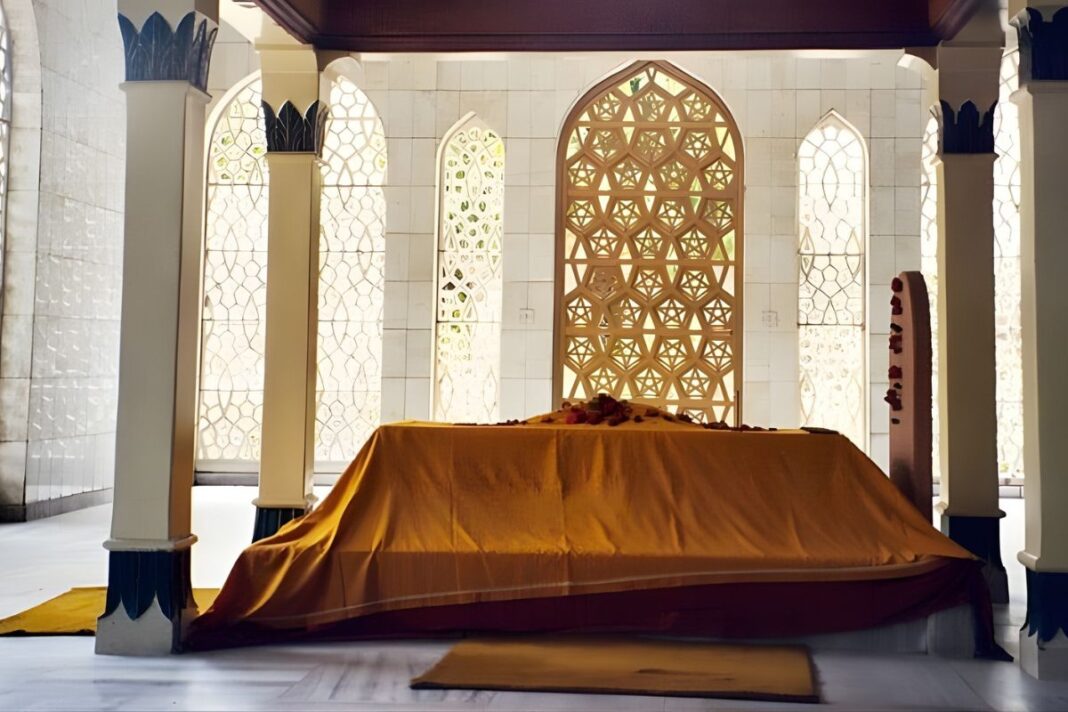

Under the soft, uneven light of Nizamuddin Basti, there is a quiet corner many Delhi-walas still overlook: The Dargah of Hazrat Inayat Khan, the musician-saint who carried Indian Sufism to the West and then returned to rest forever in the city of saints. His grave lies very close to the famous shrine of Hazrat Nizamuddin Auliya, yet it holds a very different story. It is the story of a veena player who turned his music into prayer, of a traveller who became a bridge between continents, and of a man whose tomb today attracts seekers from Amsterdam to Ajmer, from California to Chandni Chowk.
Step into that small marble courtyard and you feel something unusual. The usual hustle of Nizamuddin suddenly softens, as if the noise outside has been lowered like the volume of a radio, and only an inner music is playing. It may be because Inayat Khan himself believed that the whole universe is a symphony of vibrations, and that the human heart is an instrument meant to be tuned to love, harmony and beauty. Standing by his dargah, you realise that this is not just the resting place of a Sufi. It is the final note of a life-long raga that began in Baroda, travelled through New York, London and Paris, and found its last, gentle fade-out in Delhi’s old lanes.
In a time when we scroll more than we sit in silence, his small tomb in Nizamuddin feels like a personal whisper to each visitor: slow down, listen, and let your heart remember its own forgotten music.
From Baroda’s court to the world
Long before his name appeared on signboards in European Sufi centres, Inayat was simply a sensitive boy in Baroda, born in 1882 into a family where music was not entertainment but almost a sacred profession. His grandfather, Maula Bakhsh, was a renowned musician who viewed classical music as a strict discipline, and young Inayat grew up in a home where riyaz mattered as much as daily bread.
As a court musician in Baroda, he played the veena and sang before princes and dignitaries, but something quietly disturbed him: applause came easily, inner satisfaction did not. The turning point arrived when he met his spiritual guide, Sayyid Abu Hashim Madani of Hyderabad, who recognised in this gifted musician a restless seeker and initiated him into the Chishti Sufi path.
Under Madani’s guidance, Inayat began to feel that the subtle joy he found in certain ragas was a doorway to something even higher. That sound itself could be a ladder towards God. After his pir’s passing, he carried a straightforward instruction like a secret note in his pocket: “Go to the West and spread the message of unity.”
In 1910, he left India, not as a political envoy or a wealthy trader, but as a travelling musician with a tanpura, a few companions, and an inner conviction that his music could build bridges where languages and borders could not.
Nizamuddin basti and the hidden shrine
To understand the dargah of Hazrat Inayat Khan, you must first understand its neighbourhood: Nizamuddin Basti, a dense, old quarter that grew around the 13th-century shrine of Hazrat Nizamuddin Auliya, the great Chishti saint of Delhi. Narrow lanes, flower sellers, qawwali echoes, beggars, foreign tourists, local devotees – all these threads weave the basti’s daily life, and somewhere within this maze sits a quieter, more modest tomb, marked by a simple board: “Dargah Hazrat Sufi Inayat Khan.”
He passed away in Delhi on 5 February 1927 after returning from years of exhausting travel in Europe and America. Pneumonia or influenza, aggravated by overwork, ended his earthly journey at just forty-four. His followers arranged for him to be buried close to Nizamuddin Auliya, linking his story physically and spiritually to the centuries-old Chishti tradition.
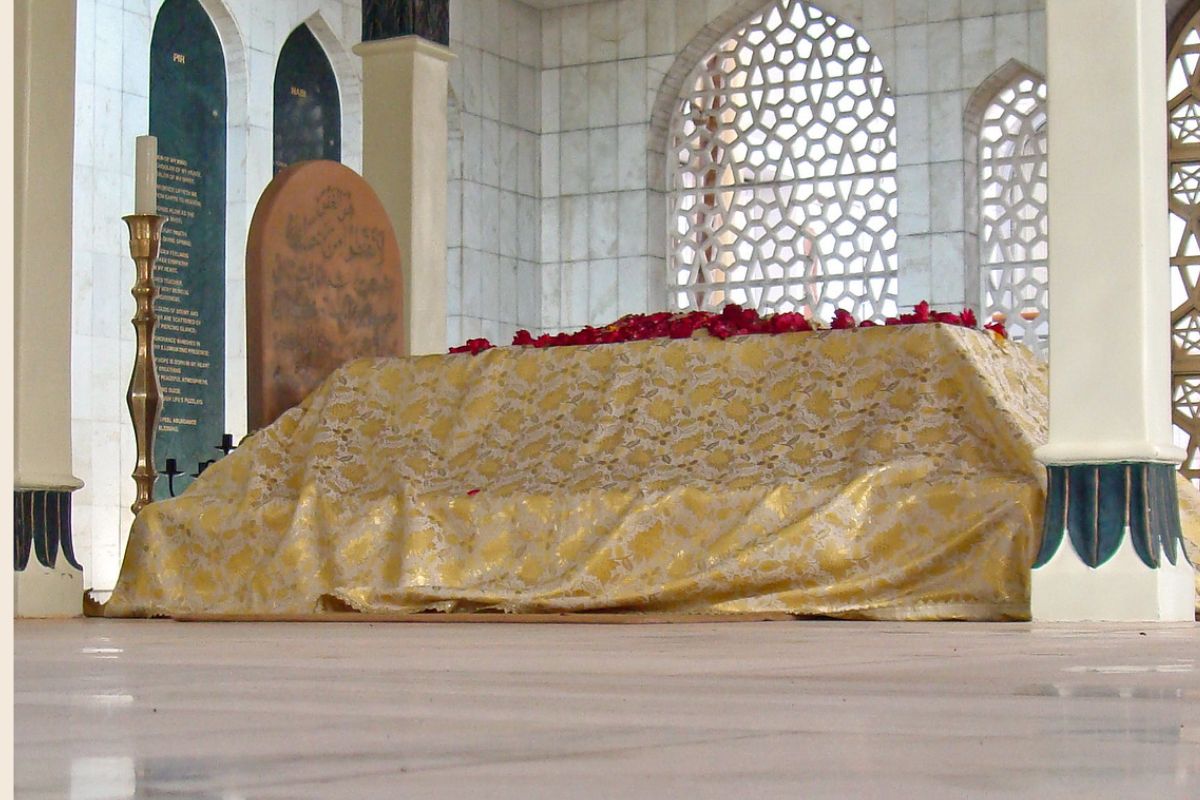
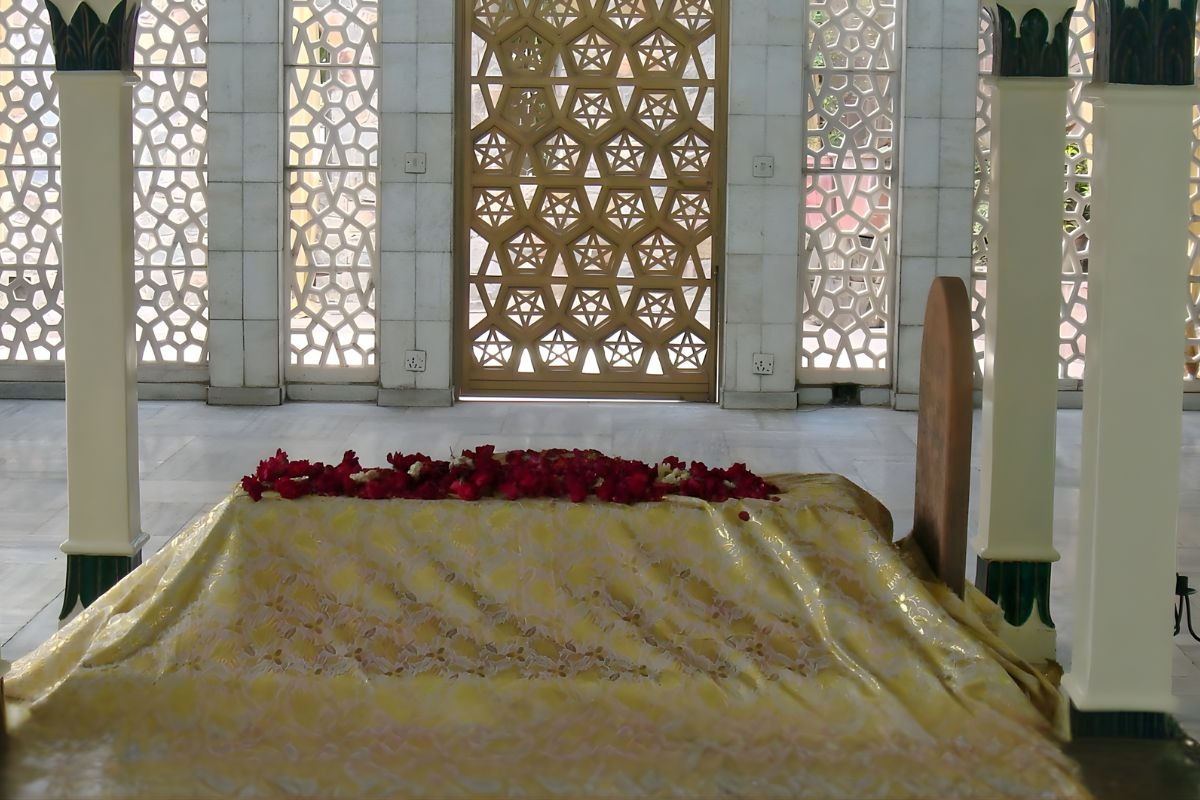
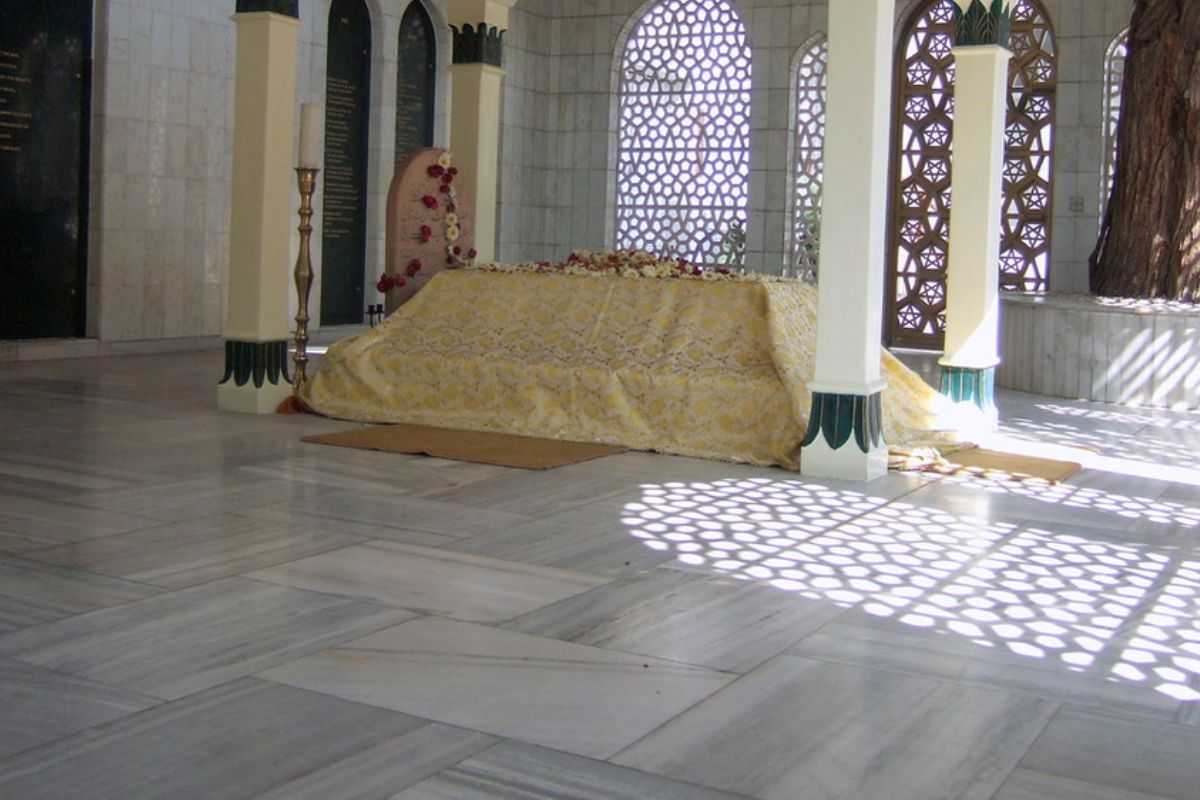
For some years, the grave slipped into neglect, like many small tombs around major dargahs, until disciples and family from Europe helped restore and care for it, turning it into a well-kept, white-marble resting place with fresh flowers and a sense of intimacy rather than grandeur.
Today, when you step through its gate, you do not feel overawed as in a huge shrine. Instead, you feel almost as if you have entered someone’s private courtyard, a space where one could sit, talk softly, or place a hand on the cool stone and unburden the heart. In that simplicity lies its real power: the dargah becomes less a monument and more a personal meeting point between the seeker and the story of a man who carried Delhi’s Sufi fragrance far beyond India and then brought it back again to this basti.
A Sufi who tuned the West
Inayat Khan’s fame is not built on miracles or political dramas. It rests instead on a quieter revolution: introducing Western audiences to the inner teachings of Sufism, hungry for meaning beyond material success.
Beginning in 1910, he travelled through the United States and then Europe, at first performing Indian classical music and gradually weaving short talks about the spiritual nature of sound and the unity of all religions into his concerts. By 1914, in London, encouraged by his students, he formally founded what came to be called “The Sufi Order in the West,” not as a separate religion but as a path emphasising the oneness of God and the harmony underlying all prophetic messages.
In his lectures and writings, he spoke not in dense theological language but in clear, human terms about love, consideration for others, inner balance, and the possibility of experiencing God not as a distant ruler but as the deepest core of one’s own being. He wrote and dictated many talks on topics such as the nature of the heart, the role of beauty, and how subtle vibrations affect our moods and health, building a kind of “inner school” that guided students step by step from concentration to meditation and then to service.
Centres of his order arose in countries like England, France, the Netherlands and the United States, and he eventually made his home in Suresnes near Paris, where an old house called Fazal Manzil became both a family residence and a khanqah, alive with summer schools and gatherings of seekers from many backgrounds.
When he finally returned to India in the mid-1920s, it was after nearly seventeen years away, carrying with him not riches but a circle of disciples and a living network of hearts connected through the teachings that began in Indian ragas and ended in silent meditation halls across the West.
Why his dargah matters today
If you visit Hazrat Inayat Khan’s dargah on an ordinary day, you may find a small, mixed crowd: an elderly Delhi gentleman who has slipped away from the busier Nizamuddin shrine for a few minutes of quiet; a foreign disciple sitting cross-legged in silent contemplation; perhaps a young musician placing his first harmonium-earned rupees near the grave as a gesture of gratitude.
This simple flow of people itself answers why the place matters today. It silently enacts the very bridge Inayat Khan tried to build: between East and West, Hindu and Muslim, believer and seeker, sound and silence.
In an age of loud arguments about identity, his message that “the need of the world is not learning, but how to become considerate towards one another” feels almost prophetic, gently cutting through noisy debates with a call for basic human courtesy and compassion. His emphasis on inner harmony, on tuning one’s own heart before trying to correct others, speaks directly to our social-media age where opinions are quick but self-reflection is rare.
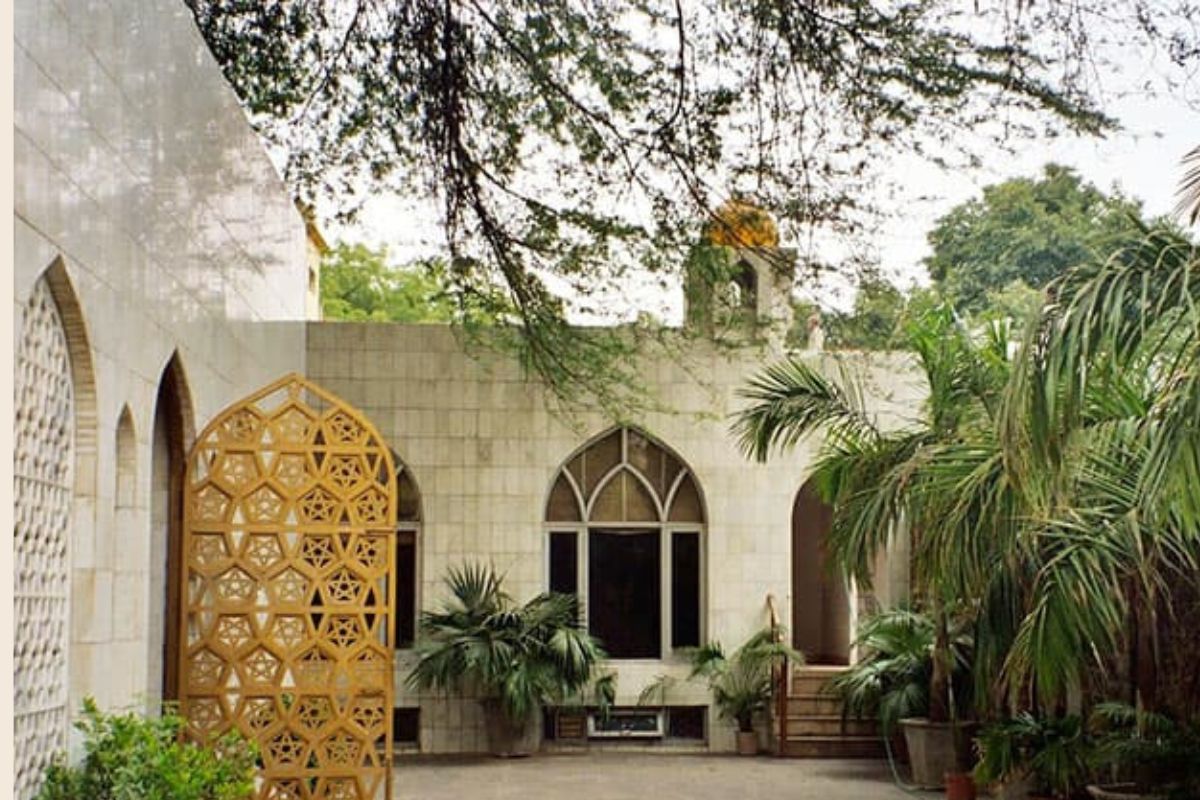
For young Indians walking through Nizamuddin, the dargah also offers a fresh perspective on their own heritage. Here lies an Indian who did not export yoga mats or Bollywood songs, but carried the fragrance of Sufism – its love, inclusiveness and respect for all prophets to faraway lands long before “globalisation” became a fashionable word.
To sit by his grave is to remember that spirituality need not shout, that actual influence may travel quietly through music, kind words, and patient teaching, and that a life dedicated to love, harmony and beauty can leave a trace strong enough to pull strangers from many countries into one small courtyard in Nizamuddin Basti.
Also Read:Bibi Zulekha: Mother Behind Nizamuddin Aulia’s Greatness
You can connect with DNN24 on Facebook, Twitter, and Instagram and subscribe to our YouTube channel.