
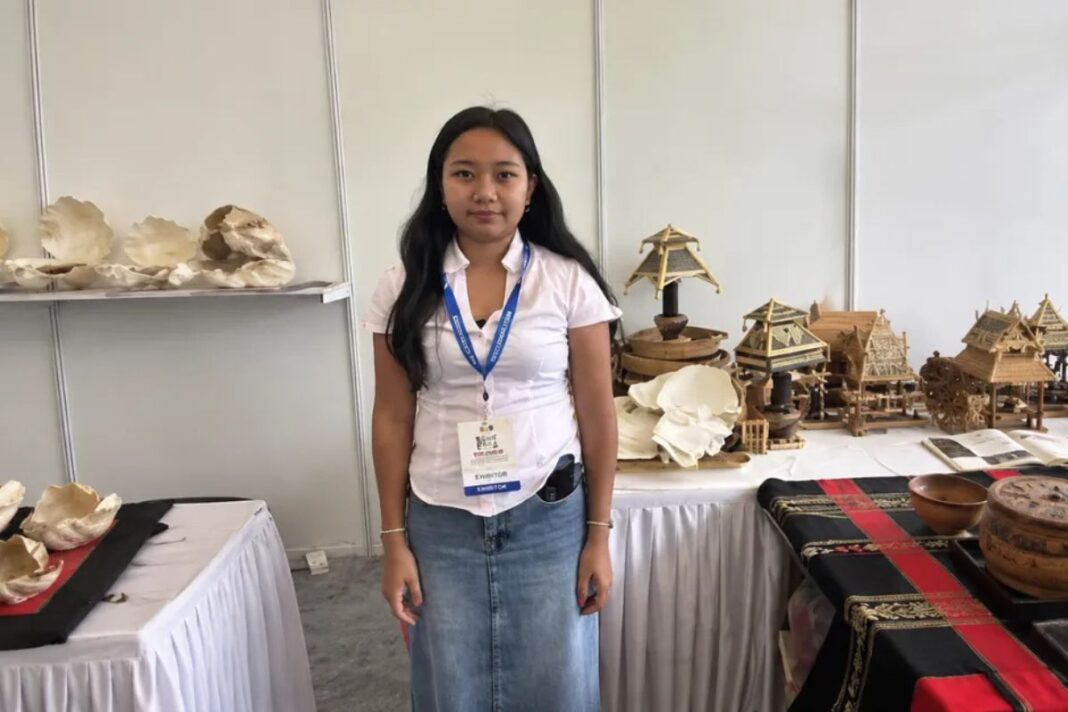

By the time most young people from Lawngtlai district leave for the city, they have already made their peace with leaving things behind. The looms gather dust. The bamboo baskets sit unsold by the roadside. The recipes for fermented foods pass from memory into silence. At 24, Debongshi Chakma decided to go the other way.
In Kamalanagar, a settlement in Mizoram’s southernmost district, Debongshi Chakma founded the Bodhibloom Society, a collective that now counts more than 500 members, nearly all of them women. The organisation does not treat Chakma traditions as relics to be admired. It treats them as working assets.
What Bodhibloom Actually Does
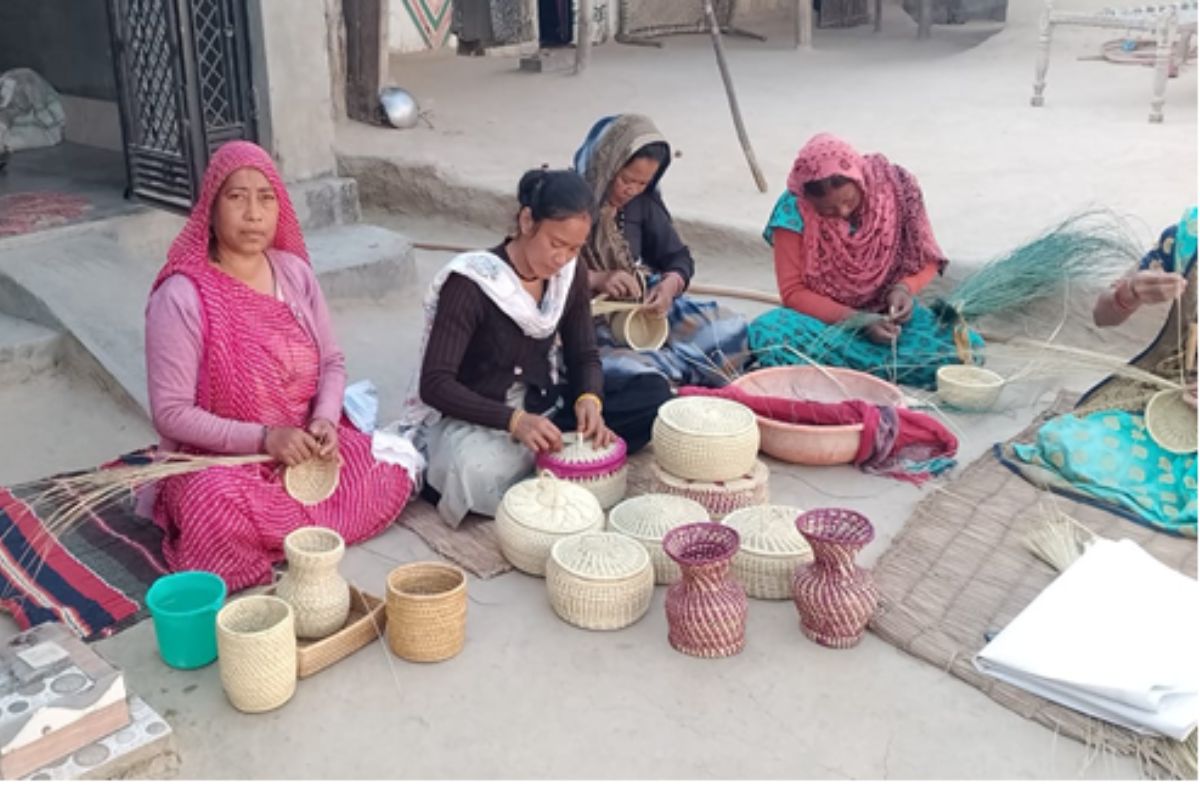
The collective is built around skills that Chakma women have practised for generations: handloom weaving, bamboo and cane craft, fermented and dried foods, and the agricultural rhythms of jhum, the traditional shifting cultivation method native to the region.
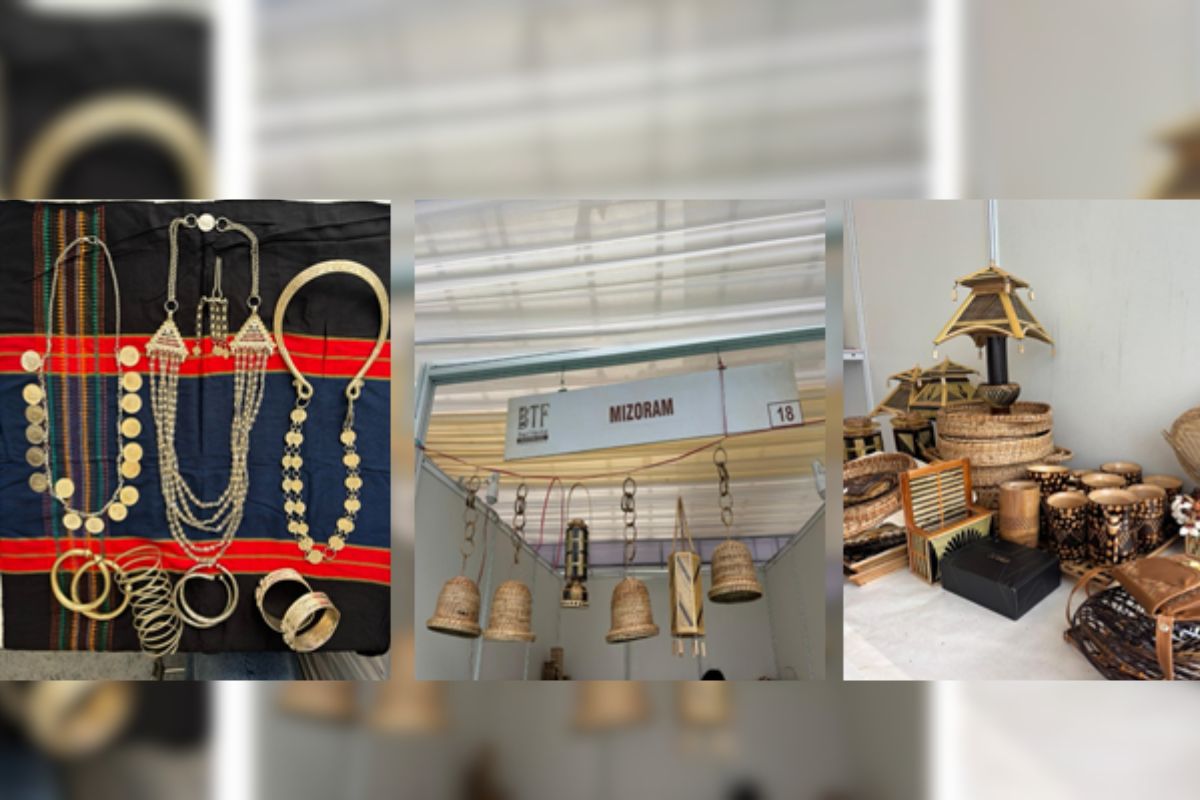
Where most rural self-help initiatives stop at training, Bodhibloom goes further. It functions as a producer collective, pooling the output of individual artisans and small farming households into a single supply base large enough to attract institutional buyers and market platforms. A lone weaver in a village of two hundred people has almost no negotiating power. A collective of five hundred, with consistent output and a known identity, has a different conversation entirely.
Handwoven textiles are sold under the Bodhibloom identity. Bamboo baskets and household items, made from sustainably harvested bamboo by member artisans, are marketed as environmentally sound and culturally specific products, which allows them to command a better price than raw material or generic craft. Value-added traditional foods, produced from jhum-grown crops, reach buyers who would not otherwise encounter them.
Whom It Is Built For
Bodhibloom’s membership is deliberately shaped around vulnerability. Women from socially marginal positions, including those who are divorced or otherwise without a primary household income, form a significant portion of the collective. This is not incidental. In remote districts like Lawngtlai, where formal employment is scarce and transport links to larger markets are poor, the difference between a reliable income and none at all often depends on whether a woman can convert her existing skills into something a buyer will pay for.
The collective provides that conversion. A woman who grew up weaving does not need to be retrained. She needs to be connected: to materials, to consistent orders, to a market that understands what she is selling.
The Economics of Cultural Preservation
There is a particular logic in what Bodhibloom has built, and it is worth stating plainly. When a craft tradition generates income, the people who practise it have a financial reason to continue. When it does not, the knowledge erodes gradually, and then all at once, when the last person who remembers it is no longer there to teach it.
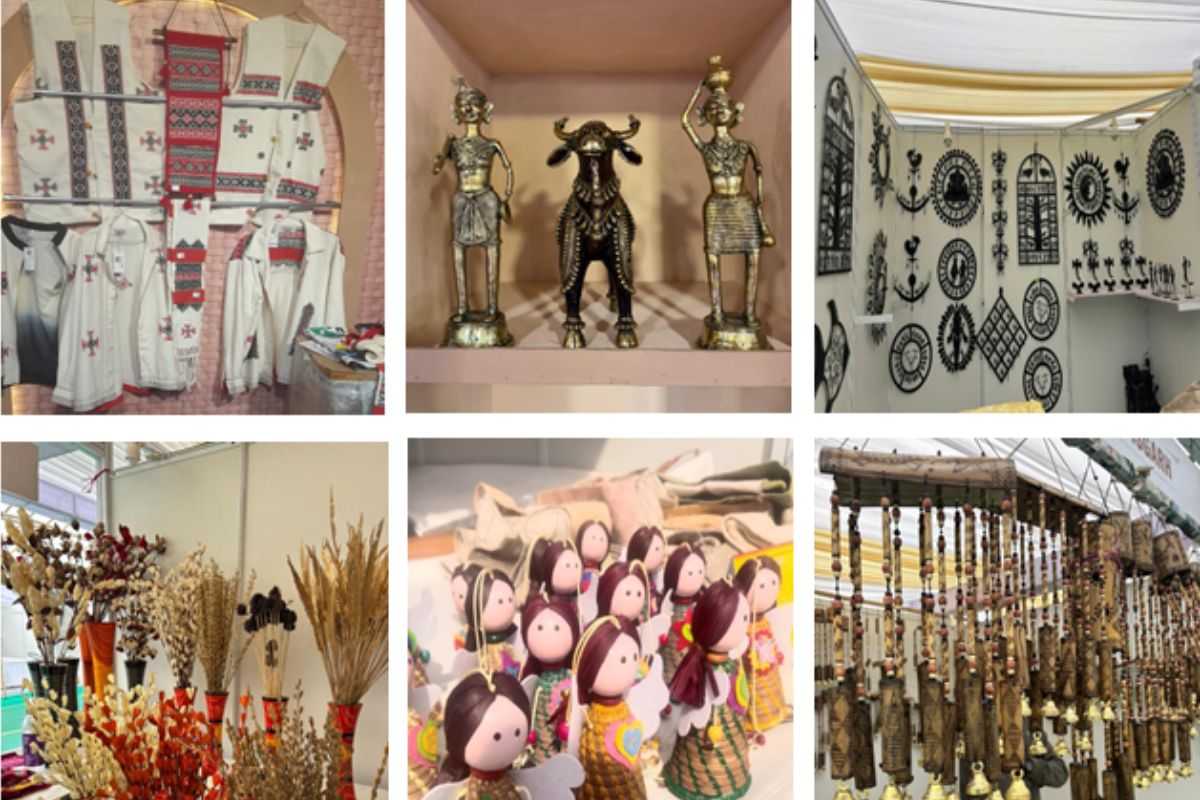
Bodhibloom ties revenue directly to the continuation of specific practices. Weavers have reason to teach their daughters particular patterns. Bamboo artisans have reason to document and refine their methods. Farmers using jhum cultivation have a market for what their land produces. Heritage becomes, in this model, a genuine economic category rather than a subject for cultural festivals.
This is not a new idea, but it is well-executed. Moreover, in Mizoram, where tribal traditions are among the most distinct and least-documented in the country, the stakes of getting the execution right are considerable.
Market Challenges the Collective Must Navigate
Success at this scale does not arrive without friction.
Tribal crafts from the Northeast face a persistent visibility problem. Outside local markets, buyers do not know these products exist. Without that awareness, demand stays flat no matter how good the craft.
Quality consistency is another constraint. When production is distributed across dozens of individual households, the finished products vary. A buyer placing a bulk order needs to know that the twentieth basket will meet the same standard as the first. Building that reliability requires training, inspection, and sometimes the willingness to turn away output that does not meet the mark.
Intermediaries remain a structural problem across rural Indian craft markets. When producers have no direct path to buyers, intermediaries capture most of the margin. The artisan who spends three days on a piece of work earns far less than the market price suggests.
Working capital is a quiet but persistent obstacle. Raw materials must be purchased before the finished product is sold. For households without savings or access to credit, that gap can stop production entirely. Seasonal supply of jhum crops and bamboo adds another layer of unpredictability.
There are also longer-term risks. Young people with options are choosing other occupations. If the craft base shrinks over a generation, the collective shrinks with it. Institutional support programs exist at the state and national levels. However, their implementation in remote districts is inconsistent, and accessing them requires paperwork, knowledge, and persistence that many rural artisans lack.
Where Institutional Support Enters the Picture
Several government-linked programs are designed for exactly this collective. The Van Dhan Vikas Kendra model, run through TRIFED, is structured around cluster-based tribal enterprise, pooling artisans for better production, packaging, and market access. Tribes India, the retail and e-commerce network connected to TRIFED, links tribal producers directly to urban buyers through airports, curated retail, and online platforms.
At the state level, Mizoram’s rural livelihoods programs offer additional channels, including yarn subsidies and market facilitation support for handloom producers. These mechanisms matter particularly for collectives in districts like Lawngtlai, where geography makes independent market access expensive and slow.
Bodhibloom’s structure fits these programs well. It is women-led, skills-based, and rooted in verifiable cultural specificity, which is precisely the profile that tribal enterprise support is designed to serve. With sustained technical assistance, the collective has a genuine path toward steadier income, broader distribution, and more rigorous documentation of the craft knowledge it depends upon.
A Young Founder’s Longer Ambition
Debongshi Chakma belongs to a generation that did not have to choose between cultural identity and economic ambition. She is building an institution that insists those things are the same project.
At the heart of Bodhibloom is a straightforward conviction: that the skills Chakma women have carried for centuries are not liabilities in a modern economy. They are assets that have been chronically underpriced and underorganised. The collective, at its core, is an attempt to correct that.
Whether it scales further will depend on how well it navigates market access, product development, and the institutional relationships that determine funding and distribution. However, 500 members in a district that most of the country cannot locate on a map is not a small beginning. It is a working proof of concept that development can move toward tradition rather than away from it.
Also Read: How Bugun Tribe Protected Wildlife and Transformed Local Livelihoods
You can connect with DNN24 on Facebook, Twitter, and Instagram and subscribe to our YouTube channel.