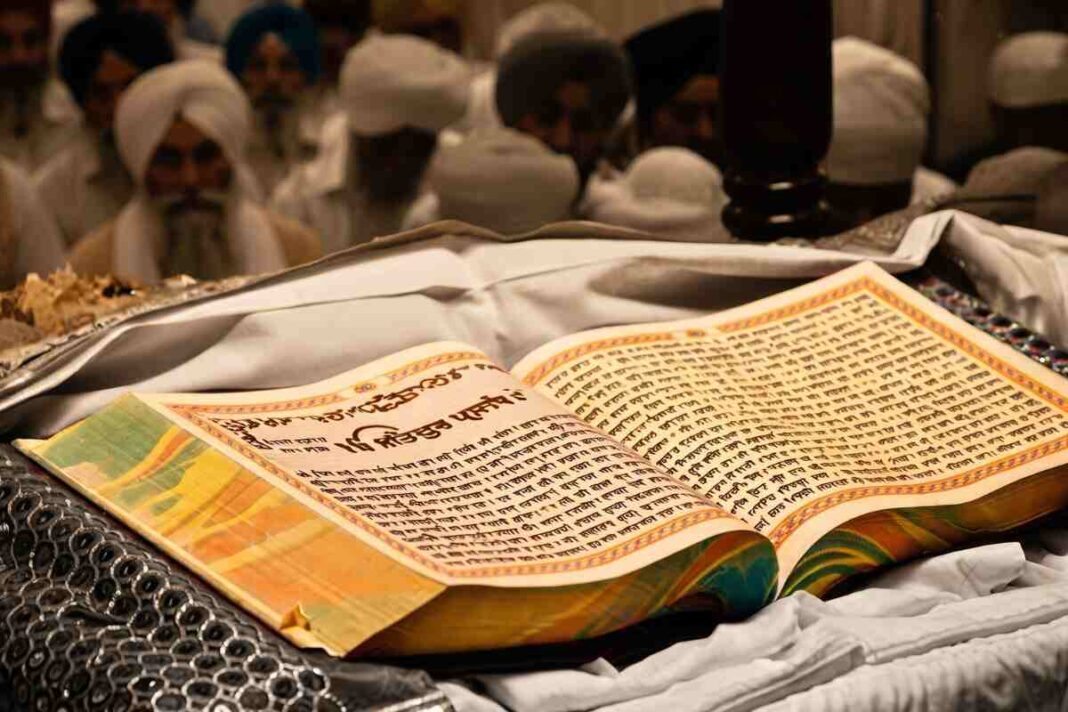

The Guru Granth Sahib is regarded as the Guru of all humanity in Sikh tradition. The sacred writings within it bring together the spiritual voices of Sikh Gurus, Bhagats, Bhatt poets and close Sikh associates of the Guru Ghar.
The fifth Sikh Guru, Sri Guru Arjan Dev Ji, undertook the compilation of the Adi Granth with the assistance of Bhai Gurdas Ji. The collection brought together Bani that reflected the principles of Gurmat and rose above boundaries of religion, caste, region, language, poverty and wealth.
Its teachings emphasised equality, dignity, compassion and humanity. They also gave a sense of equality to people pushed away from society because of their caste and birth.
Many Voices, One Spiritual Message
The Bani of six Sikh Gurus is included in the Guru Granth Sahib: Sri Guru Nanak Dev Ji, Sri Guru Angad Dev Ji, Sri Guru Amar Das Ji, Sri Guru Ram Das Ji, Sri Guru Arjan Dev Ji and Sri Guru Tegh Bahadur Ji.

Alongside the Gurus, the Bani of 15 Bhagats was included. They were Bhagat Jaidev, Baba Sheikh Farid, Bhagat Sadna, Bhagat Trilochan, Bhagat Namdev, Bhagat Sain, Bhagat Ramanand, Bhagat Ravidas, Bhagat Kabir, Bhagat Beni, Bhagat Dhanna, Bhagat Pipa, Bhagat Surdas, Bhagat Bhikhan and Bhagat Parmanand.
The writings of 11 Bhatt poets were also included. Their names are Kalh, Nalh, Gayand, Bhikha, Salh, Kirat, Bhalh, Mathura, Balh, Jalap and Haribans. In addition, the Bani of four close Sikh associates connected with the Guru Ghar became part of the Adi Granth. These included Bhai Mardana, Rai Balwand, Satta Doom and Baba Sundar.
Together, these voices came from different religions, castes, regions and sections of society. Their inclusion gave the scripture a message centred on equality, brotherhood, compassion and humanity.
Guru Nanak Dev Ji and a Changing Society
The social environment of India had developed through different systems of classification over centuries. The four major varnas, Brahmin, Kshatriya, Vaishya and Shudra were recognised within Hindu society. Over time, Islam also spread across different parts of India.
It was in this wider historical environment that Guru Nanak Dev Ji emerged. Born during the period of the Lodhi dynasty, Guru Nanak Dev Ji travelled extensively across India and other regions, sharing a message of humanity, equality and living together.
His teachings offered a different way of looking at society and human relationships. Guru Nanak Dev Ji came to be regarded as the founder and first Guru of Sikhism.
During the early 15th century, social conditions had become deeply affected by various practices and customs. Guru Nanak Dev Ji used his Bani to guide people towards truth, equality and humanity.
After him, Guru Angad Dev Ji developed and promoted the Gurmukhi script. He also helped preserve the Bani of Guru Nanak Dev Ji and the writings of other Bhagats and Bhatt poets. Guru Amar Das Ji and Guru Ram Das Ji continued this work.
Guru Arjan Dev Ji and the Adi Granth
Guru Arjan Dev Ji, the youngest son of Guru Ram Das Ji, became the fifth Sikh Guru. A blessing associated with his birth was the phrase, “Dohita Bani Ka Bohitha,” referring to his future connection with Bani.
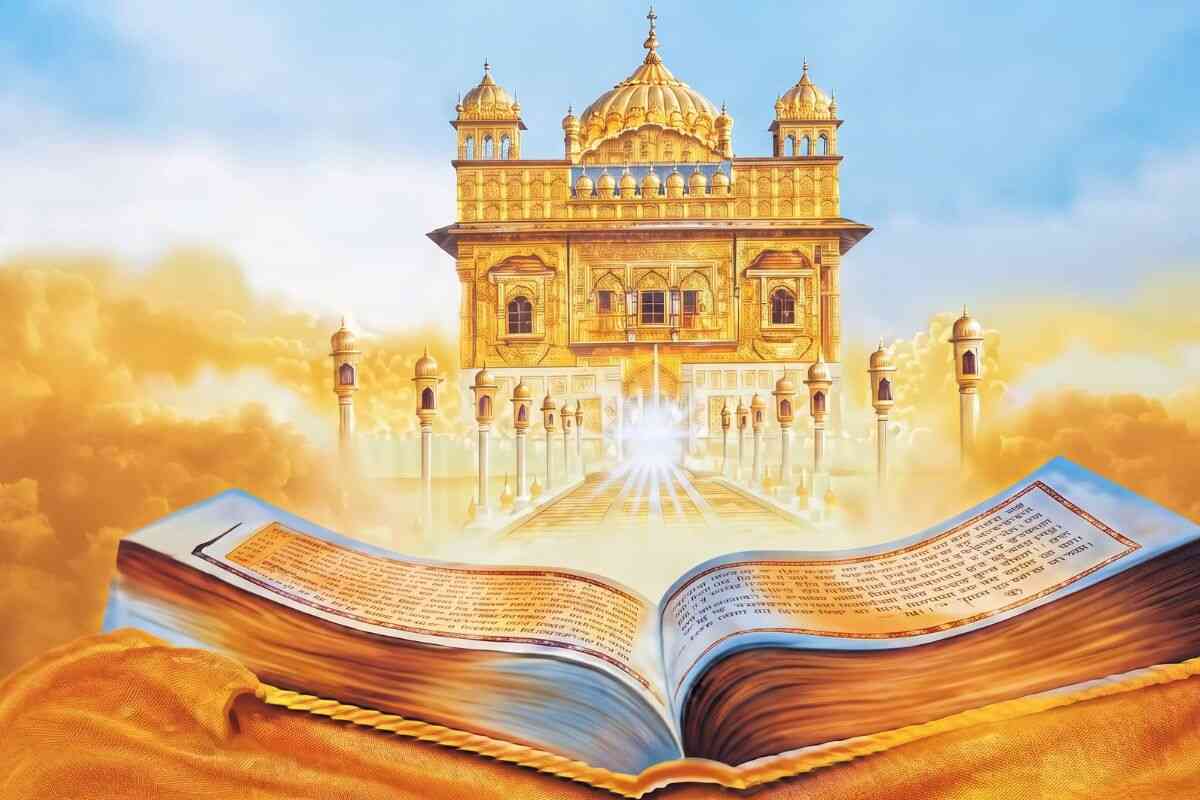
Guru Arjan Dev Ji collected the Bani of the first four Gurus along with the writings of 15 Bhagats and 11 Bhatt poets. He also included 2,216 of his own compositions. The entire collection was written down by Bhai Gurdas Ji, who prepared the Bir that came to be known as the Adi Granth.
The Adi Granth contains 1,430 Angs, or pages, and its Bani is organised largely around 31 principal ragas. It was completed in August 1604 and installed at Harmandir Sahib in Amritsar in September 1604.
Baba Buddha Ji, one of the most respected and spiritually experienced figures in the Guru Ghar, was appointed as the first head Granthi of Harmandir Sahib to look after the sacred scripture.
The scripture was written in the Gurmukhi script, but its contents include words and linguistic forms from Punjabi, Sanskrit, Hindi, Braj, Bagri, Awadhi, Bhojpuri, Sindhi, Marathi, Marwari, Bengali, Persian and Arabic.
The use of different languages helped carry the message of Bani to people belonging to different regions and communities. Before preparing the Adi Granth, Guru Arjan Dev Ji obtained the Bani of the first three Gurus from Baba Mohan Ji, the son of Guru Amar Das Ji.
From Adi Granth to Guru Granth Sahib
After Guru Arjan Dev Ji, Guru Hargobind Sahib Ji became the sixth Guru. He had five sons and one daughter: Baba Gurditta Ji, Ani Rai, Atal Rai, Tegh Mal, Suraj Mal and Bibi Viro Ji.
Baba Gurditta Ji’s son, Guru Har Rai Ji, later became the seventh Guru. His brother Baba Dhir Mal Ji possessed a handwritten Bir of the Adi Granth because of his connection with the Guru Ghar.
After Guru Har Rai Ji, Guru Harkrishan Ji became the eighth Guru. He was followed by Tegh Mal Ji, son of Guru Hargobind Sahib Ji, who became Guru Tegh Bahadur Ji, the ninth Guru.
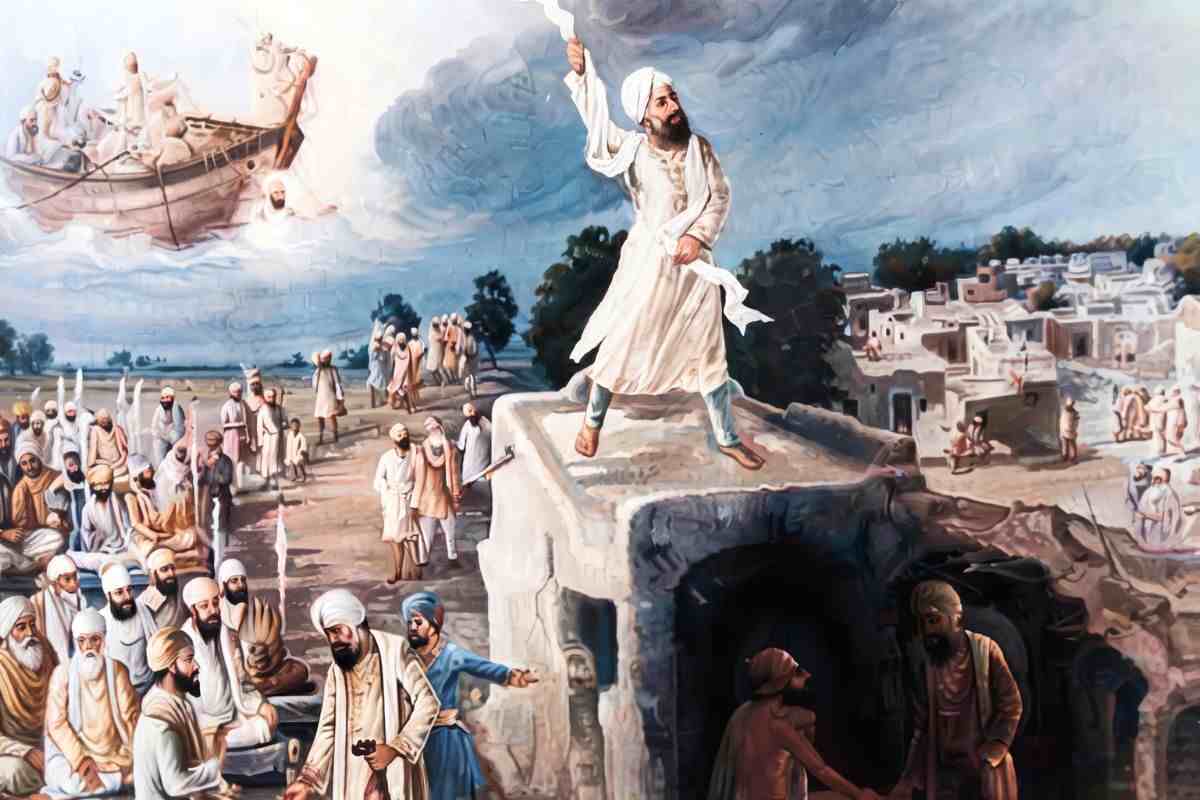
Baba Dhir Mal Ji continued to hold an aspiration for the Guru Gaddi. When Makhan Shah Lubana recognised Guru Tegh Bahadur Ji at Baba Bakala, Dhir Mal became hostile towards him. One of his Masands, Shiha, even fired a shot at Guru Tegh Bahadur Ji, who survived with a minor injury. Guru Tegh Bahadur Ji later established Chak Nanaki, which eventually became known as Anandpur Sahib.
He ultimately sacrificed his life for humanity and freedom of religion. His martyrdom was followed by major events in Sikh history, including the establishment of the Khalsa Panth and the battles fought by Guru Gobind Singh Ji.
Guru Gobind Singh Ji Completes the Scripture
After leaving Anandpur Sahib, Guru Gobind Singh Ji and his family became separated near the banks of the Sirsa River. Written material in the Guru’s possession was also lost in the strong current.
Guru Gobind Singh Ji later sent some Sikhs to Baba Dhir Mal Ji at Talwandi Sabo to request the old Bir. Dhir Mal refused to return it, saying it was an ancestral possession.
Guru Gobind Singh Ji then entrusted Bhai Mani Singh Ji with the task of preparing a new scripture. Guru Gobind Singh Ji recited the Bani while Bhai Mani Singh Ji wrote it down.
Guru Gobind Singh Ji spent nine months at Damdama Sahib in Bathinda. During this period, the new form included the Bani of the first five Gurus, 15 Bhagats, 11 Bhatts, four close Sikh associates and Guru Tegh Bahadur Ji. This new form came to be known as the Guru Granth Sahib.
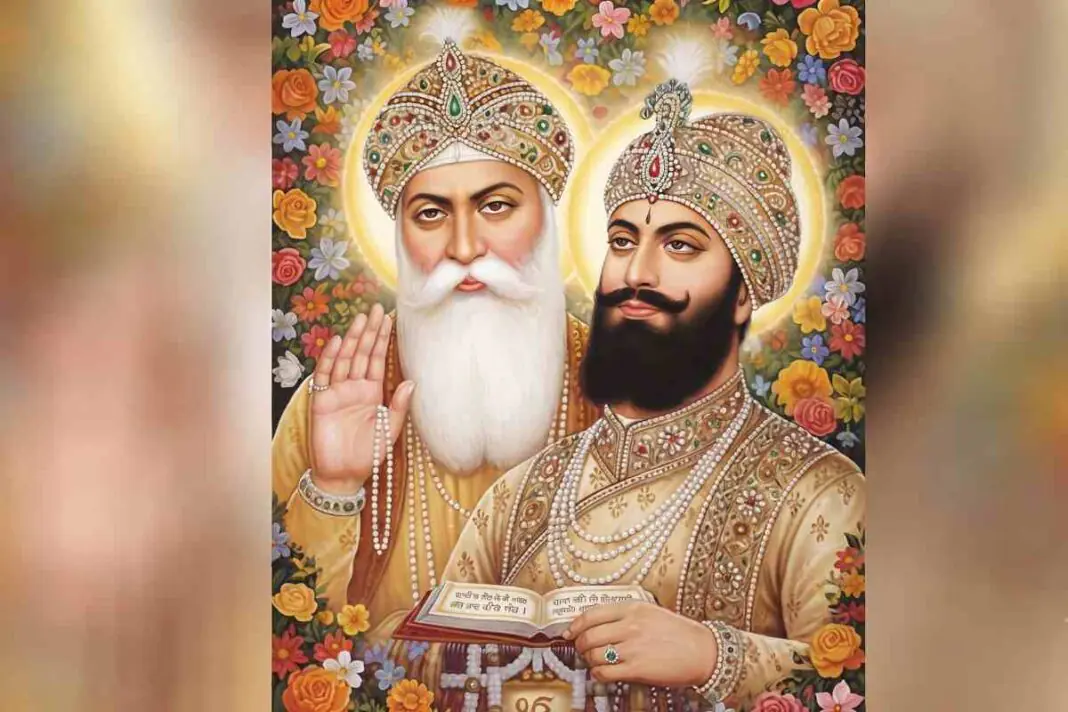
In 1708, at Nanded Sahib, Guru Gobind Singh Ji declared the Guru Granth Sahib the eternal Guru of the Sikhs. Since then, it has been regarded in Sikh tradition as the Shabad Guru.
A Living Tradition
Today, the Guru Granth Sahib is installed and respectfully kept in Sikh Gurdwaras across Punjab and other parts of the country.
According to the revised Nanakshahi Calendar of the Shiromani Gurdwara Parbandhak Committee, 2026 marks the 422nd First Parkash Gurpurab of Sri Guru Granth Sahib Ji.
For the occasion, the Sri Darbar Sahib in Amritsar was decorated with flowers. Around 50 to 60 varieties of colourful, fragrant Indian and foreign flowers were used for the decoration, which was completed by 11 September. The 422nd First Parkash Gurpurab was celebrated on 12 September with devotion and enthusiasm.
From its diverse voices to its message of equality and humanity, the journey from the Adi Granth to the Guru Granth Sahib remains deeply connected with the spiritual and historical tradition of Sikhism.
Article: Prof. Ravinder Singh
Also Read: From Guns to Glamour: Surrendered Naxal Women Walk Fashion Ramp
You can connect with DNN24 on Facebook, Twitter, and Instagram and subscribe to our YouTube channel.