
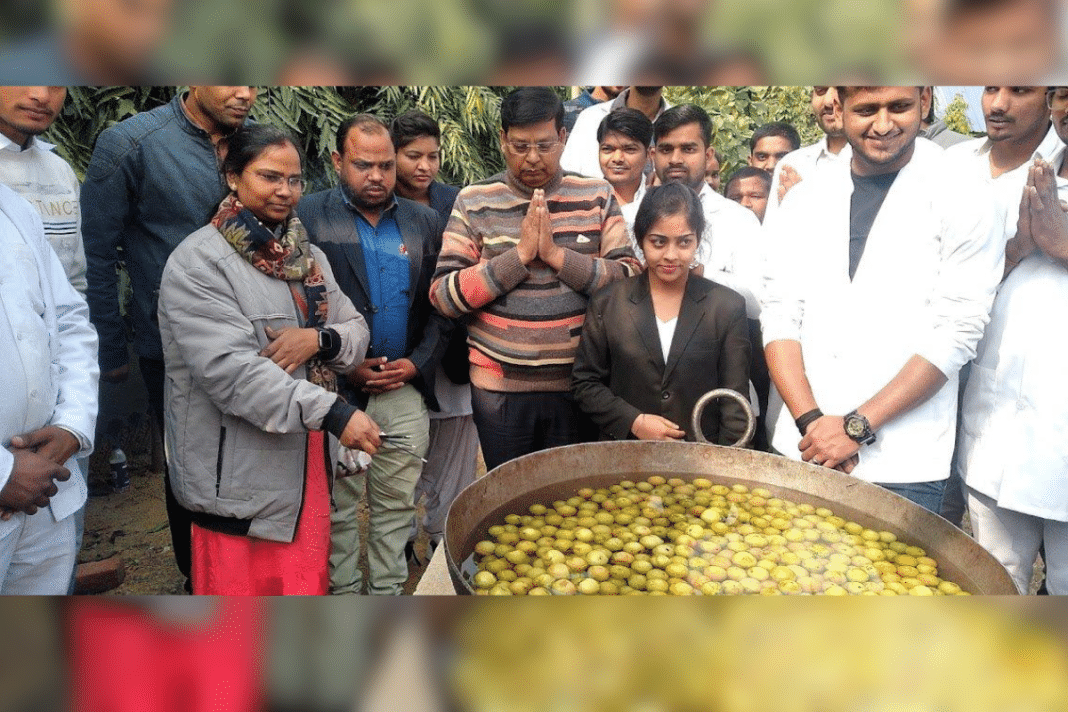

Just as summer slowly gives way to autumn, a lemon is carried door to door in the hills of Himachal Pradesh, revered as an oracle that predicts what the year ahead will bring. The festival is called Sair, and long before anyone in the state saw a harvest calendar printed on paper, farming communities were marking this moment with prayer, food, and an odd citrus fruit.
Sair falls in September or October, though the precise date and attached customs shift from valley to valley. In Kangra, officials describe it as a thanksgiving festival, a time when residents pray for a good harvest and a kind winter. The lemon in question is called a galgal, a hill variety that grows wild across the district. A barber carries it from house to house in a basket, and each household bows before the fruit and offers its prayers for the months to come. In Kangra, this tradition has endured for generations, and nobody treats it as anything less than sacred.
A Season Turning, Not Ending
People sometimes describe Sair as a festival that welcomes winter, but that phrase undersells the significance of the festival. The monsoon has just pulled back. The fields have yielded a good harvest, or are close to it. The air carries the first hint of a chill that was absent a month earlier. Sair sits at that hinge point, when one agricultural season closes and families begin preparing for the cold. It draws together several strands at once: gratitude for what the land has produced, respect for the labor that produced it, and the quiet, practical business of preparing for winter.
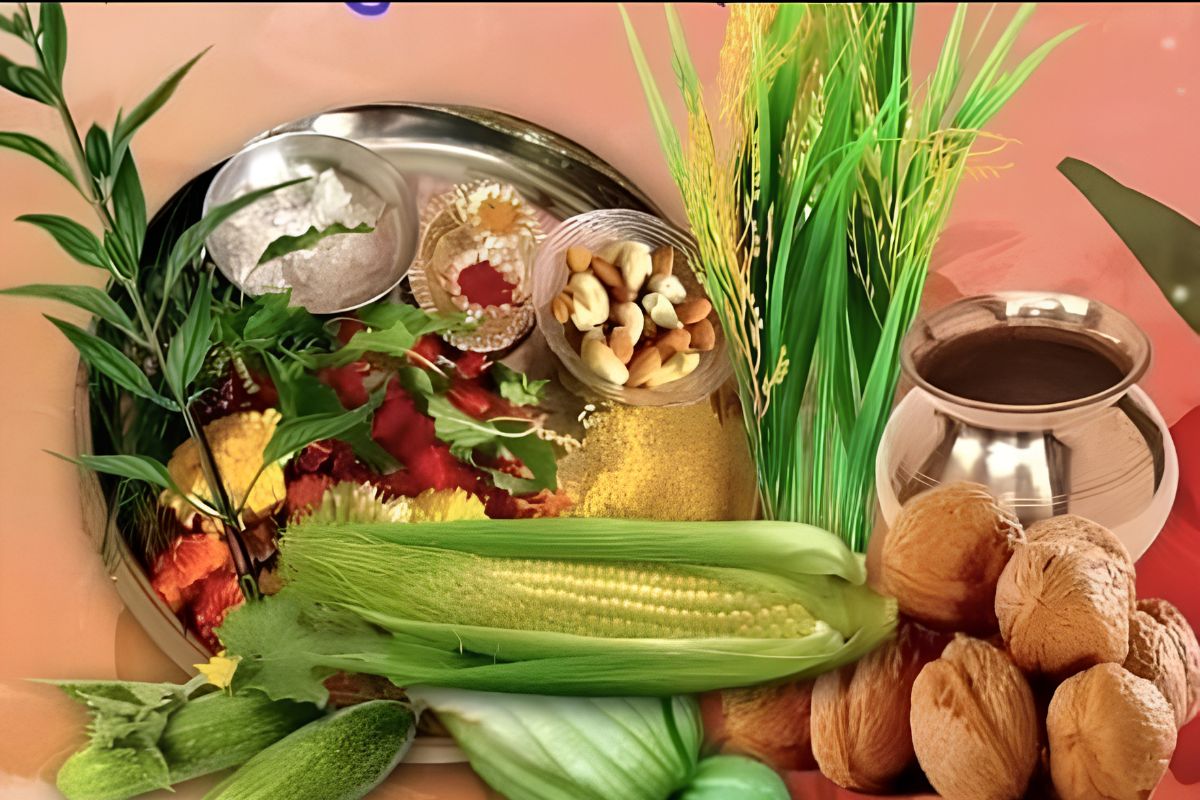
Himachal Pradesh celebrates many festivals tied to the land. The state tourism department notes that many of its fairs grew out of old customs honoring local deities, marking the turn of a season, or celebrating a good crop. Sair belongs to that broader tradition. The grain that comes off a field is not treated as mere produce to be sold or stored. It is treated as something that deserves acknowledgment, and families offer seasonal grain, fruit and vegetables to local deities as a way of saying thank you for the rain, soil, animals and human effort combined.
Crops associated with the festival include maize, barley, rice, horse gram and buckwheat. The produce on offer includes cucumber, pumpkin, bottle gourd, colocasia, guava and, the galgal, a list that says a good deal about how varied the region’s farming actually is.
Why a Walnut Means So Much
If the galgal is Sair’s curious mascot, the walnut is its true currency. Many communities offer walnuts first to local deities, then pass it among relatives, friends and neighbors. Over time, it has picked up a significance beyond nutrition, coming to stand for wisdom, resilience, memory and prosperity, and a walnut handed across a doorway carries all of that in miniature.
The gesture also has a practical side. In the difficult mountainous terrain, where one village might be a stiff climb away from the next, a festival becomes an occasion for people to actually meet and share something. A walnut is a small thing to give, but the message underneath it is not small at all. It says that having plenty is not complete until it has been shared.
The walnut trade around Sair is not just symbolic. A recent report in The Tribune noted that Sair markets in Mandi draw traders and buyers from Chamba, Kullu, Hamirpur, and even Jammu and Kashmir, giving local vendors a genuine seasonal opportunity to sell walnuts and other produce. For farmers, collectors and small traders, a festival like this is one of the more dependable chances in the calendar to earn a living from what the land has given them.
A Storehouse of Plant Knowledge
Some of Sair’s most interesting details sit in the plants families gather for their rituals. In parts of the state, households prepare a bundle of seasonal and medicinal plants as an offering, and the exact selection varies by region, following the biodiversity of whichever valley a family calls home.
Plants that turn up regularly in accounts of the festival include tulsi, giloy, amla, castor, gular and apamarg, along with other species known mainly at the local level. Some have a history of medicinal use; others serve as food, fodder, or purely religious symbols. The practice preserves a body of plant knowledge that has always traveled through families rather than textbooks.
Dr Tara Devi Sen, who heads the Botany Department at Vallabh Government College in Mandi, has described Sair as a point where faith, health, environment and livelihood meet, and reporting on the festival notes that the plants chosen vary with local growth and custom.
This gives Sair a relevance that outlasts the festival calendar. Traditional plant varieties are disappearing in many parts of India, and younger generations often grow up with little exposure to the ecological knowledge their grandparents took for granted. A festival like this can work almost like an informal classroom, keeping names, uses and meanings alive. That said, the plants in a ritual bundle are not a home remedy kit. Correct identification, preparation, and dosage of any medicinal plant call for a qualified practitioner, not a folk memory tied to a festival basket.
Food That Travels Between Homes
Sair reaches into the kitchen as easily as it reaches into the fields. Families cook special dishes, among them bhallas, dahi bhallas, patrodu, pakoras and kachoris, and send portions to relatives and neighbors. The menu changes from one part of the state to another, but the idea holds steady everywhere. The harvest becomes food, and food becomes what keeps a community connected.
In rural Himachal Pradesh, sending a plate of food to another house is not a simple courtesy. It reinforces a web of mutual help that villages still lean on for sowing, harvesting, illness, or bad weather. Elders, meanwhile, do the quiet work of passing the festival’s meaning down. Children learn the names of seasonal grains and plants, watch the household offerings being made, receive blessings, and take part in the walnut exchange themselves.
A Living Custom, Not a Museum Piece
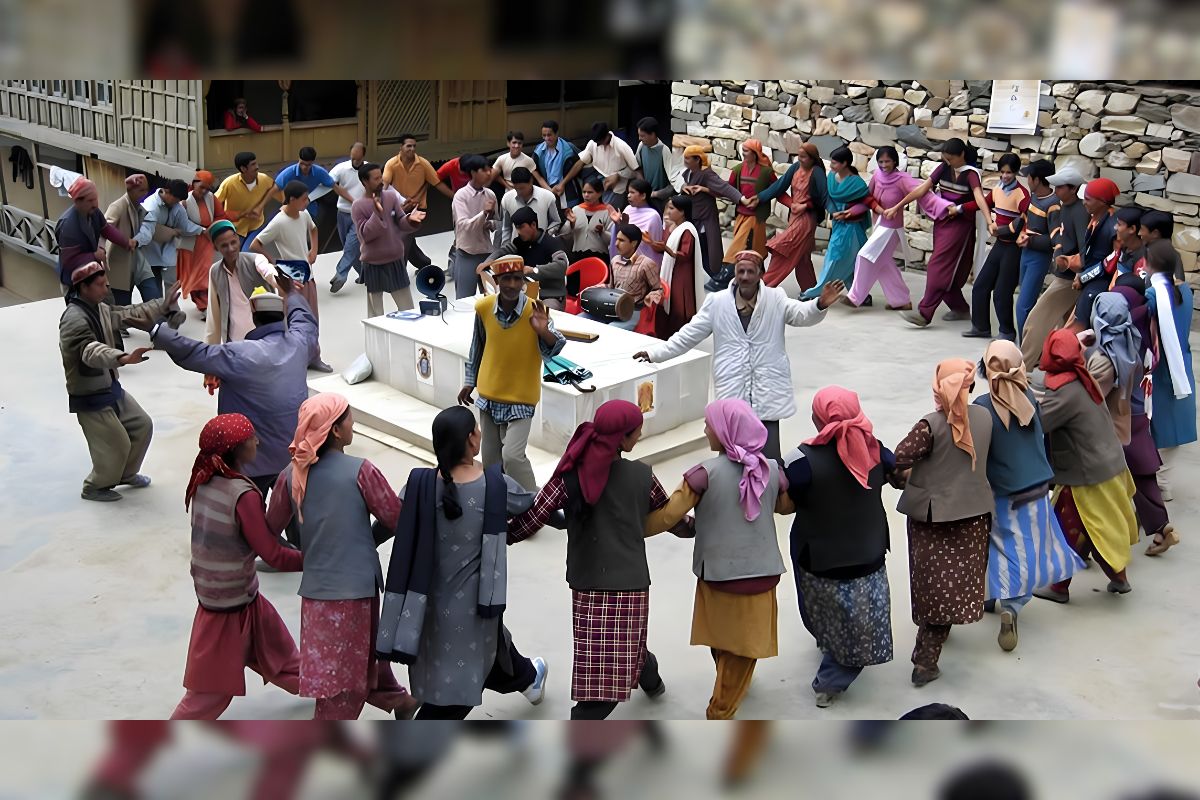
In many areas, Sair spills out into village fairs, folk songs and dances, often built around local instruments and trade stalls. In Kangra, it figures officially among the district’s thanksgiving traditions, and recent reports describe Sair fairs as an important showcase of local heritage and a way to keep community ties intact.
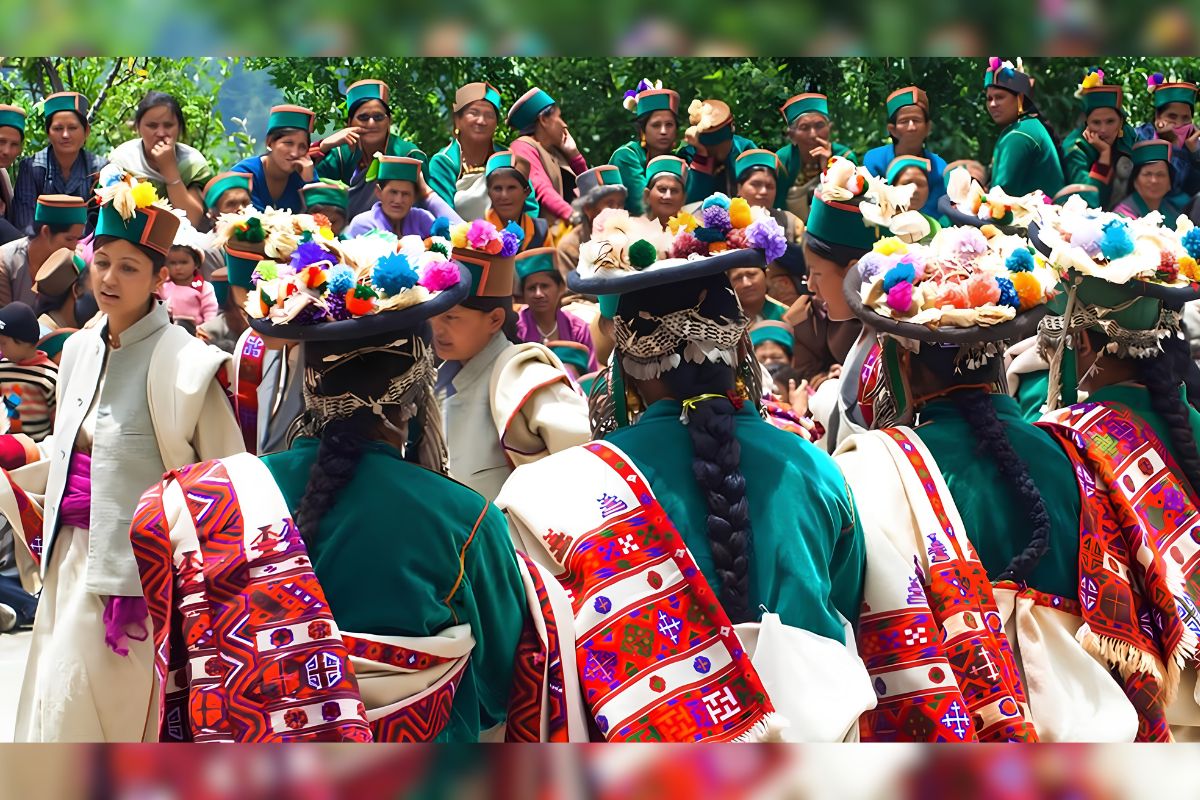
Folk custom rarely survives by sitting quietly in an archive. It survives because people keep singing, dancing, cooking, and gathering around it, generation after generation. For younger residents, a festival like Sair also offers a working bridge between the world they are being educated into and the world their families came from.
What the Festival Still Has to Say
The lesson at the center of Sair is not complicated. Human wellbeing depends on treating nature as a partner rather than a resource to be used up. The festival links rain, soil, seed, plant, animal and human labor into a single picture, and insists that abundance ought to produce gratitude rather than waste.
That message has not aged. It has grown sharper as Himachal Pradesh deals with erratic weather and the slow erosion of traditional farming livelihoods. A festival cannot solve those problems alone, but it can keep alive the values any real solution will need, including moderation, cooperation, and respect for local knowledge.
Sair does not meet winter with dread. It meets the season with preparation and, more than anything, with hope. The harvest is acknowledged, the community gathers, food is shared between households, and the land is treated less like scenery and more like a partner in everyday life. In the passing of a walnut, the offering of a grain, an elder’s blessing, or a barber’s lemon carried from one doorstep to the next, Sair makes a simple argument that still holds up. Prosperity is not just what a person has. It is what they receive with gratitude and choose to share.
Also Read: Libia Lobo:102-Year-Old Lawyer Who Ran Secret Jungle Radio During Goa’s Liberation
You can connect with DNN24 on Facebook, Twitter, and Instagram and subscribe to our YouTube channel.