
A pinch of coloured powder on a stranger’s cheek, and the whole village is said to know the answer. That is the story most outsiders hear about Bhagoria Haat. It is a good story, and it is also the smallest part of what happens each year in western Madhya Pradesh in the week before Holi. In Jhabua, Alirajpur, Dhar and Khargone, the roads fill with people heading to a market that doubles as a festival, a family reunion and a seasonal marker. Those who attend say little about legends. They talk about the drums, the crowds and the sense that the hard months are behind them.
A Market Dressed for a Festival
The word haat means a market, and the simple meaning is worth holding on to. A haat is a periodic gathering where villagers buy goods, trade news, and meet people from settlements that lie far apart. Bhagoria turns this ordinary habit into a holiday. The district administrations of Jhabua and Dhar say the haats begin seven days before Holika Dahan. Because Holi follows the lunar calendar, the dates shift every year, but the festival’s place in the calendar stays fixed.
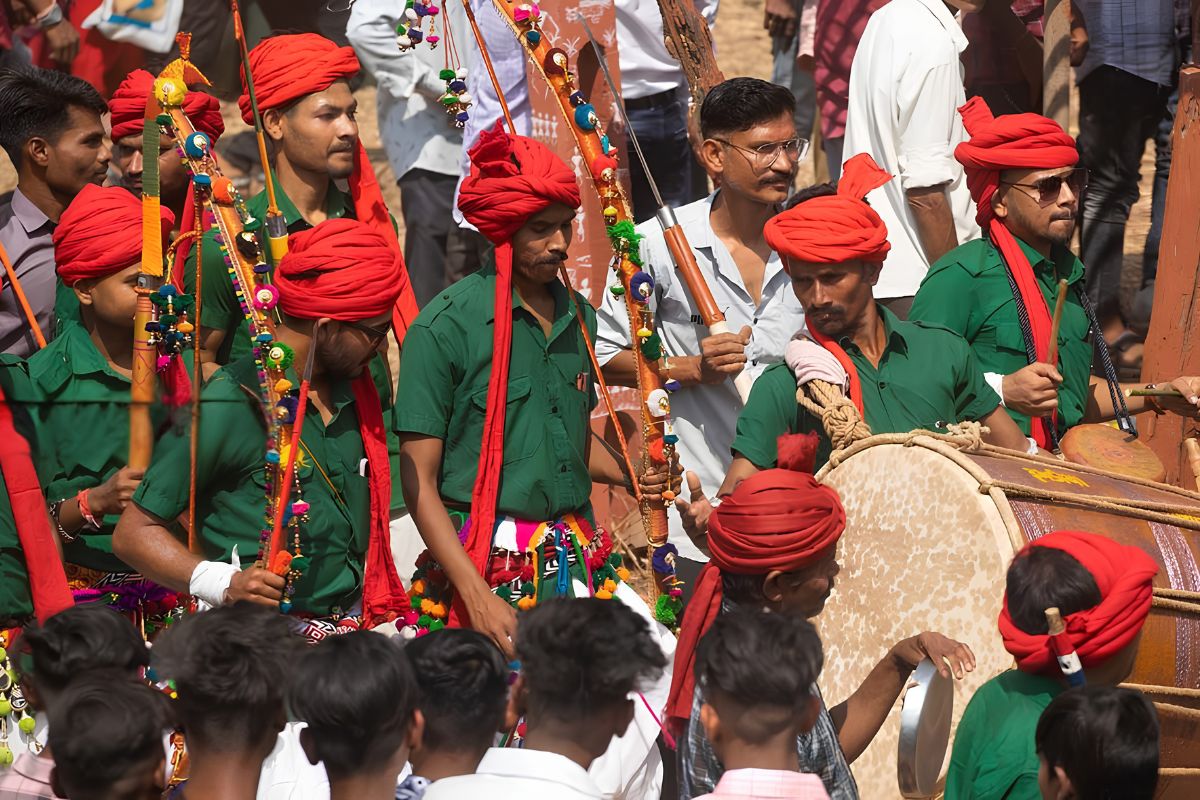
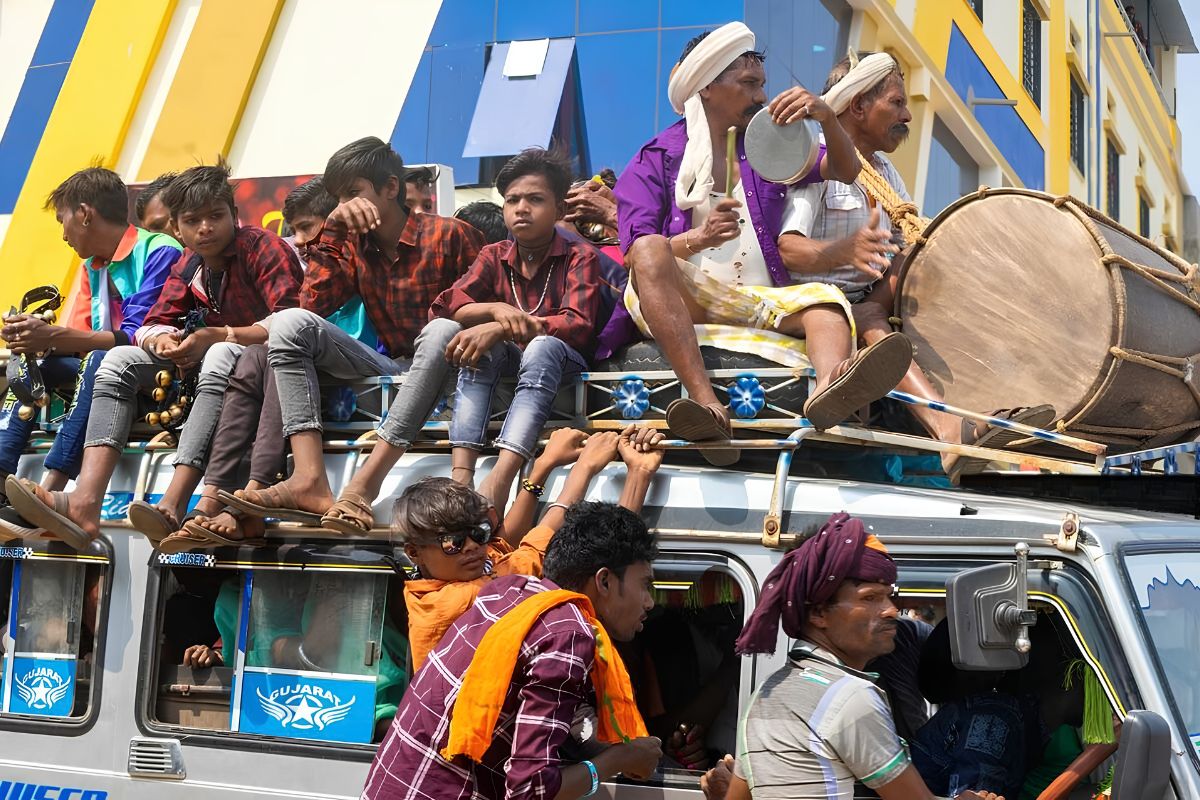
The festival is most closely linked to the Bhil and Bhilala communities. The Alirajpur administration names the Bhil people of Alirajpur, Jhabua and West Nimar as its chief keepers. Over the days of the fair, the gathering moves from one haat to the next, so no single site holds it all. People travel, meet relatives, and return home with purchases and gossip.
Stalls sell vegetables, fruit, clay pots, jewelry, and household goods. Buying and celebrating happen in the same lane, often in the same minute. A farmer haggling over a pot may be humming along to a flute in the next breath. The Dhar administration describes Bhagoria as a haat market where people meet and do business in a cheerful spirit, and that plain description fits well.
Spring Arrives After the Work Is Done
Bhagoria’s timing tells its own story. In March, the main winter crops are generally ripening or have been cut, and the long labor of the farming year begins to ease. The Alirajpur administration places the festival at the start of spring. Madhya Pradesh Tourism connects it with the close of the harvest.
For families who depend on the land, a good harvest brings relief as much as profit. Months of sowing, watering, guarding, and cutting are over, and people finally have the time and the mood to gather. The haat gives that mood a place to go. It is a public, noisy way of saying that the season has ended well.
One caution is fair here. Cropping patterns and local climates differ from village to village, so it would be wrong to claim that Bhagoria marks the end of the same crop everywhere. It falls somewhere between the final harvest and the first days of spring, and that broad description is the safest.
Flutes, Drums and a Changing Wardrobe
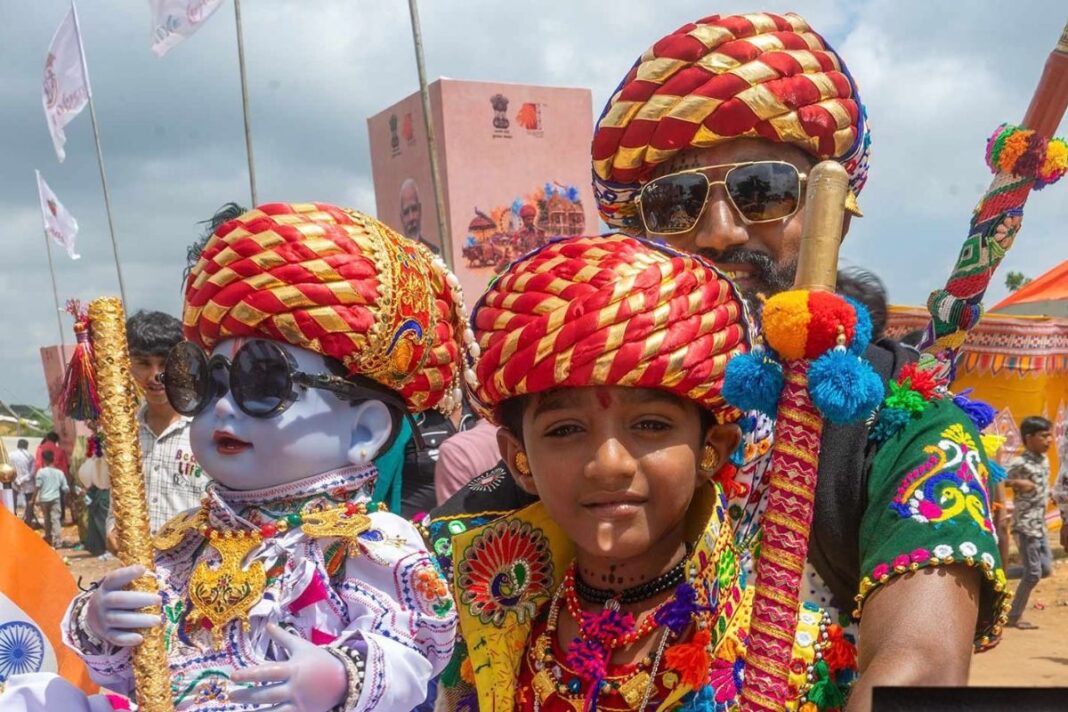
Most visitors remember the sound before anything else. Musicians play flutes and drums, and singing and dancing run through the day. Men and women arrive in bright clothes, and the ornaments, instruments and food on show belong to the people wearing and eating them. The Jhabua administration calls the festival a celebration of life and love through music, dance and color.
That point deserves attention. Bhagoria was never staged for tourists. Its dress, songs and customs matter first to those who take part. A photographer who treats the crowd as scenery has misread the event.
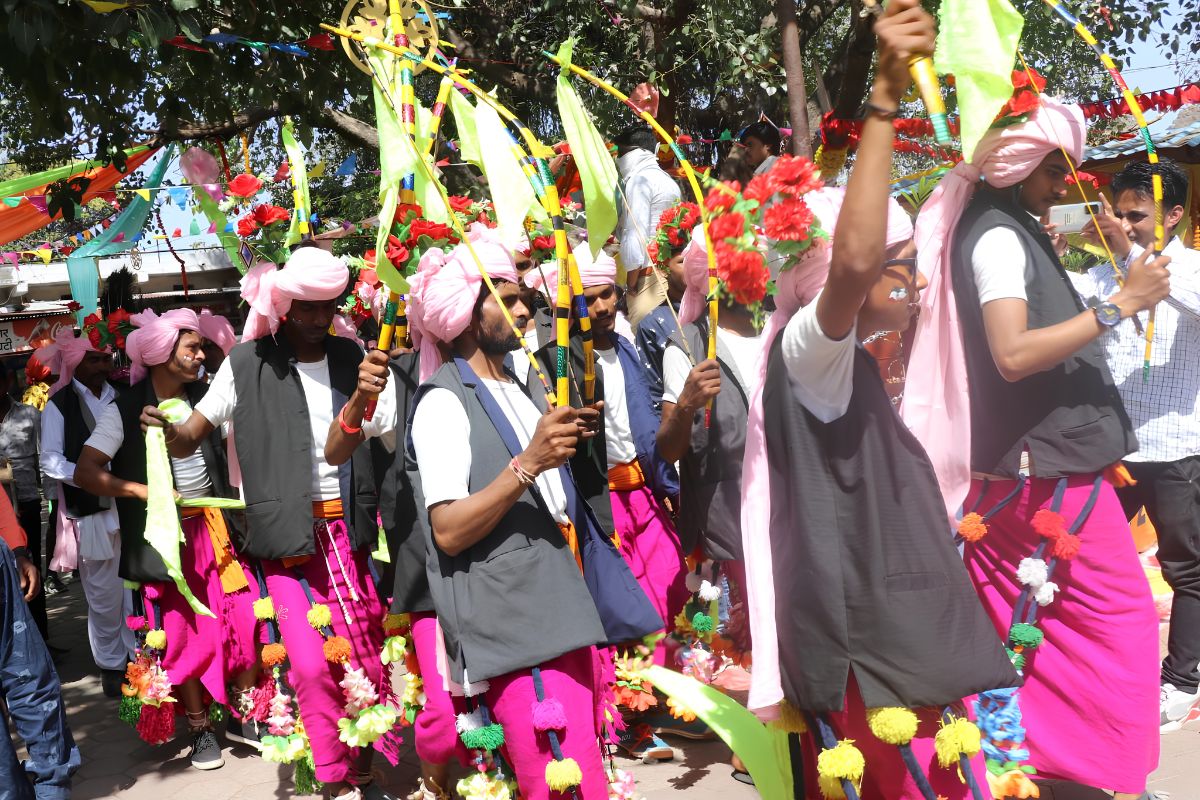
The festival has also changed. The Alirajpur administration notes that young men now often wear modern clothes, and that the style of the songs has shifted over the years. People from neighboring Rajasthan and Gujarat attend some of the fairs, which shows that the festival’s reach crosses state lines. None of this has ended the tradition. Clothes and tunes change with the times, while the habit of gathering stays the same.
Courtship and the Question of Choice
Many accounts call Bhagoria a marriage festival, and the label has stuck. Popular telling goes like this. A young woman who likes a young man applies gulal to his face. If he agrees, the two may soon speak of marriage, and in some versions they leave together. The tale is lively and has helped make the festival famous.
The official district accounts are more modest. They describe young men and women meeting at the haat, with music and social mixing, without describing a fixed marriage rite. The gulal custom appears in popular and oral accounts. It should not be treated as a single ritual followed in the same way by every Bhil or Bhilala group. Practice differs from one community to the next.
What can be said with confidence is that the haat gives young people a public and respectable place to meet. Villages that may sit many kilometers apart send their youth to the same fair, where they can see one another, talk and join in the same celebration. Courtship at Bhagoria happens in full view of elders, neighbors and cousins. The festival gives personal choice a seat inside the larger life of the community.
Two Stories About One Name
Where does the name come from? Ask around, and you will hear more than one answer.
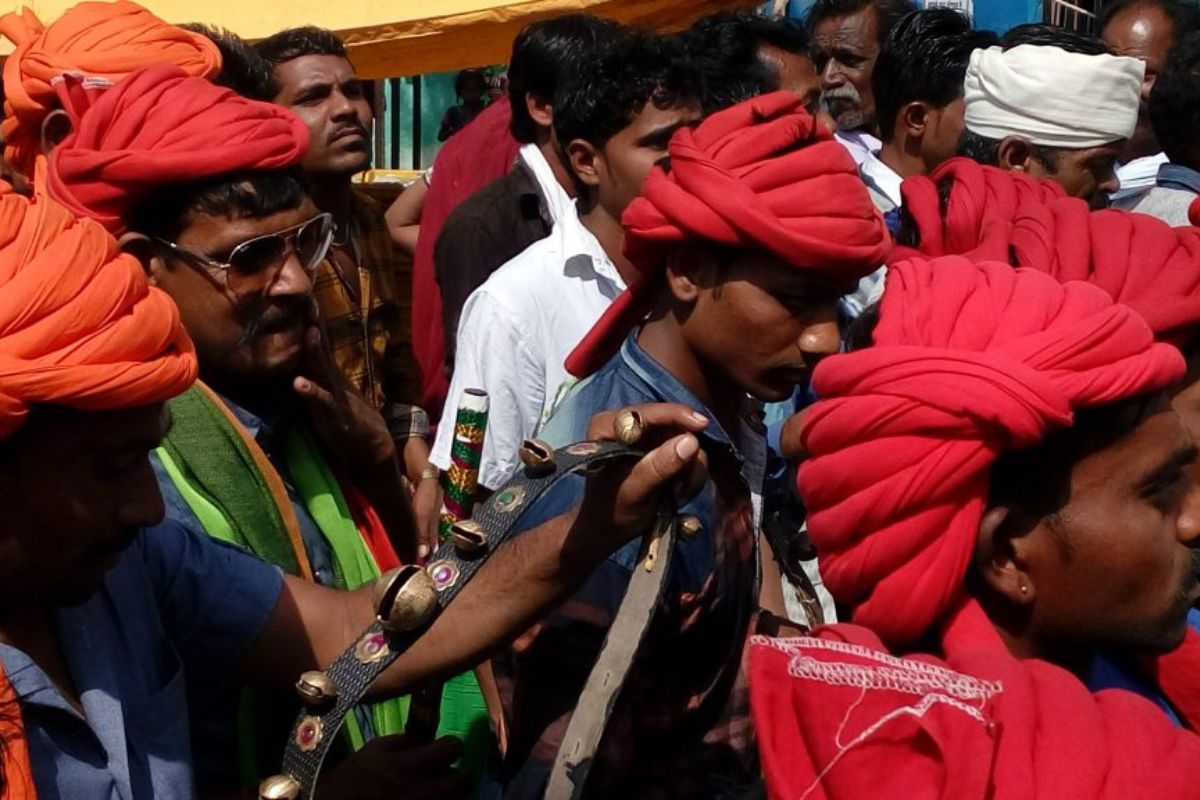
The better-known version links Bhagoria to the Hindi word bhag, meaning to run away. In this version, couples who met at the fair slipped off together. It is a memorable explanation, and it has been repeated often. Still, the official accounts do not settle it as the true source of the name.
The Alirajpur administration records another tradition, tied to the time of Raja Bhoj. Two Bhil rulers, Kasumar and Balun, are said to have held fairs in their capital, Bhagor. Neighboring Bhil rulers copied the idea, and the fairs and markets came to be called Bhagoria. The same source states plainly that people do not agree on this history.
That frankness is useful. A festival kept alive through spoken memory will carry several accounts side by side, and each may hold some truth. A careful writer separates what the administrations record, what the communities hand down, and what later popular retelling has added. The safest summary is that Bhagoria grew over a long stretch of time as a network of tribal fairs, shaped by Bhil custom, and that its exact beginning remains uncertain.
Food, Trade and the Outside Visitor
Bhagoria’s food reflects the region. The Jhabua administration lists dal paniya among the popular dishes, and the Alirajpur administration names kachori. These foods are part of the haat’s daily economy, sold by locals to locals, and visitors are welcome to join in.
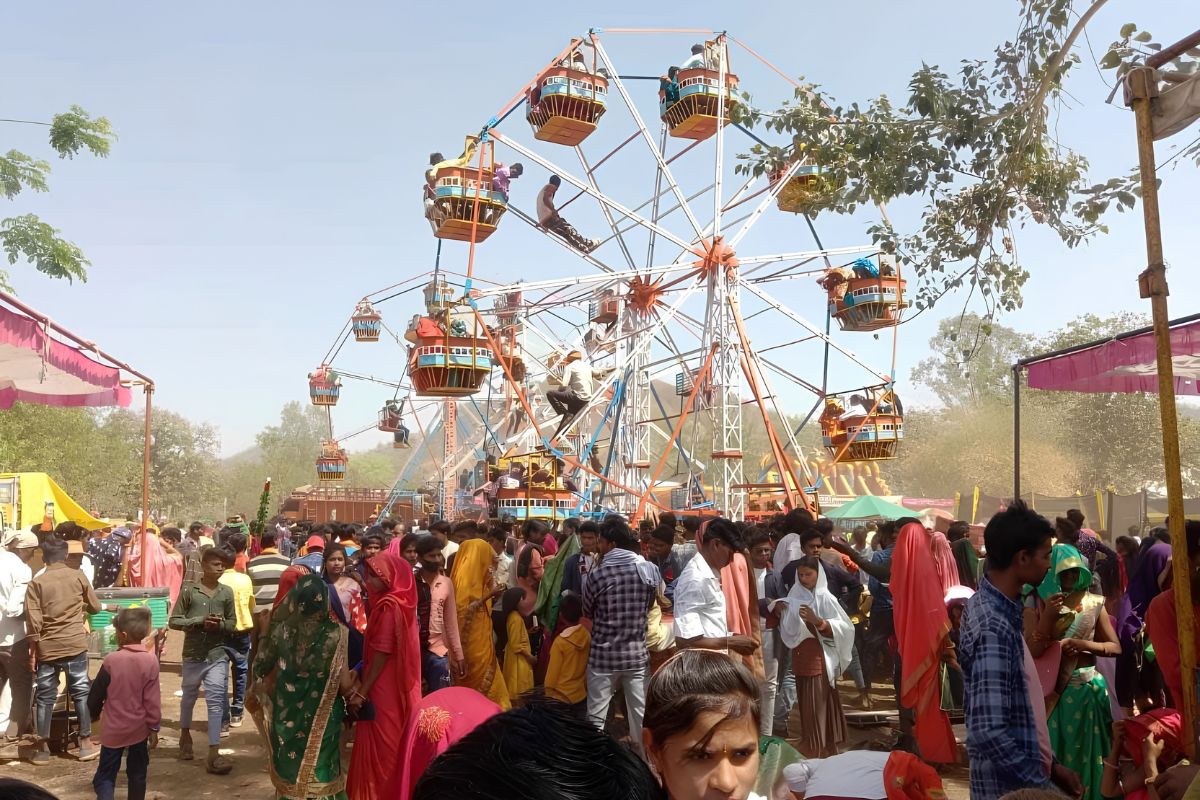
The market also helps sellers. Farmers, potters, jewelers, and cooks find more buyers than usual, and families shop for Holi and the season ahead. In this way, the festival supports livelihoods directly, with money passing from hand to hand within the region.
Outsiders who attend should keep a few habits in mind. Ask before photographing anyone. Buy directly from local vendors and artisans. Treat songs, dress and food as part of a living culture, and leave the idea of a show behind. Describing Bhagoria as an exotic spectacle flattens a complicated institution into costume and color. It is better understood as a place where trade, music, courtship, food and memory all share the same ground.
What Remains After the Color Fades
Bhagoria survives because people still find reason to come. Nobody preserves it in a glass case. Communities keep trading, dancing, meeting and arguing over bargains because the gathering still serves them. Its customs bend with the years, yet bending is different from vanishing, and the haat has bent a good deal without breaking.
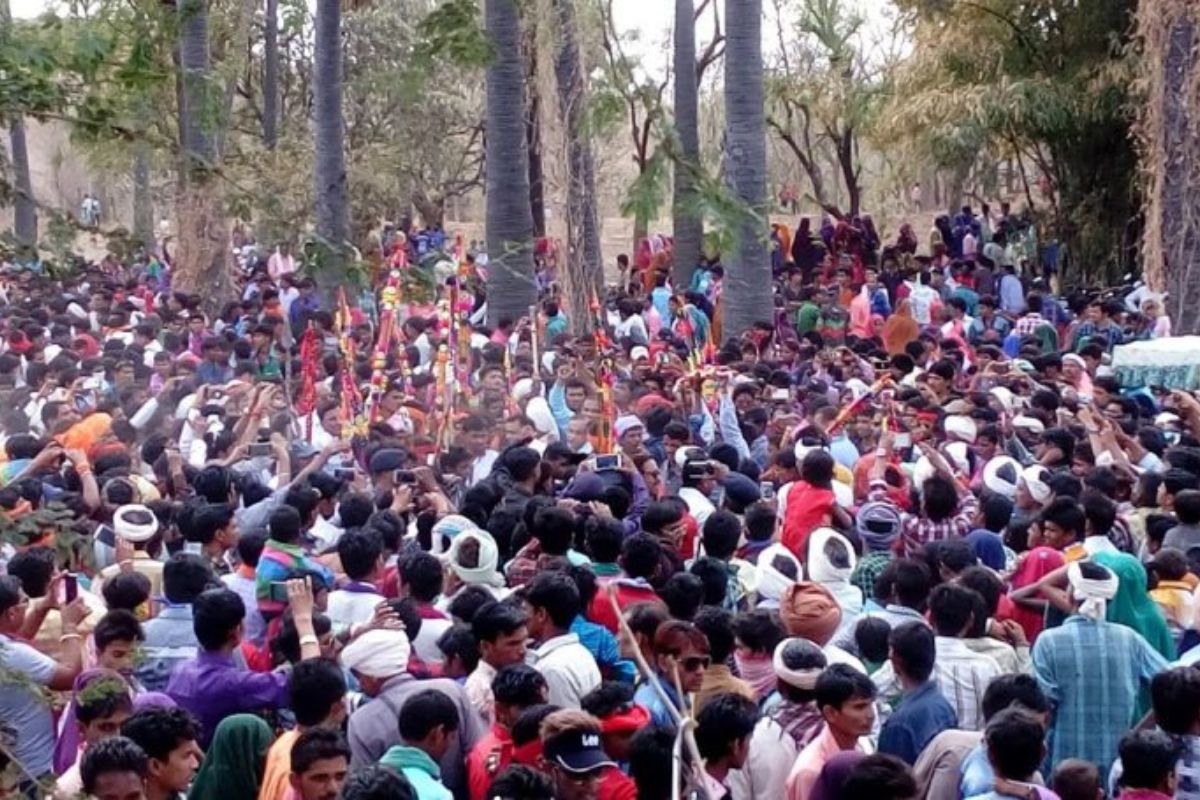
Holi gets most of the attention each spring, and Bhagoria usually gets a footnote. That seems an unfair division. The haat marks the end of labor, the arrival of spring and the freedom of young people to meet. It also lets a village feel, for a few days, like part of something larger.
So when the drums start up and the lanes fill, Bhagoria tells people that Holi is close. It also reminds them that culture is made whenever a community gathers to remember, trade, sing, choose, and celebrate. The famous handful of gulal may or may not settle a courtship. The festival around it has already settled something larger: these villages still know how to come together.
Also Read: Arunachal’s Solung Tradition: The Festival Where Villages Become Living Museums
You can connect with DNN24 on Facebook, Twitter, and Instagram and subscribe to our YouTube channel.