



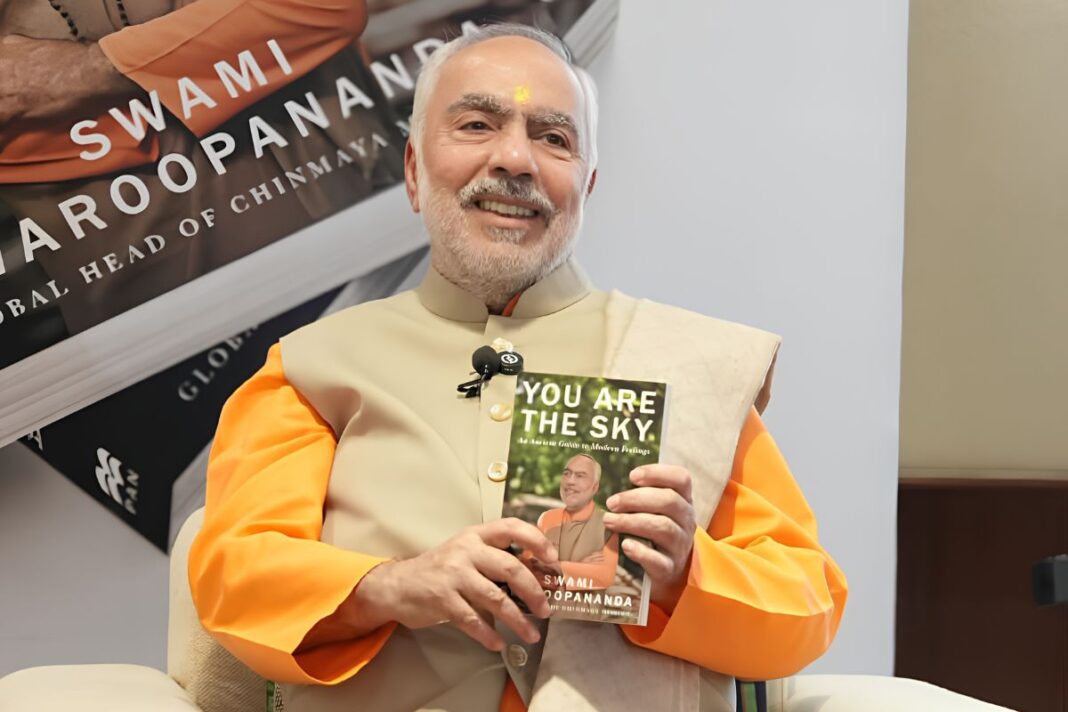

How do feelings steer us, and who is holding the wheel? Swami Swaroopananda, Global Head of Chinmaya Mission, answers that question in his new book, You Are The Sky: An Ancient Guide to Modern Feelings. The book was unveiled on October 21, 2026, at India Habitat Centre in New Delhi, amidst a distinguished gathering of diplomats, senior advocates, chief executives, psychologists, artists, and academics.
Most of us know the pain of a sharp word landing at the wrong moment. A colleague speaks bluntly, a message goes unanswered, a plan falls through, and within seconds, a reply is already forming that we may regret by evening. The book starts from that ordinary experience and asks a plain question. What would it take to feel the full force of an emotion and still choose our own response?
Close to 7,000 Copies Sold Before Launch Day
Readers did not wait for the book launch. The publisher- Pan Macmillan India- reports that close to 7,000 copies were sold before the official unveiling. The publisher describes the response as overwhelming, and the figure suggests many people are looking for help with something they seldom discuss openly: living alongside their own emotions.
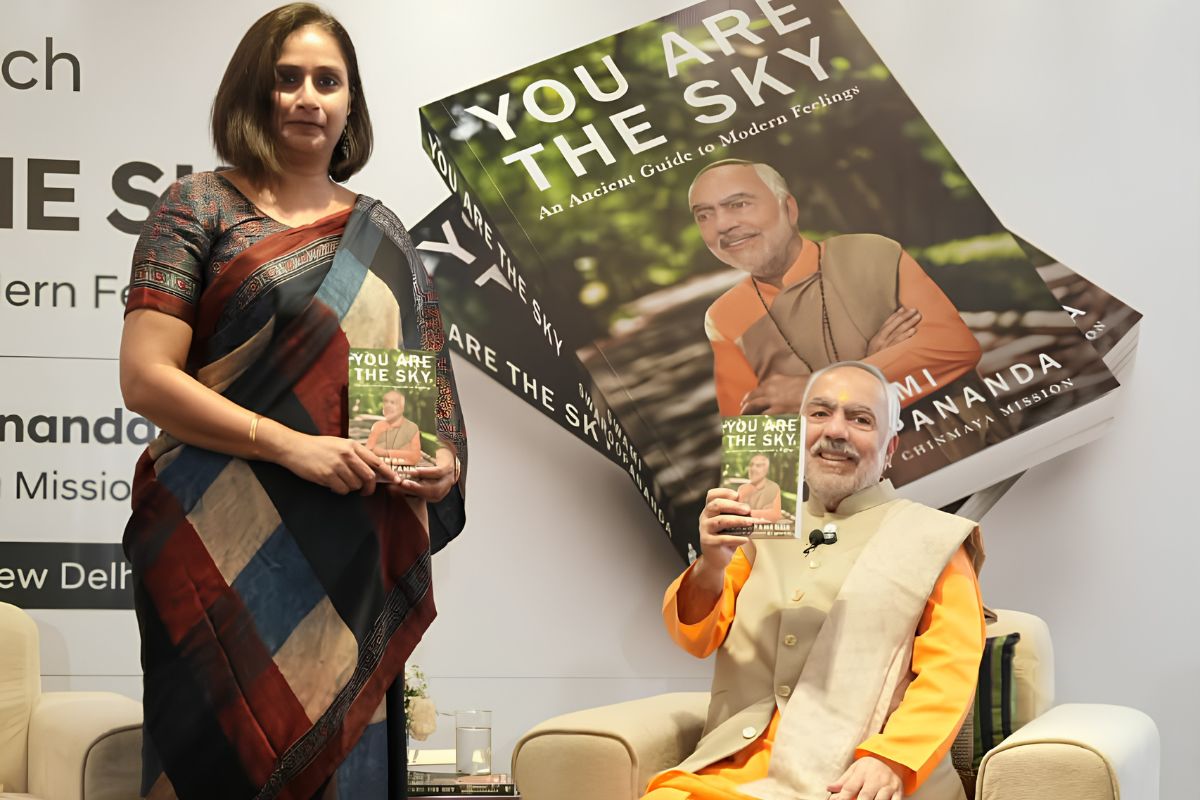
The book draws on Vedantic philosophy and on contemporary psychology. Vedanta is the body of knowledge that Chinmaya Mission, a spiritual and educational organisation, exists to share. The author’s concern is practical. He wants readers to experience their emotions without letting those emotions define who they are or dictate how they respond to life.
A Sky That Holds Every Cloud
At the centre of the book sits a picture – clouds passing across the sky. Some are heavy and dark, others thin and bright, and none of them stays. The sky itself, wide and quiet, is never changed by what crosses it. The author asks readers to see their emotions the same way. Feelings arise, pass, and the person who has them keeps a deeper identity untouched by the passing show.
The book explores core emotions, including anger, fear, jealousy, guilt, and sadness. It explores how each emotion shapes our thoughts, behaviour, and relationships. Pleasant feelings get the same attention. Love, happiness, and pride can cause trouble of their own when our sense of fulfilment depends on outside circumstances. A person who needs the world to cooperate to feel happy has handed the controls to the world.
Pushing a difficult feeling down is a familiar habit, and the book does not recommend it. Reacting immediately is another familiar habit, and it fares no better. The author points readers to a third course: conscious recognition. A person notices the feeling, names it, understands what it is saying, and then uses it for growth. The book applies this to both personal and professional life, so the same method is meant to serve at home and at work.
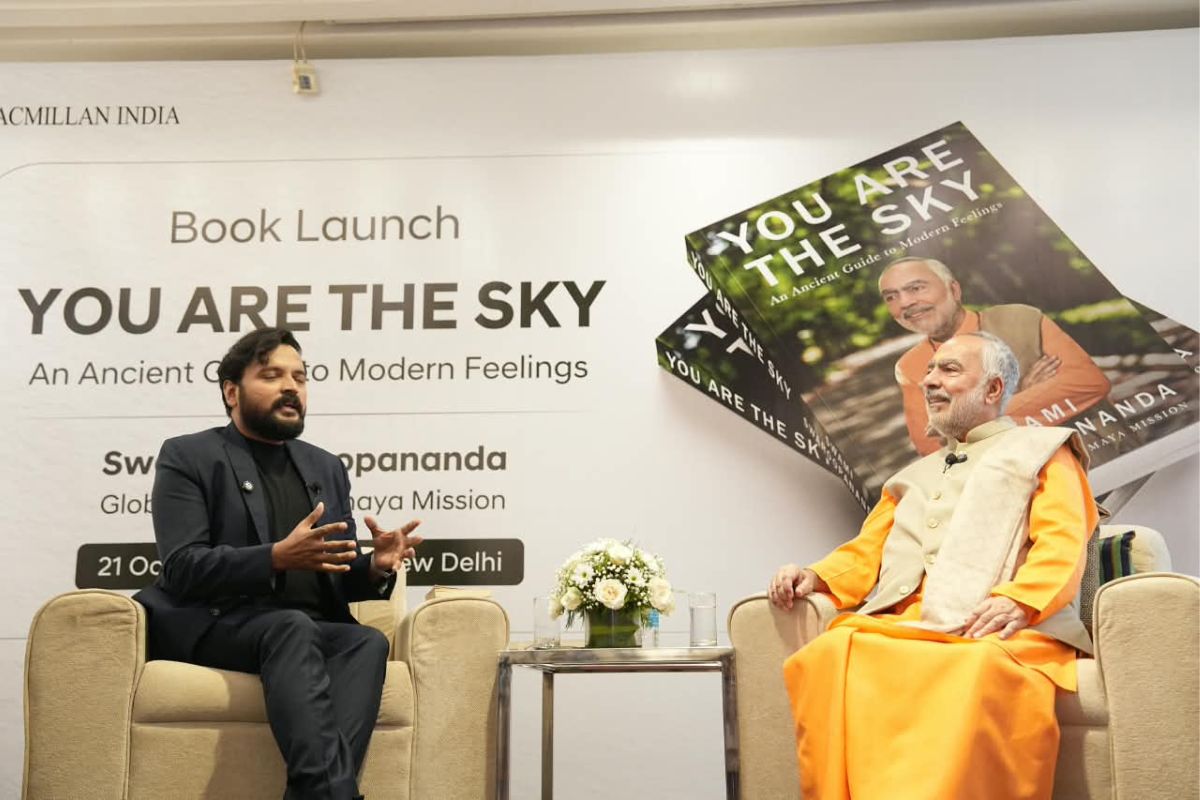
The book launch programme opened with a welcome address by Pujitha Krishnan, Editorial Director of Pan Macmillan India followed by the unveiling on stage. Swami Swaroopananda was joined by Vinay Bharadwaj, filmmaker and talk show host, for a conversation that turned into an interactive question-and-answer session with the audience.
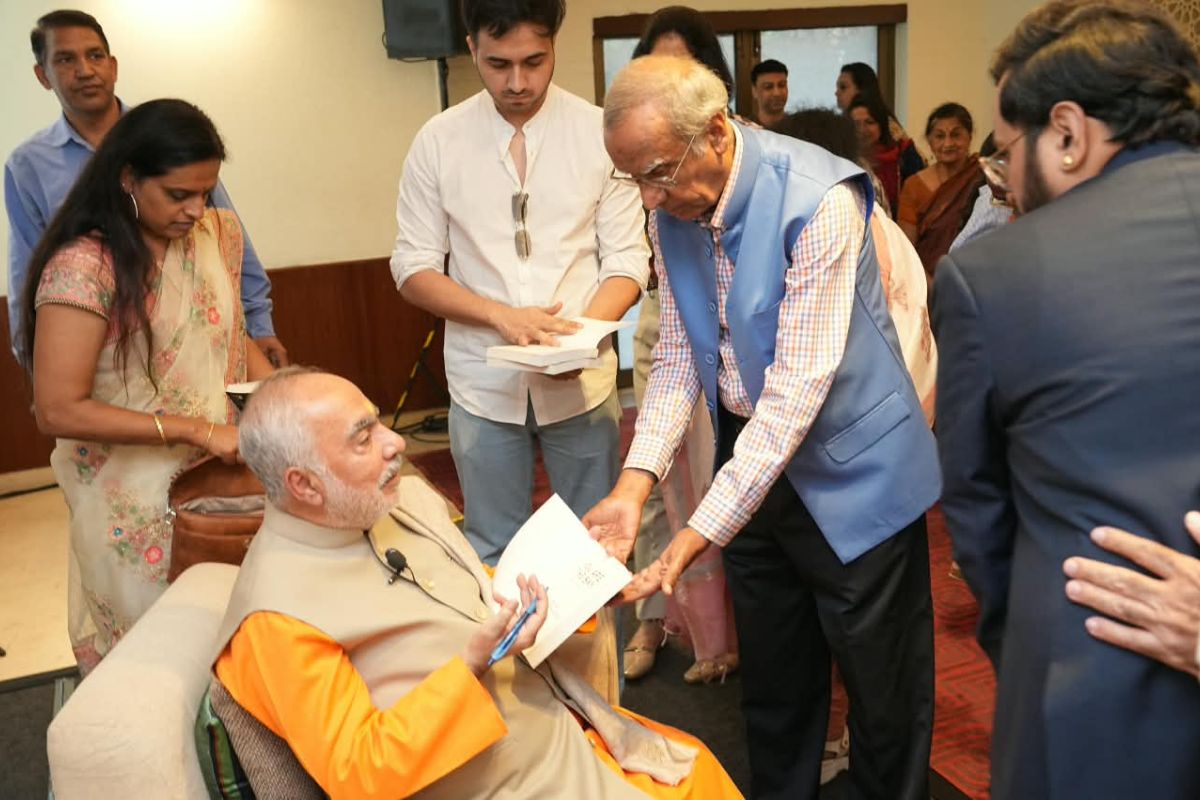
The talk centred on decoding emotional triggers through the Sky perspective. The audience heard how an ancient science for modern minds can offer a practical path to emotional mastery and peace. People who treat the mind for a living sat alongside people who run companies and people who argue cases, all listening to a monk speak about feelings.
What the Author and the Publisher Said
Swami Swaroopananda spoke plainly about the problem. “Emotions bring richness to our lives, but when we either suppress what we feel or react impulsively, we lose our inner peace,” he said at the launch. He pointed out that people today prepare themselves thoroughly for the world outside, yet receive little guidance on the world within. His book blends Vedantic wisdom with modern psychology so readers can decode what their feelings are telling them, find inner steadiness, and meet life’s challenges with true freedom.
Pujitha Krishnan spoke for the publisher. She said the book combines the timeless truths of Vedanta with a contemporary understanding of physiology, neurology and psychology, and shows how we can transform our relationship with our own minds. In her view, this is a crucial skill in today’s overwhelming world.
A Milestone Year for Chinmaya Mission
The book arrives at a historic point for the organisation. Swami Chinmayananda founded Chinmaya Mission in 1951, and the organisation is celebrating its 75th year through the Chinmaya Amrit Mahotsav. The celebration will culminate in the Chinmaya Global Sammelan, to be held in New Delhi from October 23 to 25, only two days after the book launch.
The Monk Behind the Book
Swami Swaroopananda is the Global Head of Chinmaya Mission, which oversees more than 350 centres worldwide. He also serves as Chancellor of Chinmaya Vishwa Vidyapeeth, an institution that brings Indian knowledge traditions together with contemporary systems of knowledge. Swami Chinmayananda ordained him as a monk in 1985, and he has made it his life’s endeavour to carry ancient wisdom into everyday settings.
He is known for a warm sense of humour and a down-to-earth approach. He has used digital media inventively, and he moves easily between spiritual growth, mental wellbeing, and leadership. He developed and conducts “Make It Happen,” a pioneering executive leadership and personal development course. His work is dedicated to bringing maximum happiness to as many people as possible.
His acclaimed works as an author include Storm to Perform, Meditation the Awakening, Life Management Techniques and, now, You Are The Sky.
Where to Find You Are The Sky
You Are The Sky: An Ancient Guide to Modern Feelings is now available across major bookstores, including Crossword, and online through Amazon and Flipkart.
A Question Worth Asking Again
The question that opens this account has no quick answer. The book offers a way of looking. The next time anger rises in the chest or worry settles in for the night, a reader can recall the sky and the clouds, and ask who is watching the weather. That small pause, between a feeling and a reply, is where the author places the freedom he writes about.
Also Read: India Built Underground Palaces of Water Long Before Modern Water Management
You can connect with DNN24 on Facebook, Twitter, and Instagram and subscribe to our YouTube channel.