

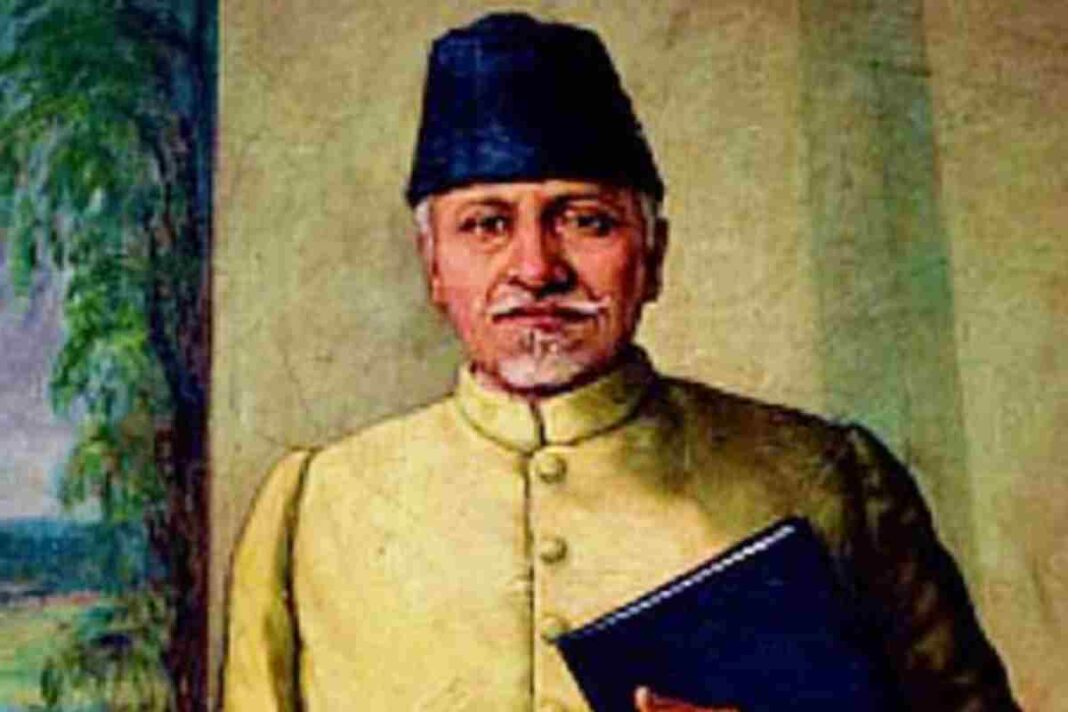

Maulana Abul Kalam Azad, renowned as an Islamic scholar and a prominent freedom fighter, possessed a lesser-known passion and proficiency in music, specifically the sitar. In an intriguing letter exchange with Sardar Vallabhbhai Patel in 1947, he expressed dissatisfaction with the “standard of music of All India Radio broadcast”. He urged improvements to establish All India Radio as a benchmark for Indian music.
His love for music became evident in an unposted letter dated September 16, 1943, in which he conveyed that music was essential to his well-being. He wrote, “I can be happy without everything in life, but I can’t live without music.” Music, for him, was the support of life, a remedy for mental struggles, and a balm for physical ailments.
Azad’s journey into music began in 1905 when he acquired “Raag Darpan,” a Persian translation of an ancient Sanskrit text on Indian music by Faqirullah Saif Khan. This acquisition led to a challenge from Denis Ross, Principal of Aliah College, Kolkata, who asked young Azad to elucidate the book’s content, a challenge he couldn’t meet due to his lack of musical knowledge.
His passion for music found expression in moonlit serenades atop the Taj Mahal’s roof, where he would play the sitar under the enchanting glow of the moonlight, creating a mesmerizing ambience.
Maulana Azad’s connection with music extended to his role as India’s Education Minister post-independence. Under his leadership, a trust for music, drama, and dance training was established, emphasizing the promotion of Indian culture.
Azad firmly believed that Indian music’s richness surpassed that of Greece and emphasized the importance of cherishing and nurturing this cultural heritage. His commitment to sustaining and creating music and art traditions is a testament to his enduring legacy in India’s freedom struggle and cultural enrichment.
For a detailed story, please visit: Awaz the voice
Also Read: India’s Global Leadership: G-20 and Development
You can connect with DNN24 on Facebook, Twitter, and Instagram and subscribe to our YouTube channel.