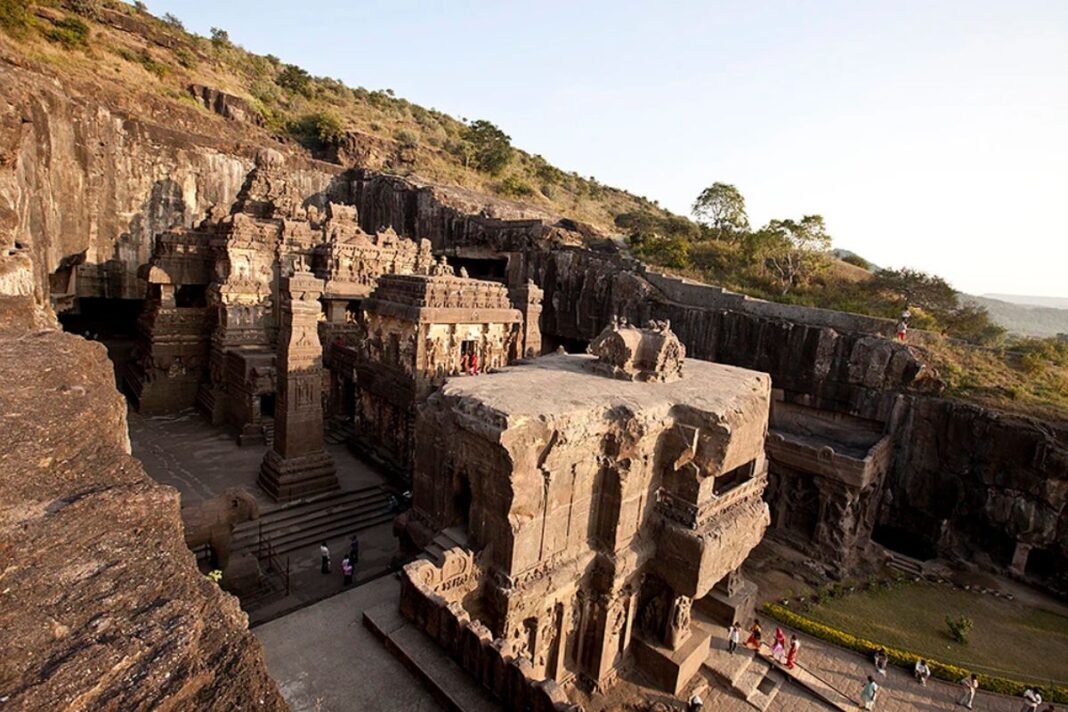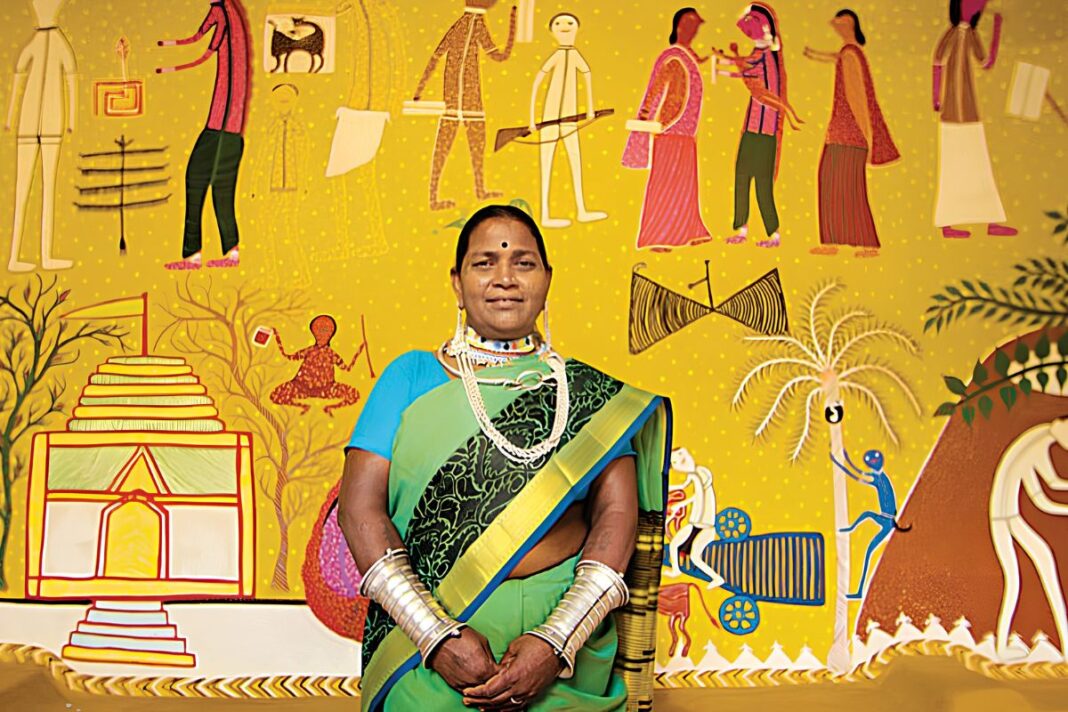


The hidden priestesses of Karnataka that nobody discusses in polite conversation, though their music has echoed through temple courtyards for generations.
They are called Jogappas, transgender devotees of goddess Yellamma, and their story sits at a strange crossroads. For rituals, they are treated as sacred. In ordinary life, they are invisible. Understanding how both things can be true at once says a great deal about how India handles faith, gender, and belonging.
A Goddess, A Curse, And A Community
The story often begins with Renuka, wife of the sage Jamadagni. According to folklore, she was distracted for a moment by a group of celestial musicians called Gandharvas, and that moment of distraction cost her dearly. Her husband ordered her beheaded. Her son Parashuram carried out the order, then later revived her, and she became goddess Yellamma. Her other sons, who had refused to kill their own mother, were stripped of their masculinity as punishment and became the first Jogappas.
It is a dramatic tale, full of divine anger and impossible choices. But it barely captures what it actually means to live as a Jogappa today. The community describes its members as people who have been claimed or possessed by Yellamma Devi, a calling that reaches across caste and creed and does not care what religion a child was born into. Many of the personal accounts follow a similar pattern. A child grows up with effeminate features, faces rejection or neglect at home, and eventually finds a place within the Jogappa community where that same identity becomes a source of respect rather than shame. Within the fold, they take on priestly roles and are sought out for blessings, healing, and ritual performance.
What makes this transformation striking is how completely it reverses the child’s earlier experience. A young person once mocked or pushed to the margins of family life suddenly becomes someone sought after, someone whose presence at a wedding or a harvest ceremony is considered auspicious. That reversal does not erase the pain that came before it, but it does explain why so many Jogappas describe their calling in the language of rescue rather than loss. The goddess, in their telling, did not curse them. She found them.
A Distinct Identity, Often Misunderstood
Outsiders frequently lump the Jogappas together with hijras or eunuchs, but the community pushes back against that flattening. Their transgender identity does not follow the guru-chela kinship structure that defines hijra communities, and it is not built around ritual castration. That practice, known as nirvana, is explicitly forbidden among Jogappas and carries a fine if discovered. Their gender expression instead grows out of devotion. It is sacred and performative, tied directly to their role as servants of Yellamma.
The clearest picture of this comes each year at the Yellamma jatre in Saundatti, held during the Margasira month of the Kannada calendar, usually falling between November and December. Thousands of Jogappas gather there, much as Aravanis gather for the Koothandavar festival in Tamil Nadu. At Saundatti, they are not sidelined but welcomed as guests. They lead the bhajans, guide the rituals, and walk at the front of the processions.
Music As Prayer And As Survival
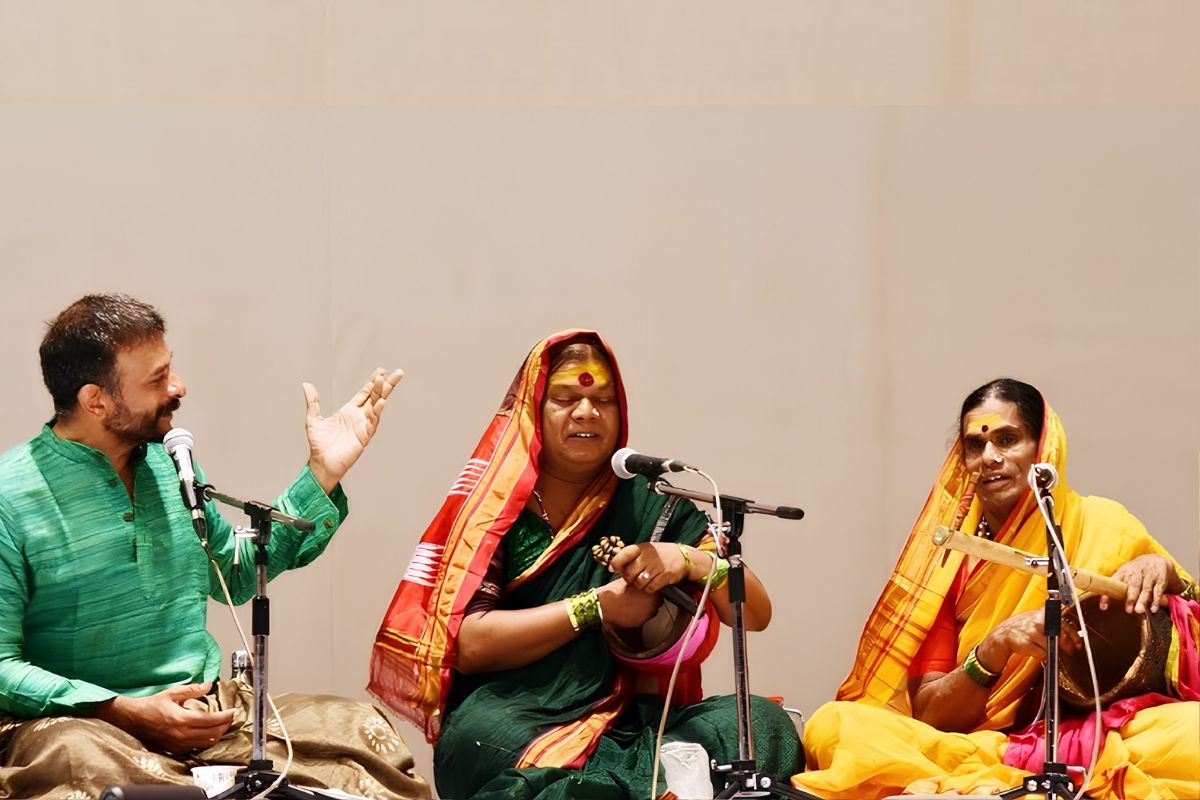
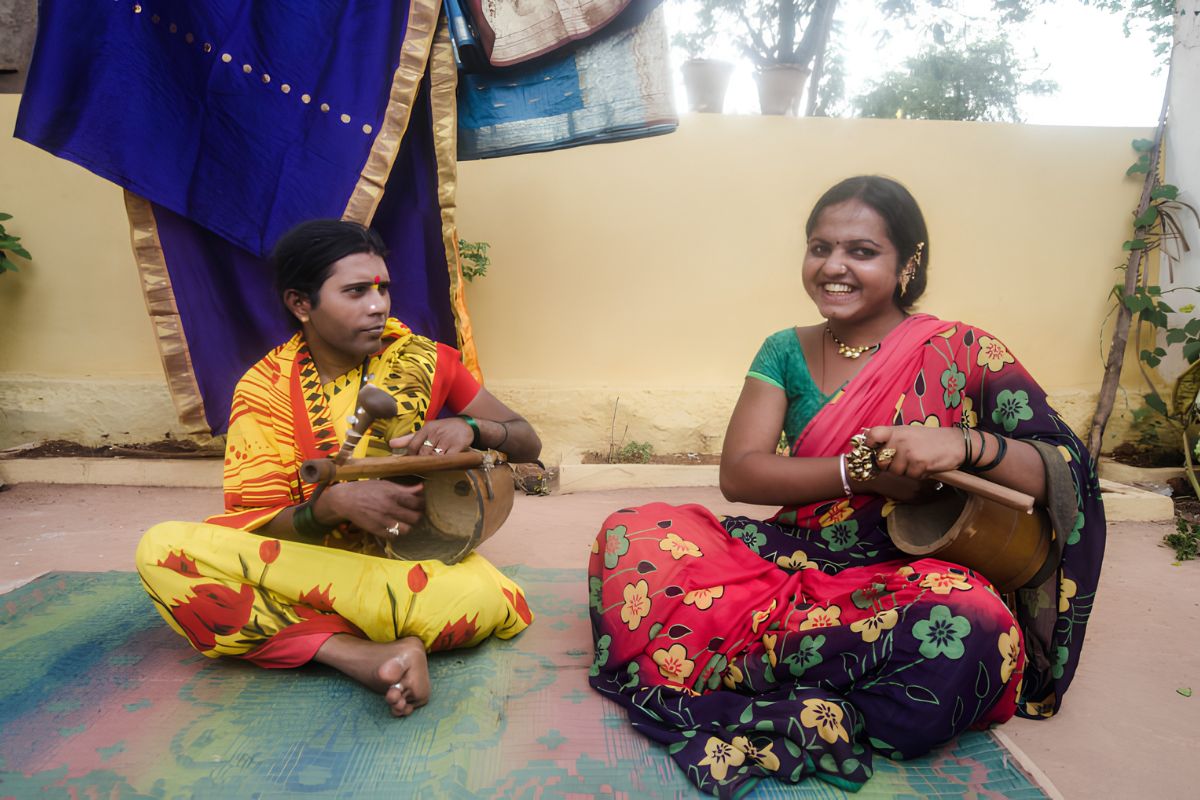
Music sits at the very center of Jogappa life. Three instruments travel with them wherever they go. The choudki is a wooden percussion instrument, struck along the inner frame of an open drum with a small piece of wood to produce a steady, resonant beat. Many Jogappas build their own drums by hand, which speaks to how deeply they understand the instrument’s sound. The sutti works differently. It resembles the ektara family of single-stringed instruments found across Indian folk music, usually a lone steel or gut string stretched over a bamboo neck with a gourd resonator at the base. Played by plucking with the fingers, it holds a steady drone that keeps singers in tune through long devotional sessions. Rounding out the trio is the taal, small brass or iron cymbals struck together to mark rhythm and punctuate key lines in a bhajan.
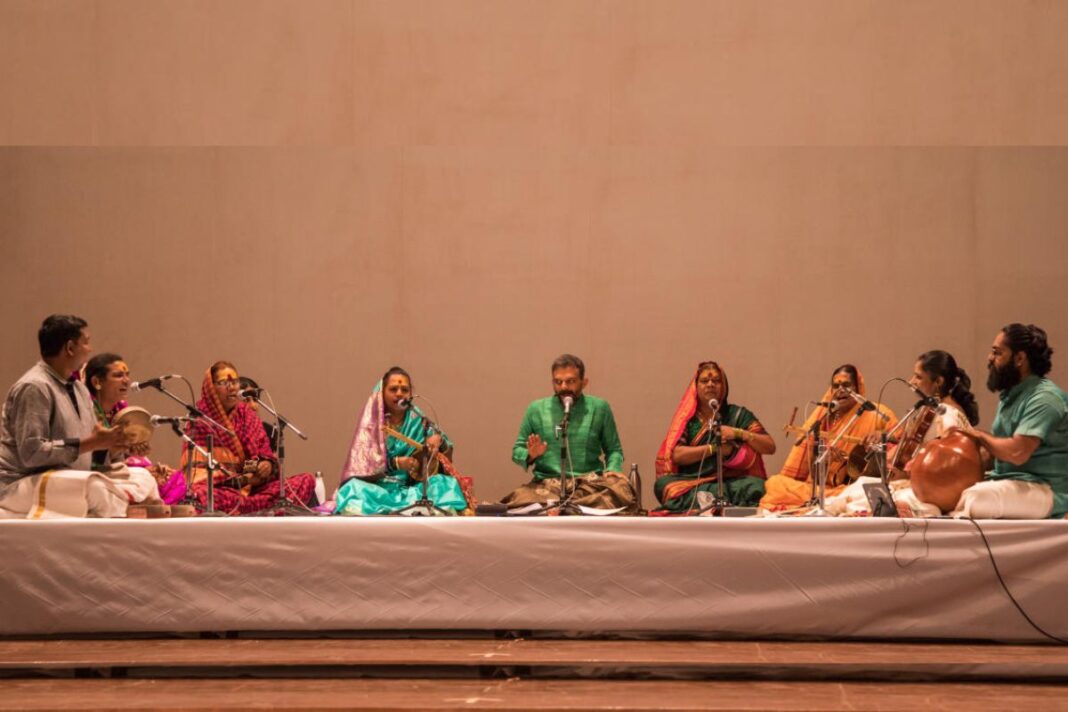
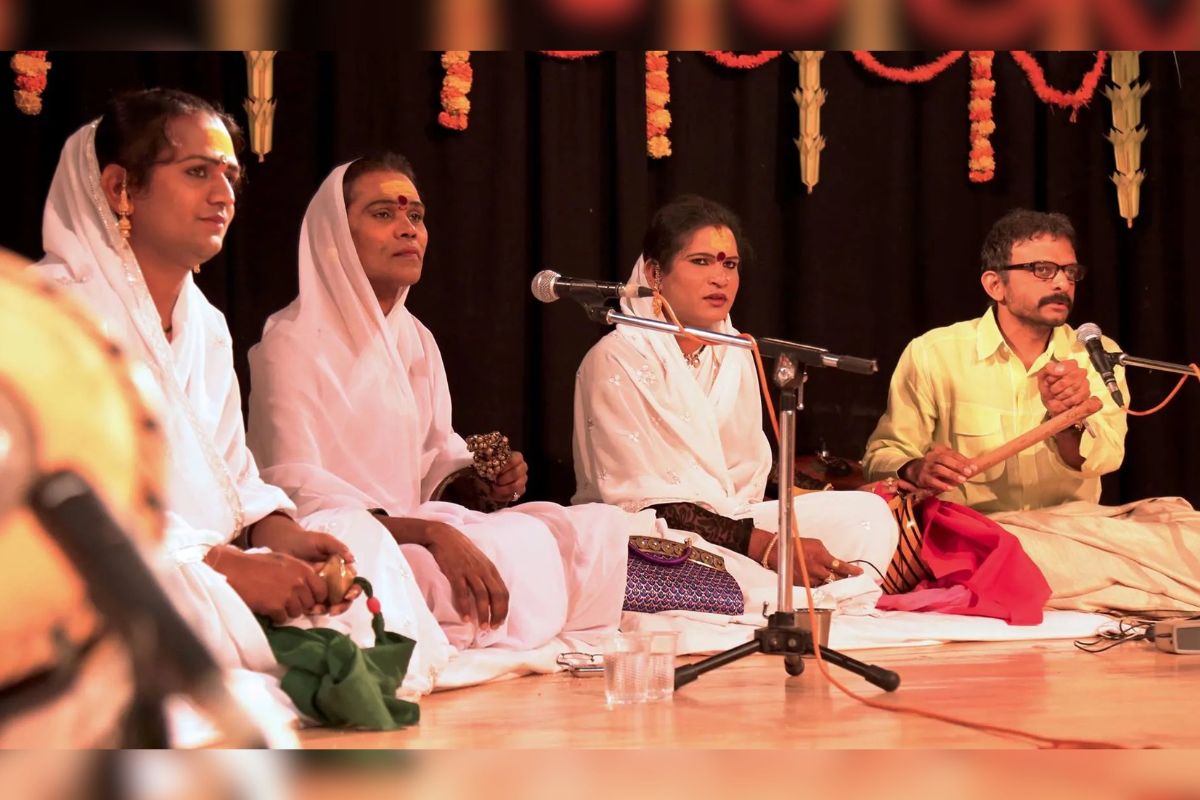
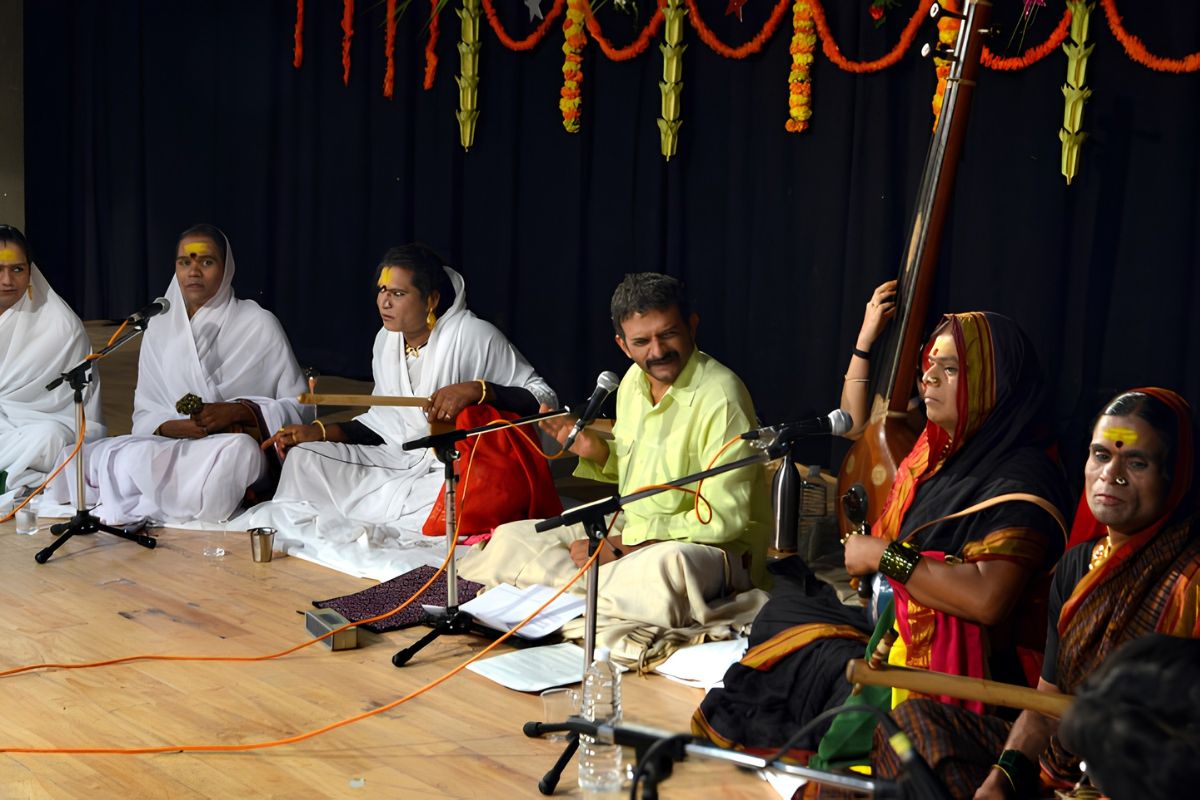
For a brief moment in 2016, this music reached far beyond the villages where it usually lives. Five Jogappas, including a performer named Bibijaan, shared a stage in Bengaluru with the Carnatic vocalist T.M. Krishna. Bibijaan typically earns around fifty rupees a day performing on the street, and groups like hers are paid between Rs 1,000 and Rs 1,200 for an all-night jagrata performance. The Bengaluru concert wove original Jogappa compositions from Nipani and Vijayapura together with Carnatic ragas, and for one evening, dignity in art took precedence over difference.
The Cost Of A Sacred Life
Being treated as holy does not translate into being treated as equal, and nowhere is that gap more visible than in health and money. A 2015 report by Aneka, an organization that works with sexual minorities, documented how Jogappas are often assumed to be sexually inactive because of their spiritual status. That assumption pushes them out of HIV prevention programs entirely. Many rely on prayer or traditional remedies instead of medical testing, and condom use across the community remains low.
Financially, the picture is just as difficult. Formal education and stable jobs are rare for most Jogappas, so income comes largely from street performances and alms. The Aneka study traced patterns of discrimination stretching back to childhood, patterns that push many into migration or into informal, unstable work to get by.
Housing follows the same troubling pattern. Many Jogappas move between temporary shelters, live in informal settlements, or depend on the hospitality of temple communities during major festivals such as the Saundatti jatre. Long-term planning becomes almost impossible under those conditions. The Aneka researchers noted that this constant uncertainty forces many Jogappas to live entirely in the present, since there is rarely enough stability to plan even a few months.
Schools compound the problem further. Bullying and unsympathetic teachers push many Jogappa children out of the classroom early, and without a completed education, the doors to formal employment close even tighter. Some, facing few remaining options, turn to sex work even though their own community formally penalizes it with fines, a rule that reveals just how much internal pressure exists alongside the external kind.
Signs Of Change Are Slowly Appearing
There is movement, even if it is uneven. Kerala has introduced transgender inclusive welfare policies covering housing, livelihood support, and legal recognition, setting an example that Karnataka has not yet matched. Cultural efforts are filling some of that gap in the meantime. The 2016 concert with T.M. Krishna was one example. Documentation work by groups such as Vikalp Sangam and MAP India is another, slowly shifting how the wider public understands who the Jogappas actually are.
The Jogappas are not waiting quietly for that recognition to arrive. Through their music, their rituals, and their daily persistence, they continue asserting their place in a society that often prefers to look away. They are not folklore. They are not curiosities. They are working artists, spiritual healers, and the caretakers of a tradition that has survived generations of neglect.
Devotion Should Not Replace Dignity
Reducing the Jogappas to myth or treating their gender identity as some exotic curiosity denies them their basic humanity. These are people navigating a modern, often unfair world, and they do it with a kind of grace that rarely gets acknowledged. Their story is not about a curse. It is a story about transformation, sustained across centuries by faith and by sound.
As India continues to work through questions of transgender rights and social inclusion, the Jogappas offer something worth sitting with. Sacred status should never become an excuse for exploitation. It should instead become a bridge toward real equity. Bibijaan put it simply after that night in Bengaluru. She said their community was not asking for charity, only for respect. Listening closely to their bhajans and to the history behind them might be the first real step toward giving them exactly that.
Also Read: From Guns to Glamour: Surrendered Naxal Women Walk Fashion Ramp
You can connect with DNN24 on Facebook, Twitter, and Instagram and subscribe to our YouTube channel.