
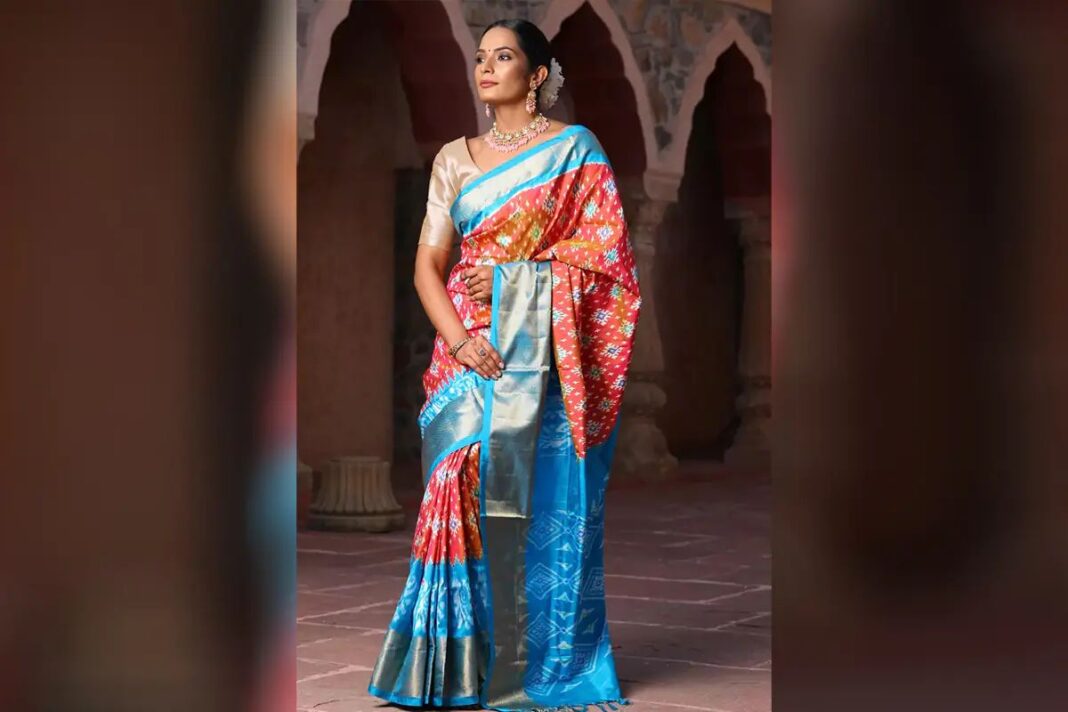

When India’s celebrated textile traditions are discussed, Pochampally Ikat holds a distinctive place. Emerging from the weaving communities around Bhoodan Pochampally in Telangana, these textiles are admired for their striking geometric patterns, vibrant colours and highly skilled resist-dyeing technique.
More than a garment, a Pochampally Ikat saree represents generations of craftsmanship. Worn at weddings, festivals and special occasions, it brings together traditional artistry and contemporary elegance.
The Magic Happens Before Weaving
What makes Ikat fascinating is that much of its design is created before the threads ever reach the loom.
In the resist-dyeing process, selected sections of yarn are carefully tied so they resist particular colours during dyeing. The threads may be tied and dyed several times depending on the complexity and number of colours required.
After dyeing, the threads are arranged on the loom. The weaver must align them with exceptional precision so that the intended pattern emerges during weaving.
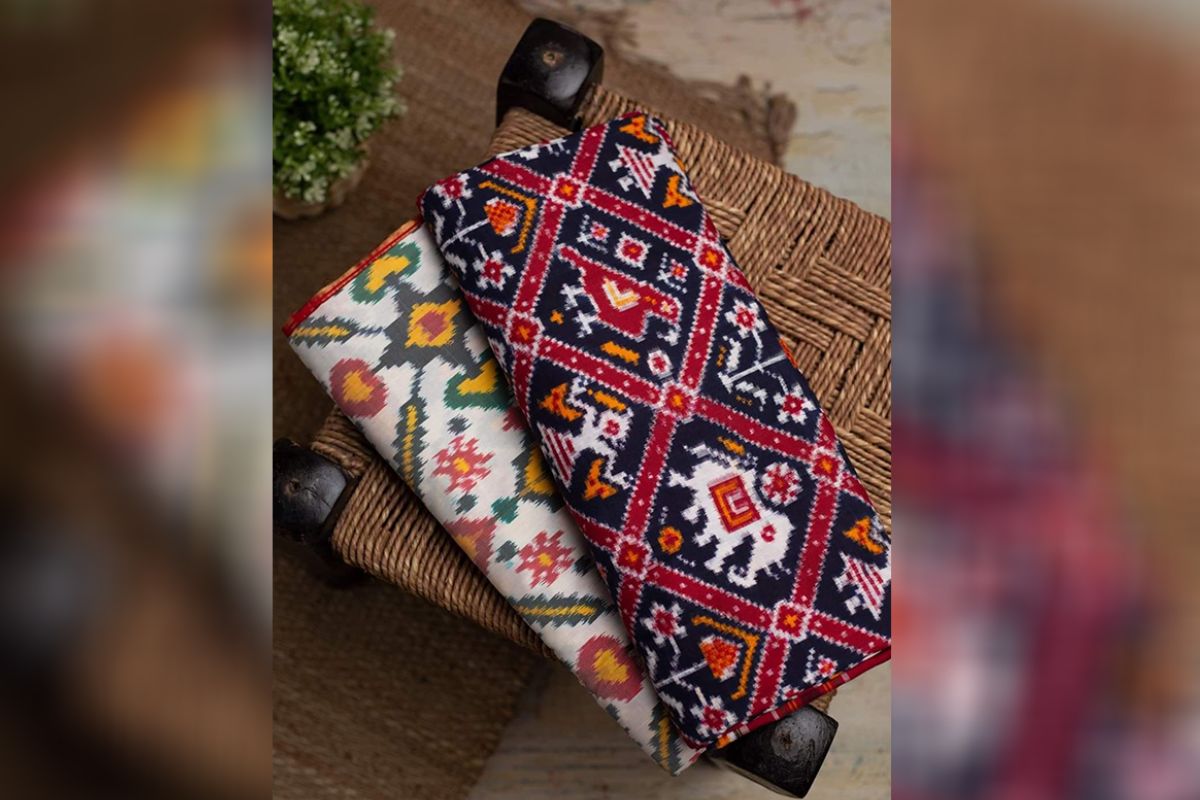
The slight feathering visible around many Ikat patterns is not necessarily an imperfection. It is one of the textile’s most recognisable characteristics and reflects the difficulty of aligning pre-dyed threads.
Patterns Filled With Character
Pochampally textiles are especially recognised for bold geometric compositions. Diamonds, squares, zigzags and other repeating forms create a distinctive visual rhythm.
Traditional and contemporary designs may also incorporate culturally inspired motifs and contrasting borders. Bright reds, blues, greens, yellows and deeper shades are frequently combined to create dramatic patterns.
The versatility of Ikat allows artisans to continuously experiment while retaining the fundamental technique inherited from earlier generations.
Silk, Cotton and Skilled Hands
Pochampally Ikat is produced using different fibres, including silk and cotton, as well as combinations suited to various garments and markets.
Silk Ikat sarees are particularly valued for festive and ceremonial occasions because they combine the natural sheen of silk with complex dyed patterns. Depending on the design, zari may also be incorporated into borders and pallus to create a richer appearance.
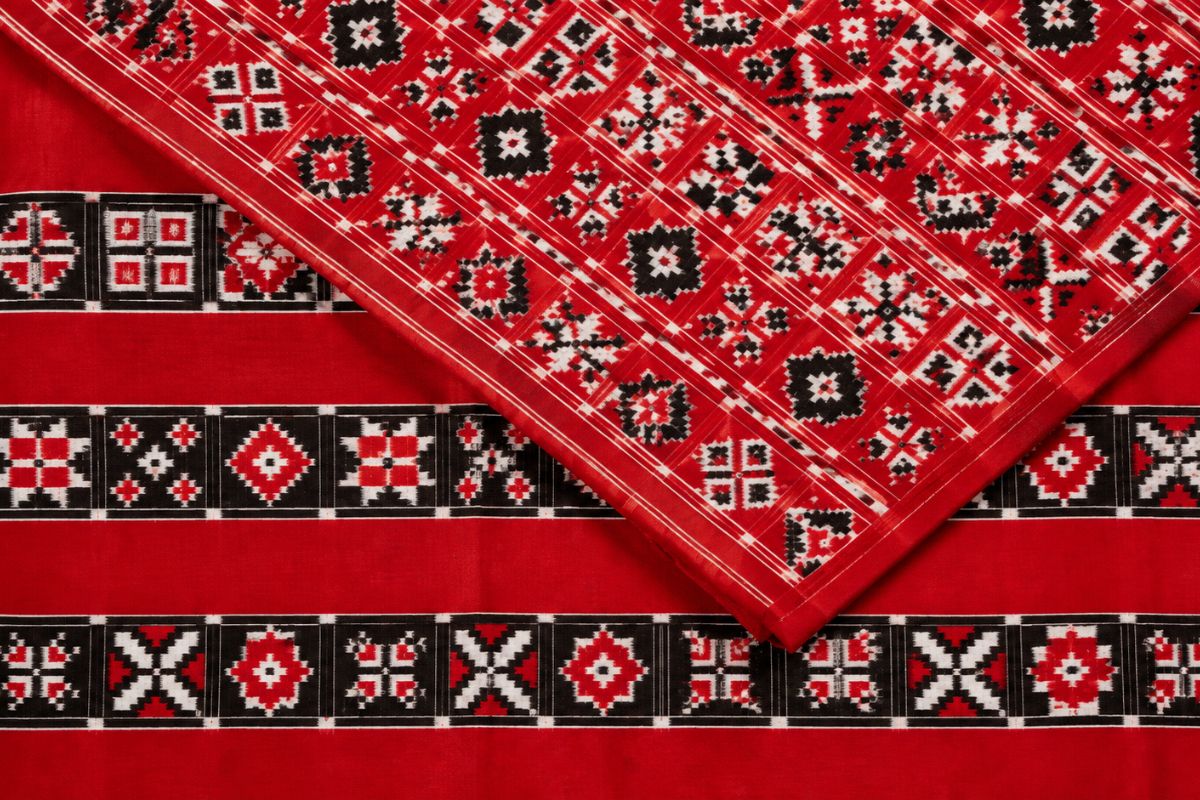
Despite their elaborate visual character, many Pochampally sarees remain comfortable to drape, making them suitable for celebrations lasting several hours.
When carefully preserved, a well-made handwoven saree can remain part of a family wardrobe for years and may even be passed from one generation to another.
Three Different Forms of Ikat
The word “Ikat” refers to the process of binding threads before dyeing. The technique is generally divided into three categories.
In warp Ikat, the lengthwise threads are resist-dyed before weaving. In weft Ikat, the crosswise threads carry the dyed pattern.
The most demanding form is double Ikat, where both warp and weft threads are resist-dyed and must be carefully aligned during weaving.
Double Ikat demands extraordinary planning. The artisan must anticipate how separately dyed threads will intersect on the loom. Even a small shift can alter the intended design, making mathematical precision and weaving experience equally important.
Why Handmade Ikat Takes Time
Producing an authentic handwoven Ikat saree is a lengthy process.
Design planning, yarn preparation, tying, repeated dyeing, drying, arranging threads and finally weaving can require considerable time. More complicated patterns naturally demand greater effort.
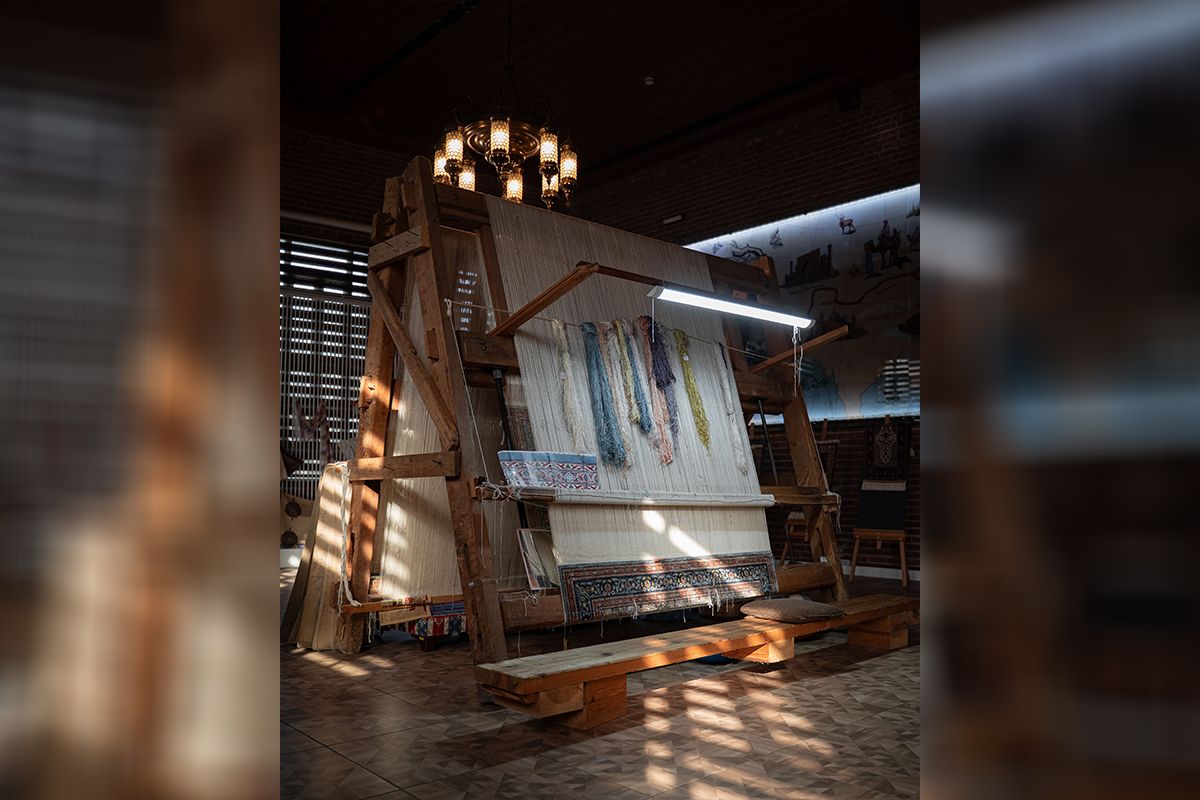
This labour-intensive process helps explain why authentic handwoven Ikat can cost significantly more than machine-made imitations.
The price reflects not simply the material but also the time, expertise and specialised knowledge involved in creating the textile.
From Telangana to Global Recognition
Pochampally has developed into one of India’s best-known weaving centres. Although sarees remain its most famous products, artisans also create dress materials, home furnishings and other textiles using Ikat techniques.
The Geographical Indication (GI) recognition associated with Pochampally Ikat has further strengthened its regional identity and helped distinguish authentic traditional products from imitations.
Its bold patterns have also attracted contemporary designers, allowing the craft to move beyond traditional wardrobes into modern fashion and interior design.
Challenges Behind the Beautiful Fabric
Despite its recognition, the weaving tradition faces significant challenges.
Rising costs of silk, cotton, dyes and other materials can reduce artisans’ earnings. Handloom production also requires considerably more time than industrial manufacturing, while inexpensive printed fabrics can imitate the appearance of Ikat without using the original technique.
For younger generations, other professions may promise more predictable incomes. As a result, maintaining interest in traditional weaving has become an important concern.
Supporting genuine handloom products therefore contributes directly to preserving the knowledge held by weaving communities.
More Than a Saree
Pochampally Ikat represents an extraordinary relationship between mathematics, colour and human skill.
Before a single pattern appears on the loom, artisans must already imagine where each colour will eventually fall. Every stage requires patience, calculation and experience.
That is what makes authentic Pochampally Ikat special.
Choosing one means appreciating not only a beautiful textile but also the hands that dyed its threads, aligned its patterns and worked patiently at the loom.
In every carefully woven line lives a part of Telangana’s textile history. Pochampally Ikat is not simply fashion; it is a living heritage carried forward, one thread at a time.
Also Read: From Guns to Glamour: Surrendered Naxal Women Walk Fashion Ramp
You can connect with DNN24 on Facebook, Twitter, and Instagram and subscribe to our YouTube channel.