

Decades ago, the Gujjar tribespeople of Jammu and Kashmir, well-versed in Europe’s processed cheeses, created a distinctive cheese called Kalari as an integral part of their ancient food preservation techniques.
Travelers traversing the Jammu-Srinagar highway would pause at the quaint village of Chennai in the Jammu region. Here, they eagerly awaited the arrival of Gujjar tribespeople descending from the hills, bearing Kalari cheese, a delicacy virtually unheard of in the region. People relished this exotic cheese by dry roasting, frying, or consuming it raw.
Crafters make Kalari from raw, full-fat cow, buffalo, or goat’s milk. Unlike common cottage cheese or paneer, the raw milk for Kalari undergoes mild heating. The preparation requires precision in maintaining the ideal temperature, with the maker diligently stirring the milk using a plunger-like tool.
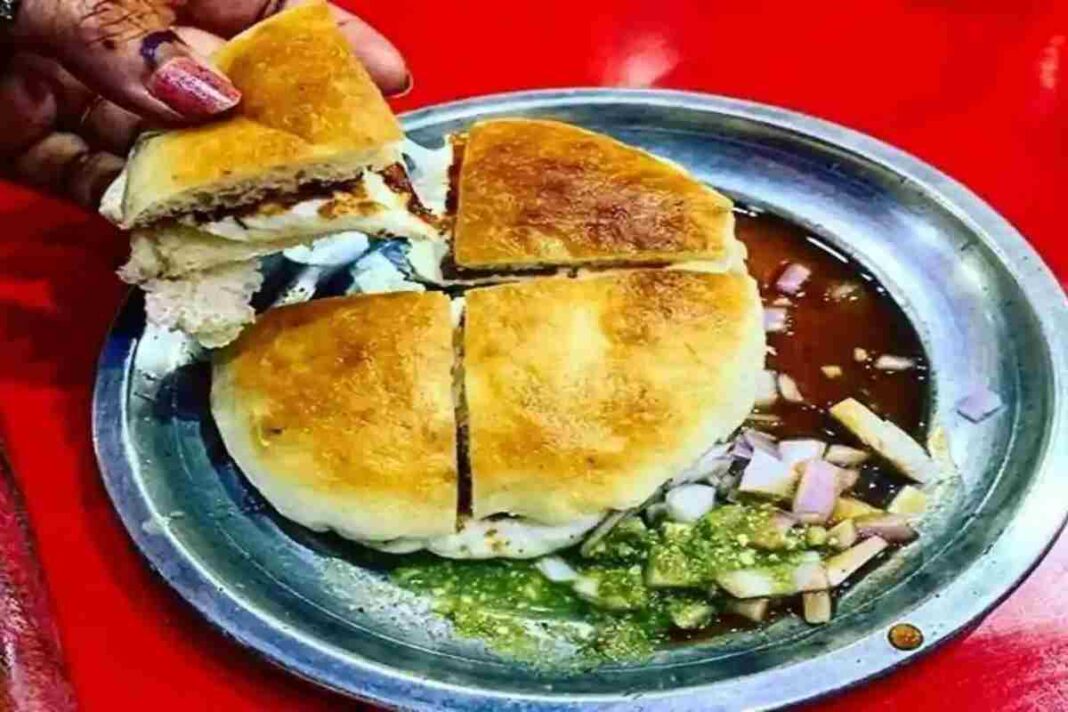
An acidic ingredient known as “matthar,” the sour whey leftover from paneer-making, coagulates the warm milk. They shape the coagulated milk mass into a compact form and leave it to sun dry in baskets. Fresh Kalari resembles Mozzarella cheese, while aged Kalari takes on a tangy quality similar to blue cheese.
Pan-fried Kalari, often served with a tangy chutney made from tamarind, onions, mint, and tomatoes, is a popular way to enjoy this cheese. Its outer layer is crisp, while the interior has a molten texture.
Kalari’s price ranges from Rs 320 to 450 per kilogram, depending on the milk quality. Kalari, made from full-fat cow’s milk, commands a higher price due to its superior taste and aroma.
While the origins of Kalari are debated, some believe it might have its roots in Central Asia. However, Dr. Lalit Magotra, a scholar of Jammu’s Dogra culture, asserts that Kalari is a product of Jammu and parts of Himachal Pradesh. He believes craftsmen created it to preserve milk in a stable form for extended periods while retaining its protein content.
In essence, Kalari cheese embodies a rich culinary heritage and showcases the Gujjar tribespeople’s resourcefulness in preserving their traditions through the ages.
For a detailed story, please visit: Awaz the voice
Also Read: India’s Global Leadership: G-20 and Development
You can connect with DNN24 on Facebook, Twitter, and Instagram and subscribe to our YouTube channel.