
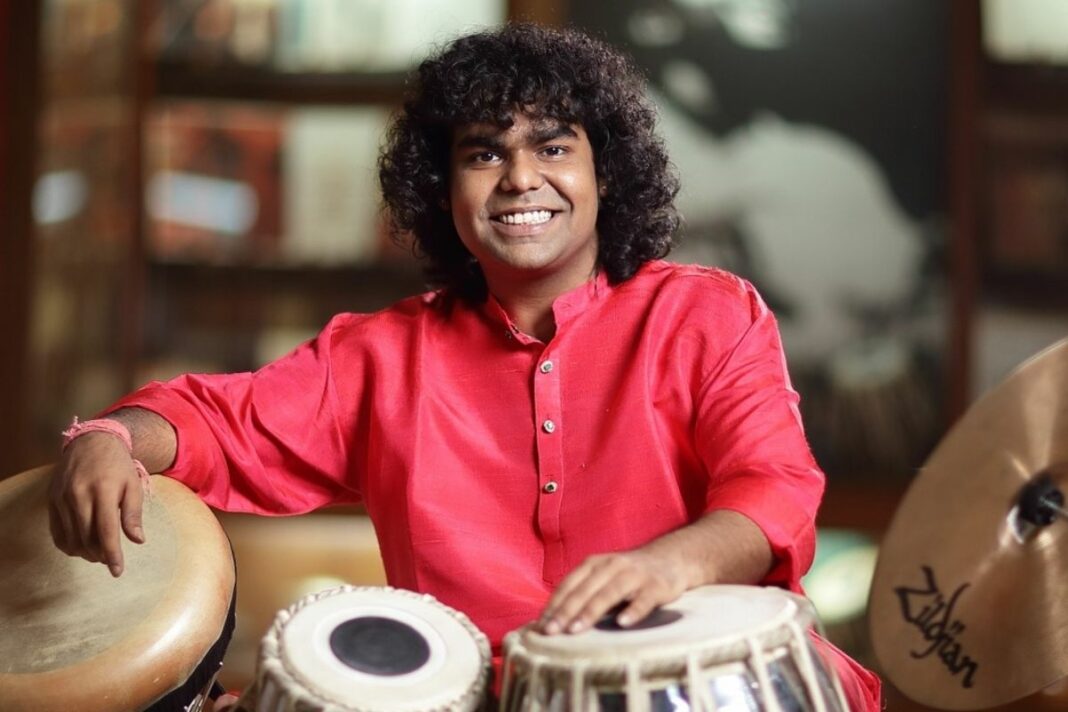

Music is not just heard with the ears, but felt with the heart. And when this music is connected to generations of hard work, dedication, and heritage, it becomes not just an art form, but a responsibility. In this episode of DNN24’s Diverse Dialogue Podcast, we spoke with an artist for whom the tabla is not just an instrument, but a form of spiritual practice. We are talking about the Prince of Tabla – Pranshu Chatur Lal, who is carrying forward the legacy of the great tabla maestro Pandit Chatur Lal to the present generation.
The Home Where Music Breathed
Pranshu Chatur Lal was born into a home where music was not a hobby or a subject of study, but an integral part of daily life. In this home, the day began with musical practice and ended with melodies. His grandfather, Pandit Chatur Lal, was one of the few tabla players in India who took Indian classical music to international stages. He gave the tabla global recognition at a time when Indian music was viewed within a limited scope.
Growing up in such an environment, it was almost impossible to stay away from music. Despite this, the family never pressured Pranshu Chatur Lal to learn music. His father firmly believed that music should be learned not through coercion, but through love and curiosity. His teaching method was equally simple and unique.
He explained the four basic syllables of the tabla – Dha, Dhin, Dhin, Dha – by relating them to the four gears of a car. Just as a car gradually moves from first gear to fourth gear, so does the rhythm progress. This simple example instilled in the child’s mind the structure and mathematics of rhythm. This is why Pranshu Chatur Lal became comfortable with the tabla at a very young age.
First International Stage at the Age of Nine
Pranshu Chatur Lal was quite shy as a child. During this conversation, he shared an anecdote about his school admission interview. He couldn’t answer any of the questions, so his father asked him to recite some tabla bols (rhythmic syllables). He did, and that’s how he got admitted. During his school years, he performed on numerous stages.
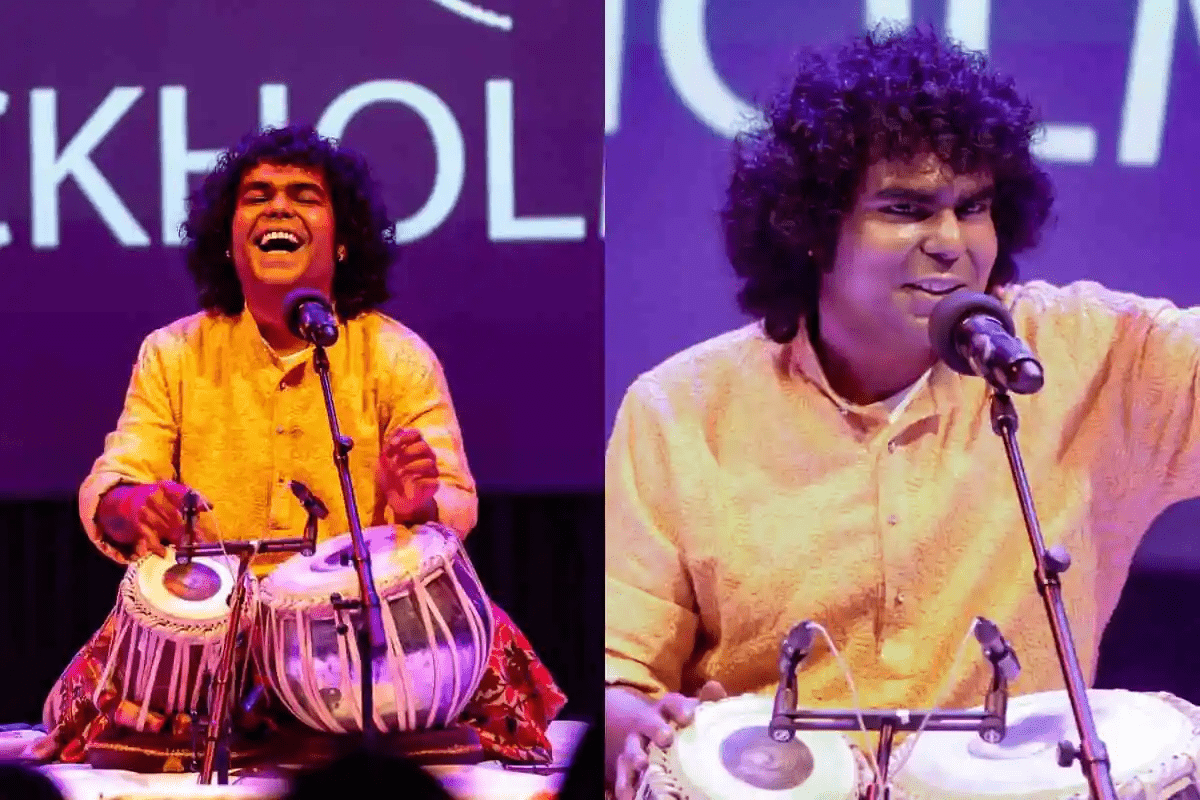
The child who had touched the tabla like a toy at the age of three gave his first international performance in the USA at the age of nine. This wasn’t just a performance; it was an indication that this child was extraordinary. This stage gave him confidence and made him realize that his music wouldn’t be limited to his home or country.
Discipline, Hard Work, and Daily Practice
Pranshu Chatur Lal says that his father used to give classes to students. He would practice after returning from school and completing all his chores. While other children went to play after school, tuition, and homework, for Pranshu Chatur Lal, practice was his playtime. Even today, he believes that the learning process never ends. For him, performing on stage is also a part of his practice. He says, “The elders were right when they said that performing on stage is a different kind of practice, but whenever I get time, I explore and create new things.”
The Depth Hidden in the Simplicity of Rhythm
Pranshu Chatur Lal explains that many rhythms seem simple at first glance, but are incredibly complex to play. Teen Taal, considered the simplest, is actually the most difficult. Indian classical music has complex rhythms like Saade Saat, Paune Aath, and Tigun, where there are multiple beats within a single measure. This is what makes the tabla unique and challenging. Talking about Kathak accompaniment, he says that the tabla is not just an instrument for keeping time. It reads the dancer’s emotions, facial expressions, and movements. Grandfather Pandit Chaturlal: Far Ahead of His Time
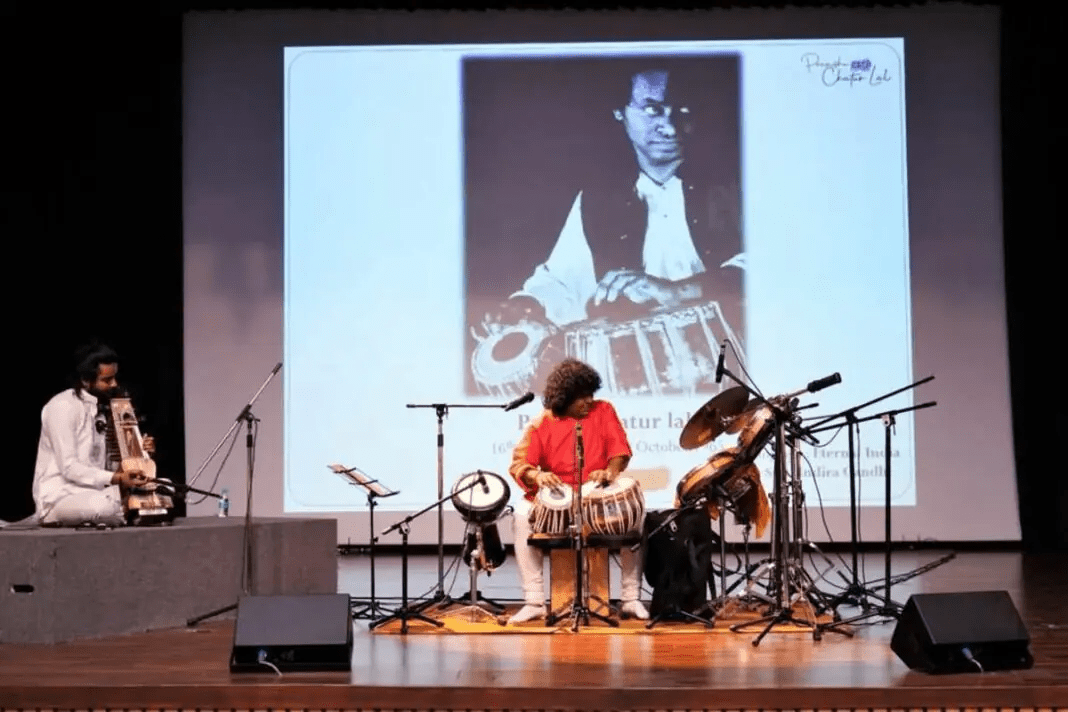
Pranshu Chatur Lal considers his grandfather not just a guru, but a god. Few people know that as early as 1956, Pandit Chaturlal laid the foundation for fusion music. He performed a duet of tabla and Western drums in Washington D.C., a video of which is still preserved in the Library of Congress.
Pranshu Chatur Lal’s father tells him that his grandfather’s career was at its peak during those days. Whenever he came home, he would make the children practice music. It was his habit to feed each child a morsel of food with his own hands before leaving for work. Pranshu’s father was only 9 years old when his grandfather passed away.
Pandit Chaturlal had close ties with Jawaharlal Nehru and Indira Gandhi. In his honor, a road in Delhi was named ‘Pandit Chaturlal Marg’. This road was named after him in 2011 to commemorate his contributions. Pranshu Chatur Lal says that on Google Maps, this road appears in the shape of the letters “C” and “L,” as if it were a mark left by his grandfather’s name.
Experience on Big Stages with Big Personalities
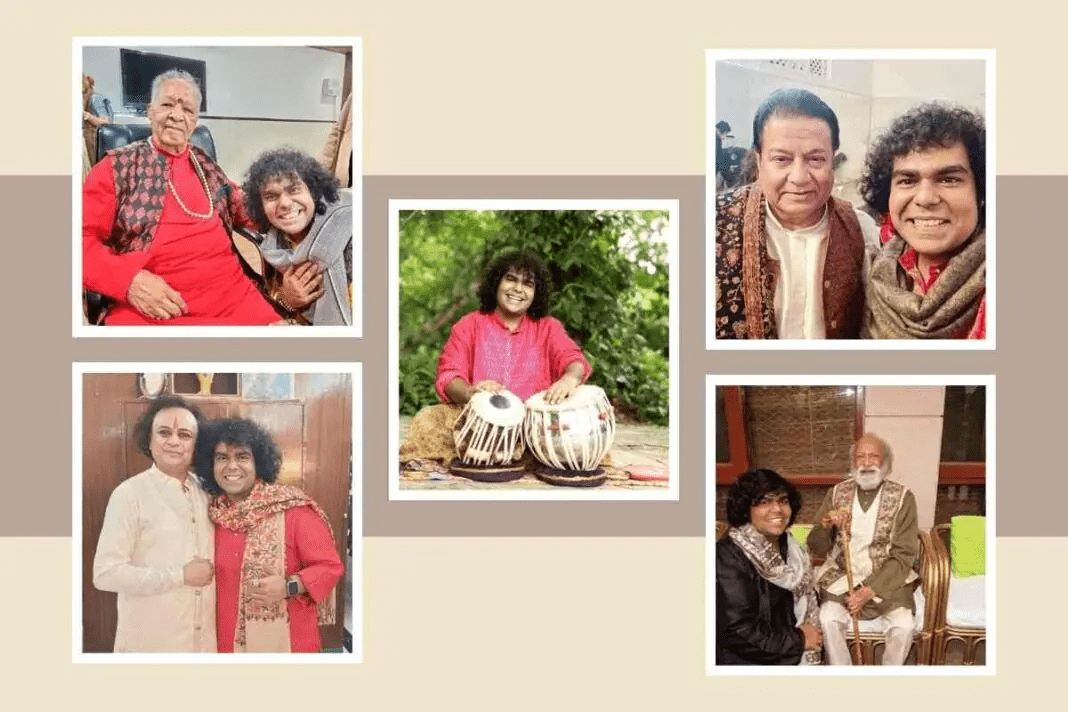
Pranshu has performed in front of Prime Minister Narendra Modi and the President of Sri Lanka. He has also performed with renowned South Indian flutist Vijayagopal, Anup Jalota, Rajan-Sajan, and Hari Prasad Chaurasia. He says that while there is always a sense of nervousness when working with senior artists, everyone made him feel very comfortable and respected.
Pranshu Chatur Lal has spent time with Pandit Birju Maharaj. He recounts that when he first met him, he was in the sixth grade. The purpose of the meeting was to learn how to play the tabla with Kathak dance. He believes that playing the tabla with the facial expressions and movements of Kathak is quite challenging.
Applause in Berlin and the Language of Music
In 2005, he had a solo concert in Berlin. When the performance ended, the audience kept shouting “Once more” for 15-20 minutes. Nervously, he looked at his father. The reply was, “Just keep playing.” That day he realized that music has no language barrier. Pranshu Chatur Lal says that when people make requests, he often plays different kinds of beats for them, such as the sound of a train, the gait of a peacock, or the cooing of a pigeon.
Spirituality: When the Existence of Time Ceases
Pranshu Chatur Lal says that when we say, “We went into a trance,” it means that we lose track of time. The mind becomes completely absorbed in one thing, and everything else fades away. This is a very special state of mind. He recounts, “When I was in America with my father, one morning we sat down to practice.
My father was giving me some important tips about accompaniment. We were also listening to recordings of my grandfather, Pandit Chaturlal ji, and discussing his tabla accompaniment with Pandit Ravi Shankar ji. My father was explaining what true accompaniment is. We were so engrossed in this practice and conversation that we didn’t even realize how much time had passed.”
We had no idea that almost 8 to 10 hours had gone by. When his mother and sister returned in the evening, they found them sitting in the same place, in the same position. He remembers that during that time, he didn’t ask for water, didn’t go to the restroom, and didn’t even feel hungry. This experience was around 2003-2004. At that time, I was about 12-13 years old. Being so completely immersed in music at such a young age was a very profound and special experience for me. Perhaps that’s why the tabla became more than just an instrument for me; it became a form of spiritual practice.
The Pandit Chaturlal Society and the New Generation
The Pandit Chaturlal Society exists in Delhi, founded by Pranshu Chatur Lal’s father. It was registered in 1990. Since then, he has been developing this organization with a clear vision. Through this society, they organize concerts and musical programs outside of Delhi as well.
Almost all the major artists have performed on the stage of this society. We run this institution in memory of our grandfather. Students from different places, not just Delhi, come here to learn. “Currently, I myself am teaching classes here and instructing children in music. The first thing I explain to them is that if you learn the basic hand movements and the correct technique, everything becomes easy later on.”
The Toy Received After Four Hours of Practice
One day, Pranshu Chatur Lal liked a robot, but his father set a condition for buying it. The condition was that he had to practice for about four hours. Practicing for four hours at the age of four or five wasn’t easy. But the desire for the toy motivated him to practice for four hours, and his father was astonished. Seeing his achievement, his father gifted him the very same robot.
Social Media and the New Generation
Pranshu Chatur Lal believes that today’s generation is not alienated from classical music. Their means of accessing it have simply changed. People might think that young people are more attracted to Western music and are drifting away from Indian classical music. But that’s not the case. People from other countries are quite fond of Indian classical music and are also very attracted to our culture.
Pranshu Chatur Lal recounts that he has a friend from Japan who lived and studied in Kolkata for about 20 years. Now he speaks and cooks Bengali very well. Social media is important, but staying connected to one’s roots is even more important. Pranshu Chatur Lal also plays drums and vocal percussion, but his identity is primarily associated with the tabla. For him, the tabla is not just a part of a performance, but a form of spiritual practice. His story teaches us that heritage is not a burden if it is embraced with sincerity.
Also Read: Aazam Khursheed : The Poet Who Made Faces Speak & Still Matters
You can connect with DNN24 on Facebook, Twitter, and Instagram and subscribe to our YouTube channel.