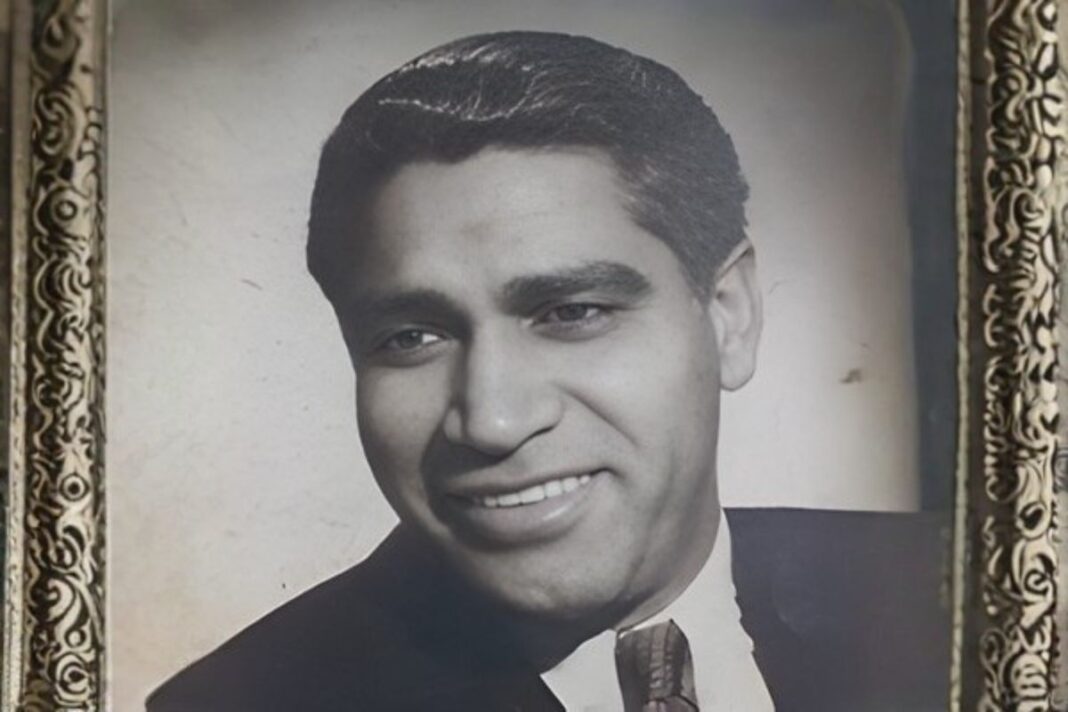

A. D. Azhar stands like a quiet lamp in the crowded courtyard of twentieth‑century Urdu poetry, glowing steadily while louder names grab the spotlight. Born in 1900 and passing away in 1974, with his final years linked to Karachi, he lived through colonial rule, Partition, and the early decades of Pakistan, yet chose the soft language of inner feeling over loud slogans.
Tujh se juda hue to teri yaad badh gayi
A. D. Azhar
Azaad hoke bhi qaid ki muddat badh gayi
A civil servant by profession and a poet by temperament, he kept one foot in files and one foot in feelings, turning daily routine into delicate verses. His poetry survives today on respected platforms such as Rekhta, where he is described as a distinguished Urdu poet and civil servant, a brief line that hides an ocean of unsaid struggle, discipline, and silence.
Na chhed ai sheikh, hum yun hi theek chal rahe hain
A. D. Azhar
Tujhe biwiyan yaad aati hain, hum bekaar baithe hain
When one imagines him, it is easy to see a slim figure at a desk late at night, government papers pushed to one side, a small lamp burning, and a notebook open like a secret door. Outside, history was breaking headlines, empires falling, borders shifting, but his poems moved in the quieter lanes of the heart, talking to longing, memory, and self‑respect.
Tu khwaab mein hi sahi, aa ke jawab to de
A. D. Azhar
Bujhi bujhi si meri khwahish ko aab to de
That is the strange beauty of his life: while the world shouted, he wrote in a small, controlled voice, and that smallness has now become his unique strength. Today, in an age of loud performances and instant fame, his restrained style feels almost rebellious, as if he is reminding readers that not every fire needs to be a blast; some flames choose to burn low and steady, yet they still warm the room for a very long time.
Life between files and feelings
Very little is recorded about Azhar’s personal life in easy public sources, which itself tells a story about the generation to which he belonged. He did not run after publicity or build a big personal brand; instead, he walked the more difficult path of doing his duty as a government servant while quietly shaping verses after hours.
Wo bulaate to hain mujhko, magar ai jazba-e-dil
A. D. Azhar
Shauq itna bhi na badh jaaye ke jaana na bane
His association with civil service brought him close to the ordinary tensions of ordinary people, transfers, salaries, rules, small injustices, and this closeness gave his poetry an undercurrent of lived reality, even when he spoke mainly of love and inner storms.
Tha jis pe naaz kabhi, ab wo khwahish na rahi
A. D. Azhar
Ishq ki pehli si izzat ab baqi na rahi
A clue to his serious literary presence comes from the simple library entry of his book “Lazzat‑e‑Aawargi,” published in Lahore by Maktaba Jadeed in 1961 and classified under Urdu poetry. The title itself, “The Pleasure of Wandering”, reads like a confession: a civil servant tied to office chairs finding secret joy in the wandering of thoughts, memories, and desires across the page.
Wo kehte hain abhi faisla thoda baqi hai
A. D. Azhar
Ke aashiqon ki darkhaastein aur bhi baqi hain
That one catalog line proves that he was not just an occasional hobbyist, but an author whose work was significant enough to be preserved in university systems and catalogued for future scholars. The period of publication also hints at a middle‑aged Azhar, looking back at a world that had recently been torn by Partition, choosing to respond not with bitter propaganda but with refined, inward‑looking shayari that sought to make sense of separation, distance, and restless movement, both on the map and in the mind.
A voice of measured longing
Reading Azhar’s verses is like listening to someone who has learned to control the volume of his pain, not because the pain is minor, but because he respects language too much to let it scream. In one of his famous couplets, he writes of being called by a beloved, yet warns his own heart not to allow its desire to grow so much that the meeting becomes impossible, capturing in two lines the delicate balance between hope and fear.
Meri aashiqui sahi be-asar, teri dillagi ne kya kiya
A. D. Azhar
Wahi main raha, wahi bekhudi, wahi din aur wahi raat hai
Another sher recalls that after separation, the memory of the beloved only grew, and that gaining “freedom” actually lengthened the term of captivity, turning the idea of liberation upside down in a gentle, philosophical way.
ye baat un ki tabi’at pe bar guzri hai
A. D. Azhar
ki zindagi meri kyon KHush-gawar guzri hai
His diction is sharp but straightforward; the emotions are common: separation, waiting, disappointment, but the treatment is mature, like someone who has lived through many cycles of expectation and loss. There is no cheap drama, no artificial fireworks; instead, there is a constant sense of izzat‑e‑nafs, a quiet self‑respect that refuses to collapse completely even when love fails.
KHushi se zindagi-e-gham guzarne walo
A. D. Azhar
KHizan tumhaare hi dam se bahaar guzri hai
This is perhaps the most precious part of his craft: he does not present the lover as helpless or weak, but as someone who suffers, thinks, and then stands up again with a little more wisdom than before.
nahin uThae hain apnon ke bhi kabhi ehsan
A. D. Azhar
hazar shukr ki begana-war guzri hai
This stance matches the disciplined mindset of a civil servant who knows that life cannot stop for heartbreak; files must still move, signatures must still be given, and trains of duty must still run on time, even when the inner clock seems broken.
Relevance in today’s restless digital age
In today’s digital world, where feelings are often turned into quick social‑media content, A. D. Azhar’s poetry acts like a slow but thoughtful mirror. His couplets invite readers to sit with their own contradictions- to desire and doubt at the same time, to remember and move on together, rather than forcing them into dramatic extremes.
dil-e-gharib ko ghar ka hua na chain nasib
A. D. Azhar
ise to ‘umr sar-e-rahguzar guzri hai
Modern Urdu platforms such as Rekhta keep his verses alive, placing him among carefully curated poets whose works are read, shared, and performed by new generations who may never have seen a physical copy of “Lazzat‑e‑Aawargi” but still feel its spirit in digital form.
nasheman apna hai phir barq-o-baad se sarshaar
A. D. Azhar
nai bahaar bhi kya sazgar guzri hai
For young writers and content creators, his life offers a quiet lesson: one can serve in a system and still protect an inner space for creativity, honesty, and softness. For readers moving between cities, jobs, and identities, his language of separation and controlled longing matches the modern experience of migration, career pressure, and emotional distance, proving that his mid‑twentieth‑century heart still beats with twenty‑first‑century rhythm.
koi masarrat-e-lazzat mujhe na dard ka gham
A. D. Azhar
meri to zist hi mastana-war guzri hai
In debates about mental health, emotional intelligence, and authentic expression, his poetry shows another path, not the path of shouting one’s pain to the world, but of shaping it into disciplined lines that respect both the hurt and the reader. In this sense, Azhar’s whispered footsteps continue to move beside today’s hurried ones, reminding everyone that even in the age of noise, a quiet flame can still guide, comfort, and gently change the way a person carries their own story.
Also Read: Pandit Daya Shankar Naseem Lakhnawi: Urdu’s Kashmiri Genius
You can connect with DNN24 on Facebook, Twitter, and Instagram and subscribe to our YouTube channel.