
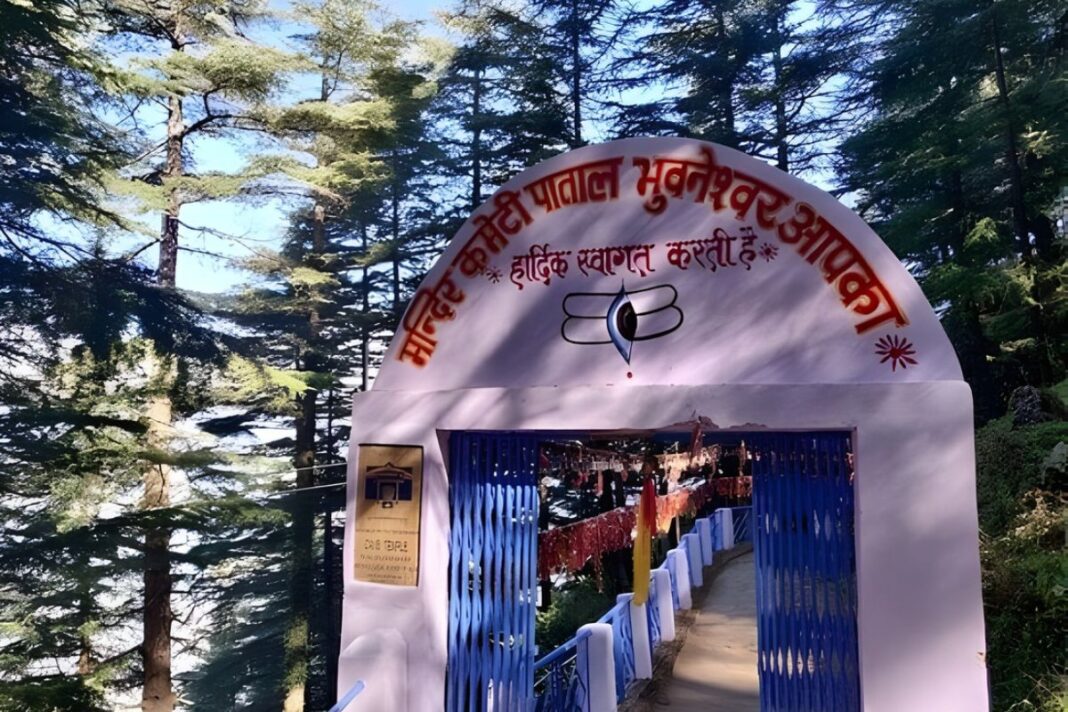

Step into a crack in the earth where kings lost their way and found eternity instead. Patal Bhuvaneshwar Cave Temple sprawls beneath Uttarakhand’s Pithoragarh mountains, a limestone cathedral carved by water’s patient hand over millennia, holding Shiva’s court in mineral silence.
When a King Chased Destiny Into Darkness
King Rituparna of Ayodhya’s Surya dynasty rode hard through Himalayan forests during the Treta Yuga, pursuing a deer that danced just beyond his arrows. The animal vanished. Exhausted, the king slept rough on mountain slopes and woke to visions of the creature begging for mercy, gesturing toward a hidden cave mouth sealed by boulders. A wandering priest appeared, granting permission to enter what lay beyond ordinary sight.
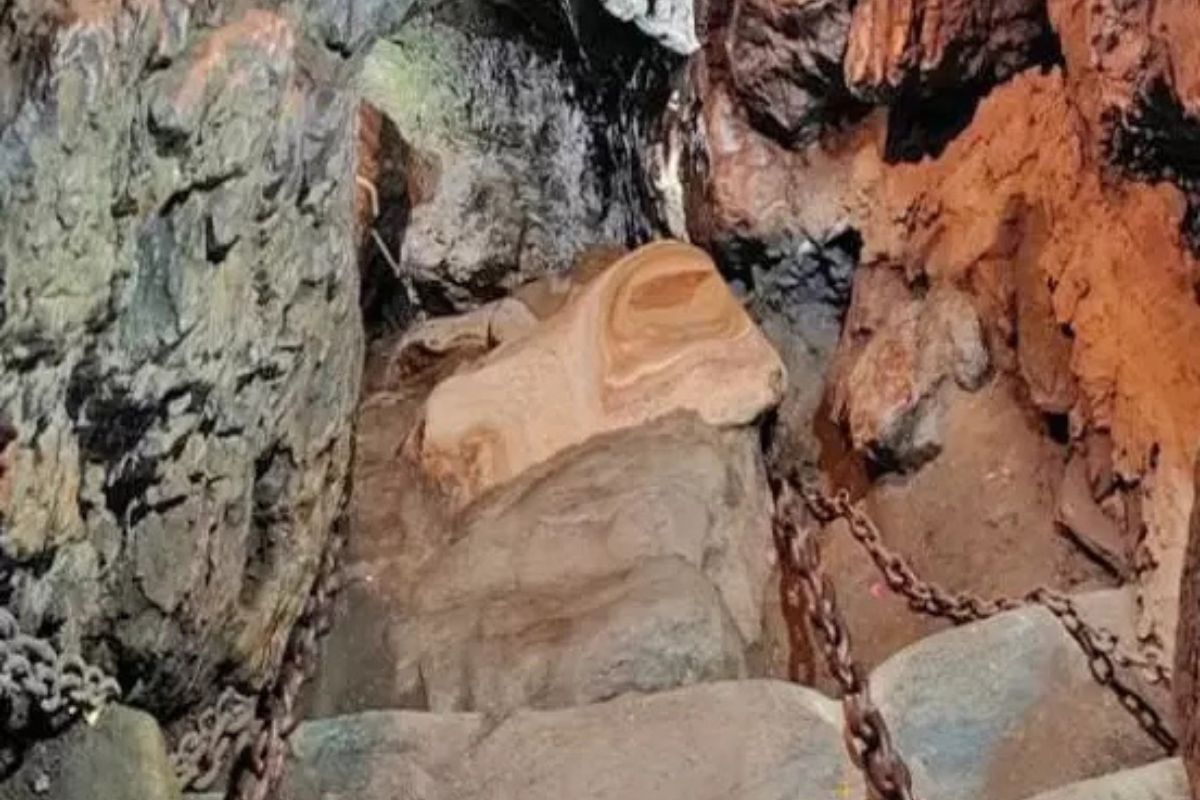
Inside, the earth opened into passages where Sheshnag himself rose in stone coils, his thousand hoods spreading like a chariot canopy, ferrying Rituparna through chambers alive with divine presence. The 33 koti devtas appeared not as crores in number but as categories of cosmic forces: Shiva sat in meditation, Parvati beside him in grace, Vishnu’s chakra gleamed from limestone walls, Ganesha’s trunk curved in blessing. The king witnessed heaven’s assembly carved into the belly of the earth, a court of gods meeting in permanent session.
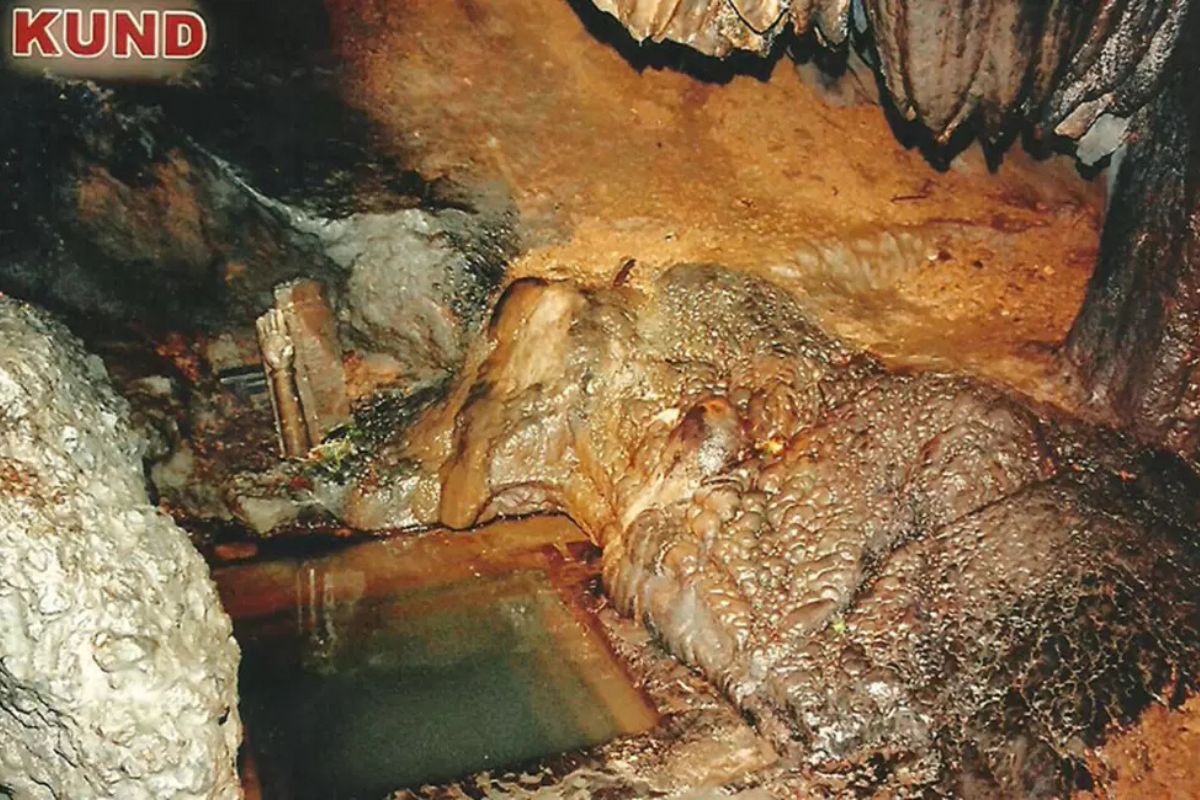
The Skanda Purana’s Manas Khand section foretold that this sacred cavity would close after Rituparna’s visit, waiting through ages for Kali Yuga’s appointed opener. Stories claim the Pandavas sheltered here during forest exile, meditating in tunnels that twist like meditation itself. Water drops, over centuries, sculpted recognisable forms: the river goddess Gangola, frozen mid-flow; saints caught in eternal prayer; each calcium deposit a stroke from time’s deliberate brush. That deer led Rituparna not astray but inward, toward truths carved deeper than memory.
The Philosopher Who Knocked With a Cow’s Horn
Jump to 1191 AD, when Adi Shankaracharya travelled the Himalayan ranges seeking Shiva’s heartbeat in stone and stream. Villagers spoke in hushed voices about an underworld sealed since ancient times, its location remembered but its entrance forbidden by the weight of rock and the passage of centuries. Shankaracharya approached the boulder barrier, and legend has it that he brought a cow whose horns struck the stone face. The crack that followed released air thick with incense memory and earth’s deep breath.
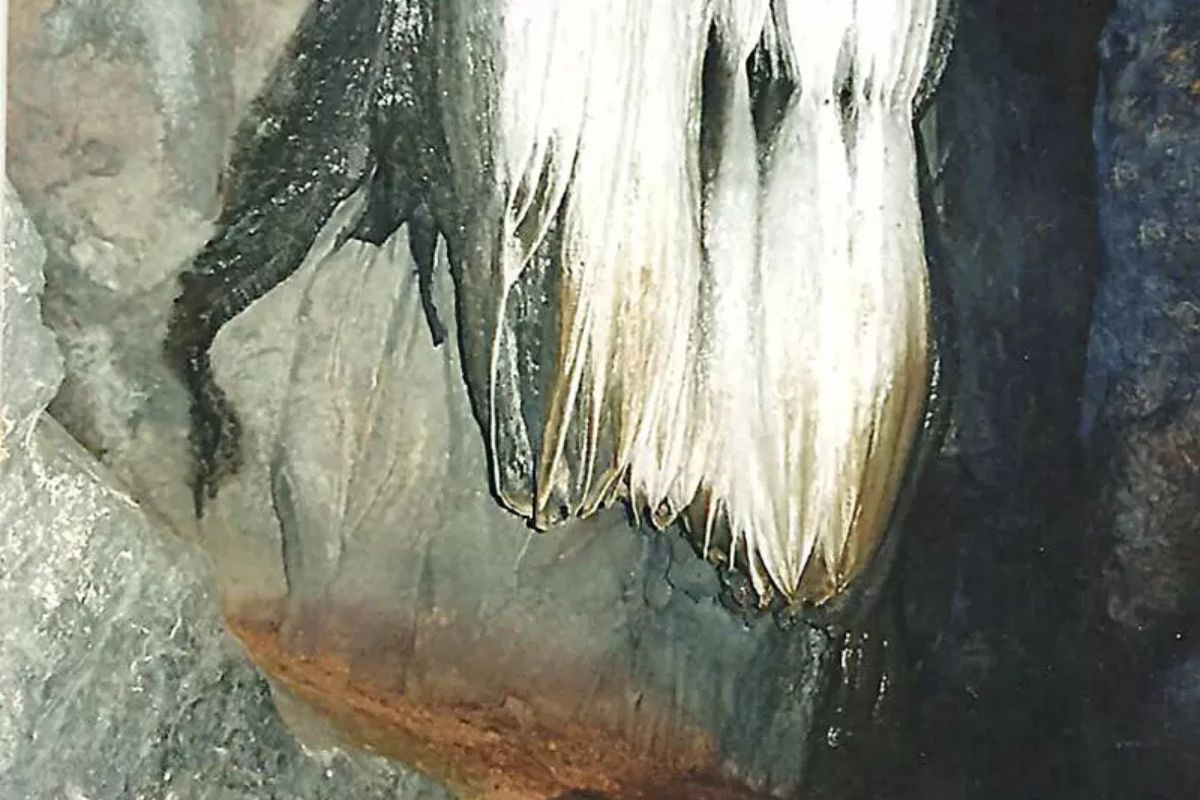
The philosopher entered with torch and courage, descending 90 feet through passages barely wide enough for single-file crawling, snaking 160 meters into the mountain’s core like veins carrying blood to a hidden heart. Sheshnag appeared again in his stalagmite magnificence, guardian of the three worlds balanced on his hoods. Havan fires burned without fuel or explanation, their flames casting shadows that danced across formations: Parvati’s flowing form, Narasimha’s fierce emergence from a pillar, Hanuman frozen mid-leap toward Lanka.
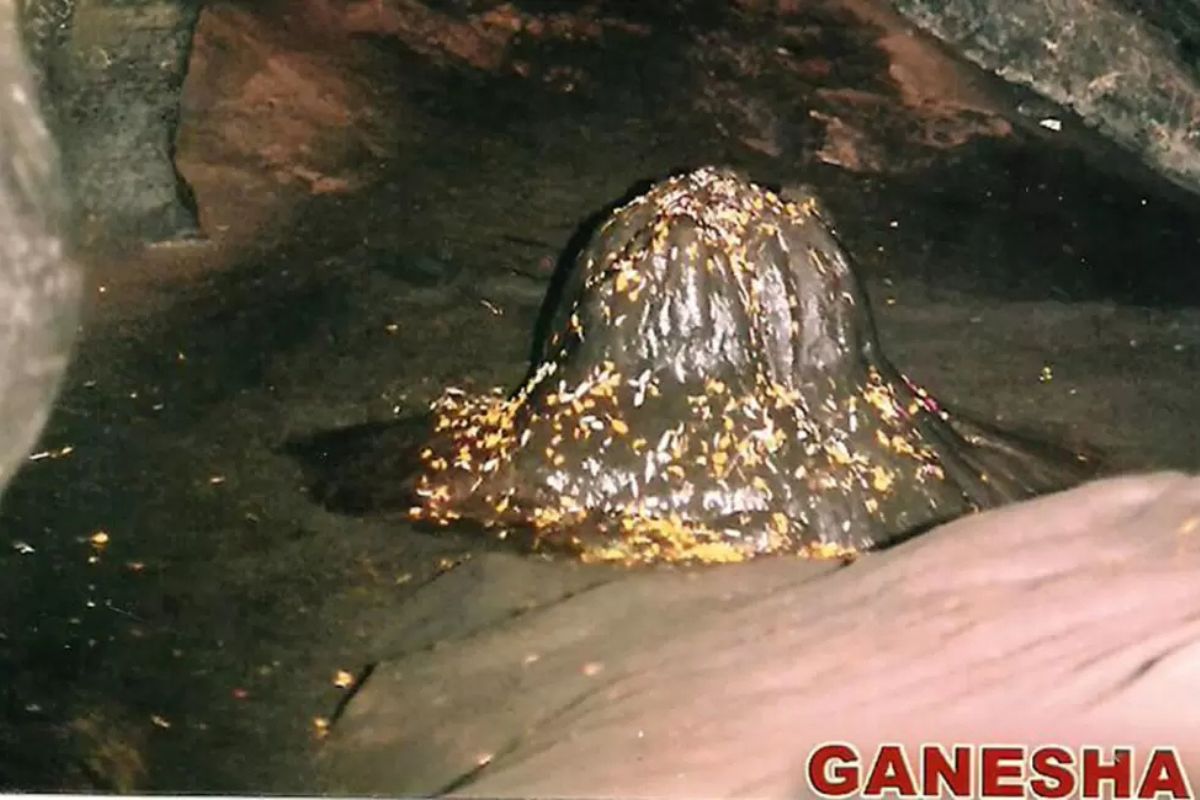
Shankaracharya worshipped before the Svayambhu Shivling, the self-manifested linga that forms the temple’s spiritual centre, and declared Patal Bhuvaneshwar among Hinduism’s most potent sites. His visit sparked pilgrim traffic that continues to this day. The original entrance required faith strong enough to move stone; now, concrete steps and electric bulbs guide thousands annually, but that first crack still speaks of moments when conviction splits reality open.
Gods Growing From the Ceiling
Stoop low and grip the safety chains because what waits inside defies human craft. Limestone calcium deposits accumulated over millions of years have created a pantheon requiring no sculptor’s hand. Massive Sheshnag formations coil upward, their hoods fanning like trishul prongs, standing eternal guard at the gateway between worlds. Nearby rises a three-tiered structure representing Svarga above, Prithvi in the middle, and Patal below, heaven, earth, and underworld stacked in mineral layers.
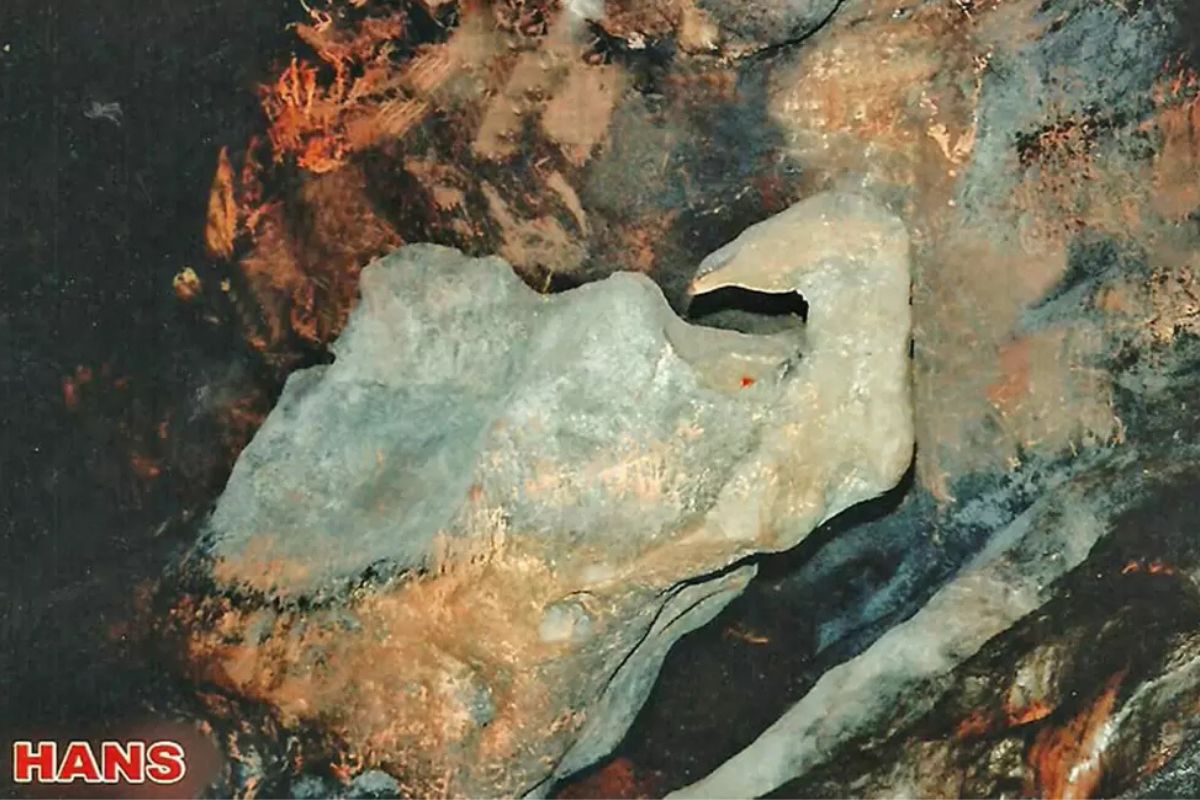
Parvati’s form appears in flowing stone veils. Ganesha’s trunk curves in unmistakable blessing. Kartikeya rides what resembles a peacock’s plume. Vishnu reclines on Sheshnag’s coils with Lakshmi at his feet in miniature perfection. Brahma’s four faces gaze toward the cardinal directions. Narasimha emerges from a pillar in mid-roar. Even Kali appears, tongue extended in her fierce dance. More surprisingly, the formation resembles the Matsya avatar, the fish that saved creation from the deluge.
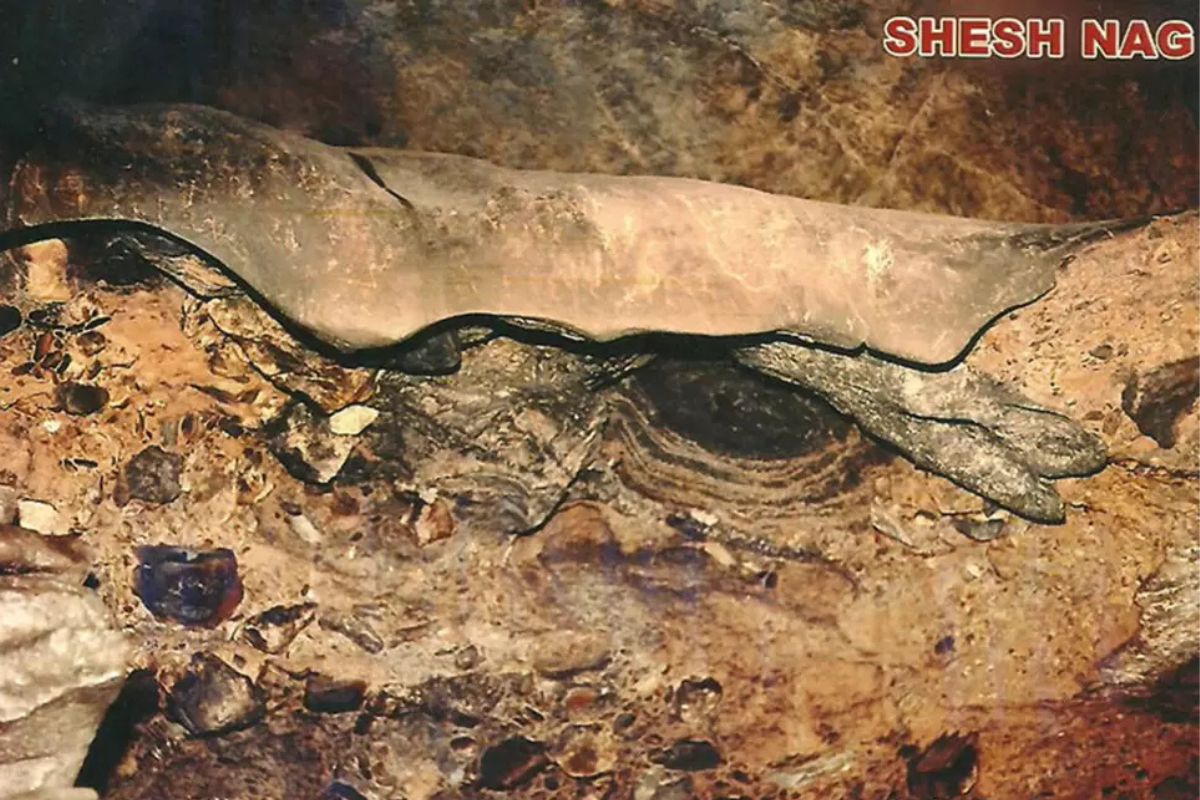
The Akhand Jyoti burns here without oil or wick, a flame that defies drafts and scientific explanation, casting amber light across chambers. Tunnels branch toward Rang Mahal, with its coloured mineral deposits, Resham Mahal, where formations hang like silk curtains, and smaller alcoves dedicated to Krishna’s childhood games. Water has shaped offerings frozen mid-ritual: camphor seeds, vermillion pots, all formed by patient dripping. Amber, green, and white hues glow under modern lighting, but they exist independently of human illumination.
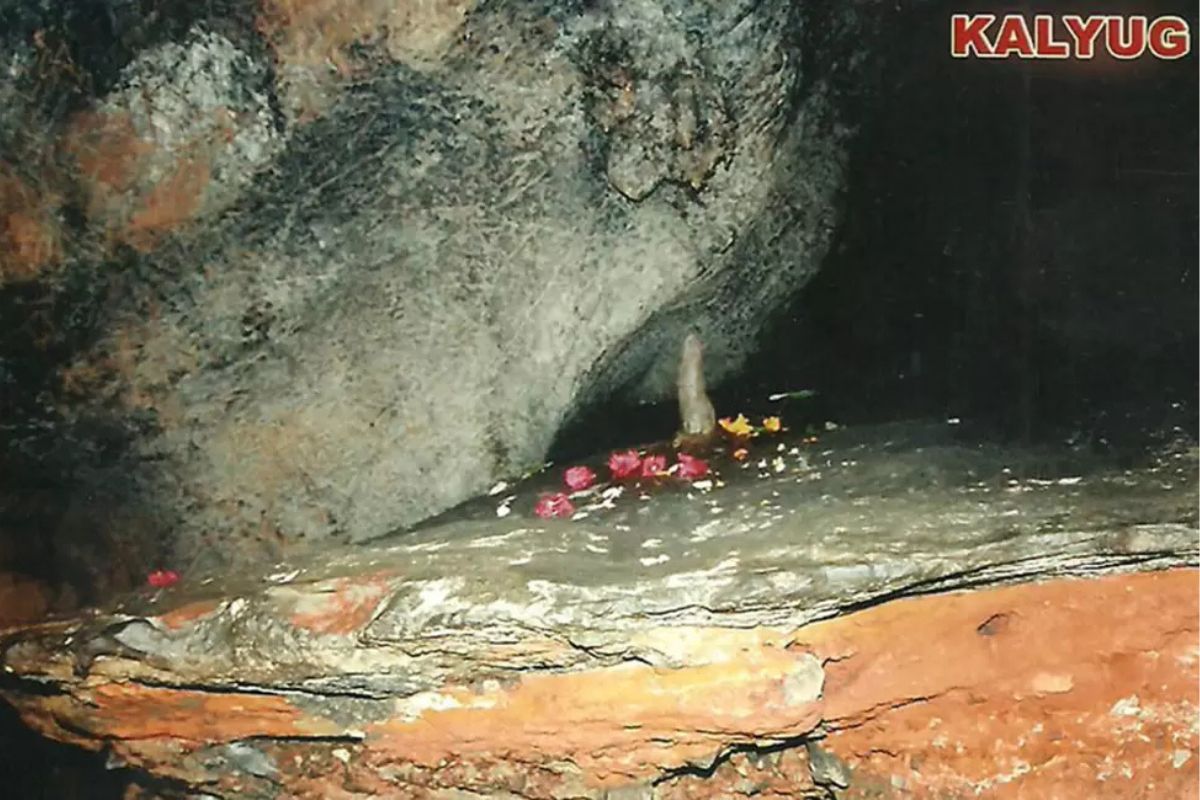
Legends claim passages extend for miles, potentially connecting to Mount Kailash itself, though most remain unexplored and unmapped. The formation locals call Yogi Badri depicts a sage frozen in meditation, a reminder that divinity accumulates drop by drop, year by year, aeon by aeon, never rushing its revelation.
From Secret Hideout to Heritage Site
After Shankaracharya’s rediscovery, word spread through kingdoms and ashrams. Gorkha rulers funded path improvements. British colonial officers visited and filed sceptical reports that nonetheless confirmed the cave’s existence and scale. The 20th century brought carved steps, electric wiring, and growing crowds for Shivaratri. During India’s independence struggle, local freedom fighters reportedly stored weapons in unexplored chambers, the cave sheltering revolution as it once sheltered gods.
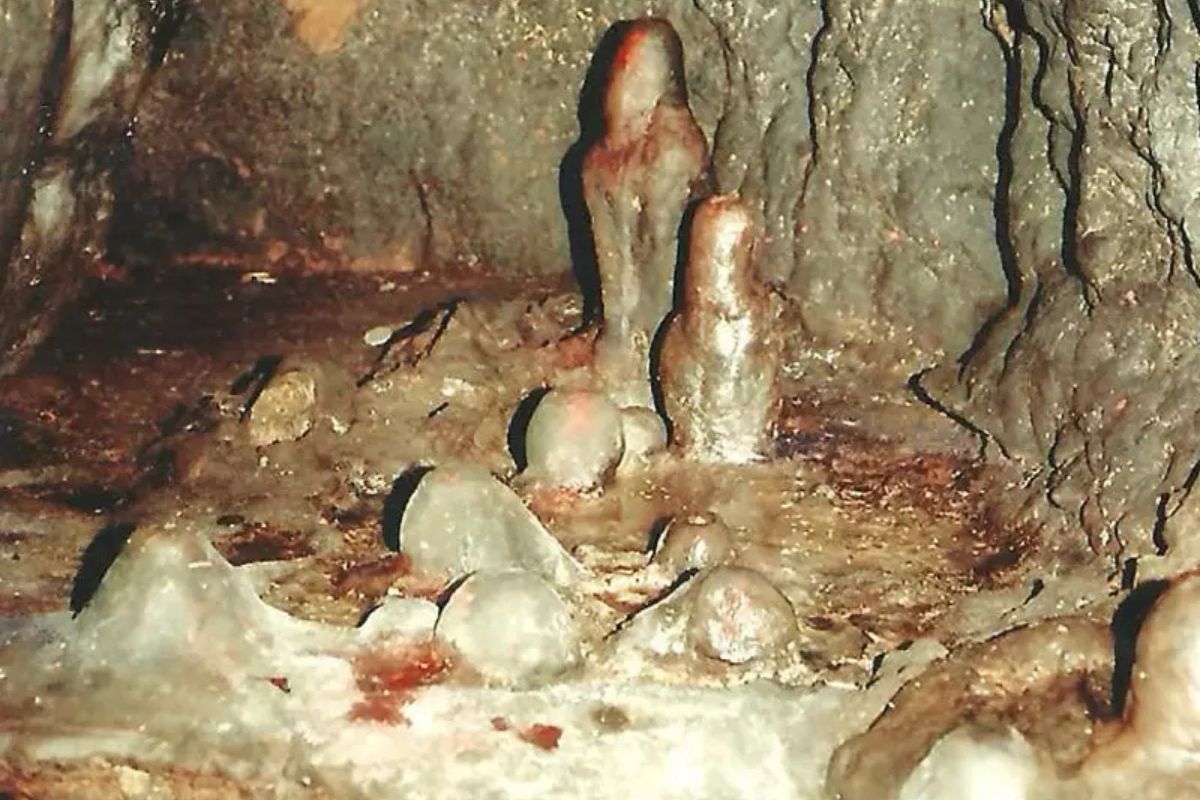
Post-1947, Uttarakhand declared Patal Bhuvaneshwar a cultural heritage site, developing Gangolihat as a base camp where tea stalls and dharamshalas serve pilgrims year-round. The official pilgrimage season runs daily from 7 am to 6 pm, with modest entry fees and priest-guides offering 30-minute tours through accessible sections. Yet mysteries persist, since roughly 70 per cent remains unexplored, with underground rivers rumbling through darkness and bat colonies whispering in chambers humans have never seen.
Today, in 2026, digital mapping projects use drones and 3D scanning to document formations, while environmental regulations limit daily visitor numbers to prevent damage from calcium deposits. The post-pandemic spiritual surge has sent urban seekers fleeing cities for cave silence, with yoga retreats and meditation centres multiplying nearby. Film scouts frame shots here, social media influencers chase content among the gods, and the cave’s connection to Mount Kailash feeds into broader Char Dham pilgrimage marketing.
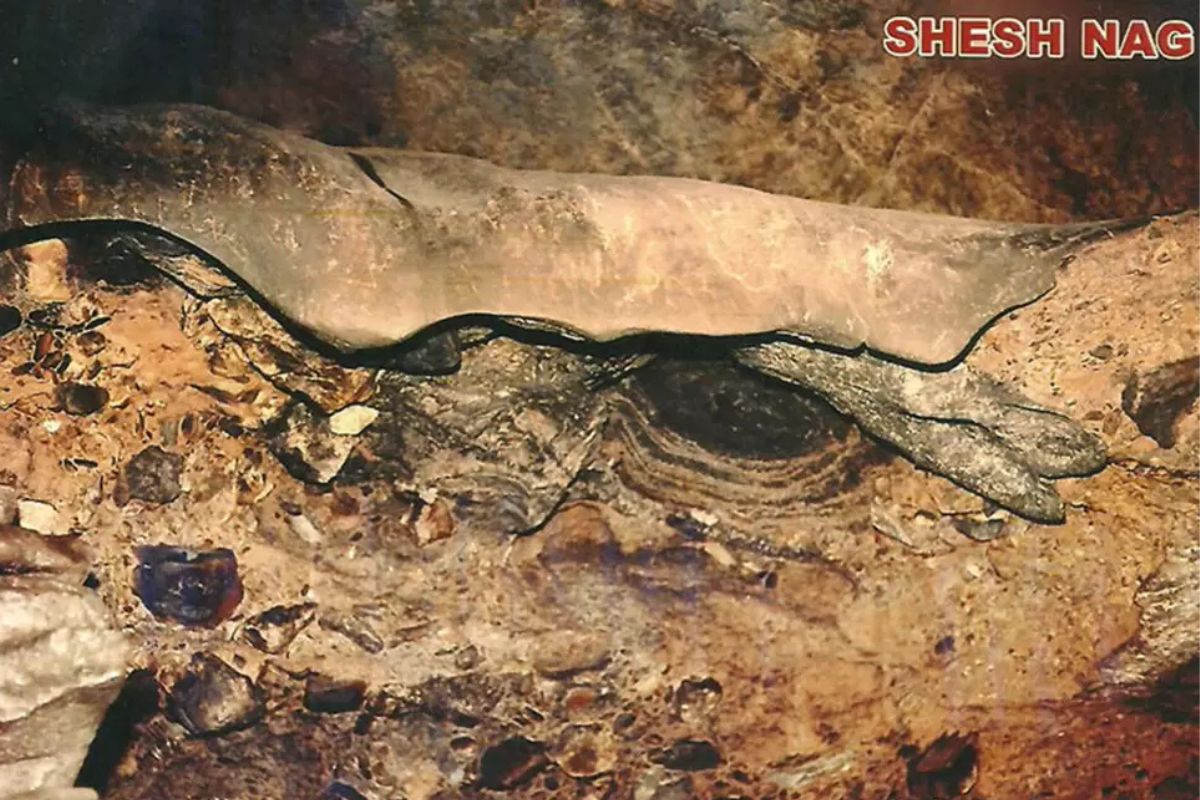
The eternal flame draws particular attention, with scientists proposing theories about methane seeps while devotees simply smile at the mystery’s persistence. NGO-led initiatives promote clean trekking practices, and viral videos of the cave spark youth interest in mythology. The cave retains contemporary relevance as an anchor of stillness amid modern chaos.
Also Read: Eklakhi Mausoleum: Pandua’s One Lakh Rupee Royal Secret
You can connect with DNN24 on Facebook, Twitter, and Instagram and subscribe to our YouTube channel.