
Located in Srinagar’s downtown area, Jalali House is a 19th-century mansion built in the finest Kashmiri architectural tradition. It has been visited by many political leaders before and after India’s independence and has become a popular shooting location for Bollywood films.
Downtown Srinagar stands as a testament to Kashmir’s enduring architectural traditions. As you walk through its narrow lanes and bylanes, you see old and historic structures that reflect traditional local craftsmanship. Among them stands Jalali House, a heritage haveli and one of the finest examples of traditional Kashmiri architecture.
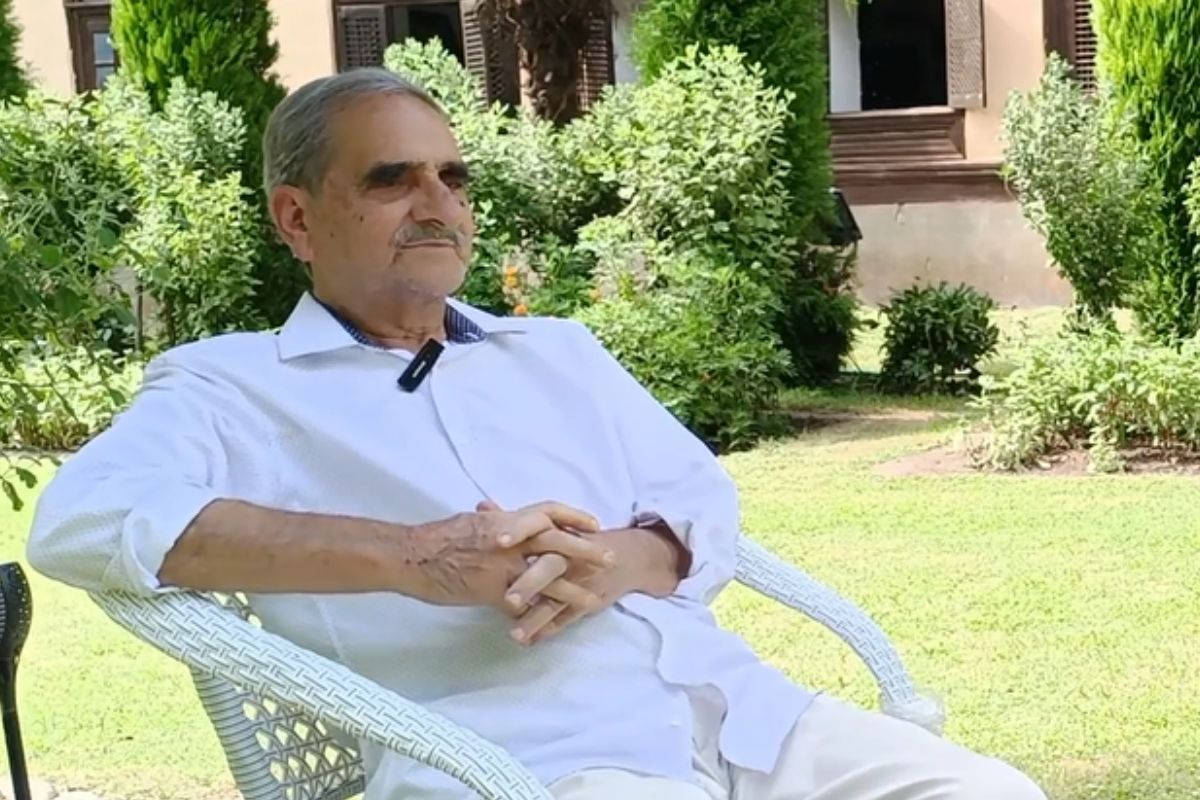
The three-storied structure is located in the Zadibal area of Srinagar. It was built in 1863 by Agha Syed Safdar Shah Jalali, a prominent 19th-century socio-political figure of Kashmir. Jalali house is one of the top heritage structures in Kashmir. It was built using the traditional Taq method of construction — an engineering technique that combines wood, brick, and mud to build structures. This technique enhances the strength of the structure to withstand disasters like earthquakes. This strength has been tested during several earthquakes over the decades. “With time, the structure loses its strength, and you either build a new one or modify the existing one to make it strong. This house is still strong, and from its strength, it clearly looks like it will stay so for hundreds of years,” Agha Syed Iftikhar Hussain Jalali, the present owner, told DNN24 recently.
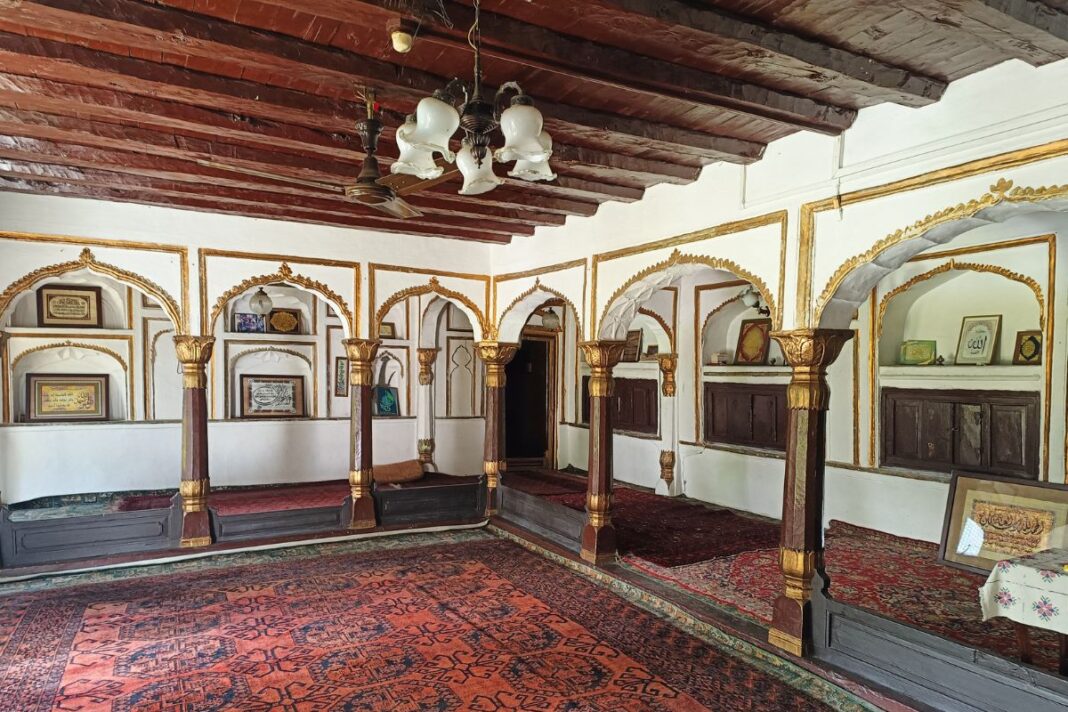
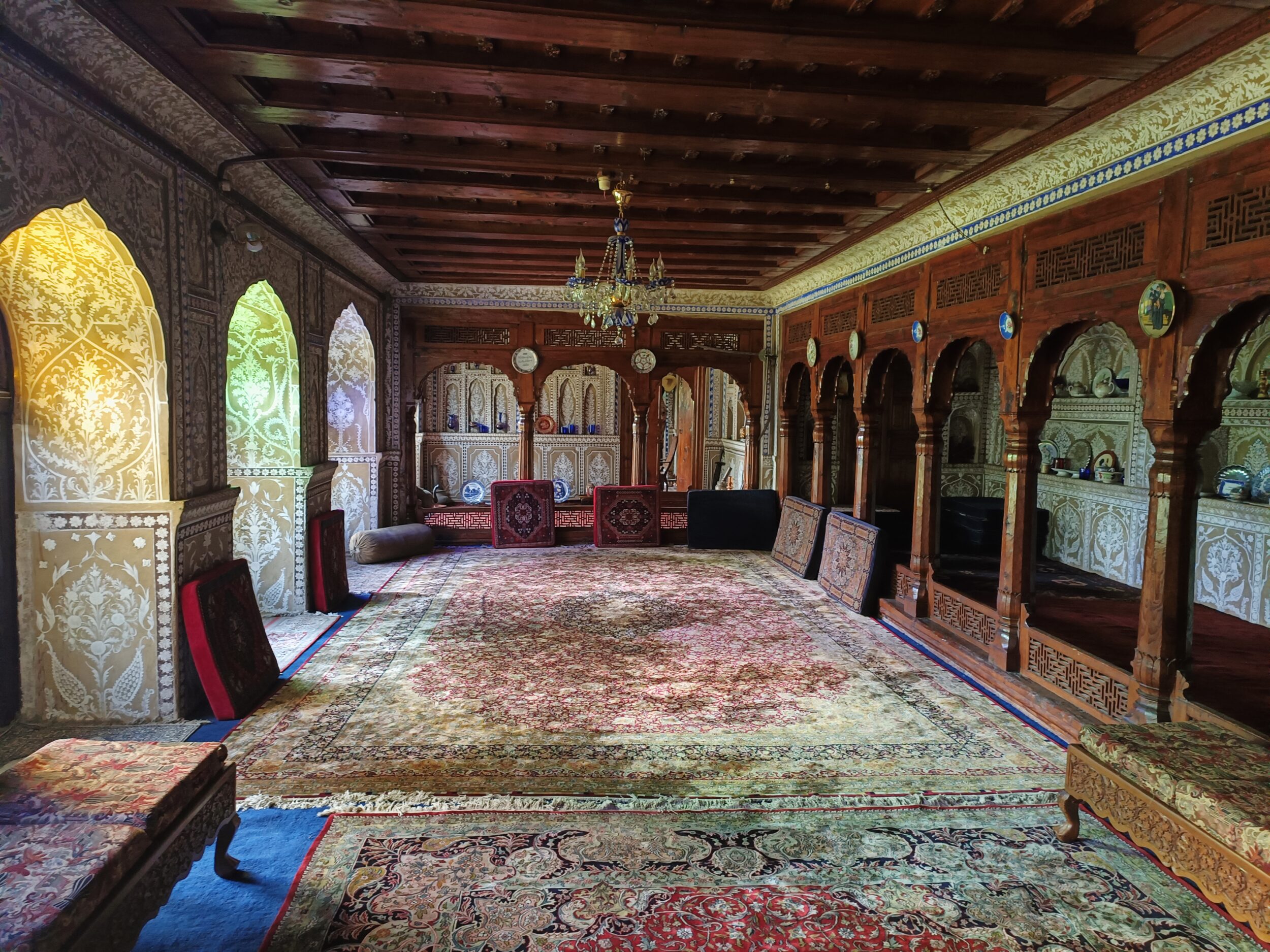
The western part of the house has large halls on all three floors, along with smaller side rooms. These halls, known as Deewan Khanas, were used for meetings, gatherings, and social events both before and after Independence. The eastern side of the haveli has private rooms, locally known as Koother, that were used to host guests. In addition, it has a long, narrow gallery called the Shah-Nasheen.
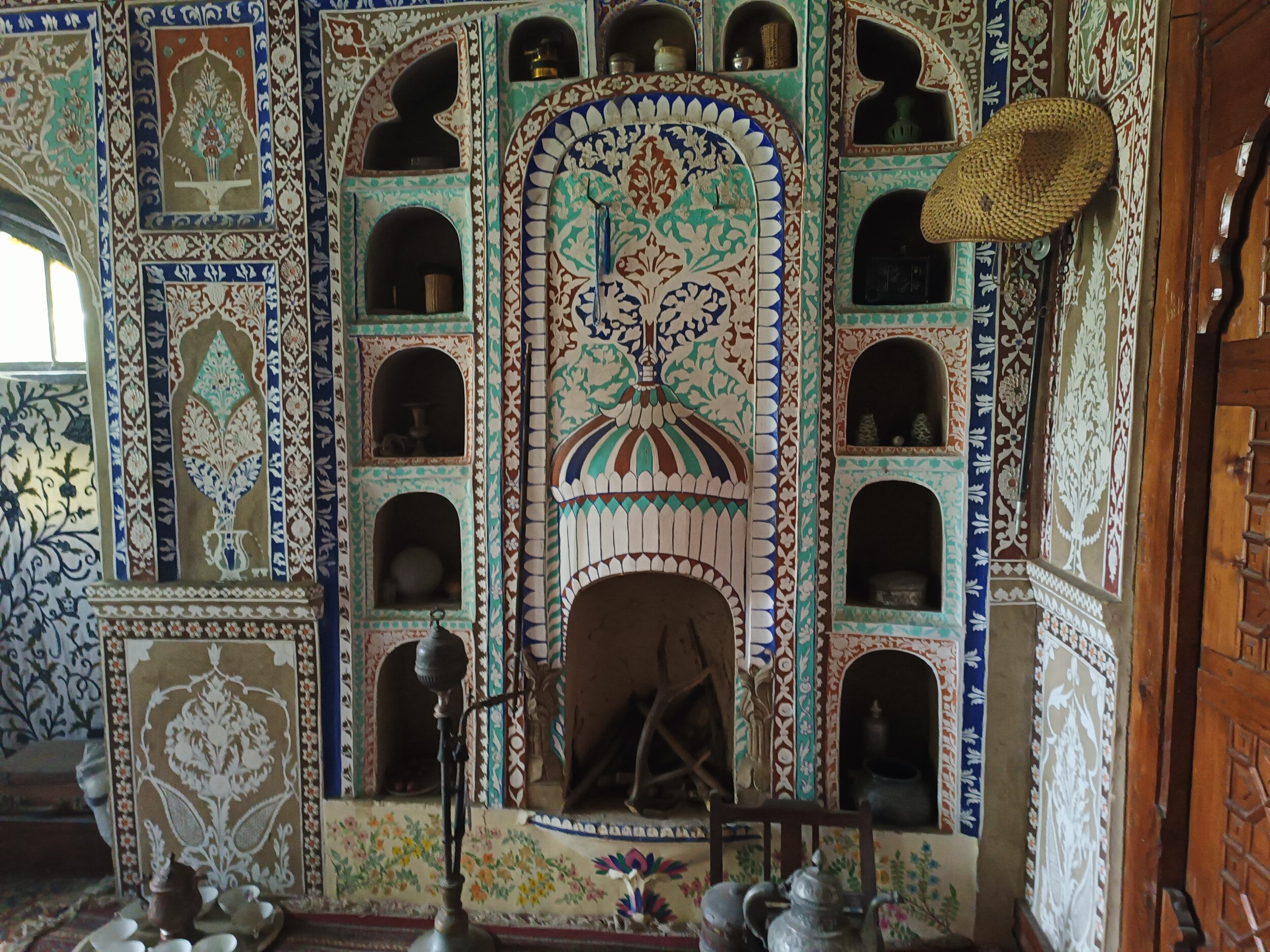
In order to withstand Kashmir’s harsh winters, with temperatures often dropping below zero, the haveli has heating elements such as a traditional Bukhari and a Hamam. The Bukhari is a wood-burning fireplace used to heat the room during winter, while the Hamam is an underfloor or stone slab heating system, usually attached to the living area.
Jalali house has been built with Maharaja bricks — a handmade, small, and very dense type of brick used in Taq buildings. These bricks give the structure its weathered appearance. It has windows of different sizes with Pinjra Kari work — the hand-carved wooden latticework typical of traditional Kashmiri homes. The windows in the large halls are fitted with colored glass that adds to the beauty of the haveli and creates striking light patterns inside the rooms.
Almost every floor of the house has Khatamband ceilings featuring intricate geometric patterns created by fitting small pieces of wood together by hand. Inside, most of the room walls are adorned with painted Naqqashi work, which adds to the elegance and artistic richness of the interiors. Hexagonal balconies, locally known as Zoon Dub, project from the second floor overlooking the lawn. In traditional Kashmiri homes, these balconies were commonplace and provided a platform to view the moon. Zoon is the Kashmiri word for moon.
The house has thick, three-foot walls made of wood and clay, which help regulate the temperature by keeping the interiors warm during winter and cool during summer. The house faces south, which further helps maintain this balance. Sunlight falls on it in such a way that it naturally keeps the rooms warm in winter and cool in summer throughout the year.
Beyond its architectural importance, the haveli holds historical significance. It was the site of several socio-political activities during both pre- and post-independent India. In 1936, it hosted Mohammad Ali Jinnah, the founder of Pakistan, as well as several British generals and viceroys. It has also hosted the former Chief Minister of Jammu and Kashmir, Sheikh Mohammad Abdullah, besides many other regional and national leaders.
Photographs of these political personalities are displayed on walls along the corridors, providing a glimpse into those historic moments. “This house is more than a structure. It holds memory, identity, and a deep sense of belonging,” said Iftikhar.
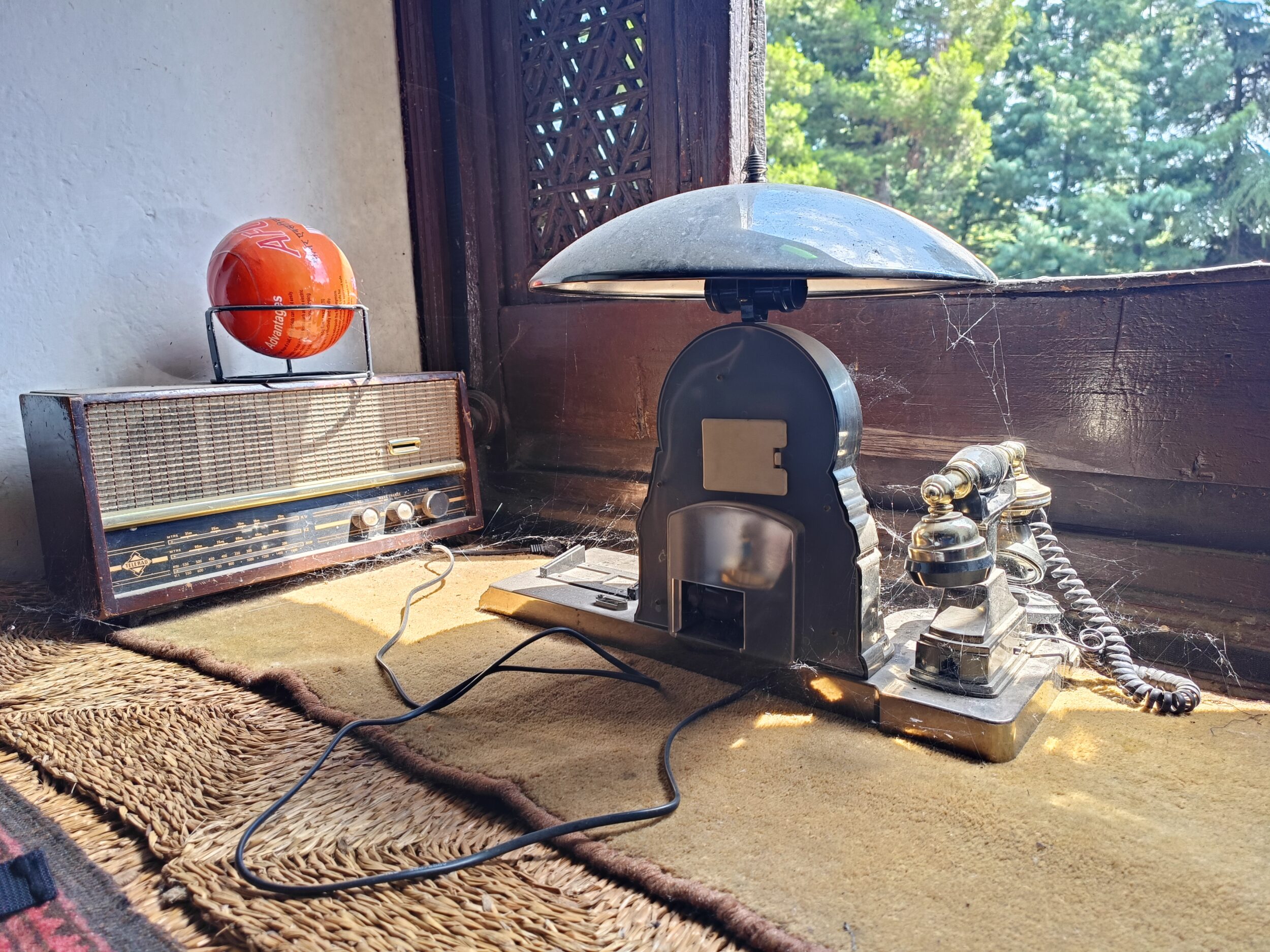
Many antique objects have been carefully preserved inside the haveli. Visitors can see old radios, a tape recorder, a traditional landline telephone receiver, pottery, traditional crockery, copper utensils, and other ancient household items. Some traditional artefacts such as charkhas (spinning wheels), grass-made shoes, and handwoven mats are also displayed in the house, offering a glimpse into the lifestyle of earlier generations.
The aesthetic appeal, serene setting, and intricate traditional craftsmanship of Jalali House have made it a preferred destination for film shoots. Several Bollywood films, including Fitoor, Haider, and 7 Khoon Maaf, were shot at the haveli. “Many ad films and television serials have been shot here,” Iftikhar told DNN24. It also attracts local and international tourists who wish to experience its architecture, history, and cultural legacy.
At present, the haveli is looked after by the helpers of the Jalali family. It is regularly cleaned, protected, and maintained by them. “No one has been living in the house since my father passed away in 1961,” said Iftikhar, who lives in a house built just in front of the haveli. Apart from some minor repairs, the haveli stands as it was originally designed. “The building remains largely unchanged since its construction. Only the roof was replaced with tin sheets, and some pillars were polished to protect them from worms,” said Iftikhar.
Even after more than a century and a half, Jalali House stands as a prominent symbol of Kashmir’s architectural heritage and living history, despite the rapid spread of modern architecture across Srinagar.