
No luxury train in Asia has a story quite like this one. The Palace on Wheels, which first rolled out of Delhi on Republic Day 1982, is about to do something it has never done in 44 years of service: depart in May. On May 20, 2026, it will pull away from Safdarjung Railway Station and head into Rajasthan during the hottest month of the year bowing to increased demand. This is not a promotional stunt. It is, by any reasonable account, a significant moment in Indian tourism history.
When a Bank Booked a Royal Train for Its Own Staff
For the first time in living memory, a nationalised bank has reserved the Palace on Wheels entirely for its employees. Not for clients. Not for dignitaries. The May 2026 run carries more than passengers. It reiterates the profitability of the Railways’ premium offering. “In a time when global financial markets have been rattled by international tensions and economic uncertainty, the choice of a nationalised bank to invest in a full-train charter speaks powerfully of institutional confidence in India’s domestic travel ecosystem,” according to a Railways’ statement.
The Palace on Wheels, which departs from Safdarjung and winds through Rajasthan’s forts, deserts, and royal dining rooms, built its reputation on exclusivity. Its fare pricing varies by season and occupancy. During the lean months of April and September, double occupancy fares start from USD 6,000 (Rs 5.78 lakh approximately) per person which increases during peak season.
The Origin of a Very Unusual Idea
The Palace on Wheels was conceived as a joint venture between Indian Railways and the Rajasthan Tourism Development Corporation. It launched on January 26, 1982, and its founding premise was neither complicated nor common. The British-era saloon coaches once reserved for Maharajas, Viceroys, and Nizams were gathering dust. Someone decided to put them to use again.
The plan was to turn Rajasthan’s forts, deserts, and palaces into a living theatre, one accessible only by rail, where the journey itself would carry as much weight as any destination. It worked. Within five years, the train had won the PATA Gold Award in 1987. By 2009, it was recognised as the best train in Asia. Travel publications from London to Tokyo began calling it one of the world’s great rail experiences alongside the Orient Express and the Rocky Mountaineer.
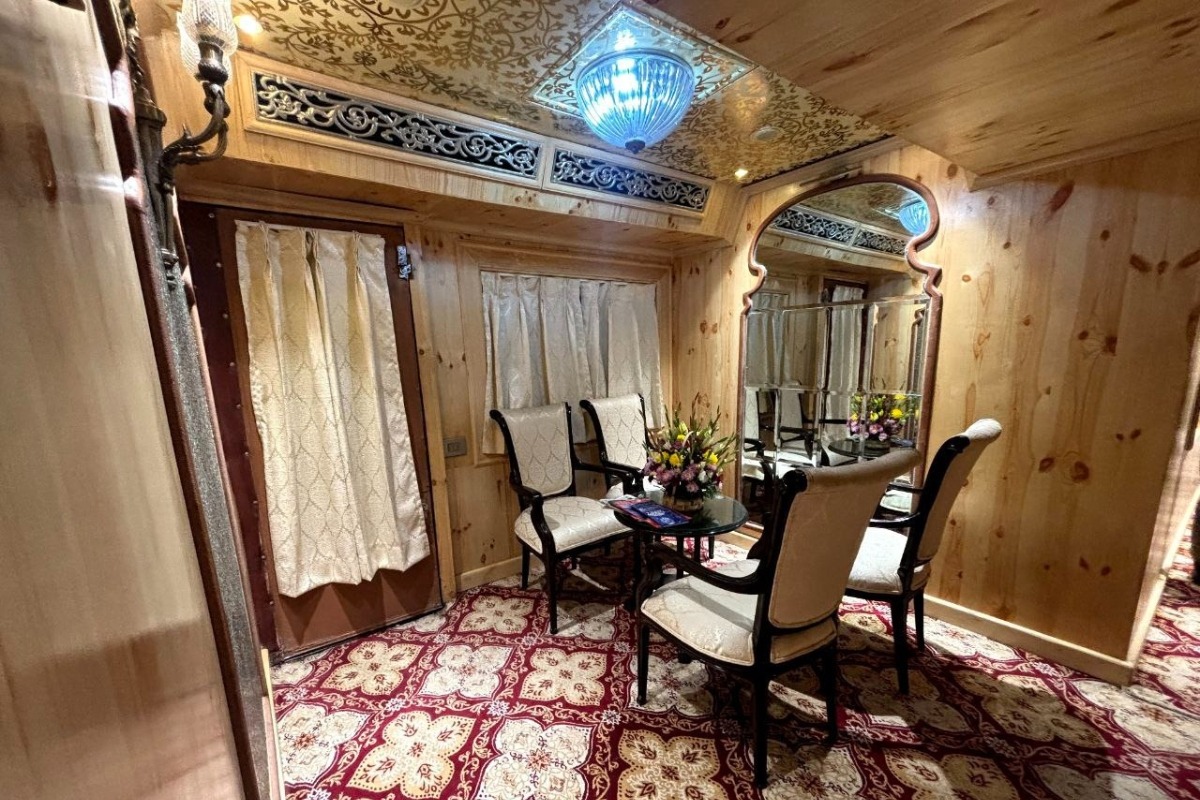
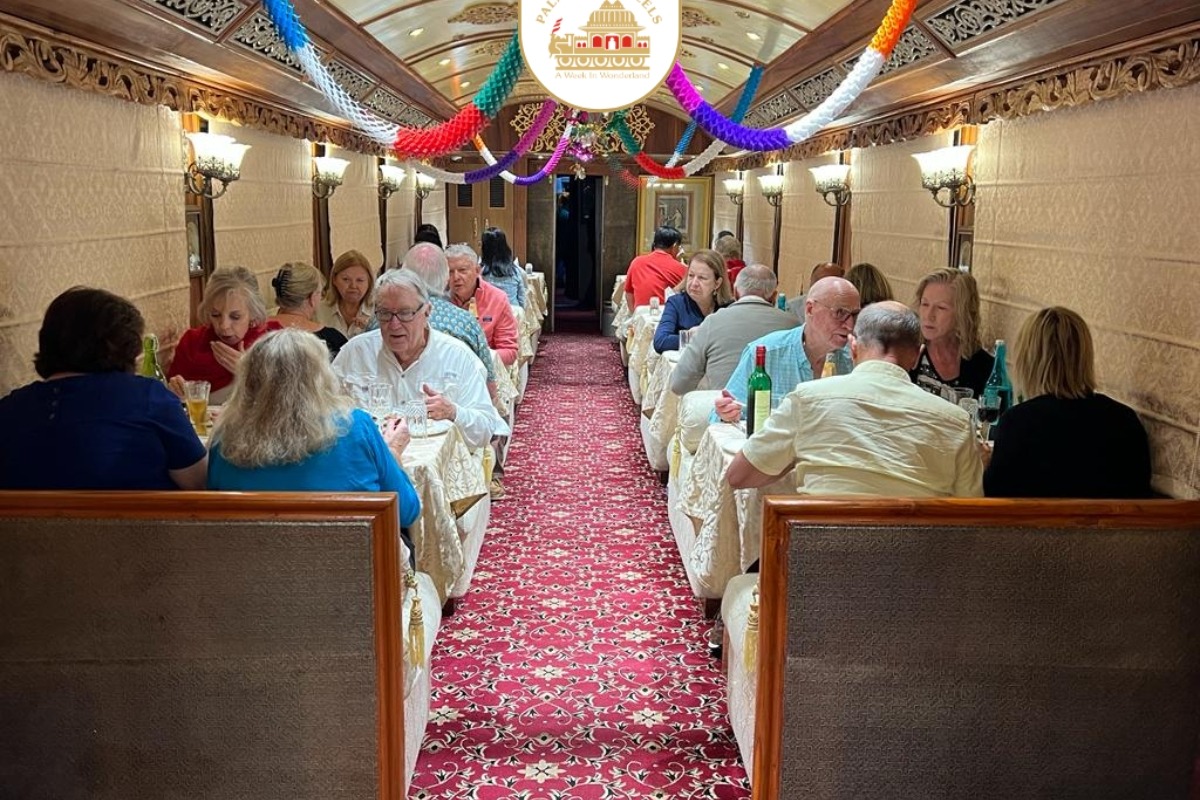
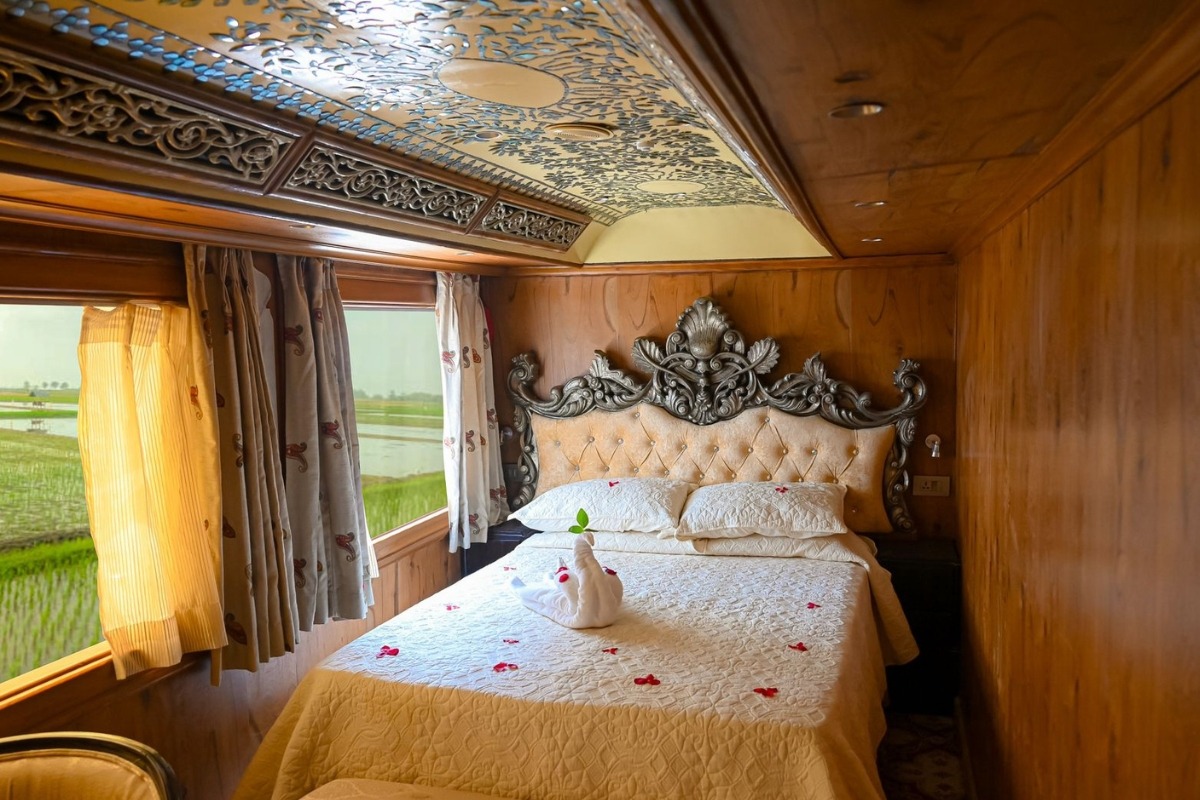
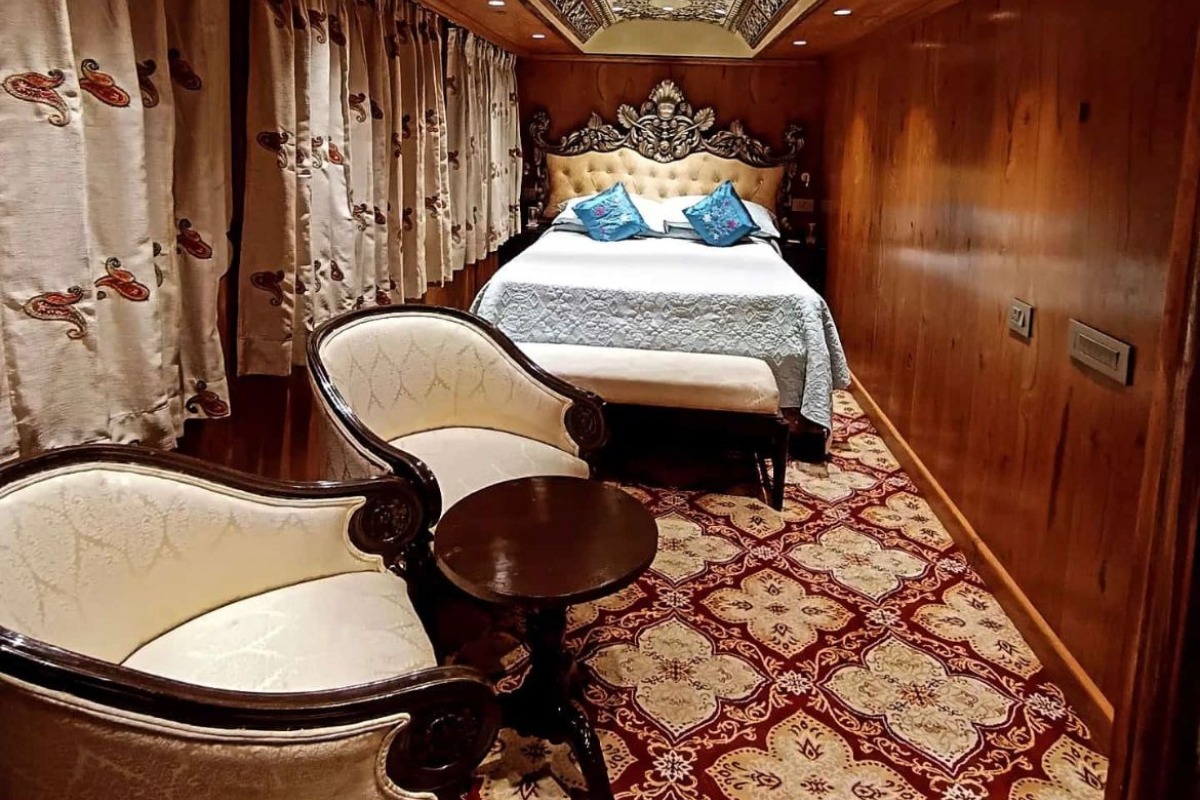
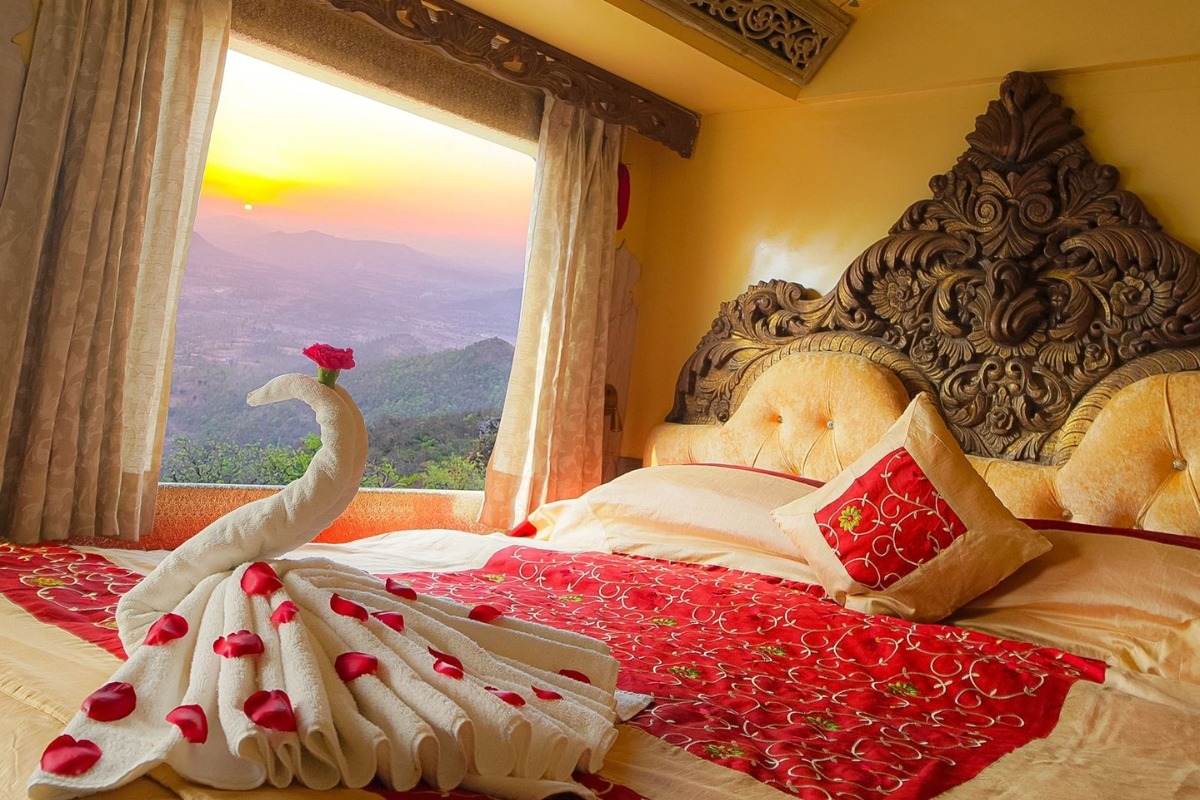
Each coach bears the name of a historic princely state: Jaipur, Jodhpur, Bikaner, Udaipur, and Jaisalmer. The interiors carry the architectural vocabulary of the erstwhile kingdoms- hand-carved woodwork, Rajasthani textiles, and painted motifs borrowed from fort walls dating back centuries.
What the Journey Normally Looks Like
For most of its history, the Palace on Wheels has operated a seven-night, eight-day circuit from September through April. The route follows a set path through Rajasthan’s most significant landmarks. From Delhi, it proceeds to Jaipur’s Amber Fort and City Palace, then on to Ranthambore National Park for tiger safaris. From there, it turns toward the towering ramparts of Chittorgarh, continues to Udaipur’s lake palaces, crosses into the golden dunes around Jaisalmer, passes through the blue-hued lanes below Mehrangarh Fort in Jodhpur, and concludes with a visit to Bharatpur’s bird sanctuary and the Taj Mahal at Agra before returning to Delhi.
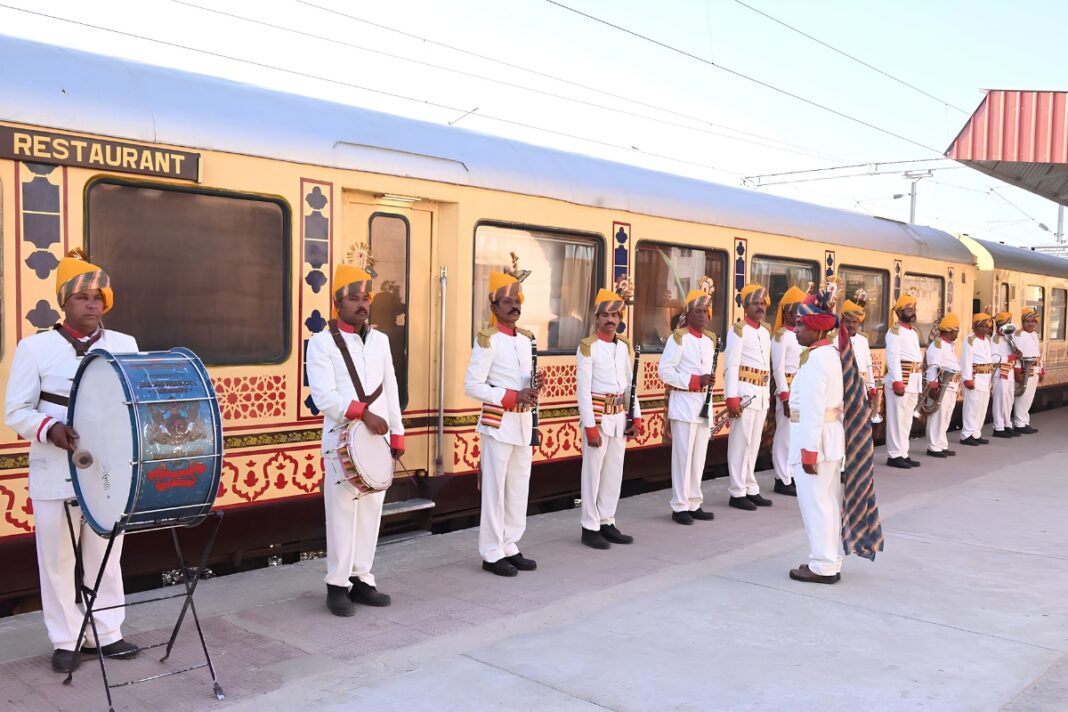
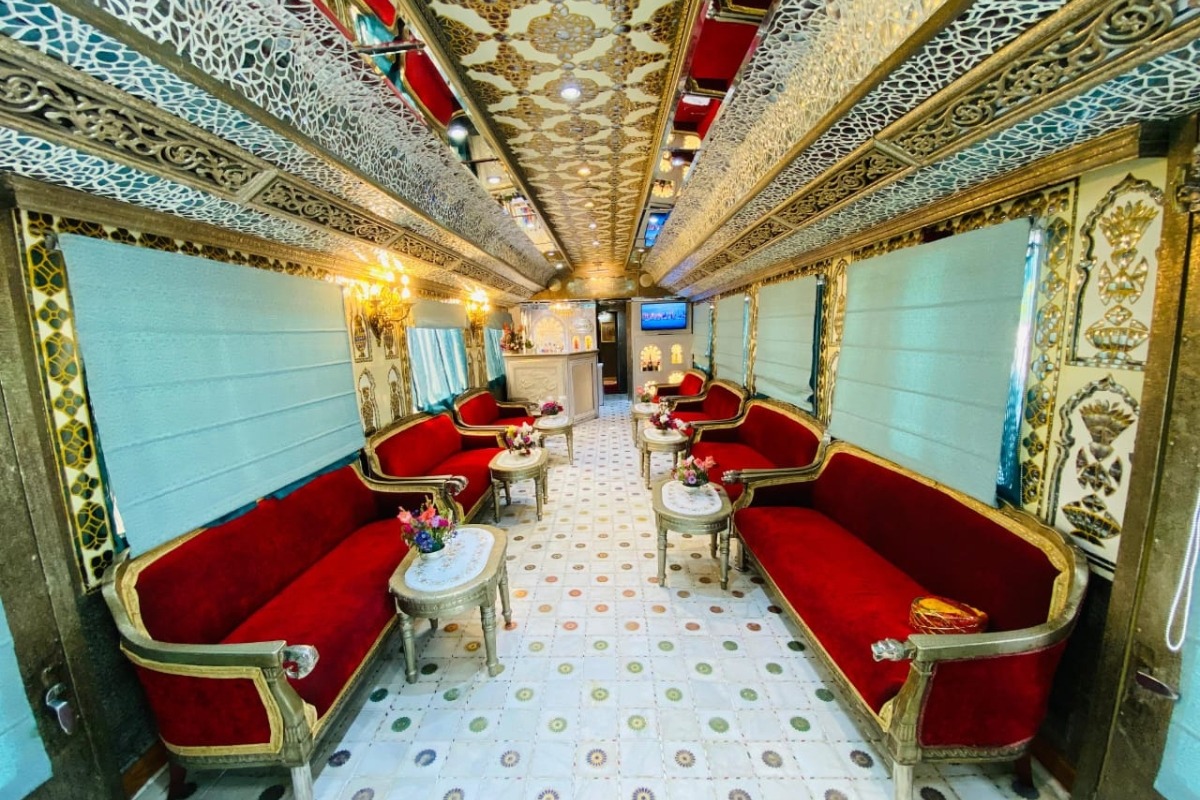
The stops alone would justify the ticket price. But passengers say that the train itself is the destination. Guests are received with marigold garlands and turbans tied by attendants. A string ensemble plays in the reception car. The restaurant’s coaches, named Maharaja and Maharani, serve dal baati churma and laal maas alongside continental menus and wines. Each evening, folk performances fill the lounge car with Kalbelia dance, Ghoomar, and old stories about kingdoms that no longer exist but whose forts still stand in the desert. For many travellers, this is where Rajasthan begins, not at the first fort gate, but somewhere in the dining car, somewhere between Jaipur and the dunes.
Why May Has Always Been Off-Limits
Rajasthan in May is not subtle about its intentions. Temperatures routinely exceed 44 degrees Celsius across the desert belt. The air carries grit. The stone of centuries-old forts radiates heat long after sundown. For years, the scheduling of the Palace on Wheels treated May as an unsuitable month, and the reason was straightforward: passenger comfort, staff welfare, and the sheer physical demands of operating a heritage train in peak summer conditions influenced the decision.
That decision has now been changed. North Western Railway officials cite growing demand from both international and domestic travellers as the driving force. Improved onboard cooling systems, upgraded insulation in the coaches, and a revised six-day itinerary that concentrates on the most essential stops have made the May 2026 run operationally viable. The train will operate as number 00290 under Indian Railways’ Bharat Gaurav scheme, covering roughly 2,610 kilometres through Durgapura, Sawai Madhopur, Chittorgarh, Udaipur, Jaisalmer, Bikaner, and Phulera before returning to Delhi.
The decision is being seen, in some quarters, as a statement of confidence. Rajasthan’s tourism infrastructure has grown considerably since 1982. The train’s management has invested in technology without abandoning the aesthetic that made the train famous. To run it in May is to bet that the two can coexist.
The Passengers Who Come From Far Away
The Palace on Wheels has always drawn a disproportionate share of foreign visitors. In the 2025-26 season, the inaugural departure from Safdarjung station hosted around 40 international guests, with close to 30 from the United States and the remainder from Europe, Japan, and the Middle East. These are not budget travellers testing the rail network. They are, by and large, people who have already visited India before and are returning for something more considered, a journey that places history and architecture inside the experience rather than outside it.
Rajasthan Tourism officials have been deliberate about how they position the train. They describe it as a brand in the full commercial sense of the word, one that carries associations of luxury, authenticity, and royal hospitality that a heritage hotel or a private car hire cannot replicate. Combined packages now link the Palace on Wheels with high-end heritage properties, desert festivals, and curated cultural programmes, extending the narrative well past the train’s eight days.
Safdarjung and the Ritual of Departure
Safdarjung Railway Station was built in the 1970s with a single purpose in mind: luxury tourist departures. It is a small terminal, unburdened by the crowd pressure that defines most of Delhi’s other railway stations. Over the decades, it has become the ceremonial front door of the Palace on Wheels, the place where drumbeats and brass bands mark every departure as though the season’s first flag-off were a state occasion.
On May 20, 2026, that occasion will carry unusual weight. The guests who board that morning will be travelling on a date the train has never travelled before. They will be moving through Rajasthan in conditions the train was originally designed to avoid. And they will be doing so aboard coaches that, for all their technological updates, still bear the names and colours of kingdoms that ended before any of them were born.
What This Run Actually Means
Heritage institutions face a particular kind of pressure as the decades go by. They must stay recognisable enough to justify their history and adaptable enough to remain useful. The Palace on Wheels has managed that balance better than most.
The May 2026 run is neither a reinvention nor a departure from what the train has always been. It is an extension, one that tests the train’s resilience against the one condition it was never built to confront. If it succeeds, it will likely be added as a regular part of the schedule. If it struggles, the lessons will inform how Indian Railways thinks about heritage rail in an unfavourable climate. Either way, the Palace on Wheels promises what it has always delivered- a sense of grandeur and luxury on rails.
Also Read:Bihar’s Rooftop School Built by a Vegetable Seller
You can connect with DNN24 on Facebook, Twitter, and Instagram and subscribe to our YouTube channel.