
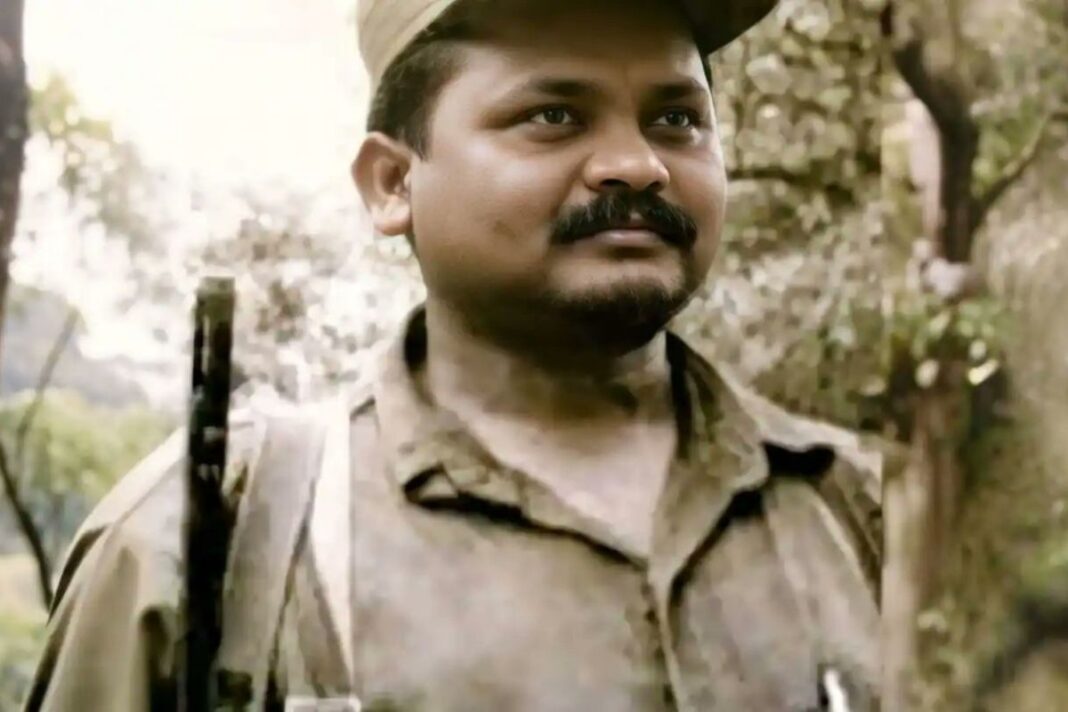

For years, villagers in the forests of south Bastar refrained from mentioning his name. In the Maoist movement’s stronghold, Papa Rao epitomized its authority. His presence in a village could determine who would be interrogated, punished, and, according to security agencies, who would live under constant suspicion of being a police informer. Fear was his most potent weapon.
However, today, that fear has shifted its allegiance.
Papa Rao no longer fears the pursuit of security forces. Instead, those responsible for safeguarding him are the very police and paramilitary forces he spent years battling.
This change is not due to the erasure of the past. It is because the consequences of that past have become inescapable.
Villagers who once lived under Maoist influence have not forgiven him. Panchayat members harbor deep resentment over the violence associated with his years in the underground movement. Security officials acknowledge that without protection, the threat to his life would not originate from the police but from those who believe justice was never served. Many of the victims, they say, were ordinary villagers falsely accused of being police informers. Some were teenagers. Such accusations have long been a dark aspect of insurgencies worldwide, where suspicion often fuels violence.
In response, the administration has taken an unusual approach. Officials have engaged with village leaders, urging them not to seek revenge. Their message is straightforward: once an insurgent formally surrenders, the responsibility for their safety shifts to the government. Whether one agrees with this policy or not, it reflects a crucial principle of rehabilitation that promises made to those who lay down arms must be honored if others are expected to follow suit.
Papa Rao’s ascent through the ranks of the Maoist organization was marked by a consistent progression. He began his career as an Area Committee member and after ascended to the position of South Sub-Zonal Commander in 2025. Security agencies attribute to him a substantial role in many attacks against law enforcement agencies, including the Central Reserve Police Force (CRPF) and the Border
Security Force (BSF), over the years. These operations collectively resulted in the fatalities of over a hundred security personnel and left many others injured.
However, by early 2026, the organization he had dedicated his life to was experiencing unprecedented strain. Months of sustained counterinsurgency operations had significantly reduced the operational space available to Maoist formations. Senior leaders were being eliminated through various means, including assassination, arrest, and surrender. Communication between units became increasingly challenging, and uncertainty permeated the ranks. The confidence that had once sustained the movement gave way to doubts about its long-term viability.

In this challenging environment, Papa Rao and 18 other Maoists surrendered on March 24, 2026. Security officials regard this event as one of the most significant setbacks to the insurgency in recent years. Beyond its immediate impact, it conveyed a message to Maoist ranks that even experienced commanders were no longer convinced that the movement could sustain itself indefinitely. In the later months, more cadres surrendered across various districts of Chhattisgarh.
As part of the rehabilitation process, the government has placed Papa Rao under close observation. While he is eligible to receive the reward amount declared on him—₹25 lakh—along with ₹3 lakh for surrendering his AK-47 rifle, these benefits are contingent upon his continued compliance with the rehabilitation framework. Authorities intend to monitor his conduct before considering him fully rehabilitated.
It is crucial to emphasize that his surrender should not be misconstrued as absolution. A surrender cannot obliterate the suffering endured by victims or the anguish of families who lost their loved ones. Furthermore, it does not erase allegations of violence perpetrated during his tenure in the underground. Those memories stay profoundly ingrained in the villages where the conflict happened.
However, his surrender signifies a far greater significance than the fate of a single commander. It represents a conflict transitioning into a new phase one where the authority once exercised through fear is diminishing, where commanders who once dictated terms are opting for negotiation over armed struggle, and where the State’s most significant challenge is no longer solely defeating an insurgency, but ensuring that those who abandon it never feel compelled to return.
Presently, Papa Rao’s life is defined by a reality that would have once appeared unimaginable. The individual who once instilled fear now lives because others are preventing fear from reaching him.
Also Read: Sports Diplomacy in Action: Basketball Connects India and the United States
You can connect with DNN24 on Facebook, Twitter, and Instagram and subscribe to our YouTube channel.