

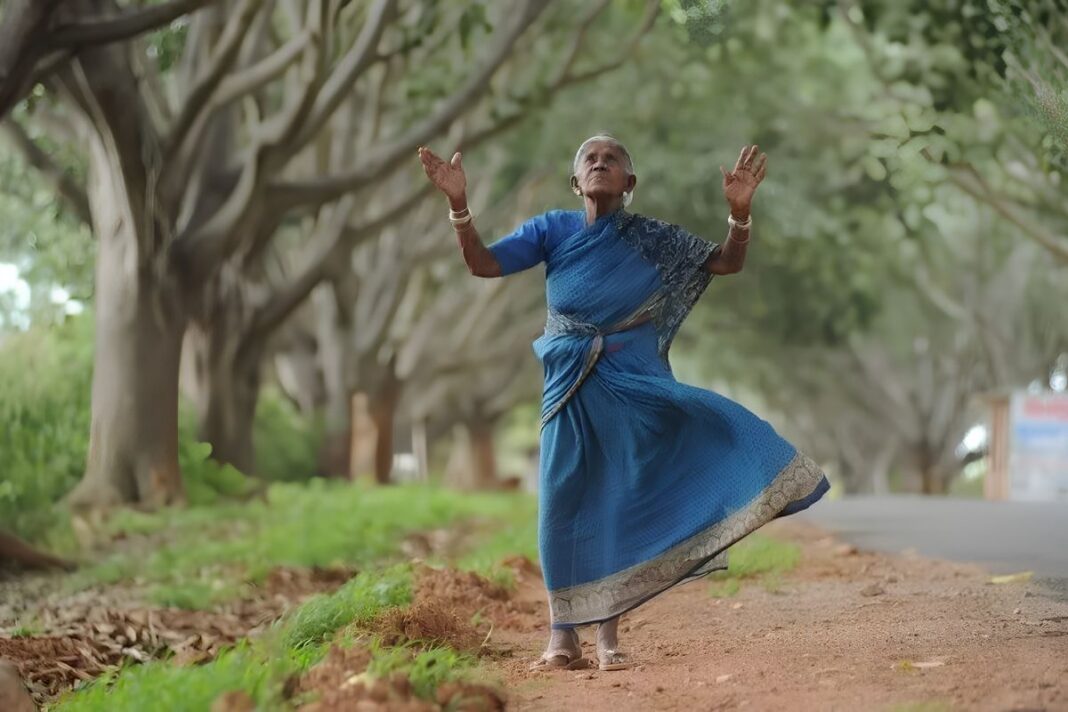

A bare stretch of highway in Karnataka once carried nothing but dust and heat, until a woman, later named ‘Mother of Trees’, decided to do something about it. Saalumarada Thimmakka, whose name literally means “row of trees”, spent nearly eight decades turning a 4.5-kilometre road between Hulikal and Kudur into a corridor of 385 banyan trees. Her story is not just about afforestation, it is also an act of quiet defiance against a society that told her, again and again, that a woman without children had failed at her purpose in life.
A Life That Began With Hardship
Thimmakka was born on 30 June, 1911 in Gubbi taluk of Tumakuru district, into a family with no money for schooling and no patience for idle hands. She grew up working as a labourer in a stone quarry, carrying rock in baskets under a sun that showed no mercy. She married a farmer named Chikkayya, and for years the couple lived in the familiar rhythm of rural poverty, issueless. In a village where a woman’s worth was often measured by motherhood, the absence of children invited whispers, and worse.
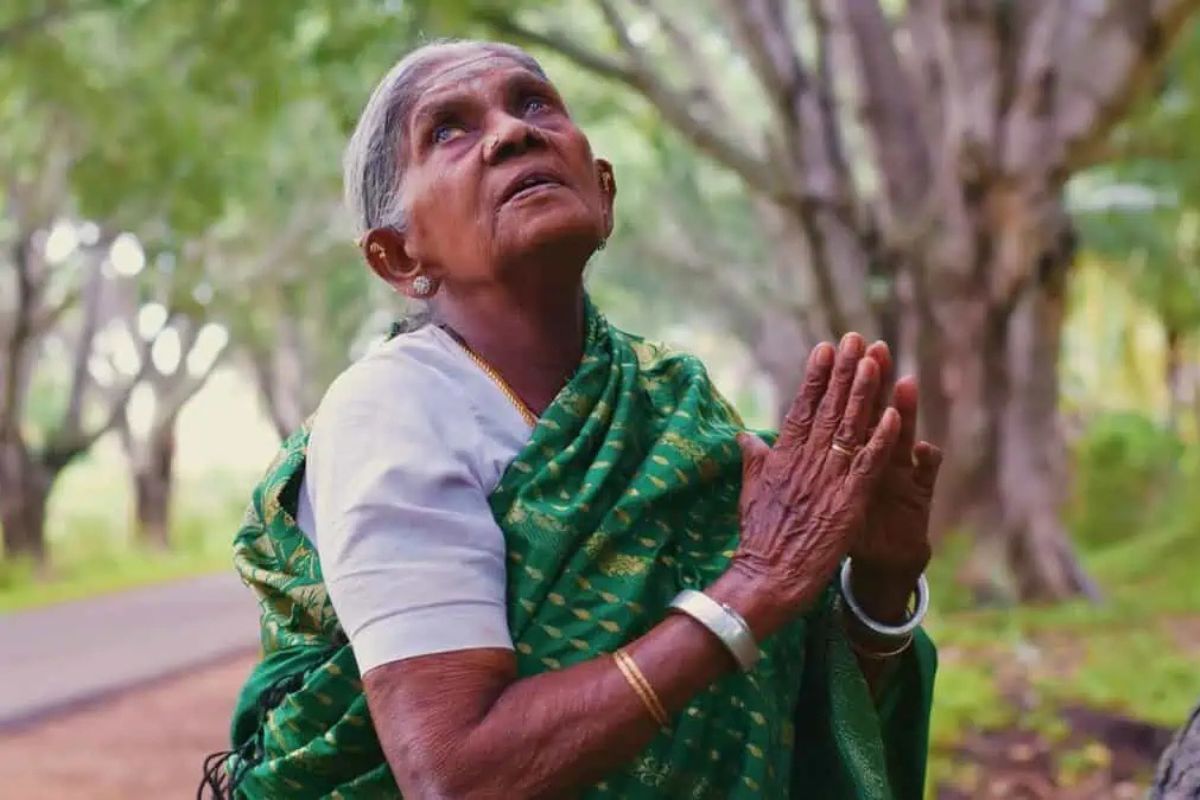
Rather than let the whispers define her, Thimmakka turned her attention to something else that needed tending. Banyan trees grew easily around her village, thick-trunked and generous with shade, and she began collecting saplings from them. In the first year, she and Chikkayya planted ten. The following year they planted fifteen- the year after that, twenty. There was no plan beyond the simple arithmetic of care, one season building on the last, until the count reached 385 along a single stretch of road.
Water Carried by Hand, Mile After Mile
What makes the achievement remarkable is not only the number of trees but the labour behind each one. Thimmakka and her husband carried water in pails across four kilometres to reach the young saplings, a journey repeated through the dry months when the ground was devoid of any moisture. They timed most of their planting to the monsoon, so the rains could help the roots take hold before the punishing summer returned. To keep goats and cattle from grazing the tender shoots, they built rough fences out of thorny bushes, a barrier that cost nothing but their own effort.
This was not charity work squeezed between other obligations. It was, for Thimmakka, akin to raising children. She referred to the trees as her own, and treated their survival with the same anxious attention a mother gives a sick infant. Neighbours who had once mocked her slowly began to see the trees differently too, not as an eccentric woman’s hobby but as an answer to climate change.
The couple had almost no money to spare for their project, so every part of it relied on whatever the land could offer. They grafted new saplings from existing banyan trees rather than buying seedlings. They repaired their thorny fences with branches gathered from nearby scrub rather than paying for materials they could not afford. There was a kind of stubborn resourcefulness in the whole undertaking, the sort that rarely gets acknowledged.
A Forest That Changed the Land Around It
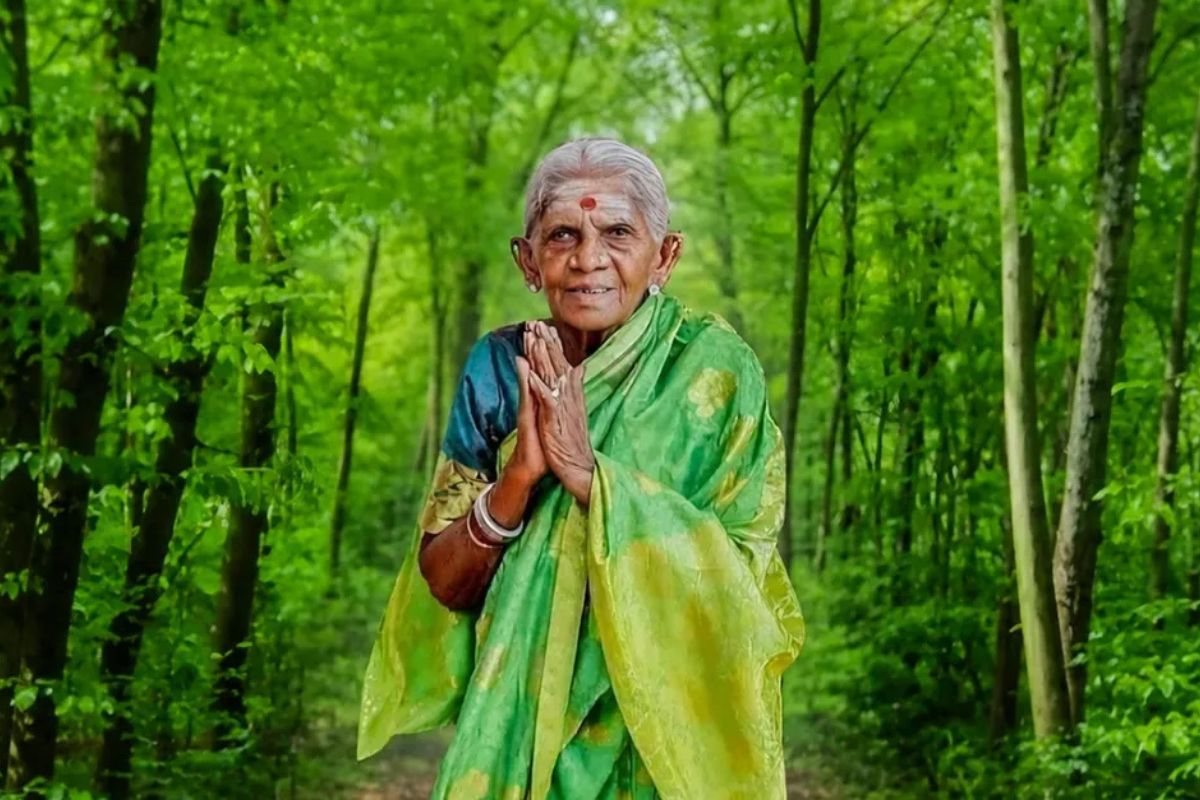
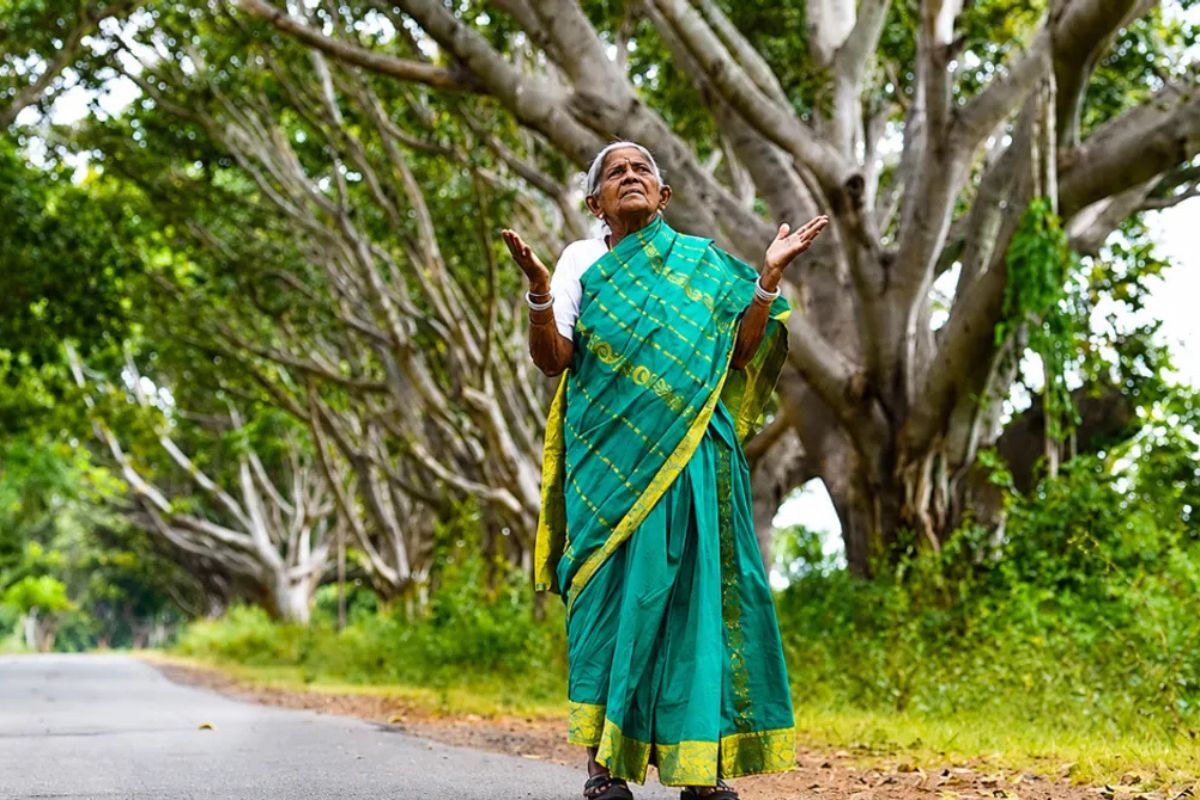
The ecological effect of that patience is now well documented. The banyan corridor cooled the road beneath it, offered shelter to birds, insects and small mammals, and helped hold the soil together during heavy rain. Banyan trees are known for their wide, low-hanging canopies and aerial roots that eventually touch the ground and thicken into new trunks, a process that turns a single tree into something closer to a small forest over time. Along the Hulikal to Kudur stretch, that process played out multiple times.
Beyond these 385 trees she is famous for, Thimmakka is also credited with planting several thousand more across other parts of Karnataka in the decades that followed. Though it is uncertain which species she chose for those later plantations, what remains certain is the scale of her ambition. She did not stop once her original corridor matured. She kept going, long after most people would have considered the work finished.
Economists who later tried to place a value on the Hulikal to Kudur grove estimated the timber and land worth of the trees at close to 15 lakh rupees, a figure the Karnataka government eventually took seriously enough to place the corridor under official protection. Yet anyone who has walked beneath those banyans would say the figure misses the point entirely. Their worth shows up more plainly in the farmers who rest under their shade at midday, the schoolchildren who wait there for a bus, and the travellers who no longer cross that stretch of highway under an open, unforgiving sky.
The Fight to Save Her Trees
In 2019, when Thimmakka was well past a hundred years old, a road widening project threatened to cut down the very trees she had spent her life raising. She appealed directly to Karnataka’s Chief Minister and Deputy Chief Minister, asking that the grove be spared. Her request was heard, and officials agreed to look for alternatives that would protect the 70-year-old trees rather than clear them for asphalt. That same year, the Government of India awarded her the Padma Shri, one of the country’s highest civilian honours, in recognition of a life spent transforming what had been barren once.
Even then, by most accounts, Thimmakka remained unimpressed by her own fame. She often said she had not planted the trees to be remembered, only because she loved them, and because they had become the children she never had. It is a simple explanation for an extraordinary body of work, and perhaps that simplicity is part of why her story continues to resonate.
Why the Story Still Matters
Thimmakka’s life offers something rare in conversations about climate and conservation: proof that transformation does not always require government funding or corporate sponsorship. It can begin with two people, a handful of saplings, and the discipline to keep watering them season after season. Her approach echoes older traditions found among tribal communities across India, among them the Munda and Santhal peoples, who have long treated certain groves as sacred and worthy of protection regardless of their economic value.
Saalumarada Thimmakka died on 14 November 2025, but the trees she raised are still standing along that highway, their branches now wide enough to provide shade for several lanes of traffic at once. Schools have named environmental clubs after her. Documentary filmmakers have told her story to audiences who never set foot in Karnataka. Each year around World Environment Day, volunteers return to the same road to plant new saplings in her memory, continuing a project she never treated as finished.
Her legacy is not simply the count of trees, impressive as that number is. It lies in what she proved about the space between grief and purpose, and how one can quietly bridge that with nothing more than water, patience, and eight decades of refusing to stop.
Also Read: Ex-Journalist Built Free Boarding School in India’s Highest Village for Children
You can connect with DNN24 on Facebook, Twitter, and Instagram and subscribe to our YouTube channel.