




In western Kutch, a stretch of sandstone holds small round stones much like the ones a NASA rover found on Mars. A team of Indian researchers has put a solar-powered habitat beside them, shut a crew inside, and watched how they cope. The company behind it is AAKA Space Studio, and its work may decide how well India’s astronauts are prepared for the day they leave the planet.
The woman who designs for the edge of survival
AAKA Space Studio was founded by Aastha Jhala, a space architect and analogue astronaut who also serves as its chief executive. Her award-winning work centres on living spaces for places where people were never meant to stay, such as lunar and Mars habitats. She treats a habitat as more than walls and a roof. It has to manage air and temperature, give a crew room to work and sleep, and keep tired people calm and cooperative.
Her view is easy to state. Space travel depends on rockets, but it also depends on shelter, safety, teamwork and the plain human ability to adjust. That outlook has made AAKA one of India’s first dedicated names in space architecture and analogue mission design.
What an analogue mission really is
An analogue mission copies some of the hardships of spaceflight on Earth. Nobody leaves the ground. Instead, a crew, its equipment and a habitat are placed in a harsh setting, and scientists record what happens. They watch how people perform, how life support behaves, how procedures hold up and whether the habitat design works. Mistakes found here cost very little compared with mistakes found in orbit.
India has a clear reason to care. ISRO is preparing for human spaceflight through the Gaganyaan programme and has longer-term plans for the Bharatiya Antariksh Station. Drawings and test benches only go so far. Astronauts will live far from quick rescue, familiar weather and ordinary infrastructure, and someone has to rehearse that life first.
Ladakh, where the first test began
On November 1, 2024, ISRO announced that India’s first analogue space mission had started at Leh, in the cold desert of Ladakh. The mission was a joint effort of ISRO’s Human Spaceflight Centre, AAKA Space Studio, the University of Ladakh and IIT Bombay, with backing from the Ladakh Autonomous Hill Development Council.
Ladakh was chosen for its bare ground and thin, high-altitude air, which closely match the conditions an interplanetary base would face. The habitat, called Hab 1, was tested for three weeks in the Himalayan terrain. Aastha Jhala said such simulations bring out the problems astronauts and equipment might face before a real mission begins.
India entered a field long held by older spacefaring nations, joining ISRO’s experience in human spaceflight with university research and homegrown design.
A seat at the world’s table
AAKA’s work soon reached beyond India. In October 2025, the company represented the country in the largest international Moon and Mars analogue campaign yet held. The Austrian Space Forum coordinated it from its Mission Control Centre in Vienna.
The campaign ran for two weeks, from October 13 to 26, and linked 17 analogue habitats on five continents. It was built to copy long stays by humans on the Moon and Mars. For India, it was the first taste of a global simulation on that scale.
Visibility counted, but the bigger gain was proof. Indian habitats, sensors, mission control systems and operating rules could stand beside those of established partners. Indian researchers and crew also joined a worldwide effort to learn how people might live and work on other worlds.
Why Kutch looks like Mars
The Indian site was set up in western Kachchh, Gujarat, close to the Laiari River section of the Jhuran Sandstone, a formation from the Jurassic period. The choice rested on a striking detail. The rock holds round concretions rich in hematite that resemble the “blueberries” found by NASA’s Opportunity rover on Mars.
That likeness gives the ground real value for planetary science, the study of ancient life and field practice. A piece of Kutch could stand in for questions about Mars. How do such rocks form? How might living things interact with minerals? How would a crew do science in an unfamiliar, difficult place?
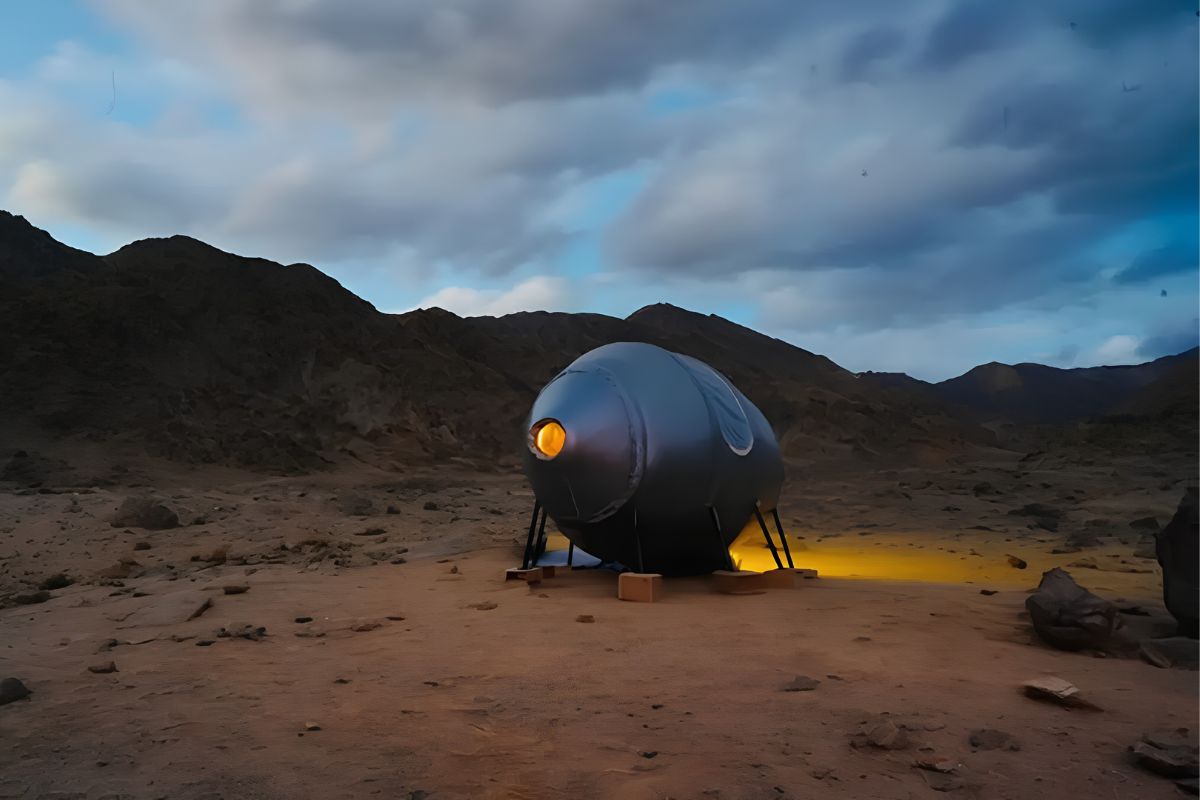
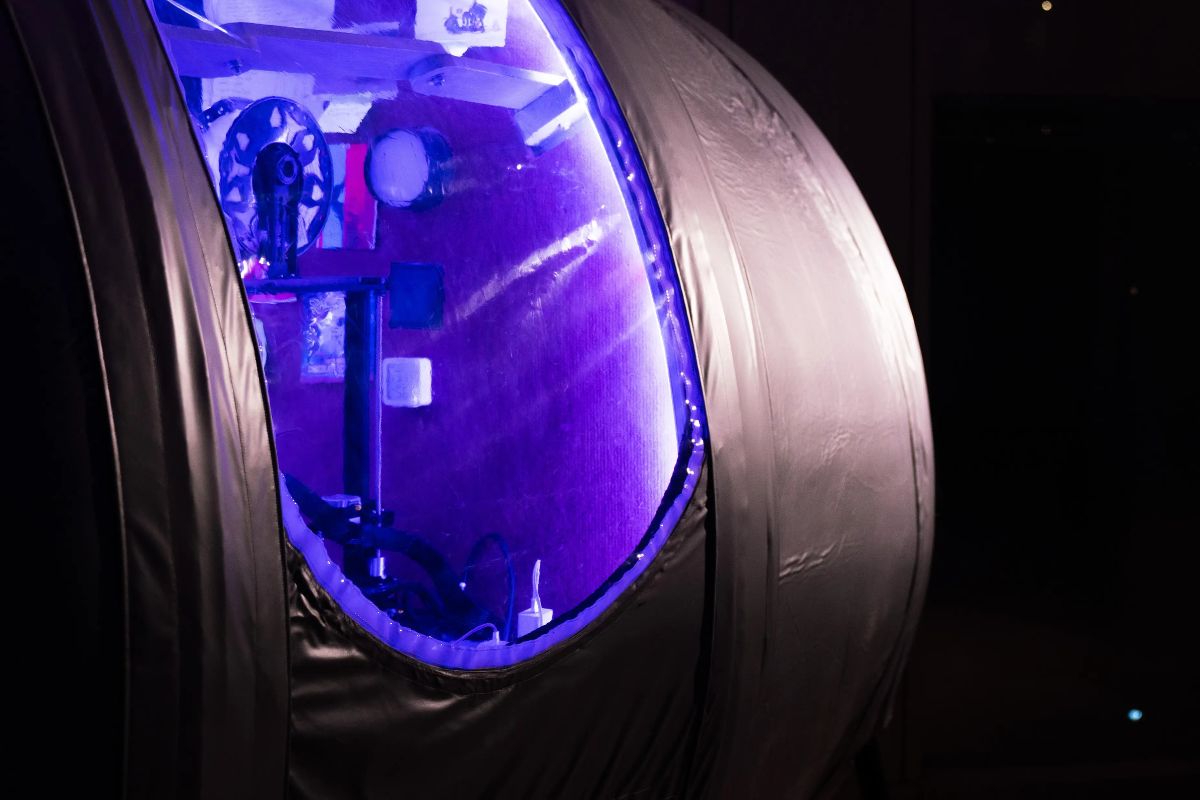
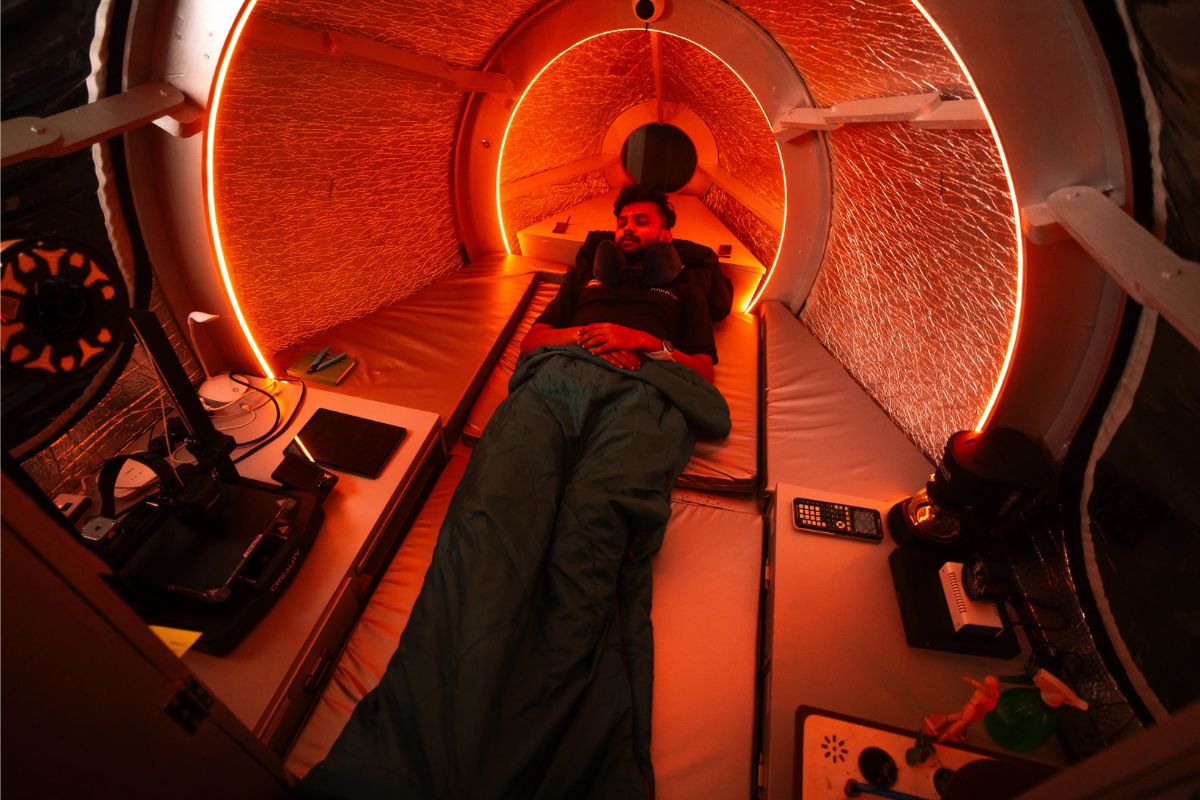
AAKA built a fully solar-powered habitat for the mission. It carried life support systems made in India, mission control hardware and software, and a set of environmental sensors. All of it was designed and prototyped in-house, which says something about how far India’s space habitat industry has come.
Many hands behind one habitat
No single organisation can claim this work. The global mission drew in IIT Madras, IIT Hyderabad, the Physical Research Laboratory in Ahmedabad, Nirma University, KSKV Kutch University, the Birbal Sahni Institute of Palaeosciences in Lucknow, Government Arts College Ooty and Government Arts College Salem.
The spread matters because each specialist asks something different of the same habitat. A geologist studies the ground. An engineer tests the power supply. A researcher in human factors watches for tiredness, poor communication and weak decisions. Bringing these people together has given India more than a few missions. It has started a research community, and that community is what will carry the country from single demonstrations to lasting skill in preparing for human spaceflight.
The commander inside
One of the best-known moments of the 2025 campaign was astronaut Prashant Nair, who served as Mission Commander inside the Indian habitat. He directed crew operations, the environmental control systems and the rules for extravehicular activity, the work done outside a pressurised habitat. His presence drew international notice. It also showed, in practice, how command, crew coordination, and habitat systems must pull together under simulated lunar or Martian conditions.

How AAKA works with ISRO
AAKA acts as a private-sector partner to ISRO in human spaceflight analogue research. It designs, builds and runs Earth-based simulations that help prepare for lunar, Martian and long-duration missions. The Ladakh mission is the clearest example. AAKA led the design and execution of a 21-day Mars and Moon analogue mission, while ISRO’s Human Spaceflight Centre provided the national framework and scientific and mission oversight. The University of Ladakh and IIT Bombay gave academic and research support, and the hill council in Leh helped locally.
AAKA is also registered with the Indian National Space Promotion and Authorisation Centre, the body that lets private space companies work with ISRO and take part in India’s space activity. That registration is part of how a private firm can contribute to government-linked research.
The arrangement works because the two sides do different jobs. ISRO sets the priorities and keeps oversight. AAKA brings space architecture skills, analogue habitat design, and field mission experience.
The next test is underwater
AAKA now plans to move into water. The company has announced India’s first underwater human spaceflight analogue mission, with a 24-hour controlled trial planned in Gujarat for December 2026 and a 72-hour mission set for March 2027. Reports say AAKA expects to work with ISRO and the Indian Navy, though the scope and formal agreements are still being worked out.
An underwater habitat can recreate several pressures of spaceflight, including confinement, isolation, and the need for careful life-support management. As India moves toward crewed missions and longer stays in orbit, such sites could become useful for training and study.
What it all adds up to
AAKA’s path began with India’s first lunar analogue work in 2022, went through the Ladakh mission and reached the global campaign of 2025. It signals a shift in India’s space story. The country launches satellites with confidence, and it is now building the human, architectural and operational knowledge that people will need to live and work beyond Earth.
The work is young, and analogue missions cannot copy everything. Radiation, weightlessness and the sheer distance from Earth stay beyond their reach. Even so, they do something very useful. They reveal problems while they can still be fixed safely, cheaply, and with some ingenuity.
AAKA Space Studio is helping India prepare for a way of thinking as well as a mission, one where design, science and human endurance move together. From the cold heights of Ladakh to the fossil-rich ground of Kutch, India is learning to build worlds for people before people go to other worlds.
Also Read: India Built Underground Palaces of Water Long Before Modern Water Management
You can connect with DNN24 on Facebook, Twitter, and Instagram and subscribe to our YouTube channel.