


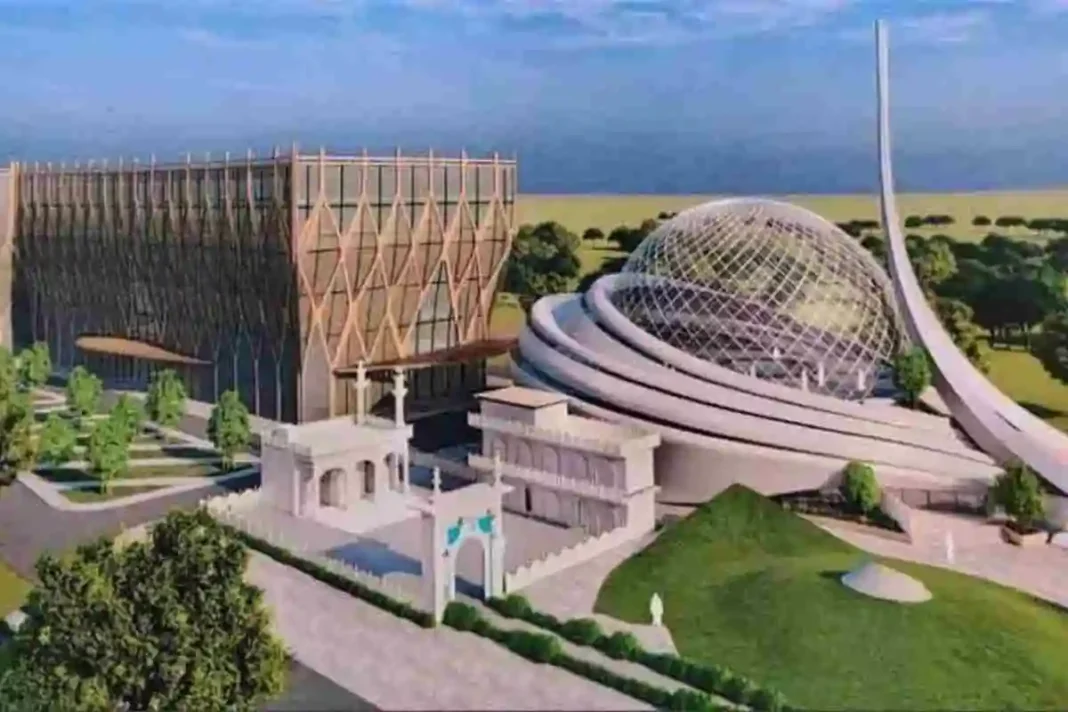

The All India Raabta-e-Masjid (AIRM), a collective organization representing mosques across India, has officially decided to name the forthcoming mosque in Dhannipur, Ayodhya, as the “Muhammad bin Abdullah Mosque” in honor of the Prophet.
This significant decision was revealed during the AIRM conference, which was convened on the initiative of BJP leader Haji Arafat Sheikh. The conference attracted the participation of senior clerics from various Muslim sects.
The Dhannipur Masjid site, located approximately 22 kilometers from the original Babri Masjid site, which was tragically demolished on December 6, 1992, is now witnessing the construction of the grand Lord Ram temple.
Haji Arafat Sheikh: New mosque, post-Supreme Court decision, set to become India’s largest place of worship.
The mosque will accommodate around 9,000 devotees, with the capacity for 5,000 men and 4,000 women to offer namaz collectively. Beyond its religious significance, the mosque complex will incorporate medical, educational, and social facilities.
Supreme Court allotted 5 acres; 6 more are planned for extensive development, shaping it as a landmark. Haji Arafat Sheikh: Delays resolved, work on the Muhammad bin Abdullah Mosque complex to start soon in Dhannipur.
A symbolic brick was presented to officials representing key organizations, marking a pivotal moment in this monumental project. The “Muhammad bin Abdullah Mosque” symbolizes unity, progress, coexistence, and cultural diversity in Ayodhya.
For a detailed story, please visit Awaz the voice
Also Read: India’s Global Leadership: G-20 and Development
You can connect with DNN24 on Facebook, Twitter, and Instagram and subscribe to our YouTube channel.



Masjid ka Nirman ka adhyaksh shuru hoga