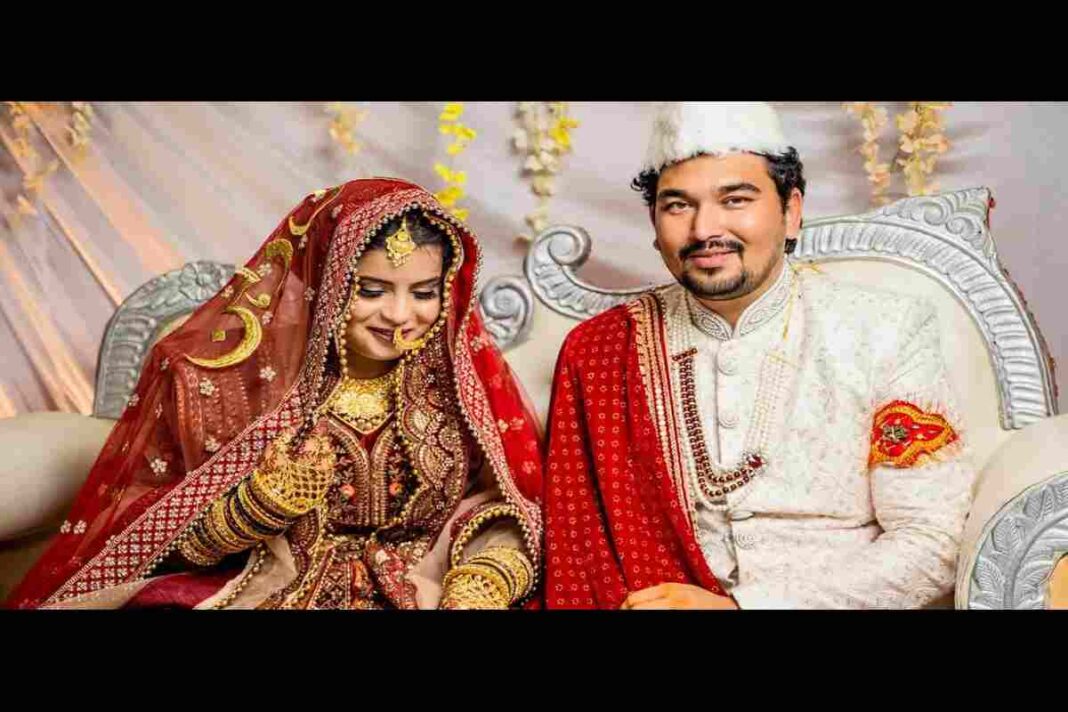

Madri Haq and Ustani Joda: In the quaint lanes near the Ibadan-e-Sharia building, Shakeel Ahmed, the Principal of Government High School Phulwari Sharif, hosted a group finalizing financial transactions for Syed Muqeem’s daughter’s wedding, a cherished social tradition in Bihar.
** The Peculiar Request: ‘Madri Haq’ and ‘Ustani Joda’**
As negotiations concluded, Shakeel Ahmed intriguingly advised Muqeem not to forget ‘Ustani Jora along with Madri Haq.’ These enigmatic terms referred to two dresses crucially brought by the groom’s family on the wedding day.
**’Madri Haq’ and Its Maternal Significance**
‘Madri Haq,’ translating to the right of the bride’s mother, symbolizes a dress for the mother of the bride. Carried by the groom’s family, it intertwines the celebration with the mother’s honor.
**’Ustani Joda’: Unveiling the Teacher’s Attire**
‘Ustani Jora,’ translating to the dress for a teacher, is designated for a woman in the bride’s family who assumed the role of a teacher, imparting cultural and traditional knowledge to young girls in Bihar’s Muslim families.
**Education Beyond the Classroom: The Role of ‘Ustaniji’**
In Bihar, religious education is not confined to formal settings. ‘Ustaniji,’ often teachers in government schools, visit families to educate girls on Quran-Hadith, instilling cultural values and societal etiquettes.
**Cultural Continuity: Farida Bano’s Assertion**
Farida Bano, an elderly woman from Gaya, emphasizes that the cultural teachings by ‘Ustani Ji’ persist, shaping the behavior and cultural identity of girls in their families and society.
**Beyond Borders: The Legacy of ‘Ustani Joda’**
Shehla Parveen, a Bihar native in Nagpur, highlights that the tradition of ‘Ustani Joda’ is unique to Bihar and endures even among those who migrated to Pakistan during the partition.
**Islamic Emphasis: Mufti Hasnain Akhtar’s Insight**
Mufti Hasnain Akhtar of Darul Uloom, Gaya, underscores the special significance Islam places on education and teachers. The role of a female teacher, or ‘Ustani,’ is particularly esteemed in shaping cultural and religious values.
For a detailed story, please visit: Awaz the voice
Also Read: India’s Global Leadership: G-20 and Development
You can connect with DNN24 on Facebook, Twitter, and Instagram and subscribe to our YouTube channel.