



Most tourists rush past Garhwa Fort on their way to Prayagraj’s famous ghats, utterly unaware that this quiet stone structure near Shankargarh holds fifteen centuries of unbroken Indian history within its walls. Built around a temple complex that predates most monuments you have heard of, this fort is where Gupta emperors, medieval devotees and eighteenth-century kings all left their marks on the same patch of earth. The stones here do not just stand as ruins. They tell stories that textbooks often miss, stories of how power, faith and time can occupy the same space without erasing each other.
A Temple Complex Older Than Most Indian Cities
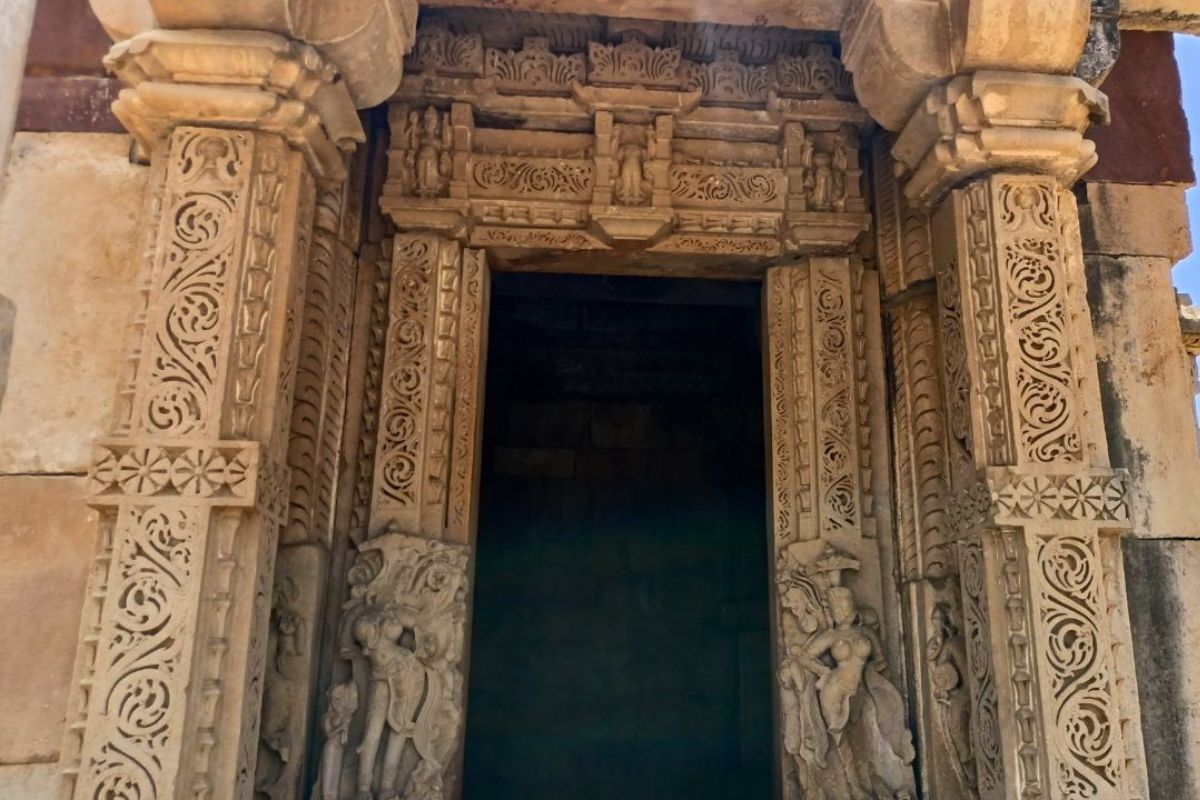
The land around Garhwa was already considered holy when the Gupta dynasty was at its peak in the fifth century. Temples dedicated to Shiva and Vishnu rose here during the reigns of Chandragupta II, Kumaragupta and Skandagupta, turning this remote spot into a proper sacred campus with stone shrines, assembly halls and water tanks. Seven Sanskrit inscriptions from that period still survive on site, firmly placing Garhwa on the political and religious map of one of India’s most celebrated dynasties. What strikes visitors today is how compact the complex feels, more like an intimate courtyard than a sprawling temple city, yet every corner carries weight.
A tall stone slab carved with the Dashavatara, the ten incarnations of Vishnu, dates from the eleventh or twelfth century and shows that worship here never stopped even after the Guptas faded from power. Even older is a mukhalinga with five faces of Shiva, possibly from the second century BCE, proving that this site was thick with memory and devotion long before any Gupta king arrived. When British archaeologists Alexander Cunningham and John Marshall visited in the nineteenth and early twentieth centuries, they were not simply cataloguing ruins. They were assembling an unusually long thread of continuous religious life from scattered carvings and half-buried stone records that most other sites in India cannot match.
When Kings Turned a Temple into a Fortress
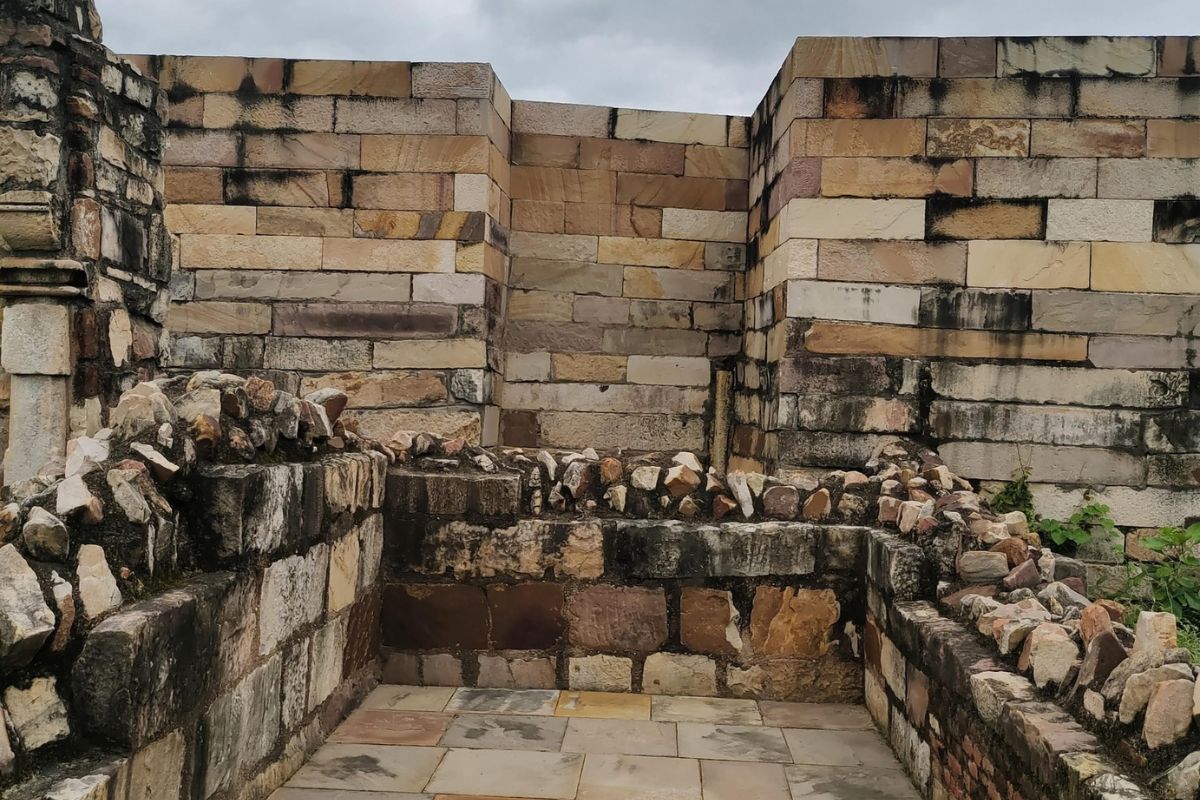
The Gupta age gave Garhwa its sacred heart, but the eighteenth century gave it walls, bastions and a new purpose. Around 1750, Raja Vikramaditya of the Baghel dynasty built a fort here using massive carved stones, wrapping the ancient temple complex inside a high perimeter wall that turned it into a defended outpost. The fort took the shape of a walled enclosure, described by some as pentagonal and by others as roughly square, with sturdy corner bastions and parapets that gave it a proper military profile on the flat landscape.
Inside this new fortification, the old shrines, tanks and stepwells suddenly lived a second life as part of a strategic garrison meant to guard a sensitive frontier between local chieftains, bandits and the looming threat of Mughal and later British control. For the Baghels, holding Garhwa meant more than just military advantage. It also meant protecting an ancient pilgrimage site that carried the cultural prestige of the Gupta kings and the classical Sanskrit tradition, a double claim to legitimacy that few other forts could match. The British period added its own layer of violence, quieter but no less real.

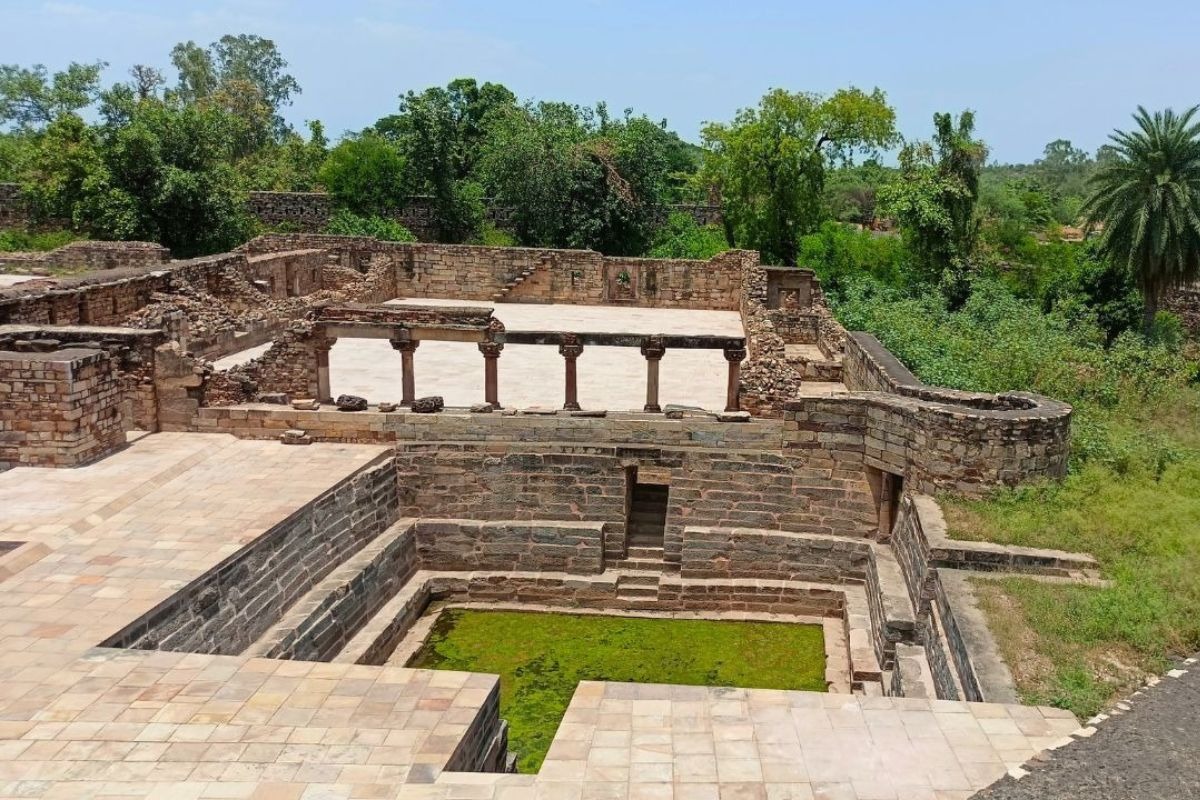
The original Shiva linga from the main temple was removed and taken away, though the associated Shakti pitha and many other sculptures remain in place as silent witnesses to both theft and survival. Two large tanks on the eastern side of the main shrine and at least two bawlis, stepwells that locals say never run dry, remind anyone walking through that defensive architecture here was always tied to the older language of sacred water and ritual necessity. Seen from the road today, the bastions still rise above scrub and open fields, but the power they project now is cultural rather than military, a monument to the many ways Indian rulers used stone to claim both land and legacy.
Layers of History Carved into Every Corner
Garhwa is not really a single monument. It is a conversation between different centuries, all pressed into one quiet, walled compound. On one side stand the Gupta fragments with their elegant pillar mouldings, weathered sculptures and the famous early fifth-century inscriptions that record rulers, land grants and gods in careful courtly Sanskrit. Nearby, the medieval Dashavatara slab gathers ten cosmic stories onto a single stone surface, each avatar carved as if the artist wanted to collapse mythic time, just as the site itself collapses historical time.
Scattered around the complex are structural remains from the medieval period whose exact dates and purposes are mostly lost, but whose rough outlines show that building activity continued here in waves long after the Gupta capitals had shifted and their emperors had become names in history books. The two stepwells and the ever-full tanks record a different kind of continuity, the daily need for water, the rhythm of pilgrims bathing and the practical knowledge of builders who understood underground aquifers better than many modern engineers do.
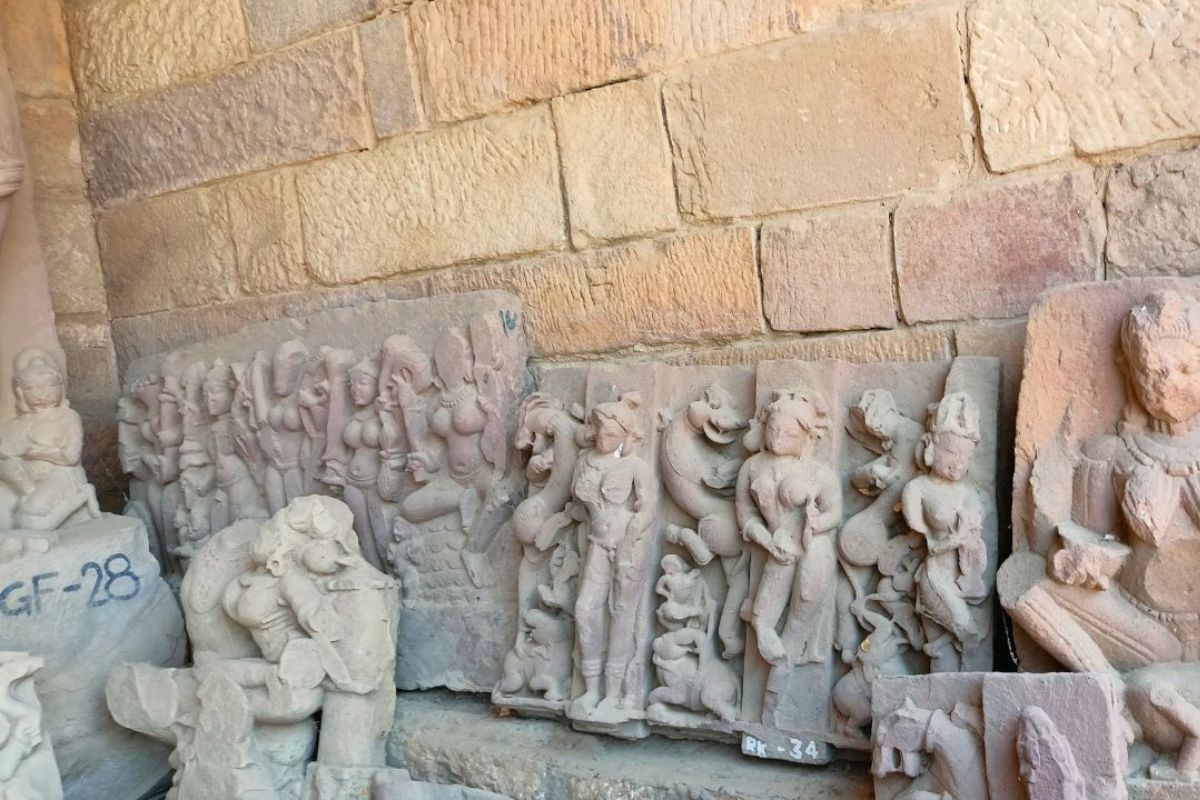
In one corner, recovered objects from various periods are arranged in an open gallery, making it clear that this is not just a religious site but also an archaeological archive now under the care of the Archaeological Survey of India. Even the absence of the original Shiva linga has become part of the story, pointing to how deeply colonial collecting practices reached into the ritual heart of Indian temples. Standing on a bastion and looking down, visitors do not see a perfectly restored monument. They see layers, some preserved and some broken, all insisting that history is rarely clean or simple but always more interesting when left honest.
A Forgotten Treasure in a Noisy Century
For a site with such a deep past, Garhwa Fort remains strangely lonely in the present. Pilgrims flood into Prayagraj for the Triveni Sangam and the prominent riverside temples, but very few make the rough, dusty journey to this offbeat site near Shankargarh, where the road can still be broken, and public transport remains basic. The isolation cuts both ways. It protects the fort from the chaos that comes with mass tourism, but it also keeps its stories out of the broader public conversation.
Within the complex, the Archaeological Survey of India has stabilised structures, arranged sculptures and kept the grounds walkable, and there are plans to improve road access and even restore a nearby bridge so that Garhwa can eventually step into greater visibility as a heritage destination. For now, the experience remains intimate and almost private.A twenty-minute, unhurried walk along simple pathways takes visitors past tanks, shrines, carved stones, and bastion steps, with only the wind and the occasional villager for company.
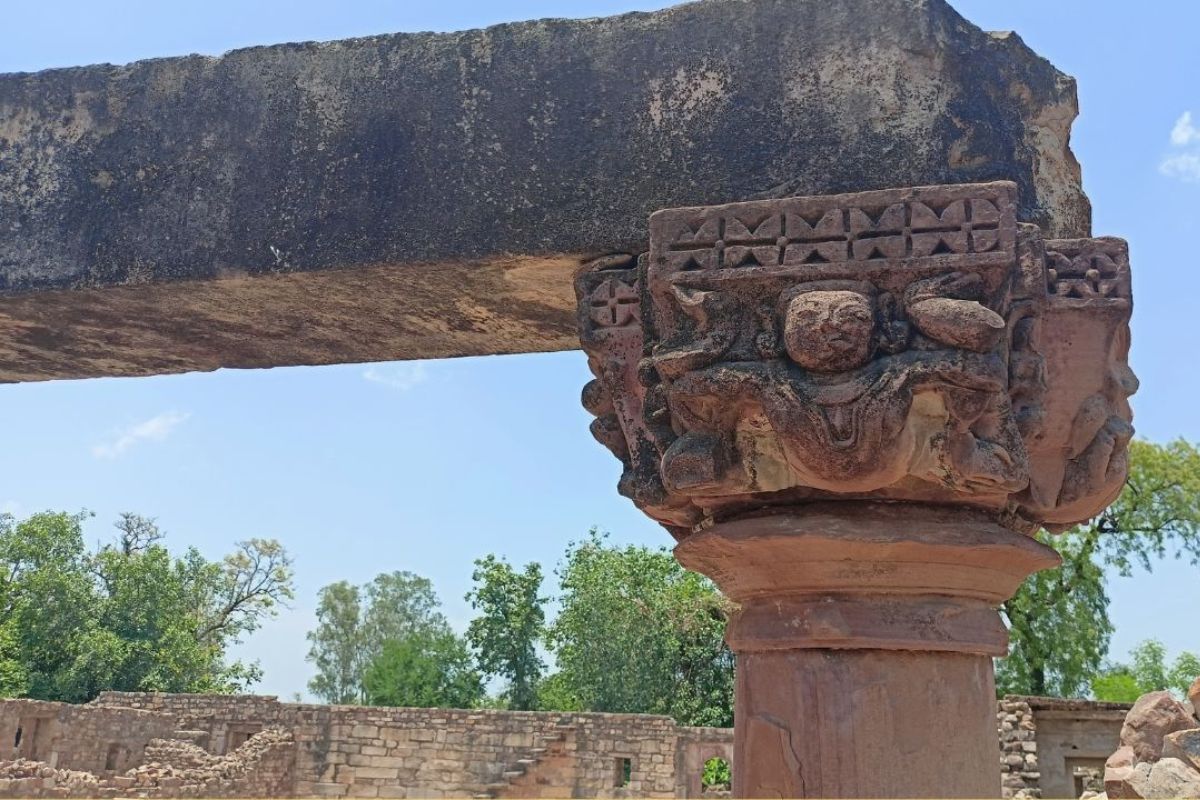
Online travel reviews call the place an ancient wonder and praise its quiet power, noting how it offers a concentrated look at early medieval Indian art without the crowds that swarm more famous sites. State tourism campaigns have also begun to mention Garhwa alongside the grander Allahabad Fort and Triveni Sangam, slowly stitching it into the larger narrative of Prayagraj as more than just a river junction. In a twenty-first century obsessed with speed and noise, Garhwa’s greatest gift may be its slowness. It forces visitors to pause, read a weathered inscription, trace a chisel mark and watch light move across worn stone, a rhythm that feels increasingly rare.
Why This Quiet Fort Still Speaks Loudly
Garhwa Fort may look like just another old structure from the highway, but it quietly challenges many lazy ideas often repeated about Indian history. It proves that medieval India was not some dark, artless gap between ancient glory and modern awakening. From the Gupta age to the Baghel rulers, there is continuous building, carving, praying and repurposing, all visible within a couple of kilometres of walled space. The site also sits at a rare intersection of religious, political and archaeological importance.
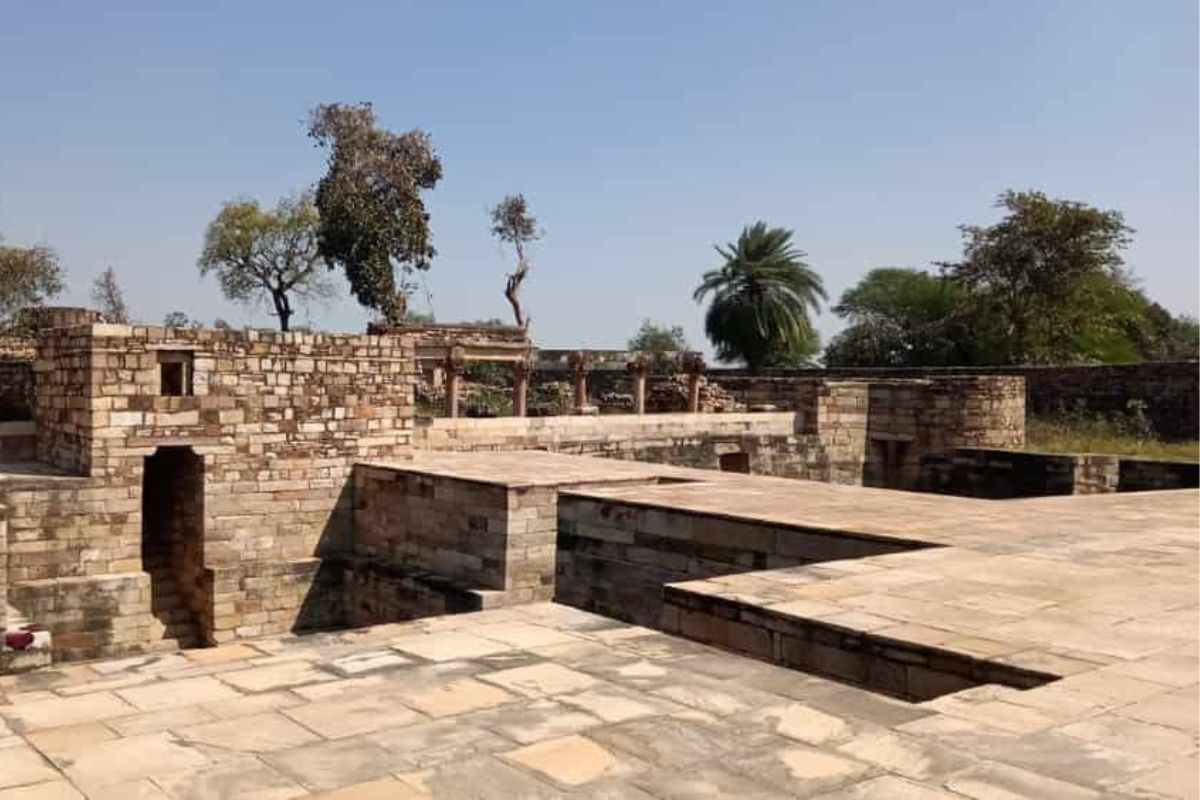
Sanskrit inscriptions connect it to imperial networks, temple icons map changing patterns of devotion, and the later fort walls tell a story of local kings negotiating violence and authority in a contested landscape. For historians and students, Garhwa is a natural classroom for reading time through layers of stone, inscriptions, and architectural plans. For writers and artists, it offers ready metaphors of enclosure and openness, loss and recovery, sound and silence.
For local communities and for Uttar Pradesh as a whole, it holds the promise of thoughtful heritage tourism that goes beyond famous ghats and melas, drawing visitors into the countryside and creating small but meaningful economic benefits. In a moment when debates about India’s past are often loud and divided, Garhwa suggests a different approach. Here, the past is not an argument but a presence, broad enough to hold a Gupta inscription, a Baghel king’s bastion, a missing linga and a modern traveller’s footsteps in the same quiet afternoon.
Also Read: Eklakhi Mausoleum: Pandua’s One Lakh Rupee Royal Secret
You can connect with DNN24 on Facebook, Twitter, and Instagram and subscribe to our YouTube channel.