
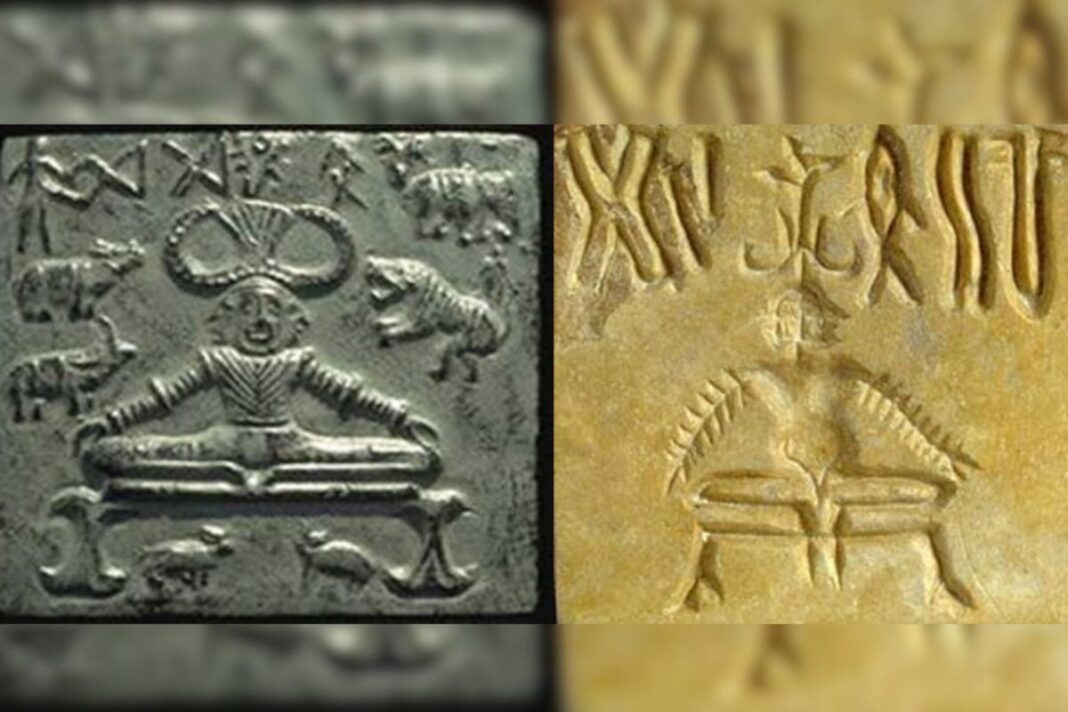

Five thousand years before the first yoga studio opened in Manhattan, a group of wandering sages in the hills of northern India sat down, closed their eyes, and refused to move until they understood something. What they eventually understood became one of the most travelled ideas in human history.
They called it yoga. The world has not been the same since.
The Oldest Word for a Very Old Idea
The word “yoga” appears first in the Rig Veda, the oldest known scripture in the world. Its root is the Sanskrit yuj, meaning ‘to yoke’ or ‘to join’. The sages who composed the Rig Veda used it to describe rituals through which priests connected their communities to the divine. Over centuries, those rituals were refined, debated, and eventually documented in the Upanishads, a body of over two hundred philosophical texts that examine the nature of the self, reality, and their relationship.
What the Upanishads proposed was radical for its time and remains unsettling for ours: that the individual soul and the universal are not two different things. Yoga, in this tradition, is not a method of exercise. It is a method of recognition.
Patanjali and the Architecture of a Practice
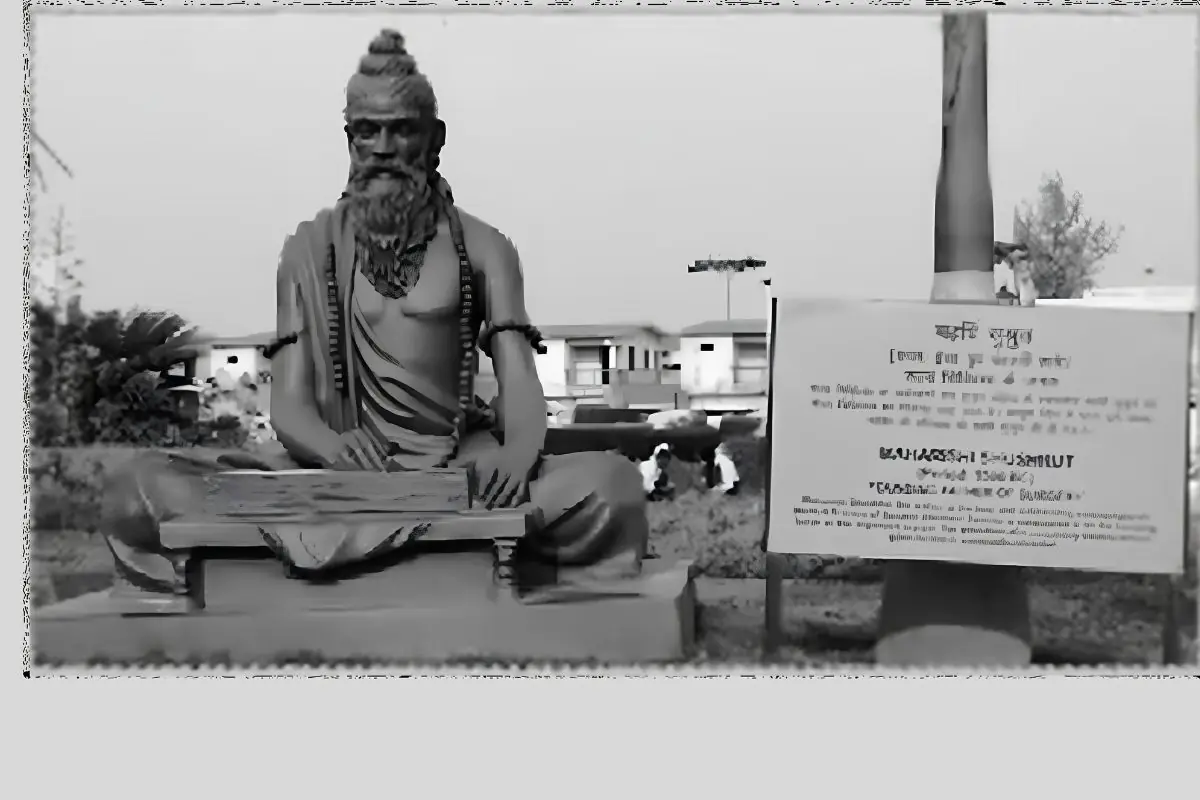
Yoga might have remained a loose collection of meditative customs had it not been for Patanjali, an Indian philosopher who lived several thousand years ago. Patanjali did not invent yoga. He assembled it. His Yoga Sutras gave the practice a structure that has endured with very little revision.
He described eight sequential steps, known as the Ashtanga or Eight Limbs:
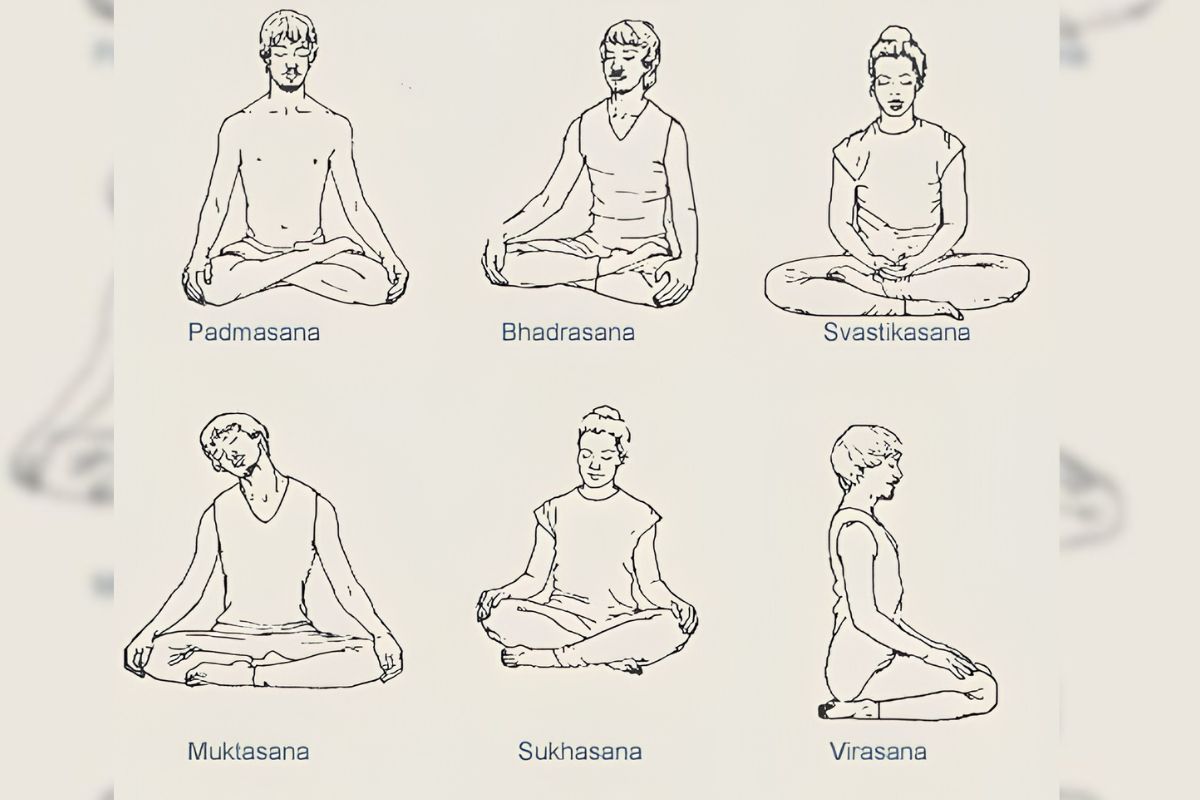
Yama, which concerns ethical restraints in daily life. Niyama, the personal disciplines one maintains inwardly. Asana, the physical postures most associated with yoga in the modern world. Pranayama, the regulation of breath. Pratyahara is the deliberate withdrawal of attention from the senses. Dharana is a concentrated focus on a single object or idea. Dhyana, sustained meditation. Moreover, finally, Samadhi is a state of complete absorption that Patanjali described as union with the divine.
This progression matters because it places the postures, so central to modern practice, at only the third step of an eight-part process. For Patanjali, a flexible spine was a beginning, not an end.
The Guru-Shishya Tradition: How Knowledge Survived
For most of its history, yoga was not written down in the way a recipe or a legal code is. It moved from teacher to student, through direct transmission over years, sometimes decades. The guru did not merely instruct. He observed, corrected, and, in time, certified. The student did not merely learn. He submitted to a process that was as much about unlearning as learning.
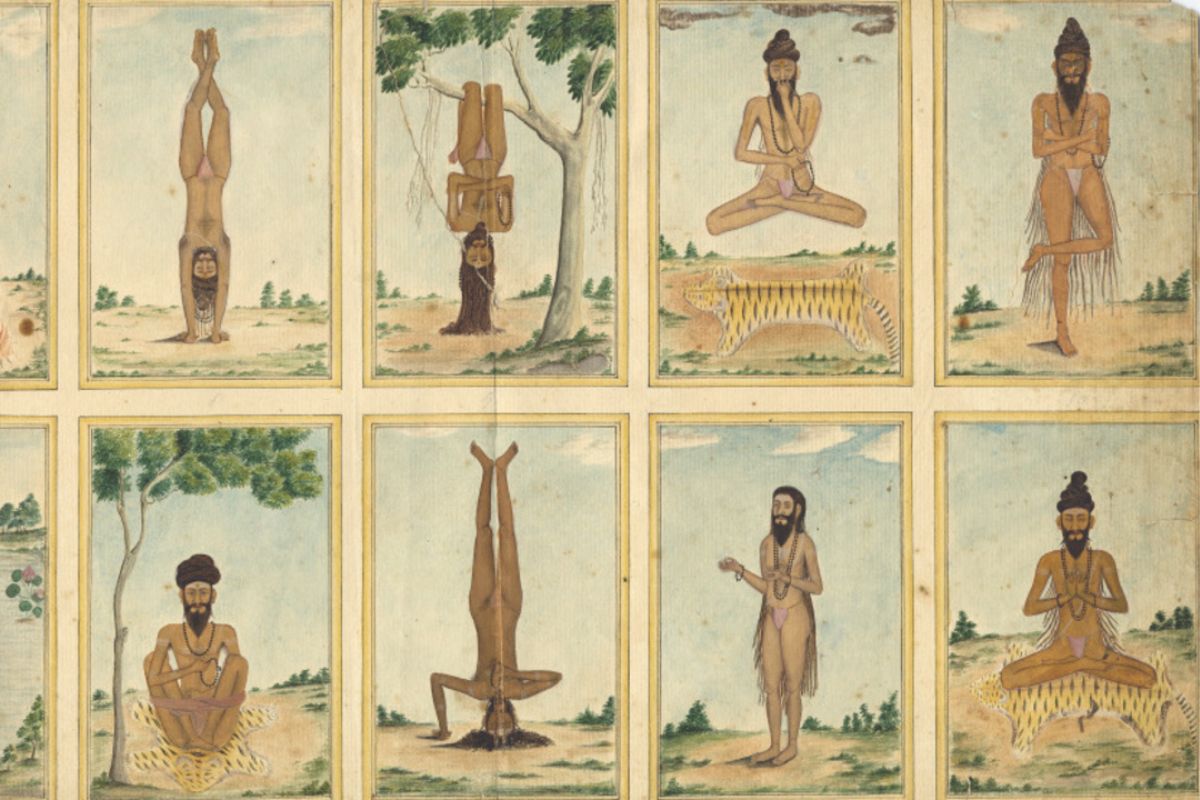
This model, known as the Guru-Shishya tradition, kept yoga coherent across generations despite the absence of printing presses, standardised curricula, or institutional oversight. It also meant that yoga was rarely generic. Each lineage carried its own emphasis, its own vocabulary, its own understanding of what the practice was ultimately for.
A Philosophy Without a Denomination
Yoga stands formally as one of the six schools of classical Hindu philosophy, alongside Samkhya, Nyaya, Vaisesika, Mimamsa, and Vedanta. However, its influence has never been confined to Hinduism. Buddhist meditation owes a significant debt to yogic thought. The Jain tradition absorbed its ascetic disciplines. In the centuries since, Christians, Muslims, atheists, and practitioners of no tradition at all have found something useful in its methods.
This is partly because yoga does not ask for belief. It asks for practice. Whether one accepts the metaphysics of the Upanishads or not, the breath remains the breath. The posture remains the posture. The silence remains the silence.
How Yoga Reached the Rest of the World
Until the late nineteenth century, yoga was almost entirely unknown outside the Indian subcontinent. The change began in 1893, when Swami Vivekananda addressed the Parliament of the World’s Religions in Chicago and offered Western audiences a coherent account of Indian philosophy in plain English. He was received with considerable interest.
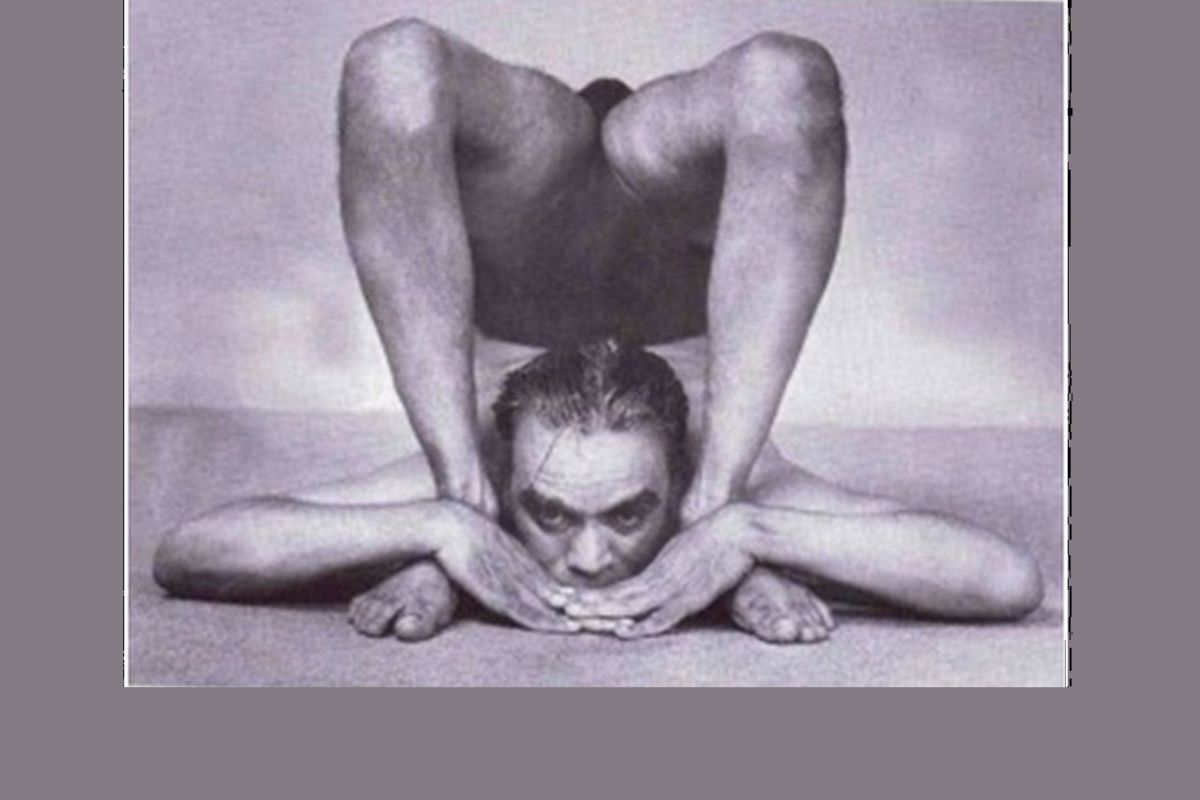
In the decades that followed, teachers such as T. Krishnamacharya and his students, among them B.K.S. Iyengar and Pattabhi Jois, developed physical approaches to yoga that could be taught in larger groups, documented in books, and eventually exported. By the mid-twentieth century, yoga studios had appeared in Europe and North America. By the end of the century, they were everywhere.
Today, an estimated 300 million people practise yoga in some form. The figure covers an enormous range of activity, from early-morning Iyengar classes in London to rigorous Ashtanga sequences in Seoul to gentle chair yoga in retirement communities in Florida. The word now contains multitudes.
What the Research Shows
The scientific study of yoga has produced a body of evidence that, while still growing, points consistently in one direction. Regular practice improves flexibility, muscle strength, and balance. It lowers resting heart rate and blood pressure in many practitioners. Studies across several countries suggest meaningful reductions in markers of anxiety and depression. Research into yoga as a complementary support for post-traumatic stress disorder is ongoing and, by most accounts, promising.
None of this would have surprised Patanjali, though he would have considered it beside the point. The Yoga Sutras were not written to promote better sleep or lower cortisol. They were written in the service of liberation. That the path to liberation also happens to be good for the body was, for the tradition, a pleasant secondary observation.
UNESCO and the Question of Heritage
In 2016, UNESCO inscribed yoga on its Representative List of the Intangible Cultural Heritage of Humanity. The decision acknowledged what practitioners had long known: that yoga is not simply a fitness regime but a living cultural inheritance, transmitted across generations and adapted to new circumstances without losing its essential character.
The inscription also raised a question that has not yet been fully resolved. As yoga has spread and in many places been commercially packaged, stripped of its philosophical context, and rebranded under names that carry no connection to its origins, the question of what is being preserved and what is being lost remains genuinely open.
The Practice and the Present
Yoga’s most enduring argument is not philosophical. It is experiential. It proposes that the mind can be trained, that the breath can be used as a tool, and that sustained attention to the body reveals aspects of the self that cannot be reached through thinking alone.
In a period defined by noise, distraction, and chronic disconnection, that argument has found a very large audience.
The Rishis who sat beneath the northern Indian sky were not trying to found a global wellness industry. They were trying to understand something that they believed mattered more than anything else. Whether the millions who practice yoga today are engaged in the same inquiry, or a different one entirely, is a question each practitioner eventually has to answer for themselves.
The breath, in the meantime, continues.
Also Read: How One Woman, Once Mocked for Saving a Bird, Now Built a 20,000-Woman Conservation Army
You can connect with DNN24 on Facebook, Twitter, and Instagram and subscribe to our YouTube channel.