

When an Engineer Aimed Sunlight at Wood and Called It Art
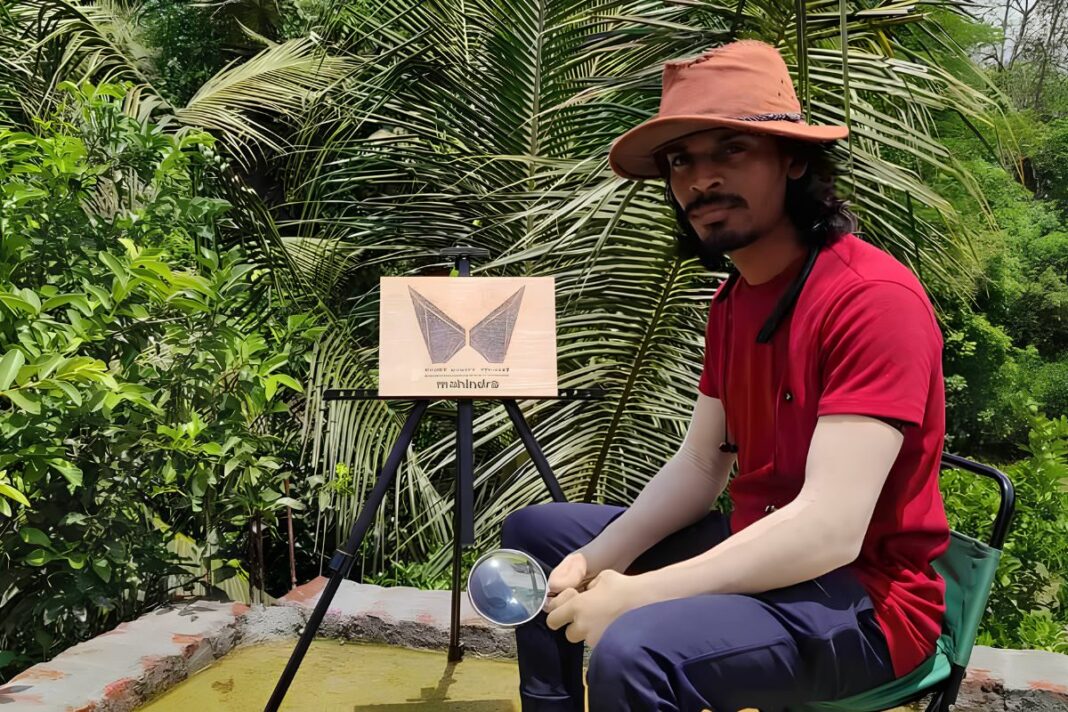
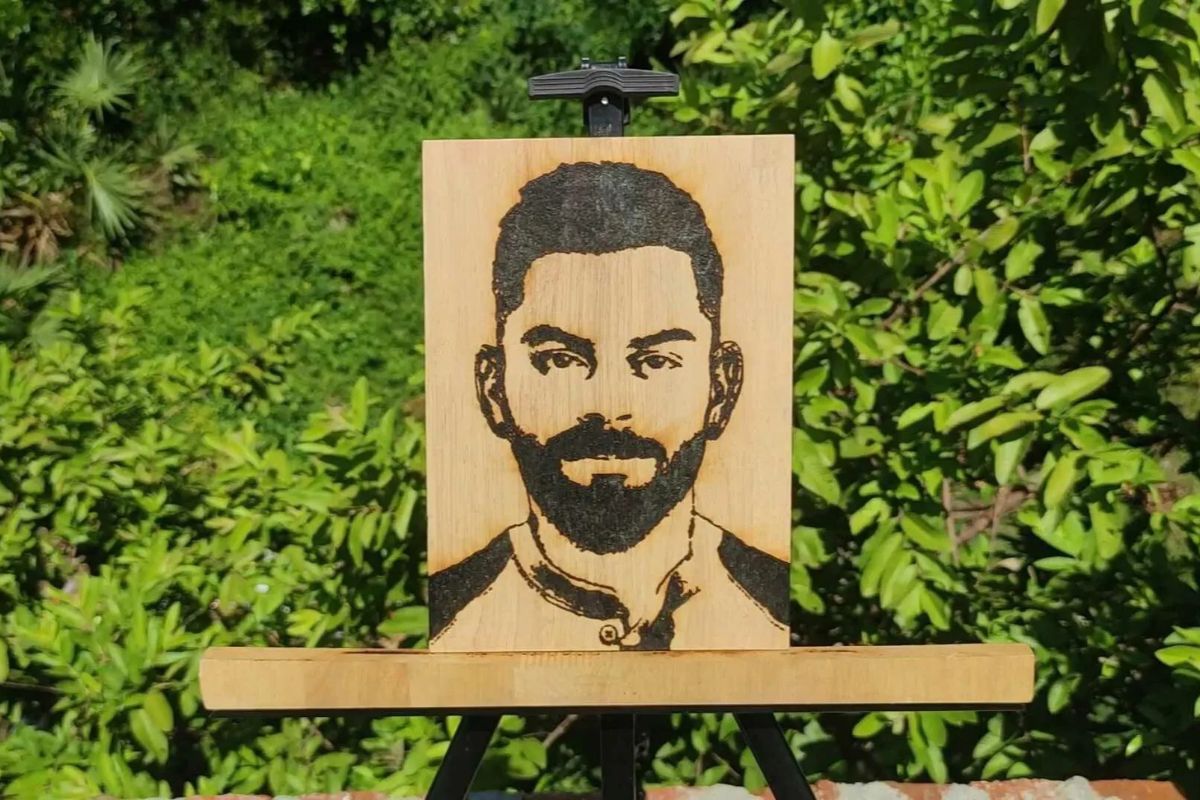
R. Vignesh does not use a brush, a pen, or a chisel. He uses the sun. The 35-year-old from Mayiladuthurai in Tamil Nadu focuses sunlight through a magnifying glass onto a piece of wood, burning delicate portraits, line by line, into its surface. He calls himself Asia’s first sunlight artist. No one, as far as available records show, has disputed that claim. However, the more remarkable part of his story is not the title. It is what drove him to pick up a lens in the first place.
A Grief That Would Not Lift
About seven years ago, Vignesh went through a personal loss that left him in a sustained state of depression. He was an engineer by training, methodical and technically minded, with no formal background in art. However, something in the act of burning patterns into wood gave him a way to occupy his mind and quiet the noise that grief brings.
He began watching videos of Michael Papadakis, a solar artist whose work had attracted attention abroad, and then went outdoors with a magnifying glass to practice. It was slow, difficult, and at times physically painful. He has spoken of tremors in his hands and the strain of standing for hours under intense midday heat. Early on, people around him were dismissive, and there were moments when the work seemed unlikely to amount to anything.
He kept going anyway. His wife Aarthi and a relative, Avinash, stayed close through the hardest stretches. Their support, Vignesh has said, made the difference between stopping and continuing.
How the Work Is Done
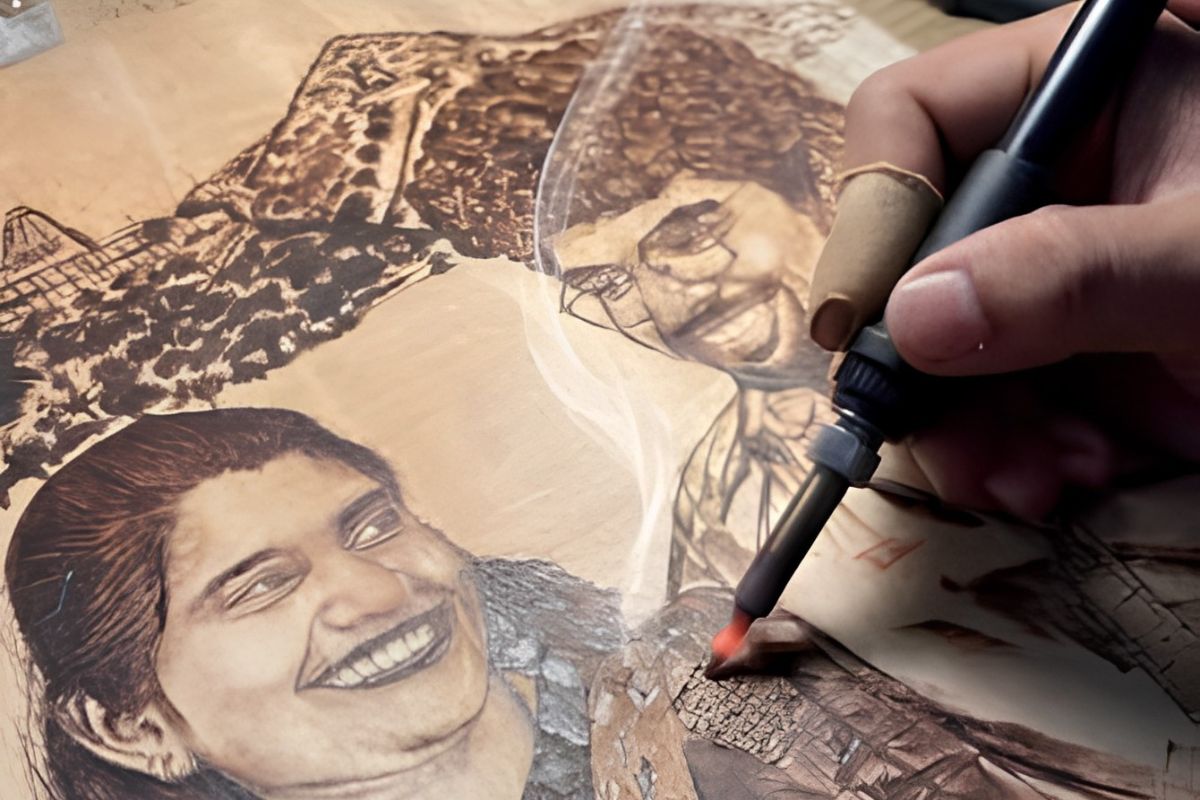
The process is straightforward to explain and grueling to carry out. Vignesh holds a magnifying glass between the sun and a wooden surface, angling it until the focused ray burns a precise mark. By varying the distance and angle, he controls the width of the burn, the depth of the shading, and the tone’s density.
He uses three magnifying glasses, each of a different size. The largest handles broad outlines. A medium-sized one works through the middle details. The smallest is used for fine finishing and delicate shading in portrait work.
Because sunlight is the only tool, the weather governs everything. Vignesh studies the forecast before he begins a piece, and an A4-sized portrait can take two to three clear days to finish. If clouds arrive mid-session, he stops and waits. If the light shifts, the burn changes. There is no switch to turn the temperature down, no way to undo a mark that went too deep.
This dependence on natural conditions is part of what separates his practice from conventional pyrography, which uses an electrically heated pen in controlled settings. Solar burning demands a kind of patience that a studio tool cannot teach. Each finished portrait carries within it the record of the days it took to make, the sun that made it possible, and the skill required to work with both.
From Personal Practice to Public Work
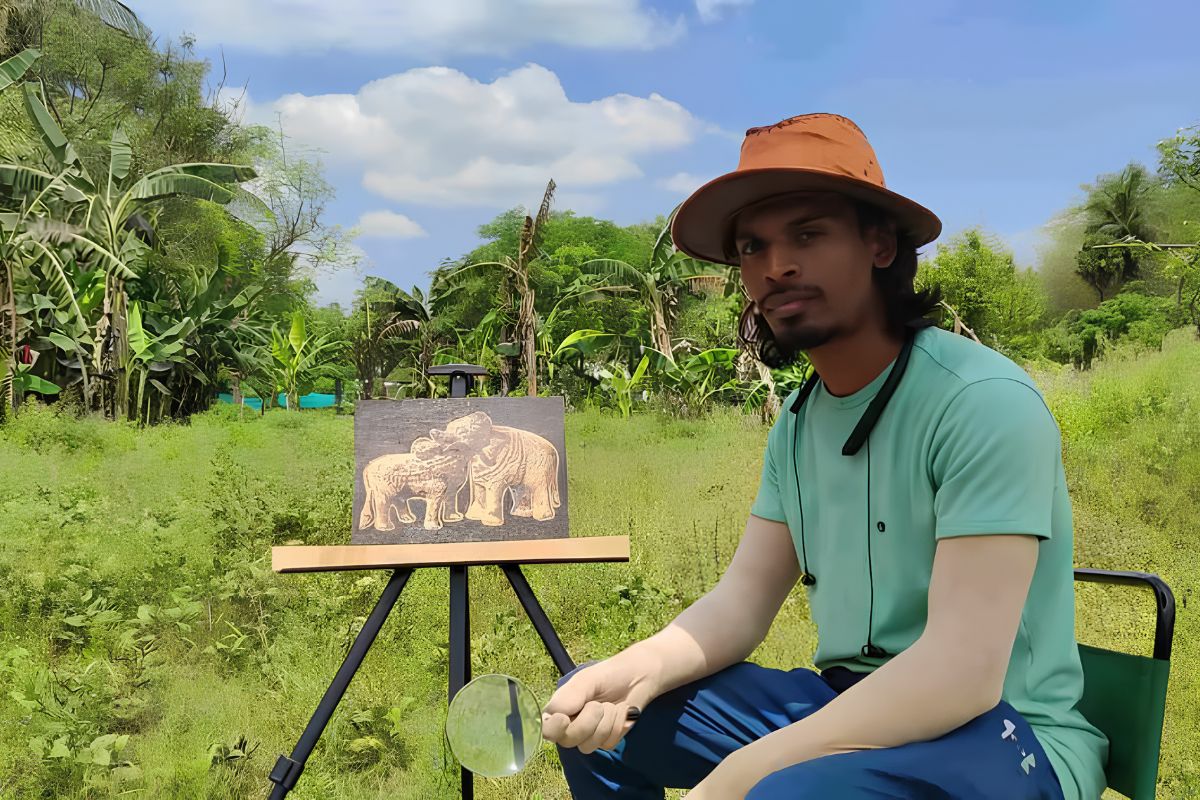
What began as a way of managing grief eventually became a livelihood. Vignesh now creates home decor pieces and customised gifts that he ships to customers in India and abroad. Social media gave his work visibility beyond Tamil Nadu, and commissions began to come in from people who had seen his portraits online.
He has made portraits of Mahatma Gandhi, cricketer M.S. Dhoni, and former Tamil Nadu Chief Minister K. Karunanidhi, among others. These commissions helped establish that his medium could carry public subjects as well as private ones, and that the technique, for all its constraints, was capable of real artistic precision.
In 2023, the Einstein World Records LLC in Dubai recognised him with the Einstein Exemplary Award. He has also collaborated with the Ministry of Culture, Government of India, to conduct workshops in sunlight art for students, suggesting that institutions are beginning to recognize the educational value of what he does.
What Students Can Learn From a Lens and a Log
The workshop dimension of Vignesh’s work is worth considering on its own terms. Sunlight art requires no electricity, no costly tools, and no industrial materials. What it requires is attention, an understanding of how light behaves, and a willingness to work slowly.
For students, that is a meaningful lesson. A great deal of contemporary design and digital production is built around speed and replication. Sunlight art offers the opposite: one original, produced with care, shaped by conditions that cannot be fully controlled. The process teaches observation more than technique, and patience more than skill.
That quality makes it particularly useful in school settings, where the convenience of machines often obscures the relationship between effort and result.
The Larger Meaning of an Unusual Practice
Vignesh’s story does not fit neatly into the categories of self-made success or inspiring recovery. It is quieter and more specific than either of those framings allows. A man found that focusing sunlight onto wood gave him something to do with his hands and his mind during a time when little else worked. He got better at it. He found that others considered the results worth paying for. He continued.
What that journey reveals, more than anything else, is that creative practice does not require a defined starting point or a clear destination. Vignesh did not begin because he had artistic ambitions. He began because he needed to begin something.
The portraits he makes now, warm-toned and precise, burned into wood by light that traveled 150 million kilometres to reach them, carry that origin quietly within them. They are technically remarkable objects. However, they are also, in their own way, documents of recovery made permanent by the sun.
Also Read: How Bugun Tribe Protected Wildlife and Transformed Local Livelihoods
You can connect with DNN24 on Facebook, Twitter, and Instagram and subscribe to our YouTube channel.