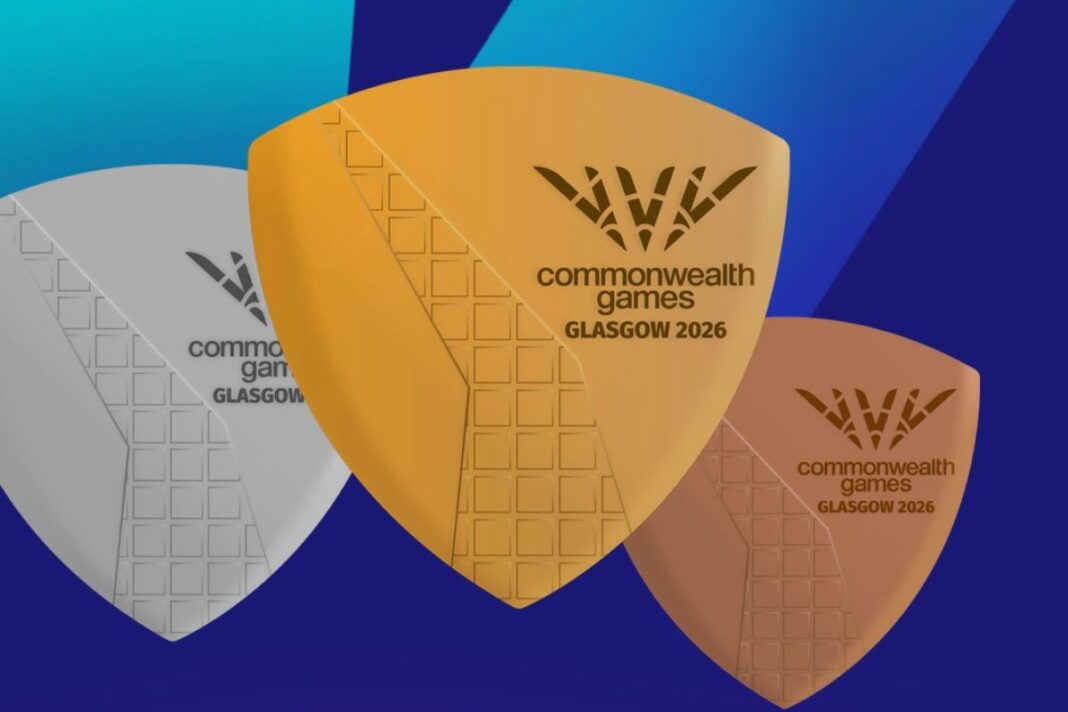

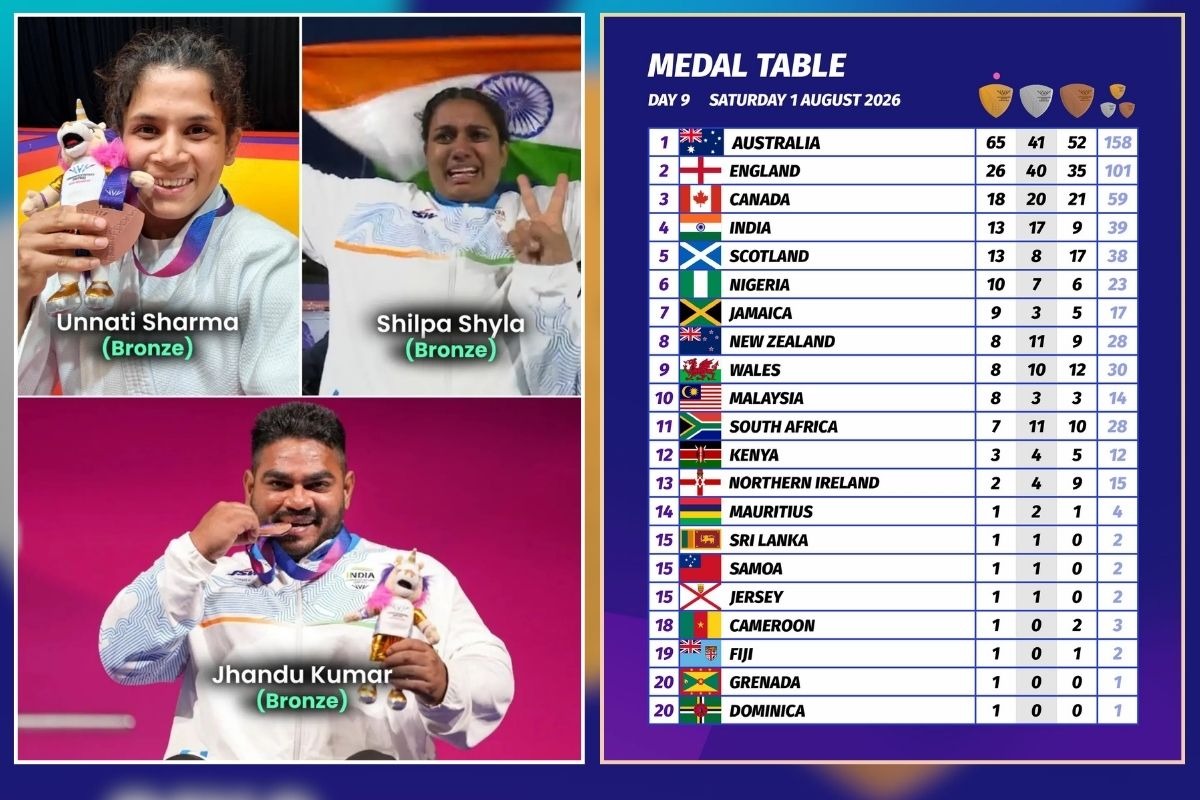
India’s Glasgow medal rush defied every prediction that circulated before the opening ceremony. When organisers trimmed the Commonwealth Games programme down to ten sports, most followers of Indian sport braced for a quiet fortnight. Wrestling was gone. Shooting was gone. Badminton and table tennis, two disciplines that had filled Indian trophy cabinets for two decades, were absent from the schedule entirely. Yet when the closing ceremony arrived, India stood in fourth place on the table with 39 medals in hand, a number that surprised even the most optimistic officials back home.
The Full Tally
The final count read 13 gold, 17 silver and 9 bronze. That distribution alone tells a story of narrow margins and photo finishes, since silver outnumbered gold by a wide stretch. Australia, England and Canada finished ahead of India, but the gap to fifth place was comfortable enough to call this campaign a genuine achievement rather than a lucky escape.
Medal Type Count
| Medal Type | Count |
|---|---|
| Gold | 13 |
| Silver | 17 |
| Bronze | 9 |
| Total | 39 |
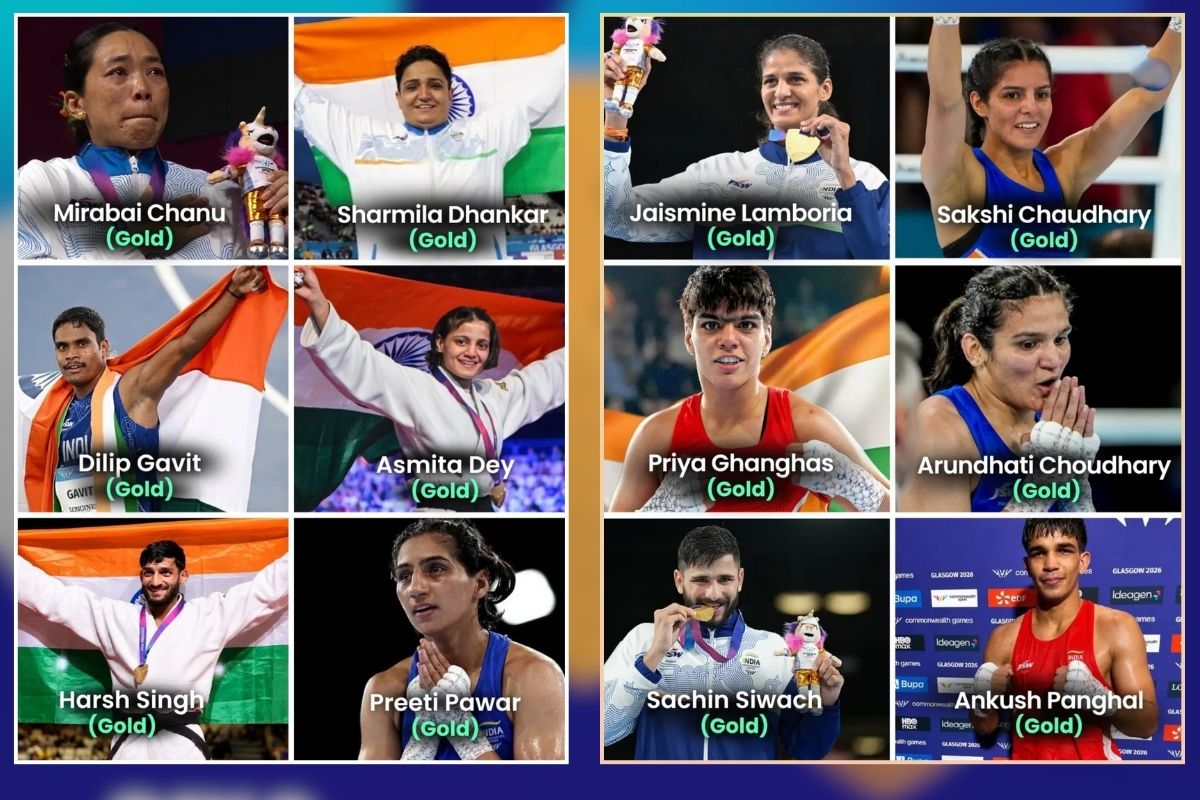
Boxing carried the heaviest load. Seven gold medals came from the ring, the largest gold haul any nation managed in boxing at a single Commonwealth Games. Preeti Pawar, Jaismine Lamboria, Sakshi Chaudhary, Priya Ghanghas, Arundhati Choudhary, Sachin Siwach and Ankush Panghal all climbed to the top step, and three more boxers, Lovlina Borgohain, Narender Berwal and Jadumani Singh, added silver.
Gold, Silver and Bronze by Sport
| Sport | Gold | Silver | Bronze |
|---|---|---|---|
| Boxing | 7 | 3 | 0 |
| Weightlifting | 1 | 6 | 1 |
| Para Athletics | 3 | 2 | 2 |
| Judo | 2 | 1 | 0 |
| Athletics | 0 | 5 | 3 |
| Para Powerlifting | 0 | 0 | 1 |
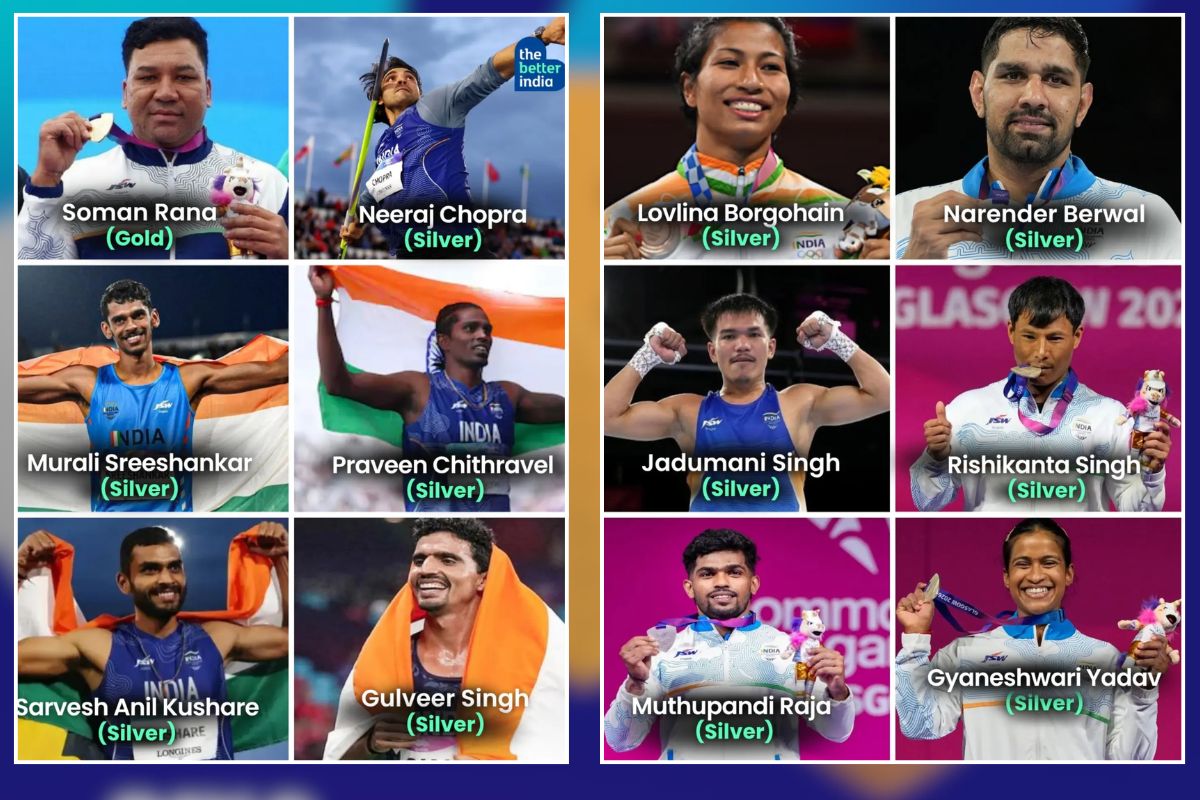
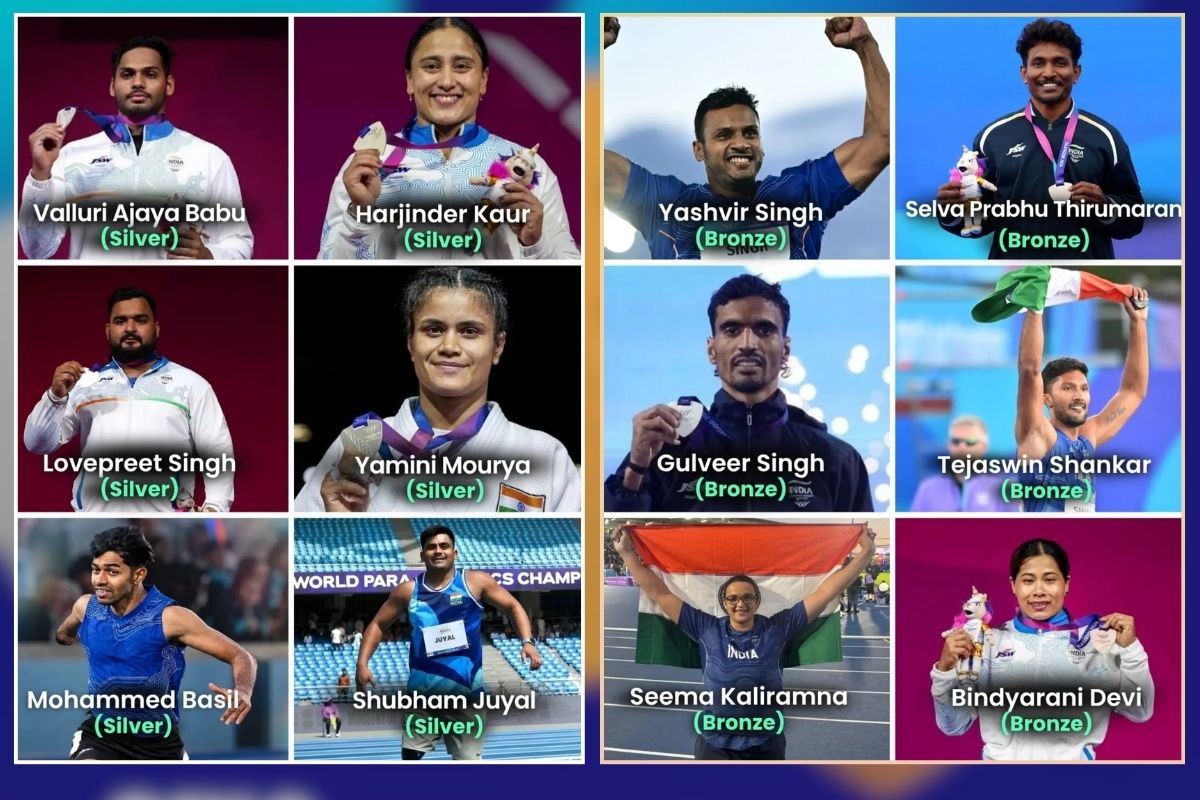
Weightlifting delivered a single gold through Saikhom Mirabai Chanu, who broke Games records in both the snatch and the clean and jerk in the women’s 48kg category, along with six silver medals across the men’s and women’s divisions. Athletics produced no gold this time, though Neeraj Chopra’s javelin silver and Tejaswin Shankar’s decathlon bronze, the first such medal an Indian athlete has ever won at these Games, kept the discipline relevant on the medal charts.
Para Athletes Steal the Spotlight
The most striking numbers on the table belong to a squad most fans barely followed before the Games began. India’s para athletes returned with seven medals, three gold, two silver and two bronze, from a contingent of only 28 competitors. That single fortnight matched the entire cumulative para medal count India had built across every previous Commonwealth Games combined.
| Athlete | Event | Result |
|---|---|---|
| Sharmila Dhankar | Women’s Shot Put F57 | Gold, 9.81m |
| Soman Rana | Men’s Shot Put F57 | Gold, season best 13.40m |
| Dilip Mahadu Gavit | Men’s 100m T47 | Gold, 10.71 seconds, Games record |
| Mohammed Basil | Men’s 100m T47 | Silver |
| Shubham Juyal | Men’s Shot Put F57 | Silver, 13.28m |
| Shilpa Shyla | Women’s Shot Put F57 | Bronze |
| Jhandu Kumar | Men’s Heavyweight Powerlifting | Bronze |
Three events produced complete sweeps of gold and silver or gold and bronze for India: the women’s shot put F57, the men’s 100m T47 and the men’s shot put F57. Jhandu Kumar’s bronze in powerlifting arrived on the opening day of competition, setting a confident tone that carried through the entire campaign. Before Glasgow, a drought stretching two decades had left India without a single para athletics medal at these Games. That drought ended here, and it ended with six medals in track and field alone.
What the Cuts Actually Cost
Numbers rarely explain themselves without comparison, so it helps to look at what India lost when organisers slashed the sports list from nineteen in Birmingham to ten in Glasgow.
| Sport Removed | Birmingham 2022 Medals | Effect |
|---|---|---|
| Wrestling | 12 | India’s most reliable medal source disappeared entirely |
| Badminton | 6 | No Sindhu, no Lakshya Sen, no doubles pairs |
| Table Tennis | 7 | Singles and doubles chances lost |
| Hockey | 6 (all time) | Both teams sat out |
| Cricket | 1 silver | Women’s team lost a realistic medal shot |
Analysts inside the Indian contingent estimate the cuts removed something close to 26 to 30 potential medals from India’s reach. Given that context, a total of 39 looks less like a decline and more like a recovery built on sports nobody expected to carry the weight.
A Closer Look at the Numbers
Comparing the ten sports that featured in both Birmingham and Glasgow reveals the real story behind India’s fourth-place finish.
| Metric | Birmingham 2022 | Glasgow 2026 | Change |
|---|---|---|---|
| Total Medals | 61 | 39 | Down 22 |
| Gold Medals | 22 | 13 | Down 9 |
| Sports Contested | 19 | 10 | Down 9 |
| Final Rank | 4th | 4th | No change |
Within those ten overlapping sports alone, India’s tally actually climbed from 31 medals in Birmingham to 39 in Glasgow, an increase of nearly 26 per cent. That growth came almost entirely from three sources.
| Sport | 2022 Medals | 2026 Medals | Change |
|---|---|---|---|
| Athletics and Para Athletics | 8 | 16 | Doubled |
| Boxing | 7 | 10 | Up 43 percent |
| Judo | 3 | 4 | Up 33 percent |
| Weightlifting | 10 | 8 | Down 20 percent |
| Lawn Bowls | 2 | 0 | No medals |
Had India merely repeated its 2022 rate across those same ten sports, the final tally would have hovered near 31 medals, likely enough to slip to fifth or sixth place. Instead, record output from boxing, para sport and judo pushed the country back up to fourth, exactly where it stood four years earlier, despite nearly half the sporting programme being gone.
Judo’s Quiet Breakthrough
Judo rarely draws headlines in Indian sport, yet Asmita Dey and Harsh Singh both won gold in Glasgow, with Yamini Mourya adding a silver. Three medals from a discipline that had produced almost nothing at previous Games suggest a talent pipeline that has been building for years without much public attention. Officials within the federation now speak openly about targeting Asian Games and Olympic qualification slots on the strength of this squad.
Looking Toward Ahmedabad
As the closing ceremony wound down, the Commonwealth Games flag passed from Glasgow to India, the confirmed host of the 2030 edition in Ahmedabad. Prime Minister Narendra Modi praised the 39-medal campaign publicly and spoke of building on this foundation at home. A host nation typically expands the sporting programme to suit its own strengths, and Indian officials are already discussing the return of wrestling, shooting and badminton alongside continued investment in boxing, judo and para sport.
If Ahmedabad restores even a modest version of the traditional eighteen or nineteen sport format while keeping the gains made in Glasgow, a total near 60 medals is not an unrealistic target. Boxing has proven itself as India’s most dependable gold source. Para athletics has shown untapped depth that only needed proper support to surface. Judo has quietly built a bench of world-class talent. Athletics remains deep even without a gold this time, led by Chopra, Murali Sreeshankar and a promising crop of young throwers and jumpers.
Final Word
India’s Glasgow campaign was never going to be judged fairly on medal count alone, not with nine sports missing from the programme and a squad forced to lean harder than usual on boxing gloves, para athletics tracks and judo mats. Fourth place, matched exactly to the Birmingham finish, tells the real story better than any single statistic could. The heroes of this campaign, from a decorated weightlifter breaking her own records to a group of para athletes who erased two decades of near invisibility in a single fortnight, have handed Ahmedabad 2030 a genuine head start. Four years from now, on home soil and with a fuller programme, India will get the chance to find out just how high that foundation can carry it.
Also Read: India’s First-Ever Tribal Games Bring Indigenous Sports Into National Spotlight
You can connect with DNN24 on Facebook, Twitter, and Instagram and subscribe to our YouTube channel.