
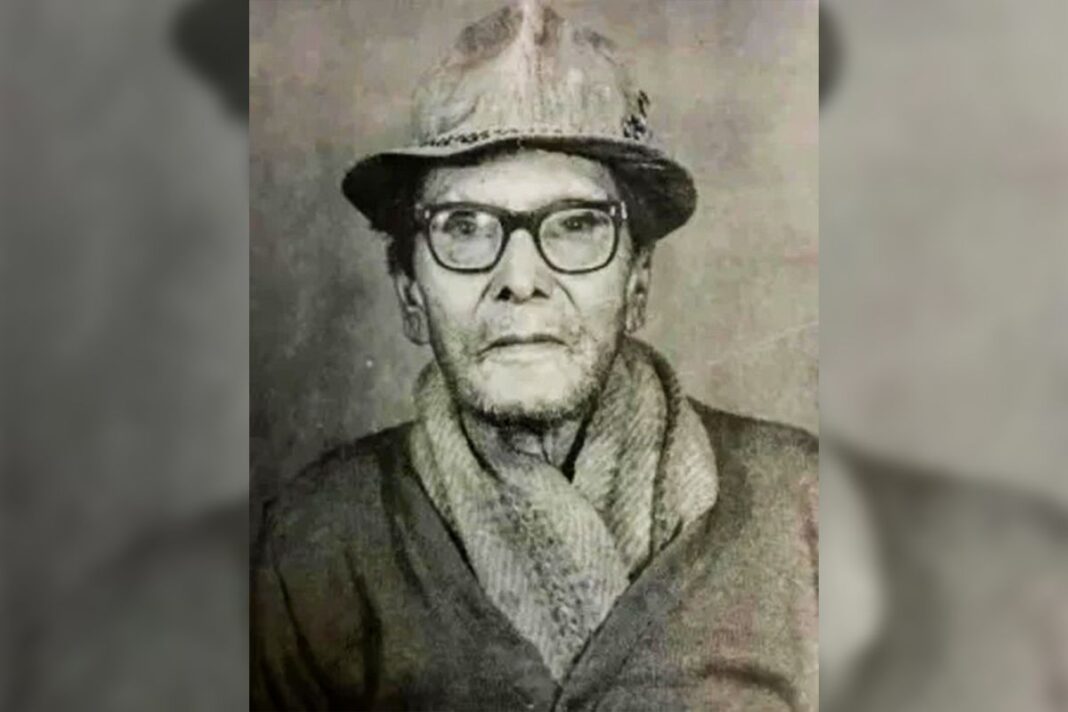

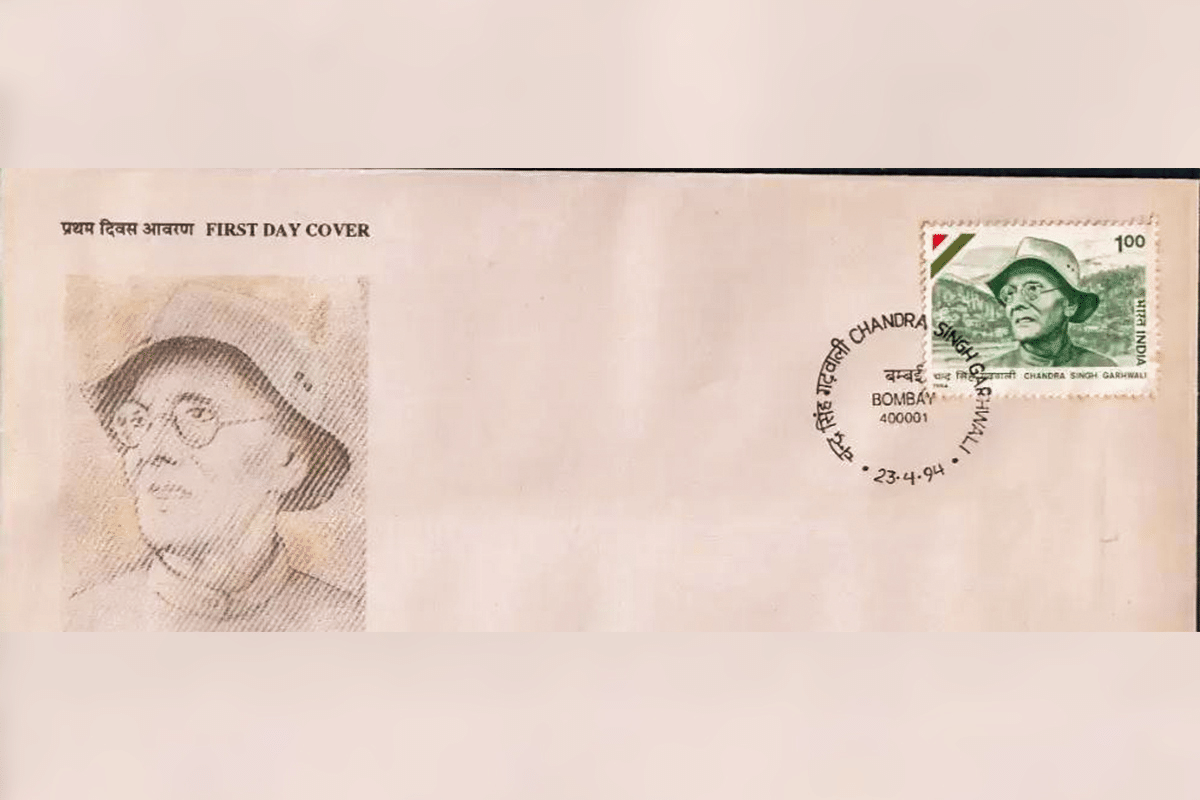
In 1994, the Government of India issued a postage stamp bearing his photograph and named a few roads after him that had been left unnamed. After Uttarakhand was formed, when the state government needed local heroes of its own, the pages of history were turned, and the name of Chandra Singh Garhwali was discovered because several government schemes needed names.
Chandra Singh Garhwali, who struggled throughout his life and faced severe financial hardships, died on October 1, 1979, at Ram Manohar Lohia Hospital in Delhi.
In April 1930, thousands of people were staging a satyagraha at Qissa Khwani Bazaar in Peshawar under the leadership of Khan Abdul Ghaffar Khan. To crush it, the British government deployed the Royal Garhwal Rifles. This was a time in Indian history when only three or four weeks had passed since Gandhi’s Dandi March, and the entire country was eager to join the freedom movement.
Chandra Singh, who was born on December 24, 1891, in a remote village in the Thalisain tehsil of Garhwal, was also part of the contingent stationed in Peshawar. Despite having very little education and serving in the British Army, Chandra Singh was not untouched by the freedom movement taking place in the country over the previous more than ten years. Despite the strictness of military discipline, he would occasionally participate in secret meetings and conferences related to independence and learned lessons in patriotism.
There is an anecdote that when Gandhi came to Kumaon in 1921, and his meeting was taking place in Bageshwar, Chandra Singh was wearing his beloved Gorkha cap. Seeing him, Gandhi said, “Who is sitting here wearing a Gorkha hat to frighten me?” Chandra Singh immediately stood up and replied, “If I am given a white cap, I can wear that too.” Hearing this, someone present at the meeting threw a white Gandhi cap towards Chandra Singh. Chandra Singh threw the same cap back towards Gandhi and said, “I will wear it only if this old man gives it to me with his own hands!” Gandhi fulfilled Chandra Singh’s wish. Gandhi later said that if he could find four people like Chandra Singh, the country could be freed very quickly.
The echoes of the satyagraha taking place in Peshawar were reaching far and wide, and the British were prepared to do anything to suppress it. Sensing his rulers’ intentions, Chandra Singh continued discussing the country and independence with fellow soldiers in his barracks at Hari Singh Lines in Peshawar.
On April 23, 1930, thousands of satyagrahis were taking out a procession in Peshawar. A British soldier on a motorcycle forced his way through the crowd—several people were injured. The angry crowd caught the soldier, beat him, and set his motorcycle on fire.
The British officers present at the spot became frightened by this incident and deployed soldiers of the Royal Garhwal Rifles at Kabuli Gate in Qissa Khwani Bazaar. The commander ordered people over a loudspeaker to return home, but the crowd’s excitement became uncontrollable. Finally, the commander ordered them to open fire and shouted, “Garhwali, open fire!”
From right beside the commander came an even louder and fearless voice: “Garhwali, cease fire!” This was Chandra Singh Garhwali, and following his command, 67 soldiers put their rifles down on the ground.
After the revolt of 1857, this was the biggest military rebellion in India’s history. The enraged British ordered the white soldiers to carry out a massacre. A large number of lives were lost, and Chandra Singh Garhwali and his companions were arrested.
When British Captain Tucker asked why they had rebelled, Chandra Singh Garhwali replied, “We Indian soldiers were recruited to protect India, not to fire upon our own brothers!” After the court-martial, the court punished all the soldiers. Chandra Singh received the harshest punishment: life imprisonment.
Gandhi Ji’s reaction to Chandra Singh’s courage was astonishing. He wrote: “A soldier who refuses to fire violates his oath. If I teach them disobedience today, I will remain afraid that perhaps tomorrow he may do the same in my government.” This was the same Gandhi who had publicly said that with four people like Chandra Singh, the country could be freed quickly. Jawaharlal Nehru described his courageous act merely as an “incident born out of emotion.”
Chandra Singh Garhwali endured numerous hardships and completed his sentence. His property had already been confiscated. For participating in the Quit India Movement, he was again imprisoned. Even after India gained independence in 1947, this warrior had to go to prison several times in independent India because of his communist views. It is shameful that when he was arrested for the first time in independent India, the warrant listed the Peshawar incident as his crime. In 1957, he also contested the Assembly elections but was badly defeated.
Also Read: Before the alphabet, A lesson in Hygiene, Dignity and Hope
You can connect with DNN24 on Facebook, Twitter, and Instagram and subscribe to our YouTube channel.