

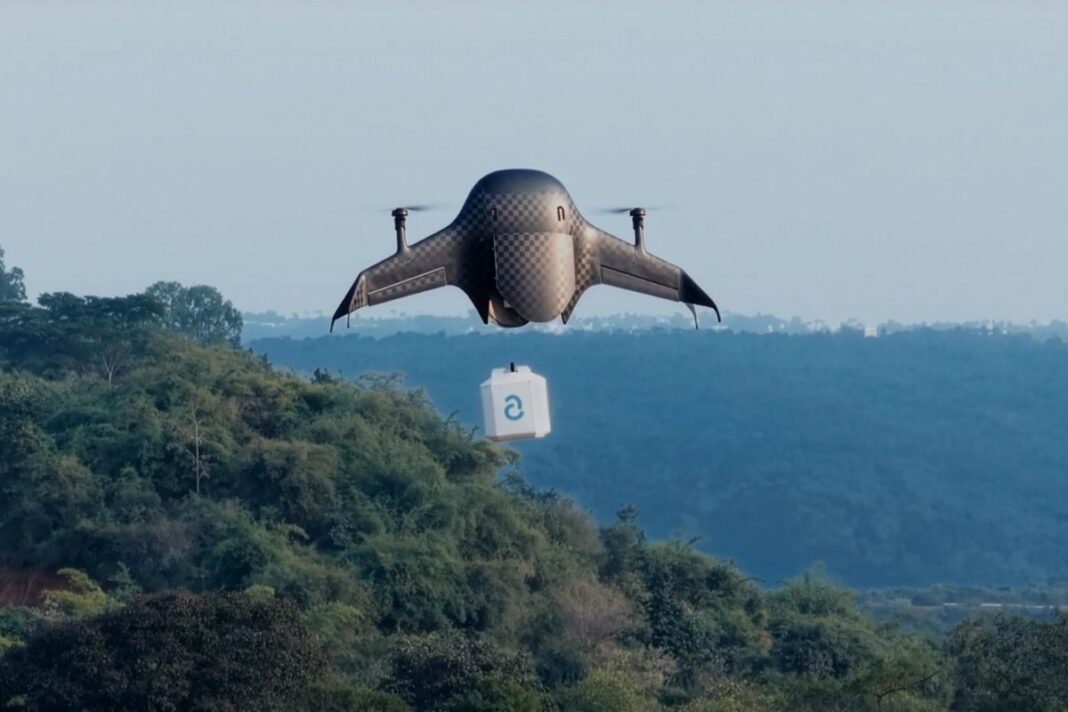

What kind of hospital opens without a laboratory or a blood bank? The one planned for Banashankari in Bengaluru, which expects its test samples to travel by air. The aircraft that will carry them began as a school-age project made from foam, toothpicks, and tape.
The company behind it is Airbound, and its founder is Naman Pushp, 21. He is chasing an idea that sounds almost impossible: to make air delivery cost about the same as road delivery. His drone takes off upright, like a rocket. Once in the air, it tilts over and flies forward like a small plane. If the idea works, it will change how Indian cities, hospitals and supply chains are planned.
In August 2026, Airbound raised $37 million in a Series A round led by Greenoaks. DoorDash, Lachy Groom, Lightspeed and Humba Ventures also took part. Total funding now stands at nearly $50 million. DoorDash had not been reported to invest in a drone business before this, so its presence drew attention.
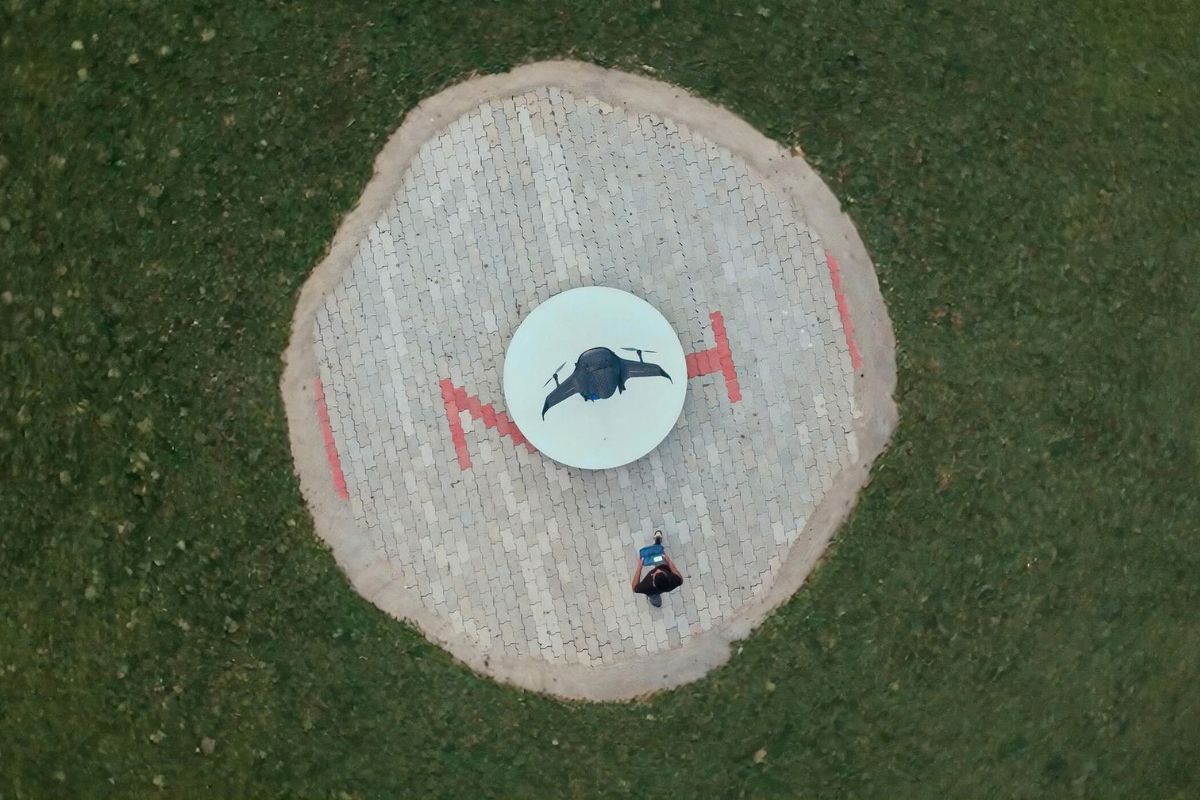
Money, however, says less than the Banashankari hospital does. Narayana Health designed it without an on-site diagnostic laboratory or blood bank. It expects to depend on Airbound’s drone network to move samples to centralized facilities and to stay connected with them. This is a customer building a hospital on the belief that an air route can be as dependable as a road.
A Drone Born during Lockdown
Pushp did not start in an aerospace laboratory. He started during the COVID lockdown, when schools were shut, and the world had slowed down. He was 15 then. A video about Zipline, the company known for delivering medical supplies by drone, set him thinking, and he began to experiment.
His first model was plainly homemade. He cut out flat sheets of cardboard, joined them with toothpicks and tape, and sanded the result until it looked like a fiberglass body. The model won a $500 hackathon grant. That is a small sum in aerospace, where costs run high, but it kept a teenager working on his idea.
Airbound was formally founded in 2023, though the central premise had formed years earlier. Why should a delivery drone carry so much of its own weight?
The question matters, because of how common drones work. A multicopter spends a great deal of energy just staying up, since its rotors push against gravity every second of the flight. That makes long trips costly and limits what the drone can lift. Airbound offered a solution by designing around weight. Its current aircraft, called TRT, weighs about 1.5 kilograms, or 3.3 pounds, and carries a payload of about 1 kilogram, or 2.2 pounds.
The stated goal goes further. The company wants aircraft that weigh less than the cargo they carry. The commercial reasoning is simple. Every gram saved on the body leaves more energy for the load, whether that load is medicine, food, an online order, or a box of diagnostic samples.
Up Like a Rocket, Forward Like a Plane
Airbound’s aircraft use a layout called a tail sitter. There is no runway. The aircraft stands on its tail to take off and land, much like a rocket. Once it has climbed, it turns and flies level, held up by its wings.
This layout targets an old trade-off in delivery aviation. Helicopter-style takeoff suits crowded cities and remote villages because it needs almost no ground equipment. Fixed-wing aircraft use less energy once they are moving forward. Airbound wants both advantages: a vertical launch without a runway, followed by efficient flight like a plane’s.
The airframes are made of carbon fiber composites. The company says this keeps the vehicle light and leaves more mass for cargo. TRT suits small consignments. According to Pushp, the next aircraft is expected to weigh about 6.6 pounds and carry up to 11 pounds.
These figures are company targets and early claims. They do not show that drones have replaced trucks. Airbound faces the same obstacle as the rest of the drone industry: regulatory approval for flights beyond the visual line of sight of an operator, usually called BVLOS. Without that approval, drones cannot go far without someone watching them directly.
The company also earns very little revenue so far, Pushp says, even though it employs more than 150 people and has completed thousands of autonomous flights. That fact deserves attention. A promising aircraft, a large funding round and a run of good pilots do not add up to a mature and profitable delivery network.
Even so, the amount of flying the company has done gives people a reason to take it seriously.
What the Hospital Flights Showed
Healthcare is where the idea becomes easiest to see and to test.
Pushp reports that Airbound has flown more than 13,000 autonomous flights across Bengaluru and Guntur. Over 1,000 of those have been for Narayana Health, carrying diagnostic samples between its facilities. Narayana Health announced a separate pilot in March 2026 that lasted 54 days. In it, Airbound completed more than 700 medical drone flights between the Chandapura clinic and the central laboratory at Narayana Health City in Electronic City.
The route was about 4 kilometers by air. Each flight carried up to 40 diagnostic samples, and the pilot recorded no failed deliveries. A flight took about 10 minutes. The same journey by road depends on how bad Bengaluru traffic is that day.
The time saved matters a great deal. Under the usual arrangement, a clinic draws blood, stores or chills the sample, and waits until enough samples have piled up. Then a courier takes them by road. It looks routine, yet it can add hours to a diagnosis, particularly in a crowded city. A drone lets the sample leave soon after it is taken.

Narayana Health has a wider plan behind this. It wants to keep costly clinical services, such as laboratories and blood banks, in central places. Smaller hospitals and clinics then connect to those services digitally. Under this plan, a small hospital does not have to repeat every expensive service on its own premises. It can rely on a central laboratory with high testing capacity and reach it through steady logistics.
The Banashankari Hospital follows that plan to the end. It has no laboratory or blood bank of its own, and it expects Airbound’s drones to link it to the central facilities. An established healthcare provider has treated drone logistics as something to plan a building around, and it does not treat the drones as a show.
Beyond Bengaluru’s Traffic
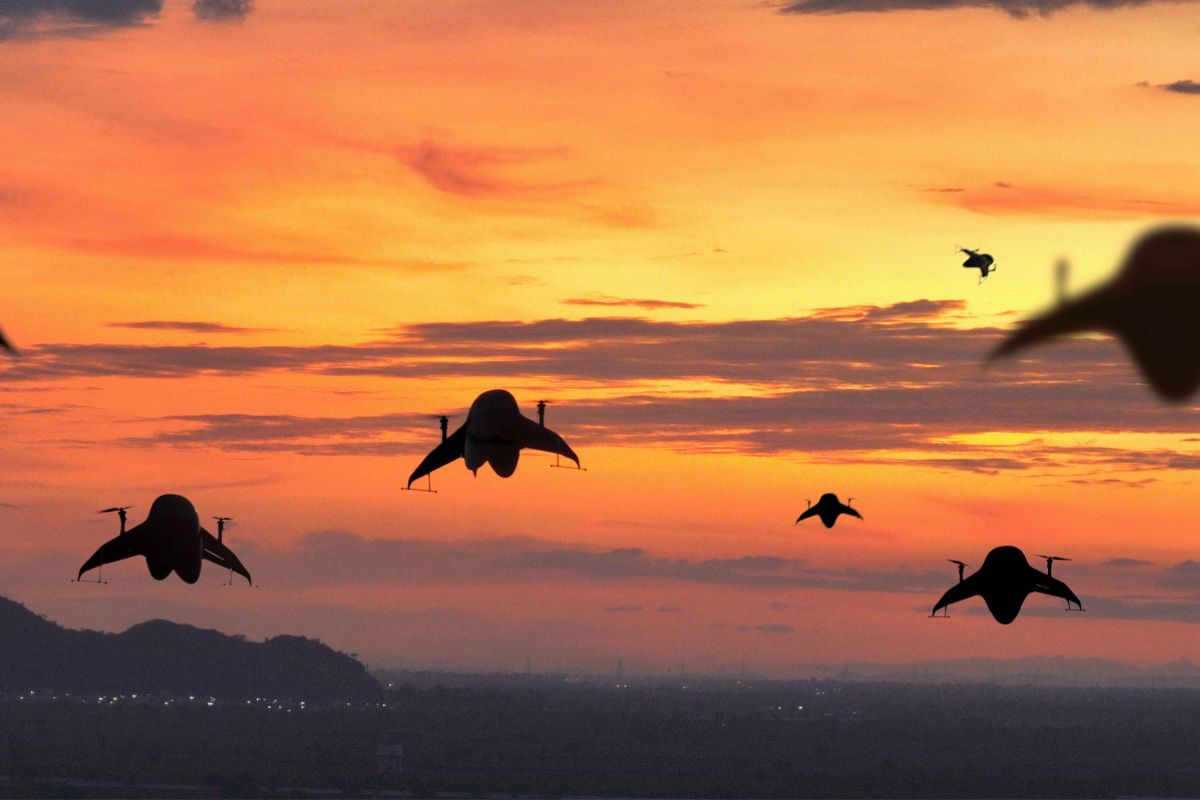
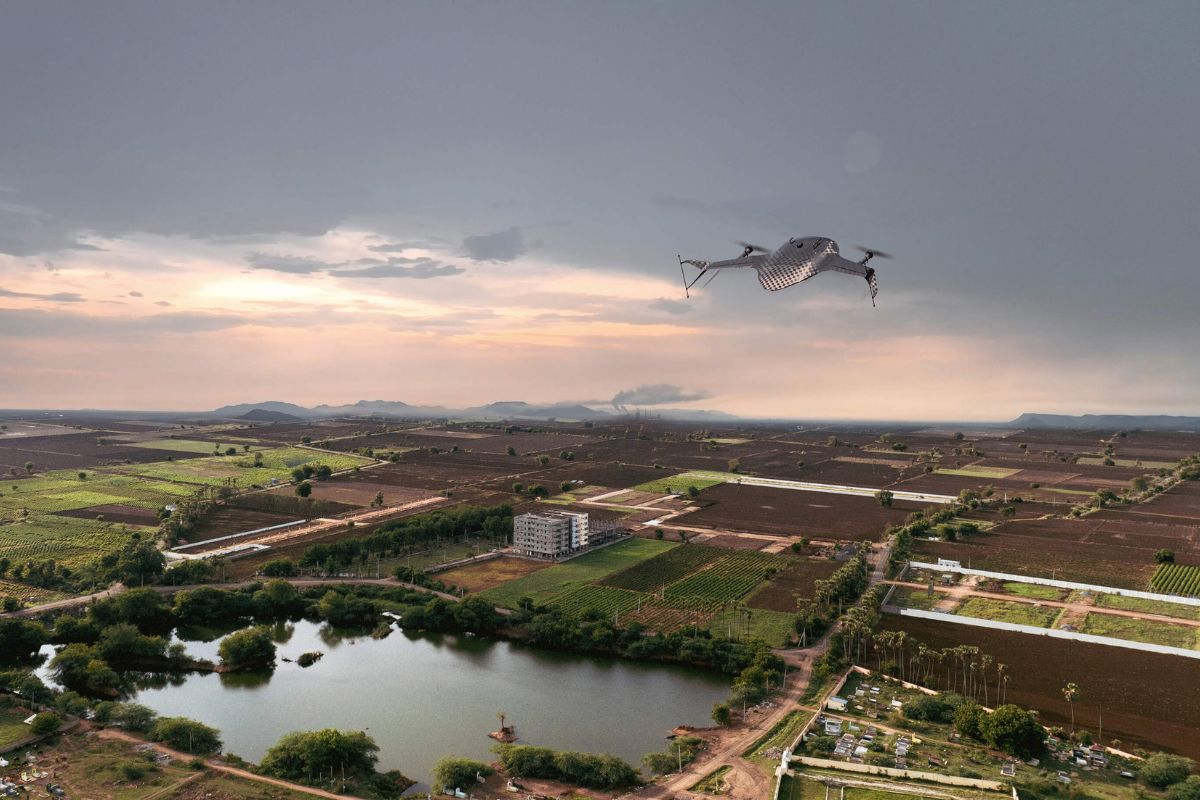
Airbound is looking past healthcare as well. When it announced the August funding, the company said it had reached an agreement with the Andhra Pradesh government. The two will develop a drone delivery network linking Amaravati, Vijayawada and Guntur. The long-term target is 10,000 flights a day, carrying retail goods, online orders and healthcare consignments.
That target is still a hope. It would take many aircraft, clear rules, reliable operating systems, safe air corridors, good weather handling, and customers who will pay. Airbound estimates the network could need between 250 and 1,000 aircraft, depending on the route length. Pushp expects the number to be nearer 250.
The plan still points to a real need. India’s transport problem is often about delay more than distance. A four-kilometer road journey can take an hour at peak times. Rural clinics may be cut off from referral hospitals by poor roads, floods in the rainy season or rough ground. In those places, a light aircraft carrying a blood sample, a test kit or a small urgent parcel could be worth far more than one carrying a restaurant meal.
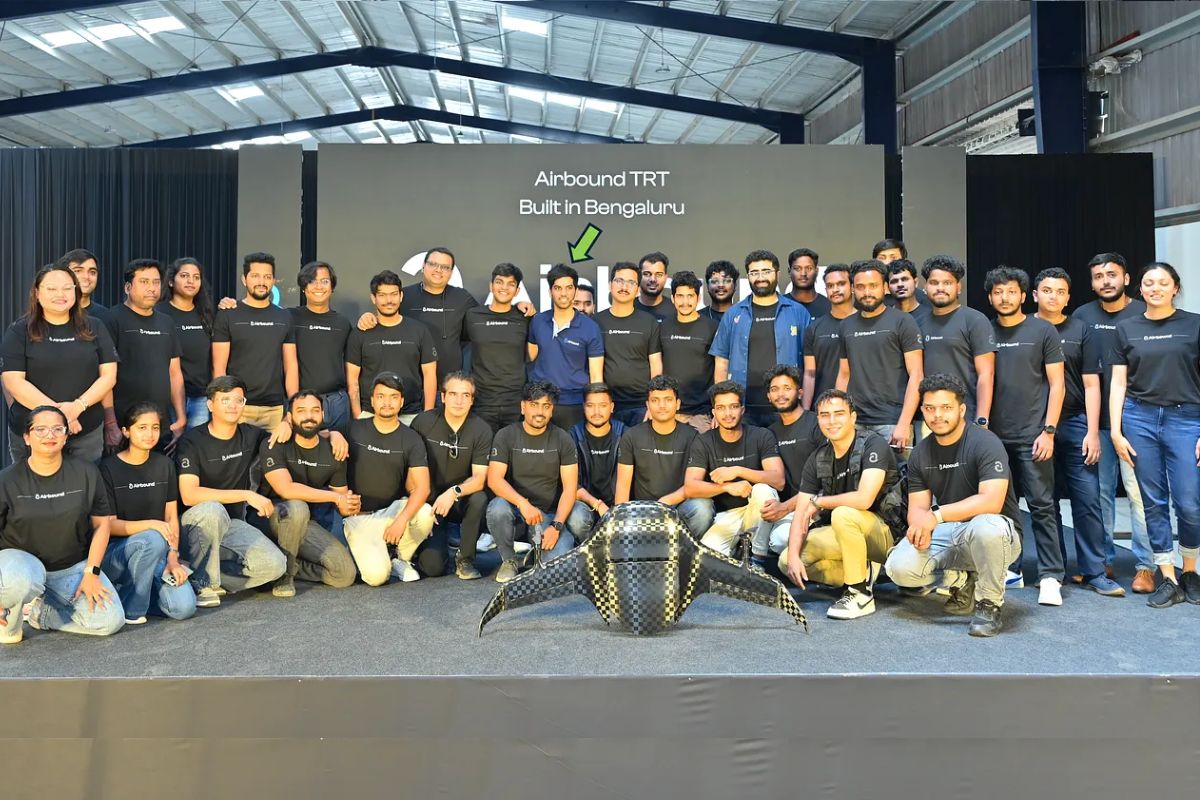
Airbound says it designs and builds its aircraft in India. Its Bengaluru facility covers 43,000 square feet, and the company keeps the airframe and other core systems in-house. That could count for a good deal if India’s drone delivery sector grows beyond pilot projects.
The Larger Lesson
Building a drone is the easy part of this story. India has plenty of young engineers, ambitious startups and clever prototypes. The interesting part is the chain of steps that now joins a teenager’s experiment to a hospital network.
A foam-and-paper model became a carbon fiber aircraft. A hackathon grant became a company with close to $50 million behind it. A single drone flight became a hospital logistics pilot. And that pilot may now shape how a new hospital is organized before its doors open.
Airbound still has a long road ahead. It must show that its aircraft are safe and reliable, that it follows the rules, that the business makes money, and that it can grow. It must show that its cost claims hold up against weather, maintenance, airspace limits and the daily grind of operations. Yet the Narayana Health decision explains why the company is worth watching. Airbound is asking whether drones can fly, and whether the next generation of Indian infrastructure can be built on the belief that essential services no longer have to travel only by road.
That question may be the company’s boldest.
Also Read: Arunachal’s Solung Tradition: The Festival Where Villages Become Living Museums
You can connect with DNN24 on Facebook, Twitter, and Instagram and subscribe to our YouTube channel.