

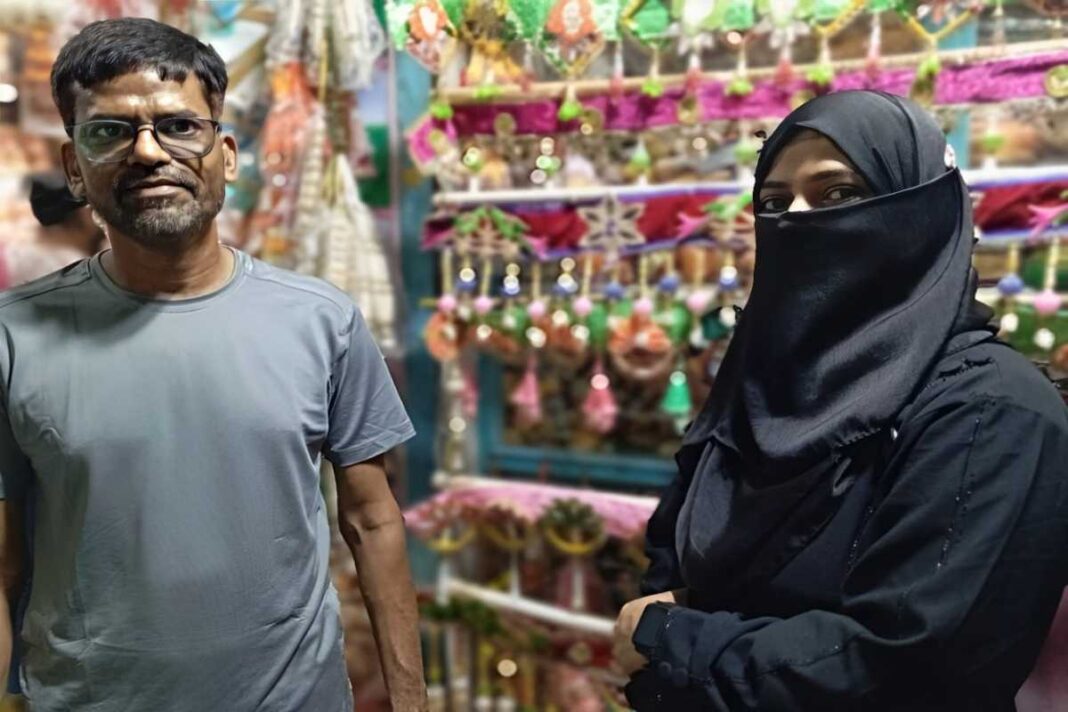

Visiting the local markets in Asansol during Dhanteras and Diwali shows a beautiful mix of cultures. People from different backgrounds—Hindus, Muslims, Christians, and Sikhs—live together in harmony. The streets are filled with colourful toys, including kitchen items like mud stoves, deep pans, and spice grinders. These toys are often used to create a mud house, which symbolises prosperity. Families fill these houses with sweet curd, rice, and vegetables to invite good fortune.
Celebrating Together
Seerat Jahan, a graduate married to local resident Rahul Rajat, has been making a mud house for five years. Their daughter, Myra, enjoys decorating it. Seerat follows both Hindu and Muslim traditions; she wears a bindi and performs puja while also praying regularly. The couple proudly states they have never faced any religious conflict. Seerat’s mother prefers to keep their family’s pictures private for safety reasons.
In Asansol, both Muslim and Hindu families buy these kitchen toys made by local artisans. During the three days from Dhanteras to Diwali, people purchase colourful images of Hindu gods like Lakshmi and Ganesh, which symbolise wealth and prosperity. Dhanteras, meaning “wealth,” is a time when everyone, including local Muslims, buys something new, whether it’s a large item like a bus or something small like a broom to clean their homes.
Busy Marketplace
The markets in Asansol are bustling during this festive time. Sangeeta Verma, a local mother, shares that she buys a silver coin for herself and her Muslim neighbour every Dhanteras as a sign of goodwill. The market is crowded, with people eager to buy sweets and colourful toys. Rahul, a seller of sweet toys, notes that children from Muslim families are drawn to his colourful sugar toys, while traditional Hindu families buy more sweets.
However, the market also faces challenges. Pickpockets are a concern, with thefts happening even in busy areas. Sellers and shoppers alike are cautious, keeping their belongings close. Despite these issues, the spirit of community and celebration shines through as families come together to enjoy the festivities.
For detailed story, please visit: Awaz the voice
Also Read: Padma Shri Awardee Dr. Shyam Sundar Paliwal Transforming Rural India Through Piplantri Model
You can connect with DNN24 on Facebook, Twitter, and Instagram and subscribe to our YouTube channel.