
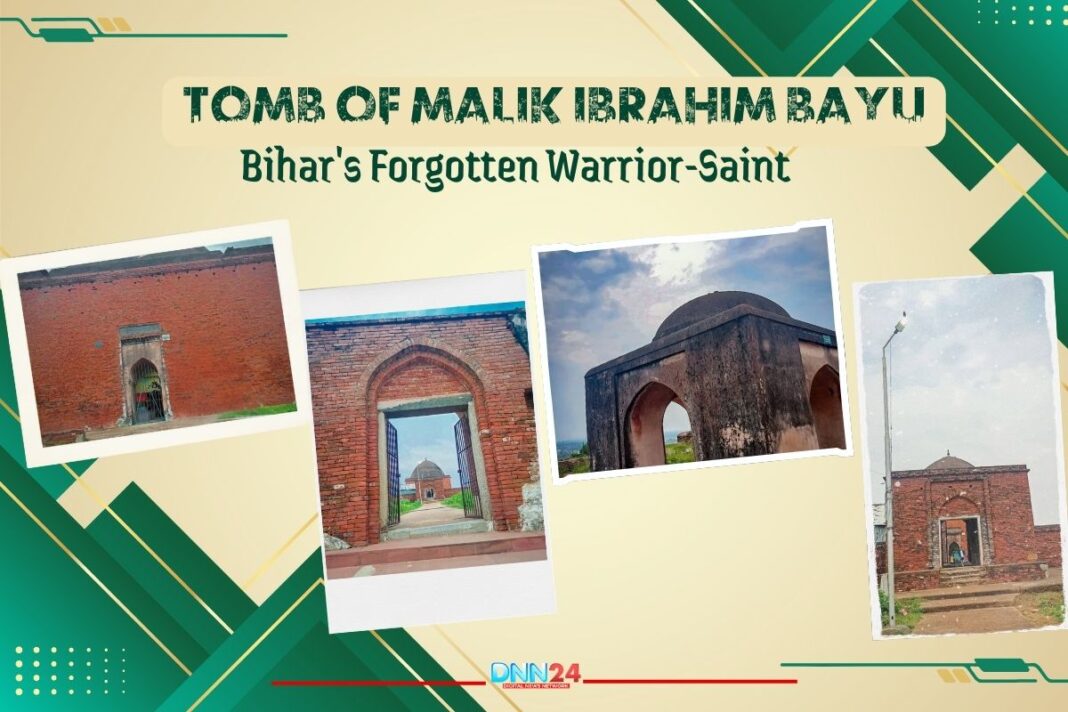

Step into the dust and devotion of 14th-century Bihar, where a sword-wielding mystic rewrote destiny with one hand gripping steel and the other extended in blessing. Malik Ibrahim Bayu arrived from Afghanistan’s rugged terrain not as a conqueror seeking gold, but as a Sufi warrior seeking souls. Born near Ghazni, this extraordinary figure of the Suhrawardiyya order arrived in India around 1339 CE, during the tumultuous reign of Sultan Muhammad bin Tughlaq. His journey from battlefield commander to beloved saint reads like an ancient thriller, packed with royal recognition, tribal warfare, and spiritual awakening. When the Sultan himself roared, “Malik biya, benasheen!” come sit beside me, O chief, history took notice.
By 1351, under Firoz Shah Tughlaq’s banner, Bayu governed Bihar, subduing the fierce Kol tribes and vanquishing Raja Birthal, who had terrorised the region’s Muslim population. A Sayyid tracing his noble lineage through Abdul Qadir Gilani back to Prophet Muhammad, Bayu embodied a rare fusion: warrior precision meeting mystic compassion. His death on 20 January 1353 CE (13th Dhu al-Hijjah 753 AH) didn’t end his influence. Instead, it began a new chapter. At Pir Pahari in Bihar Sharif, where Nalanda’s ancient Buddhist whispers meet Islamic architectural grace, his tomb still draws seekers from every faith. This isn’t museum history gathering cobwebs. This is a living heritage that challenges our fractured modern world with a simple question: if one man could unite battlefields and prayer halls seven centuries ago, what’s stopping us now?
Tomb of Malik Ibrahim Bayu- The General’s Roar: When Swords Sang Justice
Picture the scorching Bihar plains where Malik Bayu’s military genius blazed brightest. Arriving during the Tughlaq dynasty’s most volatile period, he didn’t ease into governance with diplomatic niceties. He charged forward, leading armies against oppressors who had made life unbearable for the faithful. The decisive campaign against Raja Birthal stands as his defining military triumph. This local chieftain had built a reign of terror, but Bayu’s forces dismantled it with surgical precision, bringing security to Bihar and earning him the title “Madarul Mulk”, Master of Sword and Wealth. Between 1351 and 1353, as Bihar’s governor, he transformed from warrior to peacemaker, mediating tribal conflicts and shielding vulnerable communities from the aggressive Kol chiefdoms.
His contemporary, the revered Sharfuddin Yahya Maneri, recognised Bayu’s unique ability to blend military authority with spiritual wisdom. These weren’t campaigns of plunder or territorial greed. Bayu fought to establish harmony in a fragmented landscape, creating what would later be celebrated as Ganga-Jamuni culture, the beautiful mingling of different traditions into something greater than their parts. Today, as modern India wrestles with communal tensions and identity politics, Bayu’s approach remains surprisingly relevant. His victories built bridges rather than walls. Visitors to his tomb don’t come chasing Instagram moments. They come seeking that electric connection to a man who understands that genuine power heals divisions rather than deepening them. His military record tells a revolutionary story: strength exercised with restraint, conquest aimed at protection, and authority wielded for unity. In our age of polarisation, that ancient warrior whispers an urgent truth across the centuries.
Tomb of Malik Ibrahim Bayu– Architecture That Breathes: Stone, Spirit, and Silence
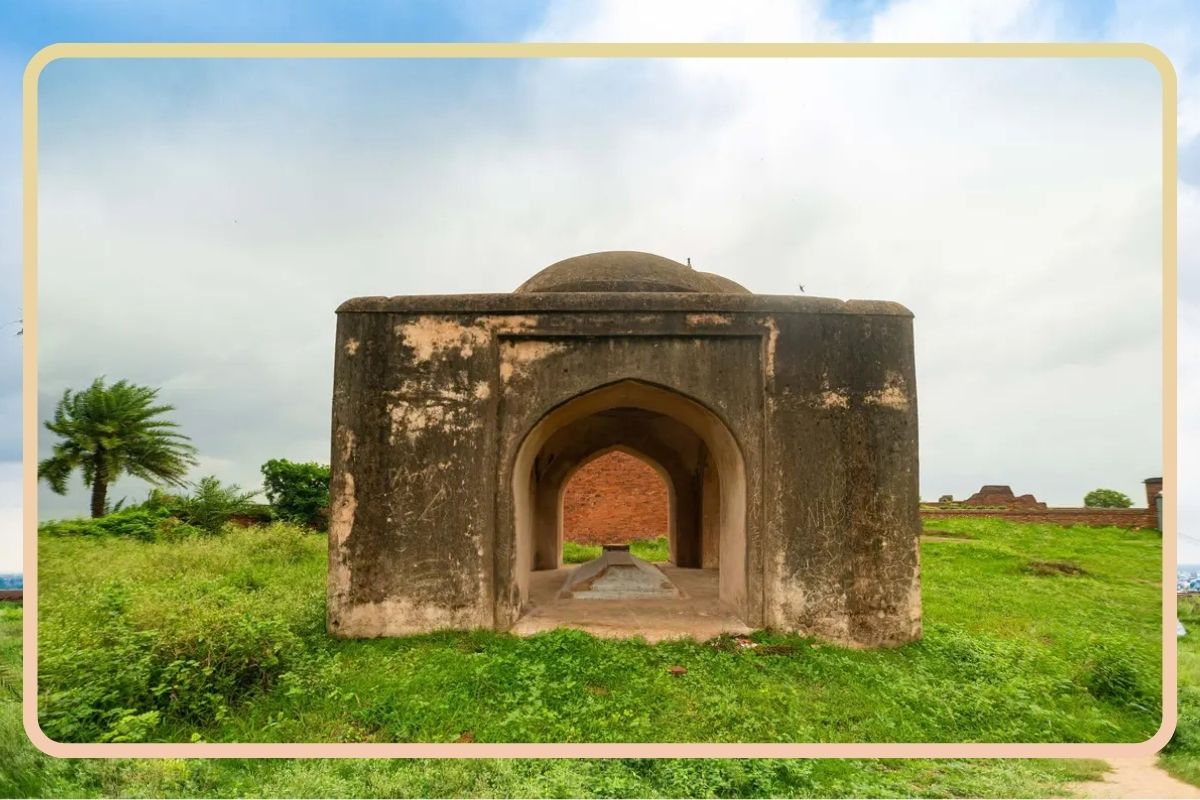
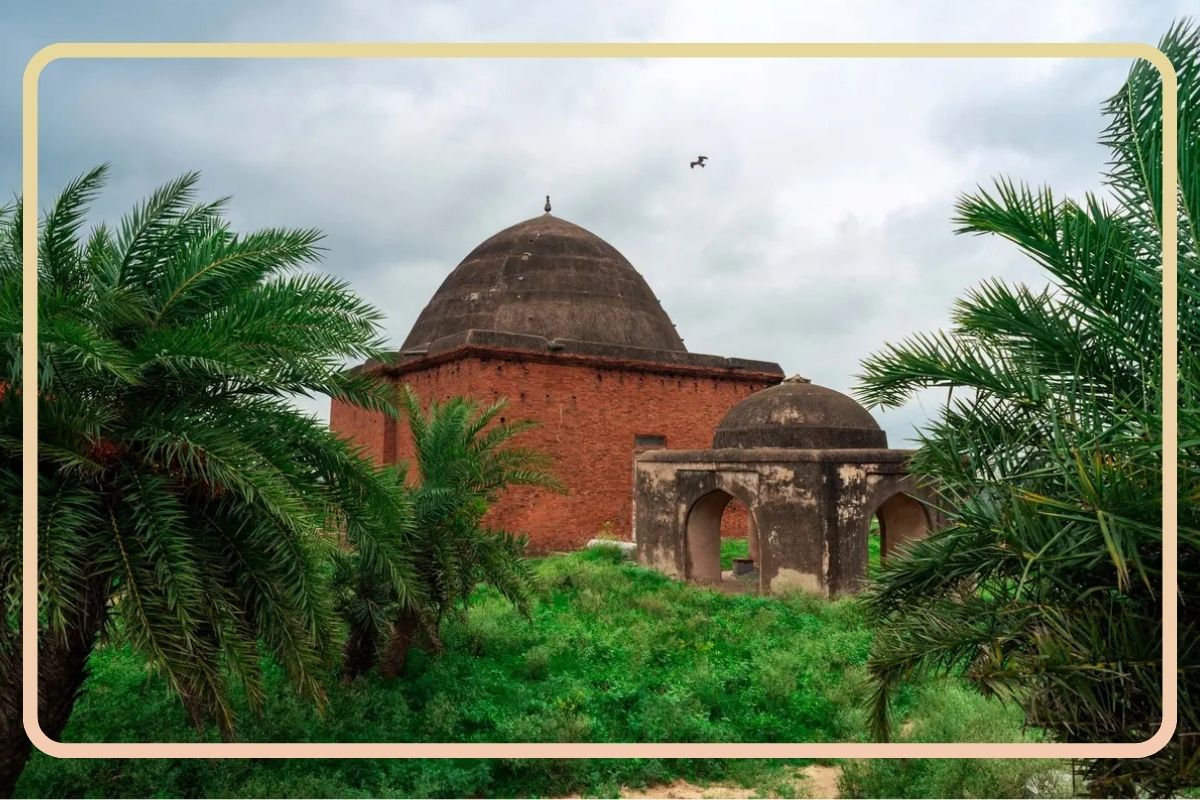
The tomb itself speaks volumes through understatement. Rising from a modest platform, enclosed by weathered brick walls, this square structure showcases Tughlaq-era architectural philosophy at its purest. Built shortly after 1353 CE, possibly by relatives such as Syed Dawood, the monument measures 708 square feet externally and 316 square feet internally, with walls reaching an impressive 8.3 feet in thickness. An elongated dome sits atop a sturdy drum, creating that distinctive Indo-Islamic silhouette that defines medieval Indian sacred architecture. Thin bricks form arched doorways facing south and east, inviting entry without ostentation. Inside rest ten graves: Bayu himself, his wife, children, grandson, nephew, and brother. Nearby lie members of the Mallick clan, maintaining a family presence that spans seven centuries.
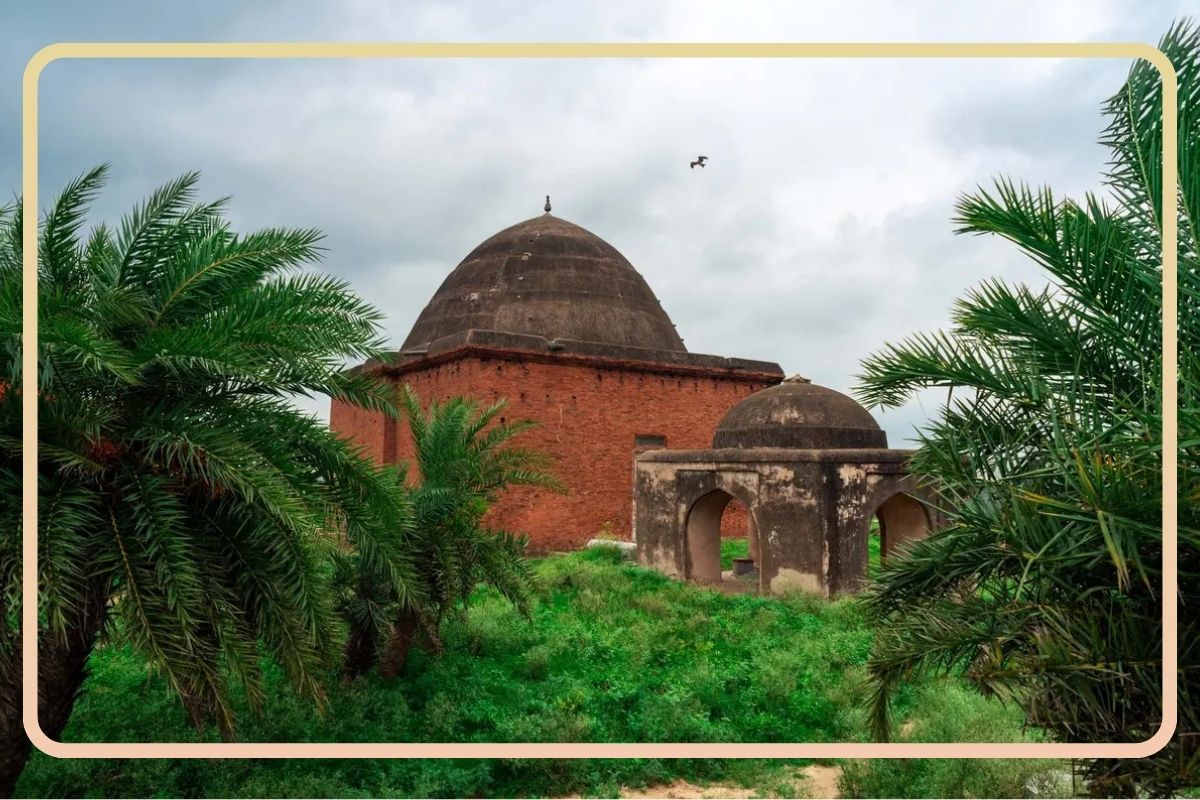
The Archaeological Survey of India now protects this monument, though nature has claimed partial ownership. Parrots nest in the dome’s crevices, their bright green feathers creating living decoration against ancient stone. This isn’t accidental symbolism. The architecture reflects Bayu’s philosophy, functional simplicity serving spiritual depth, strength without arrogance, permanence achieved through honest construction rather than elaborate ornamentation. Modern roads now wind almost to the hilltop, making access easier, but the traditional approach remains: remove your shoes, quiet your mind, feel the atmosphere shift. Devotees drape colourful cloth offerings across the graves, Muslims and Hindus alike seeking blessings. In our screen-saturated era, this flash of medieval craftsmanship delivers a masterclass: beauty emerges from restraint, monuments endure through integrity, and sacred spaces need not shout to command respect. The tomb isn’t merely a stone preserving memory. It’s Bayu’s heartbeat that is visible, connecting Nalanda’s glorious past to an uncertain future.
Tomb of Malik Ibrahim Bayu– The Mystic’s Flame: Where Combat Met Contemplation
Bayu’s true revolution happened in hearts, not on battlefields. As a dedicated member of the Suhrawardiyya Sufi order, he transformed Bihar Sharif from a conflict zone into a spiritual centre. His contemporary Sharfuddin Yahya Maneri recognised in Bayu a kindred soul, someone who understood that mystical depth and worldly responsibility could coexist. The honorific “najeeb-ut-tarafain” acknowledged his impeccable lineage from both parental lines, tracing back through Abdul Qadir Gilani to the Prophet himself. This pedigree wasn’t social decoration. For devotees, it explained the miracles attributed to his shrine: healings, prosperity, solutions to intractable problems for those approaching with pure intentions. Pilgrims still arrive regularly, covering graves with offerings, sitting silently in the tomb’s cool interior, seeking barakah, divine blessing.
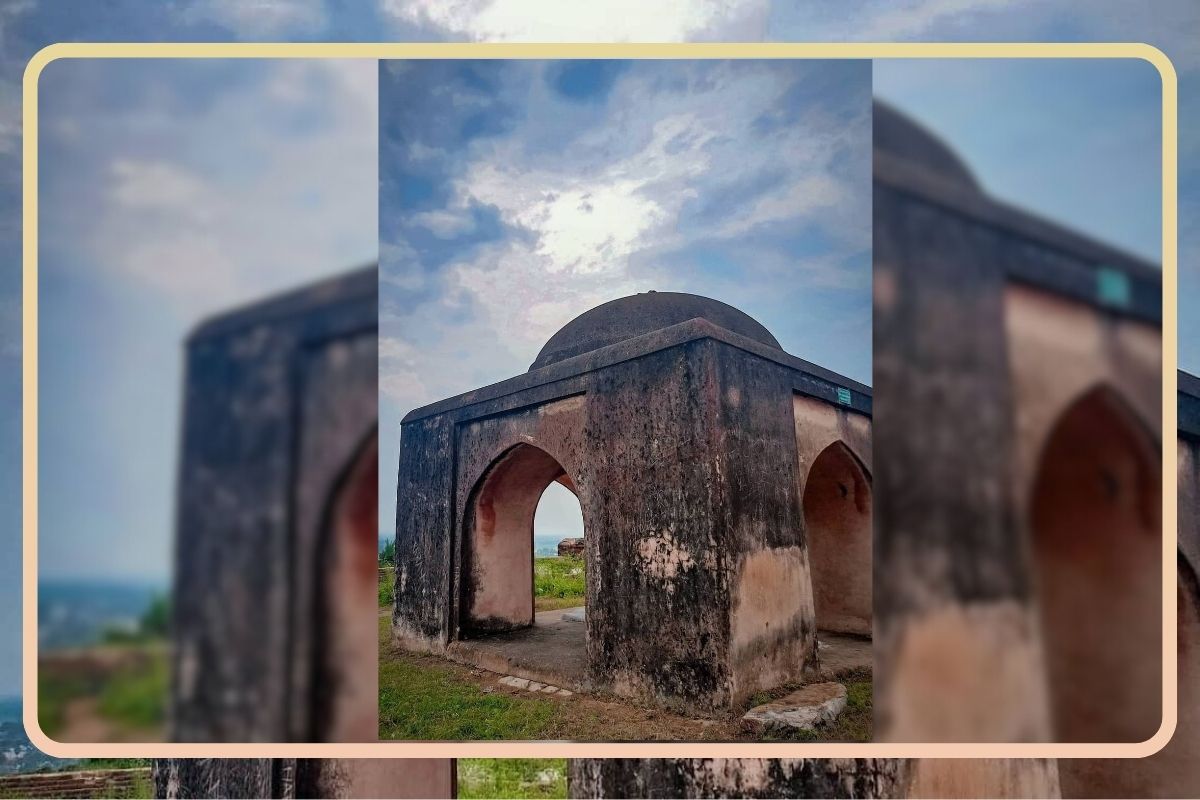
His Sufi practice created bridges across the religious landscape. In a region where Buddhist monasteries had recently declined, and Hindu traditions remained strong, Bayu established Islam not through force but through example. The challenges haven’t disappeared. A 2017 theft of historic bells from the site highlighted ongoing security concerns, prompting renewed preservation efforts from the Archaeological Survey. Yet local communities continue their protective vigil, ensuring the site remains accessible to all faiths. Today, amid India’s ongoing struggles with religious harmony, Bayu’s shrine serves as living proof that different traditions can share sacred space, seek common blessings, and recognise shared humanity. It’s deeply personal magic, standing in that domed chamber, feeling his spiritual presence urging visitors to abandon hatred and embrace our fundamental connections. In fractured times, this 670-year-old Sufi message burns with fresh urgency: spirituality transcends division, every visit becomes a commitment to unity.
Tomb of Malik Ibrahim Bayu– Living Legacy: Why Ancient Stones Still Speak
Pir Pahari refuses to remain locked in history books. Protected by the Archaeological Survey of India, this site has become a jewel in Bihar’s heritage tourism crown. Practical details matter: visit between September and April for pleasant weather; dress modestly; maintain respectful silence; and watch parrots perform aerial acrobatics around the dome. Auto-rickshaws from Bihar Sharif easily reach the hilltop, but the real journey lies within. From the summit, views stretch across landscapes where Nalanda University once thrived, connecting Buddhist scholarship to Islamic mysticism in an unbroken cultural conversation.
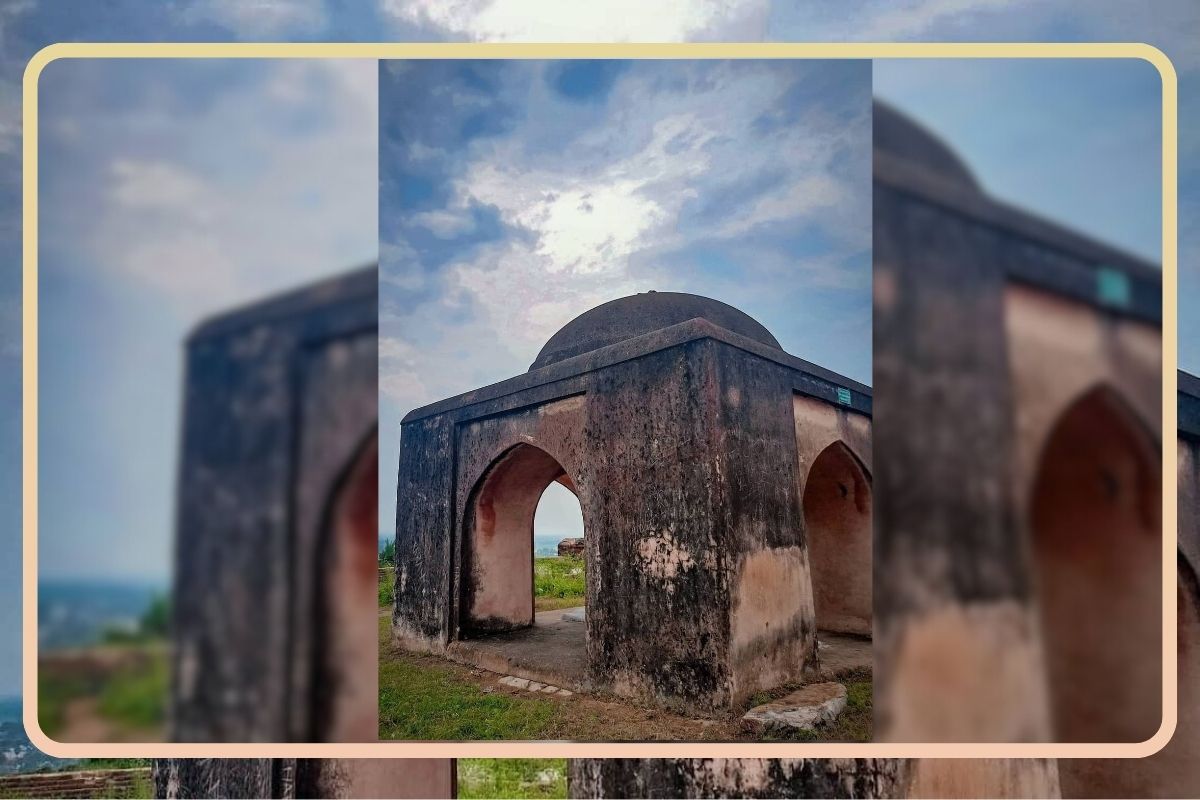
In 2025’s chaotic environment, polarised politics, religious tensions, and heritage neglect, Bayu’s story explodes with contemporary relevance. Here stood a warrior-saint who demolished barriers rather than build them, whose tomb serves as a hub of harmony despite attempts at theft and time’s erosion. Social media storytellers could craft compelling visual narratives here: dome details, unity testimonials, architectural marvels. But the site’s real value transcends viral content. For Indians seeking peaceful coexistence models, it offers historical proof: integration works, diversity strengthens, shared reverence uplifts everyone. Heritage activists continue demanding better preservation resources and enhanced security measures.
Meanwhile, devotees maintain their steady pilgrimage, their faith keeping Bayu’s flame alive across generations. His whisper carries personally across centuries: rise above division, unite across difference, endure through principle, transform your battles into blessings as he did. This isn’t dusty scholarship for academic journals. It’s a blazing invitation to build bridges in our own time. Visit this hilltop, absorb its atmosphere, and make your own vow for unity. Malik Ibrahim Bayu hasn’t finished teaching; Nalanda’s warrior-saint lives on in every heart willing to learn.
Also Read: Tomb of Sher Shah Suri: An Emperor’s Dream Palace Floating On Water
You can connect with DNN24 on Facebook, Twitter, and Instagram and subscribe to our YouTube channel.