
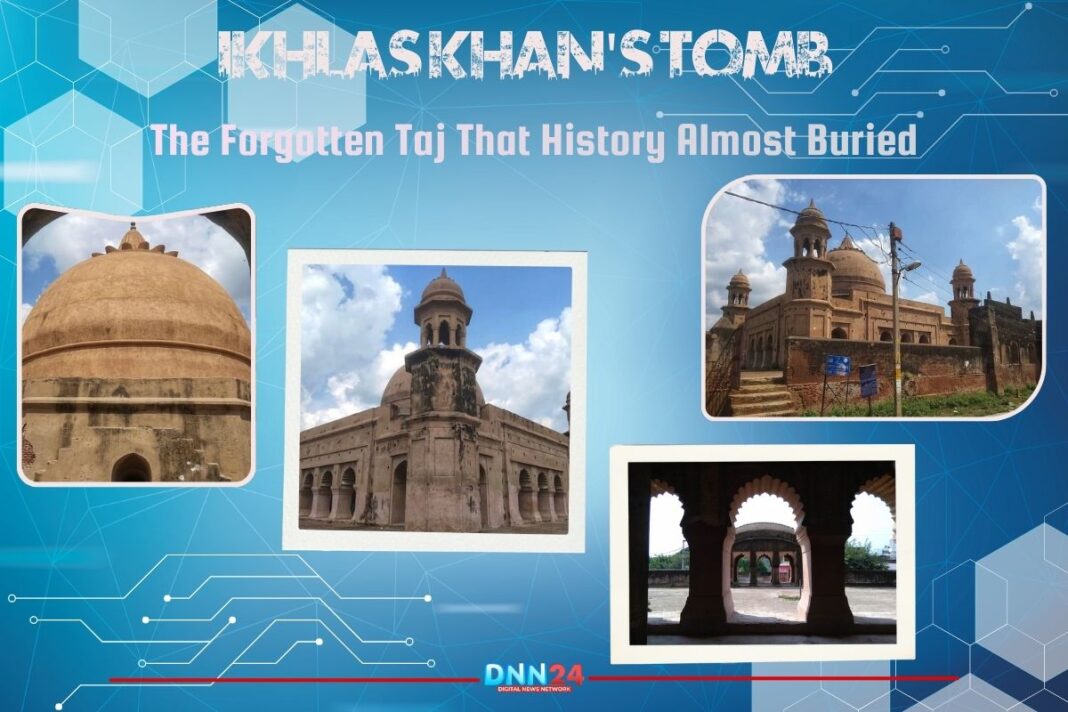

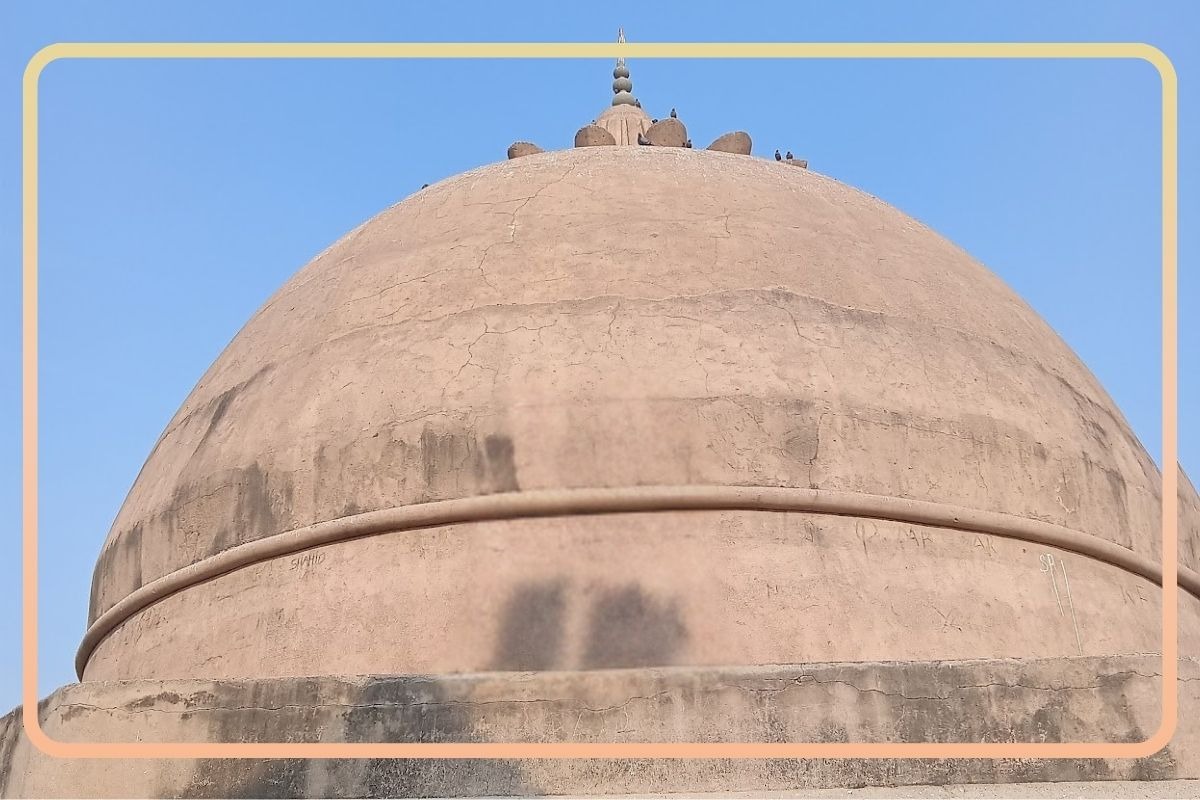
Standing in the dusty lanes of Badaun, Uttar Pradesh, rises a monument that time nearly forgot. The Tomb of Ikhlas Khan, sometimes whispered about as the “Taj of Badaun”, holds stories that could rival any royal epic. Built in 1690 CE during the twilight years of Mughal grandeur, this massive brick mausoleum stretches nearly 152 by 150 feet across the earth. What makes it extraordinary is not just its size but the love story behind it. A devoted wife commissioned this entire structure for her husband, Nawab Ikhlas Khan, a noble whose name meant sincerity itself.
While millions flock to Agra’s marble wonder, this tomb waits patiently, its red brick walls holding secrets of battles, loyalty, and a woman’s undying remembrance. Inside rest six souls, including the man himself, each grave marking a chapter of Mughal India that textbooks barely mention. The symmetry of its design reveals the mathematical precision Mughals loved, yet its humble brick construction speaks of something deeper: authenticity over showmanship. This is not a monument screaming for attention. It simply exists, dignified and patient, as if knowing that someday curious minds would arrive asking the right questions about the man who sleeps within and the era that built his final home.
The Warrior Noble: Who Was Ikhlas Khan Really?
Ikhlas Khan lived during one of the most complicated periods of Mughal rule, when emperors rose and fell, and loyalty could be both rewarded and punished swiftly. Historical records paint him as a military commander who led diverse forces, including an Abyssinian coalition army during regional conflicts. Despite facing defeats on battlefields, he retained imperial favour, receiving governorships and titles that proved his value to the throne.
His name, Ikhlas, translates roughly to ‘devotion’ or ‘sincerity’, and perhaps this quality kept him relevant in a court known for intrigue and betrayal. Unlike famous emperors whose lives fill volumes, Ikhlas Khan remains somewhat mysterious, with gaps in his biography that historians continue piecing together. Was he a strategic genius? A diplomatic survivor? Or simply a competent administrator who served faithfully? The answers remain partially hidden, adding an element of mystery to his legacy. What we know for certain is that his service mattered enough for his wife to invest considerable resources into building a monument that would outlast memory itself.
The tomb contains not just his remains but five others, suggesting family members or close associates who shared his final resting place. This collective burial tells us about Mughal customs of honouring kinship and loyalty beyond death. Today, visiting his tomb means confronting how history chooses its heroes; some get marble palaces and poetry, while others get dignified silence and the respect of those who bother to look deeper.
Brick by Brick: The Architecture That Speaks Volumes
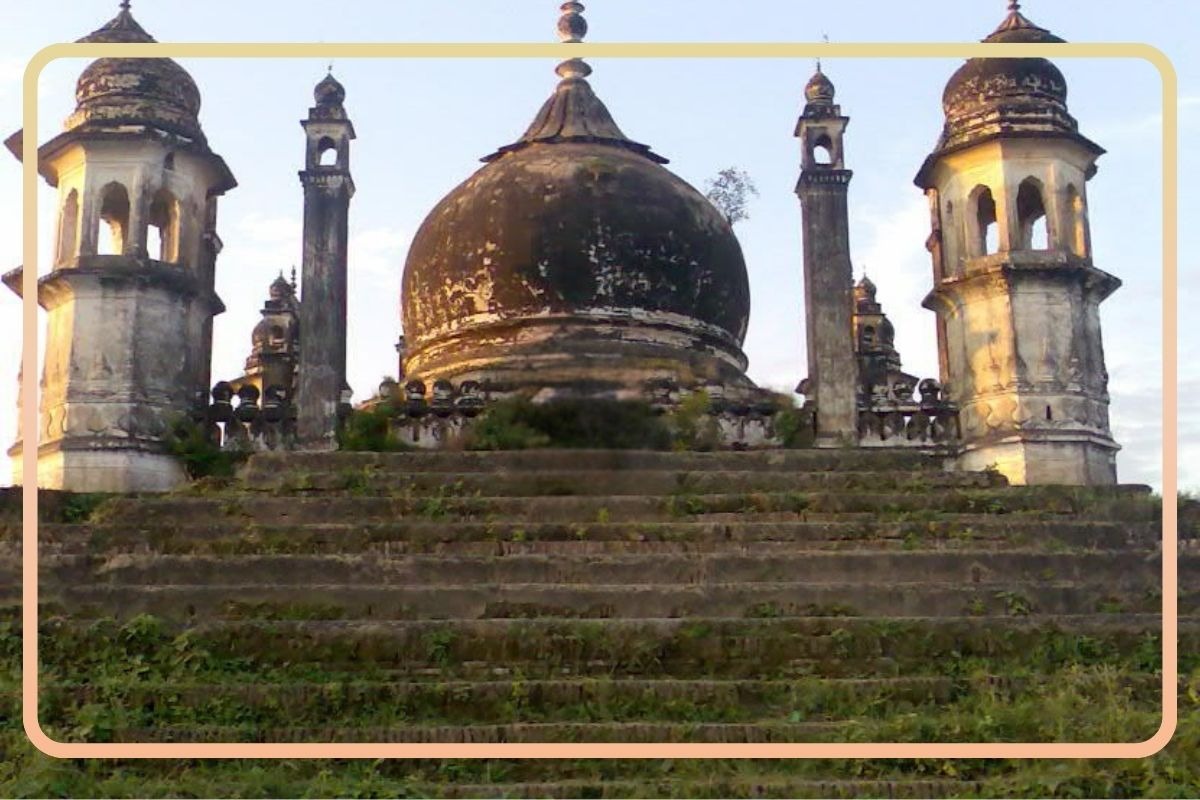
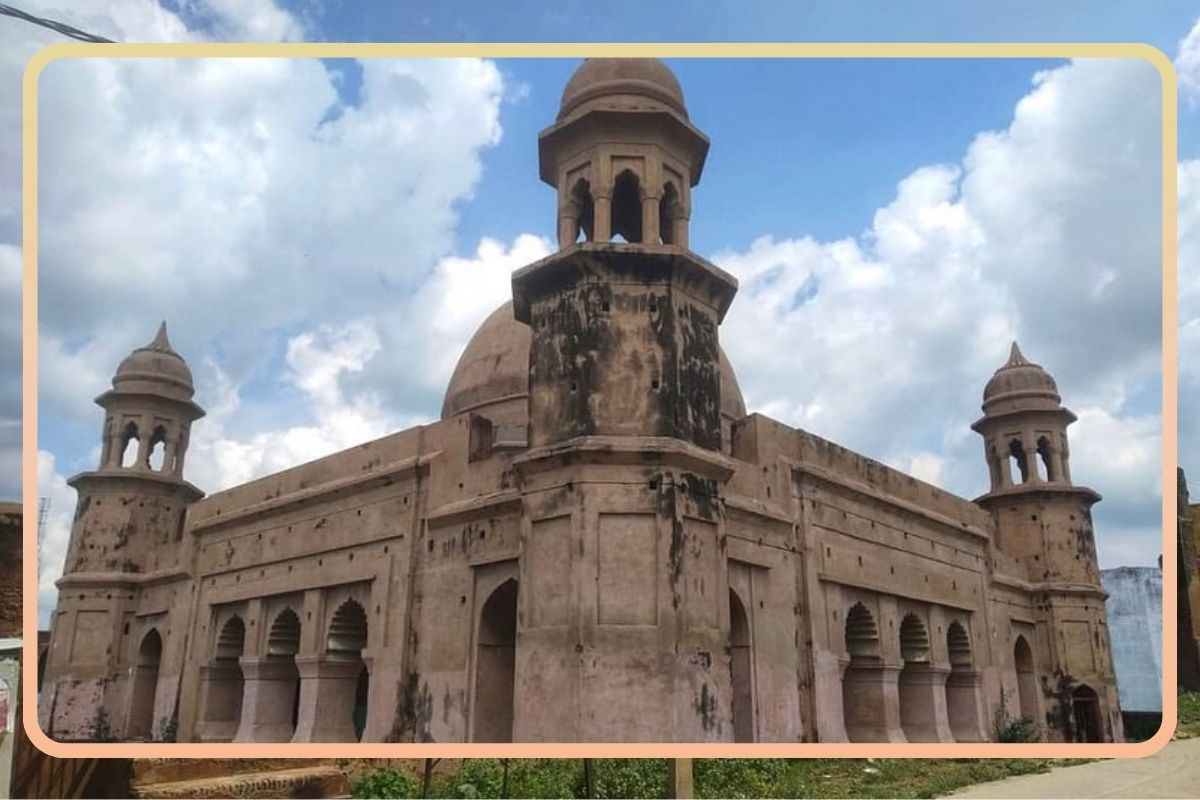
The entire structure uses brick, a choice that reveals much about regional building traditions and economic considerations of the time. Unlike the white marble extravaganzas associated with imperial Mughals, this tomb embraces the earthy red tones of fired clay, connecting it directly to the soil of Uttar Pradesh. The square layout demonstrates Mughal obsession with geometric perfection, where balance and proportion mattered as much as decoration.
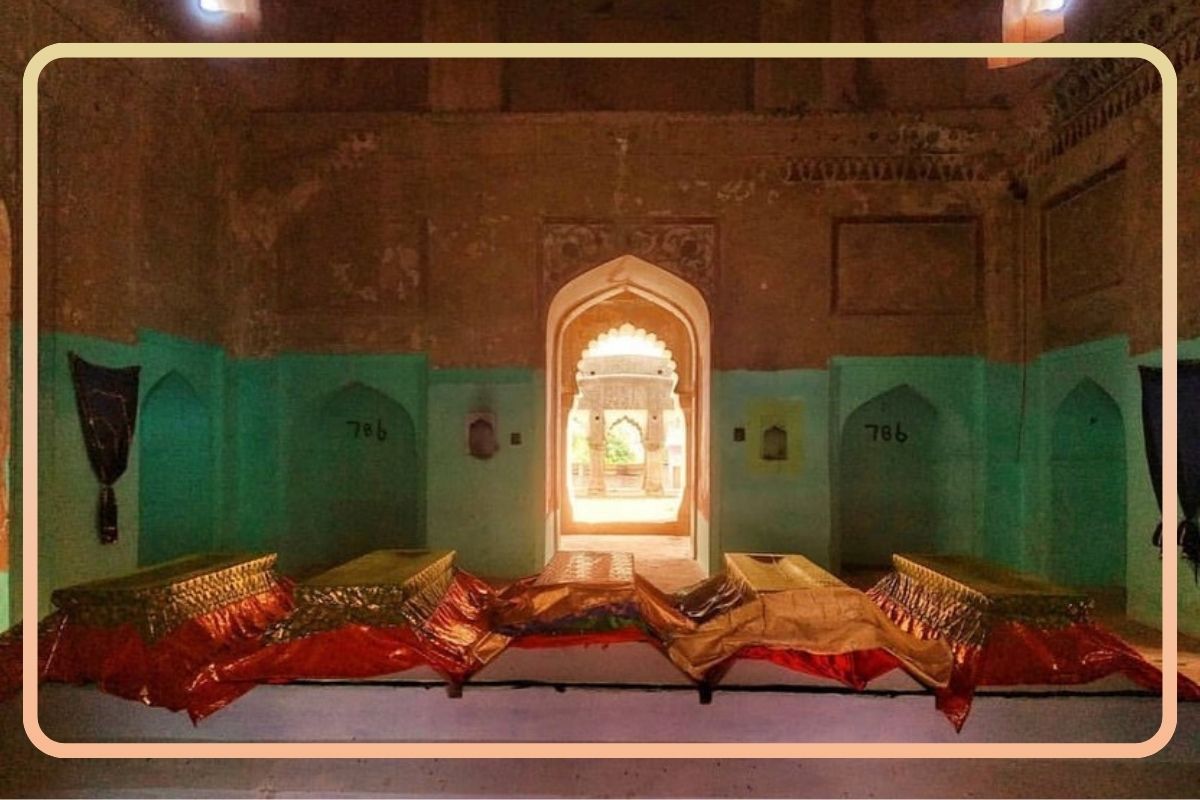
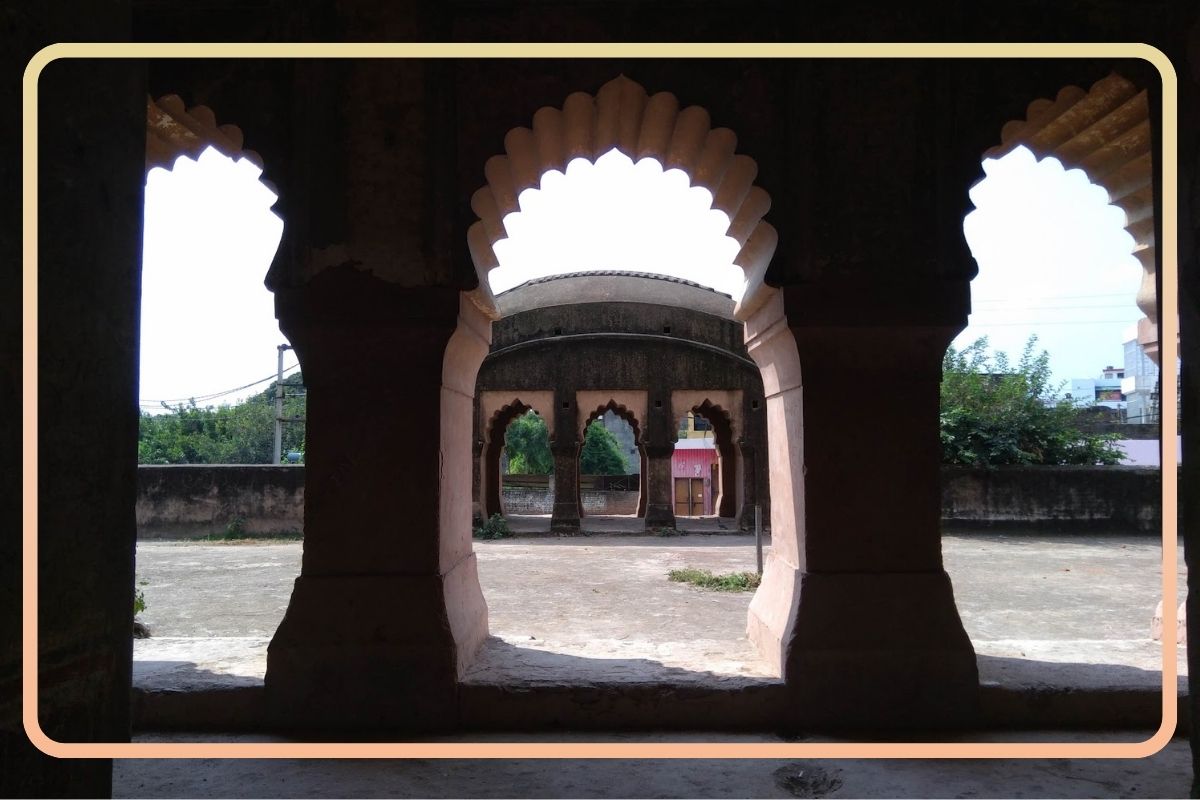
Massive walls support arched doorways and domed spaces that create an atmosphere of solemn grandeur without excessive ornamentation. The central chamber, where Ikhlas Khan lies, opens to the sky through carefully designed ventilation, allowing light to filter in and mark the passage of hours and seasons. Exterior facades show weathering from centuries of monsoons and summers, yet the fundamental structure remains solid, a testament to the builders’ skill. Compared to elaborate tombs with intricate stone inlay or calligraphy, this monument practises restraint, letting form and space do the storytelling.
The arches echo mosque architecture, blending religious reverence with memorial function, as Mughal tombs often doubled as places of prayer and remembrance. Walking through its corridors today, visitors notice how shadows play across brick surfaces, creating patterns that change throughout the day. This simplicity actually enhances its power; there are no distractions from the essential purpose of honouring the dead. The tomb proves that architectural excellence does not require expensive materials, only vision, skill, and respect for the person being commemorated through carefully arranged bricks and mortar.
A Wife’s Monument: Love Written in Stone and Clay
The most compelling aspect of this tomb is its origin story- a wife’s determination to honour her husband’s memory with permanent architecture. In Mughal society, such grand gestures were usually reserved for emperors or their immediate family, making this commissioned tomb particularly remarkable. We do not know her name, which itself reflects how history often erases women’s contributions, yet her impact stands literally solid in Badaun.
Building a structure of this scale required significant wealth, access to skilled craftsmen, and probably political connections to secure permissions and resources. It suggests that Ikhlas Khan’s family held considerable status and means, even if not at the very peak of the Mughal hierarchy. The choice to build in brick rather than marble might reflect practical economics, but it could also represent a deliberate aesthetic choice, favouring substance over flash. Her monument speaks across centuries about devotion that outlasts life itself, about refusing to let a loved one slip quietly into forgotten history.
This tomb is her voice, preserved in architecture, telling future generations that Ikhlas Khan mattered, that his life had meaning worth marking permanently. Compared to the Taj Mahal, commissioned by Emperor Shah Jahan for Mumtaz Mahal, this tomb represents similar emotions at a different social scale, proving that love and remembrance transcend royal privilege. Today, when we visit, we honour both the man buried inside and the woman whose determination gave him this dignified resting place, making their partnership eternal through architecture and memory.
Beyond Tourist Maps: Why Hidden Monuments Matter Most
The Tomb of Ikhlas Khan does not appear on most travel itineraries, which actually preserves its authentic atmosphere. Protected by the Archaeological Survey of India, it receives maintenance but not overwhelming crowds, allowing serious visitors to experience it without commercial distraction. For Badaun residents, the tomb forms part of their local identity, a connection to historical importance that larger cities sometimes claim exclusively.

This preservation of lesser-known monuments matters tremendously for understanding India’s complete historical picture rather than just highlights. Every region has layers of stories, and monuments like this one keep those narratives physically present in the landscape. The tomb serves educational purposes for students studying Mughal period architecture, military history, and social customs around death and remembrance. Researchers can examine construction techniques, compare them with contemporary structures, and trace how provincial Mughal culture adapted imperial styles.
For casual visitors, it offers something increasingly rare: a chance to encounter history without crowds, selfie sticks, or vendor stalls, just quiet reflection and authentic atmosphere. The very fact that it requires effort to find and visit filters out casual tourists, ensuring that those who arrive genuinely want to connect with its story. In our digital age where everything feels commodified and filtered through screens, the tomb’s obscurity becomes its strength, maintaining integrity and dignity. This reminds us that history’s value does not depend on popularity or Instagram potential but on genuine human stories preserved through time, waiting patiently for anyone willing to truly see and understand.
Also Read: Tomb of Sher Shah Suri: An Emperor’s Dream Palace Floating On Water
You can connect with DNN24 on Facebook, Twitter, and Instagram and subscribe to our YouTube channel.