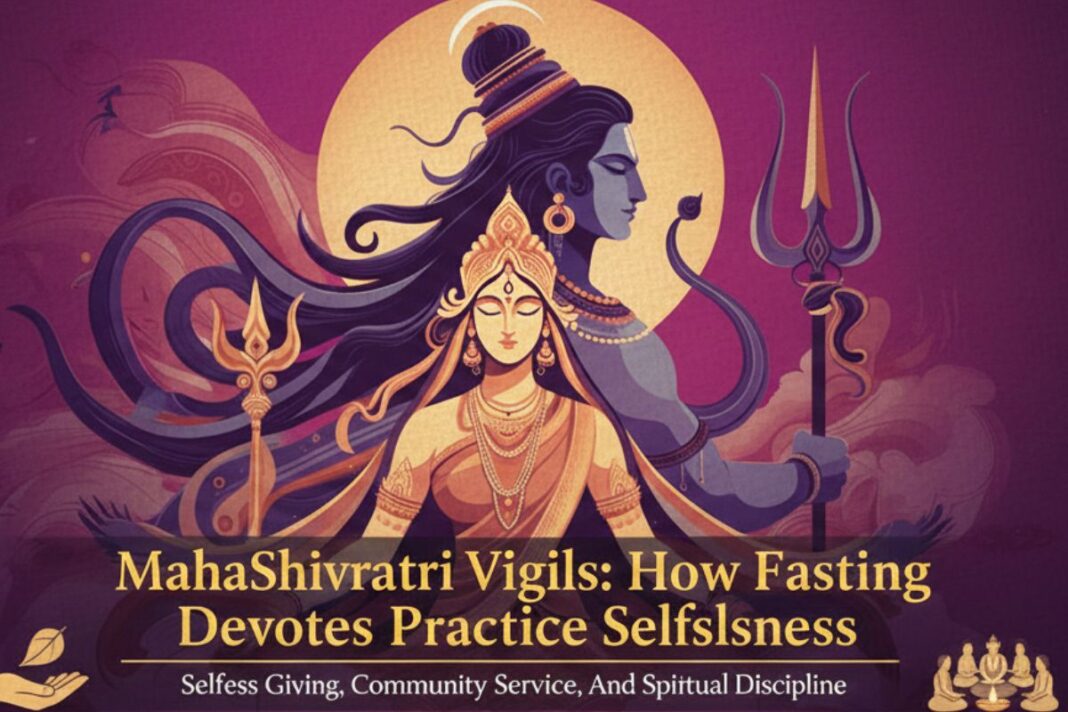

When darkness blankets the earth on Phalgun’s moonless night, millions across India begin a sacred discipline that transforms hunger into offering and sleeplessness into devotion.
MahaShivratri, the Great Night of Shiva, stands apart from other Hindu festivals through its core practice of renunciation. Devotees surrender food, sleep, and comfort for 24 hours, creating a living bridge between ancient mythological acts of sacrifice and modern spiritual discipline. This is not merely ritual observance. It represents a profound philosophy in which personal denial becomes collective blessing, individual vigil strengthens community bonds, and fasting becomes the purest form of giving.
The Mythological Foundation of Night Vigils
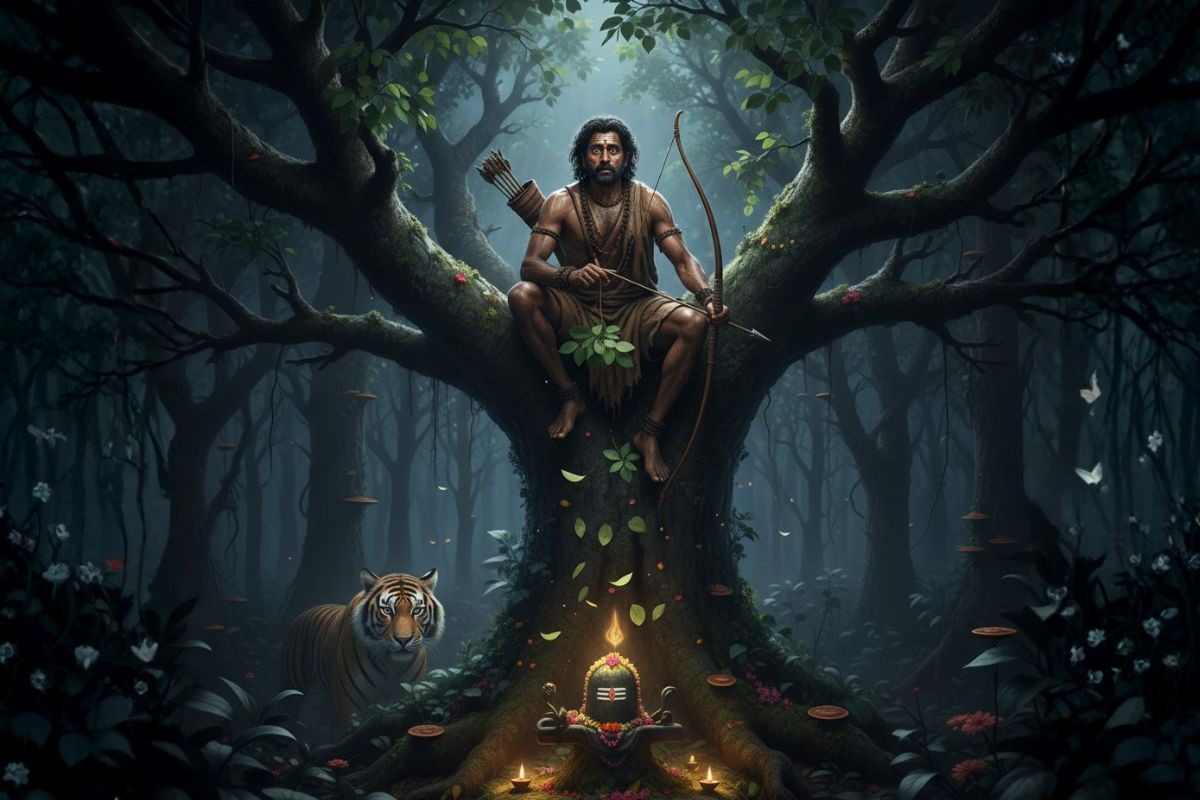
The Shiva Purana narrates how a hunter named Chandramauli, lost in the forest on a dark Phalgun night, climbed a bilva tree to escape a tiger. Through the night, he stayed awake, plucking leaves to remain alert. These leaves fell upon a Shiva lingam hidden below. By dawn, his accidental vigil and unintentional offerings earned him moksha. Shiva granted liberation for this unwitting devotion.
The story’s deeper meaning: the hunter gave nothing intentionally, possessed no ritual knowledge, yet his vigil born of fear became the ultimate offering because it was selfless. He expected no reward. This established MahaShivratri’s template: the act matters more than intention; staying awake itself constitutes worship.
The Skanda Purana adds another dimension. Shiva and Parvati’s divine marriage occurred on MahaShivratri, balancing Purusha and Prakriti. But first, Parvati performed severe tapasya, fasting and maintaining vigils for years, to win Shiva’s attention. She forsook royal comforts and endured Himalayan winters without shelter, sacrificing her youth, physical well-being, and ego for spiritual union. Every MahaShivratri vigil echoes her determined wakefulness and total renunciation.
Shiva’s Own Acts of Selfless Sacrifice
The festival’s emphasis on selfless giving mirrors Shiva’s own mythological sacrifices. During the Samudra Manthana, when gods and demons churned the cosmic ocean, the deadly Halahala poison emerged, threatening to destroy all creation. No deity would touch it. Shiva alone stepped forward, consuming the poison to save the universe. The venom turned his throat blue, earning him the name Neelkantha, but he bore this burden without complaint or expectation of reward.
This act of drinking poison established a precedent. True giving involves accepting suffering for the benefit of others. When devotees fast on MahaShivratri, they accept physical discomfort. When they maintain vigils, they endure mental fatigue. These small sufferings connect them to Shiva’s larger sacrifice, creating a thread of shared renunciation across cosmic and human scales.
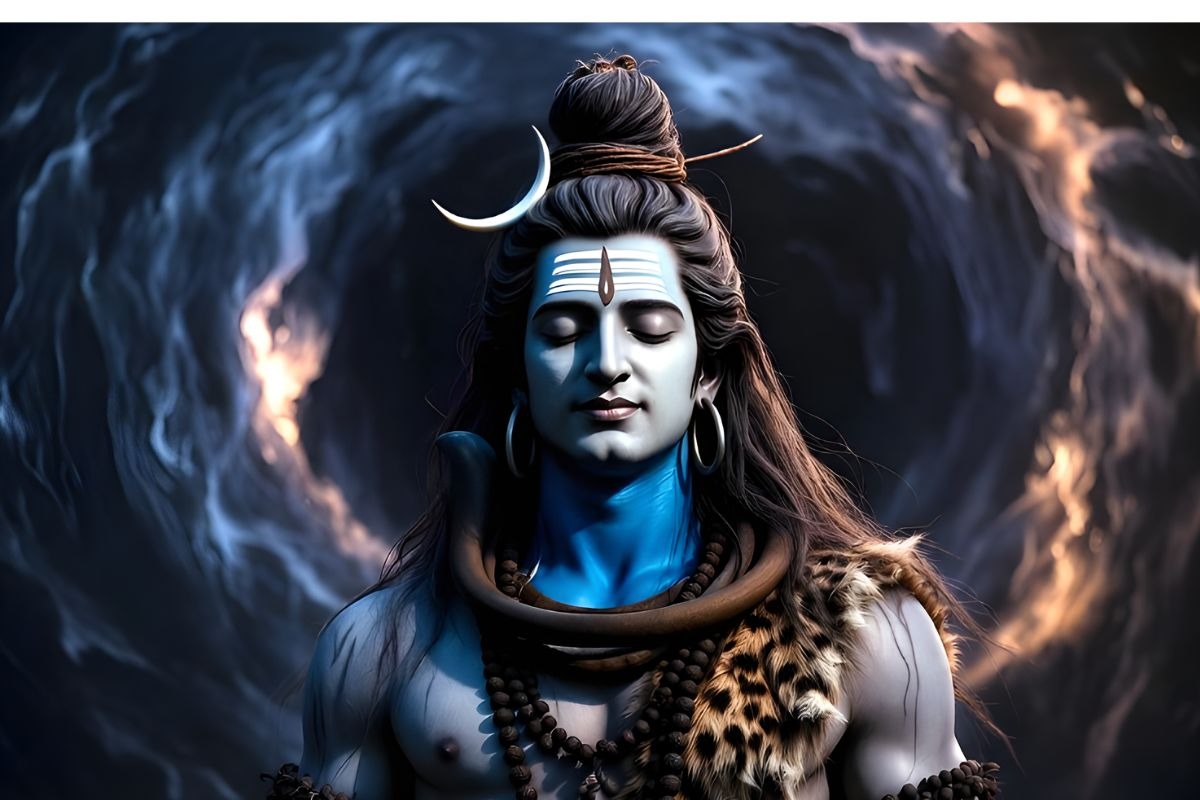
The Linga Purana describes how Shiva manifested as an endless pillar of fire, a jyotirlinga that neither Brahma nor Vishnu could measure despite their best efforts. This infinite column of light had no beginning and no end. When the gods finally acknowledged their limitations and praised Shiva, he appeared from the lingam. The message resonates through MahaShivratri practices: human efforts, however sincere, remain incomplete. Fasting and vigils acknowledge this incompleteness. They represent the devotee saying, through action, that the divine exceeds all comprehension and deserves offerings beyond material objects.
Fasting as Spiritual Discipline and Social Service
MahaShivratri fasting varies by tradition: some observe a nirjala vrat, abstaining from food and water for 24 hours, while others consume fruits and milk. Most break their fast only after the morning puja following the night vigil.
Beyond religious observance, fasting offers physiological benefits: clearer digestion and sharper mental focus. Ancient Shaiva texts from the 5th century BCE understood this connection, with Shiva Agamas prescribing fasting to prepare for meditation. Modern research on intermittent fasting confirms these intuitions about enhanced cognitive function.
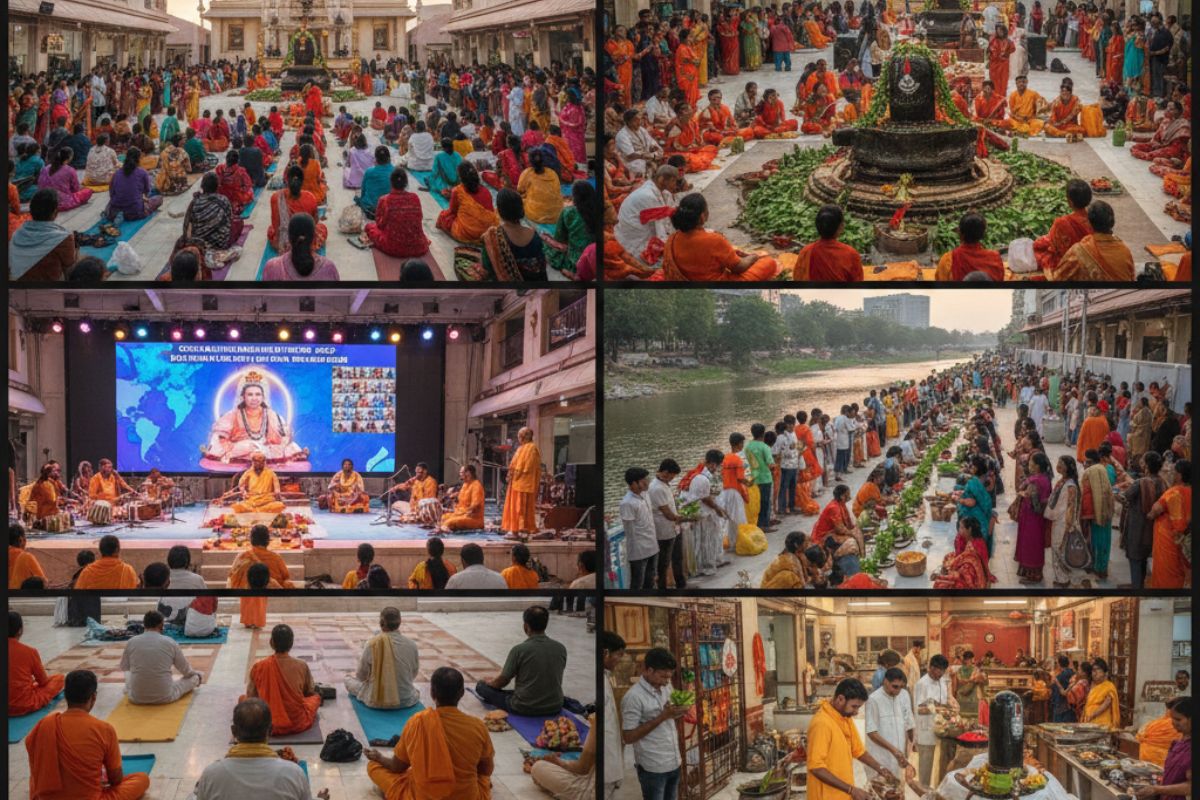
Yet the spiritual dimension transcends physical benefits. Fasting transforms passive faith into active devotion. Hunger pangs, fatigue, and discomfort become sincere offerings, prayers embodied through chosen sacrifice. Most significantly, MahaShivratri fasting enables profound social giving. Devotees fast so others may feast. Money saved from denied meals funds massive community food distributions at temples. In cities like Varanasi, Ujjain, and Haridwar, lakhs receive free meals during the festival.
This creates a beautiful circle: personal renunciation directly enables another’s nourishment. The devotee feels hungry, so people with low incomes may feel full. Individual sacrifice generates immediate, tangible collective benefit.
The Vigil as Collective Worship
While fasting can be solitary, MahaShivratri’s night vigil thrives on community participation. Temples remain open throughout the night, hosting continuous bhajans, abhishekams, and readings of sacred texts. Collective wakefulness creates shared devotion rarely achieved alone.
The jaagran, or waking, serves as a communal spiritual discipline. When tiredness strikes at 2 AM, fellow devotees chanting Om Namah Shivaya encourage. When the body demands sleep, seeing others maintain their vigil strengthens resolve. Mutual support transforms individual effort into collective achievement.
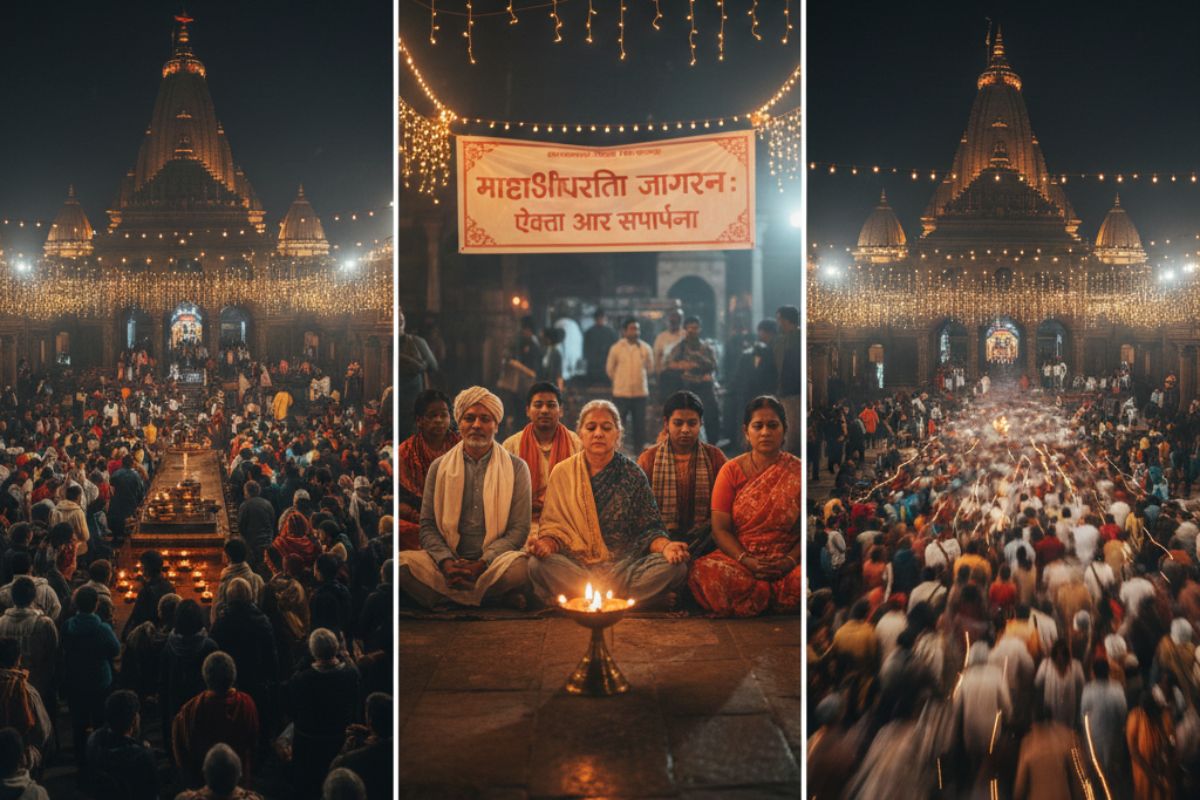
Historical records describe massive gatherings at sacred sites for centuries. The twelve Jyotirlingas, sites where Shiva manifested as light columns, become pilgrimage destinations. Varanasi swells with millions of visitors. Nepal’s Pashupatinath temple draws devotees across South Asia. These gatherings demonstrate how personal devotion creates community identity and cultural continuity.
The vigil also democratises worship. Unlike elaborate pujas requiring priestly intervention or specialised knowledge, staying awake demands no expertise. Rich and poor, educated and illiterate, brahmin and dalit participate equally. Darkness obscures social distinctions. In shared sleeplessness and common hunger, hierarchies dissolve.
Contemporary Practice and Enduring Relevance
In 2026, MahaShivratri observance continues with remarkable vitality while adapting to modern contexts. Urban temples organise structured programs, meditation sessions, classical music performances, and spiritual discourses alongside traditional rituals. Technology enables virtual participation, connecting diaspora communities to Indian celebrations through livestreamed pujas and online bhajan groups.
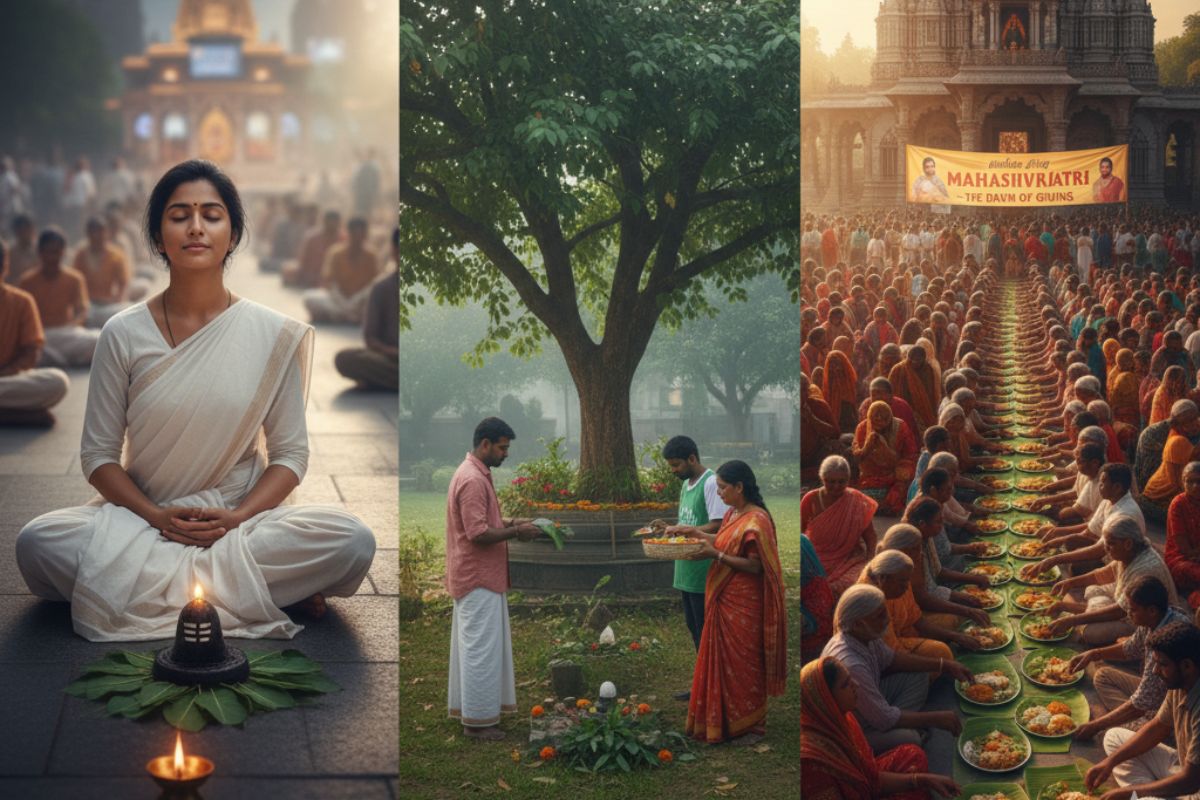
Yet core practices remain unchanged. Devotees still fast, maintain vigils, offer bilva leaves, and perform abhishekams. Ancient discipline speaks to contemporary needs unexpectedly.
Modern life breeds isolation despite connectivity. MahaShivratri gatherings counter this loneliness through shared spiritual experience. The burnout epidemic afflicting professionals finds partial remedy in the vigil’s enforced pause, its mandated step away from productivity. Environmental concerns align with traditional practices as devotees plant bilva trees and organise cleanup drives at sacred sites, framing conservation as devotional service.
The festival’s emphasis on selfless giving resonates particularly strongly amid increasing inequality and social fragmentation. When devotees fast to feed others, donate rather than hoard, and worship collectively rather than pursue individual entertainment, they enact values the broader culture often neglects.
The Essence of Selfless Devotion
MahaShivratri illuminates a paradox at the heart of spiritual practice. True giving requires taking nothing. Genuine devotion expects no reward. The hunter gained moksha through accidental worship. Parvati won Shiva by surrendering everything, including the desire for victory. Shiva saved creation by consuming poison without demanding gratitude.
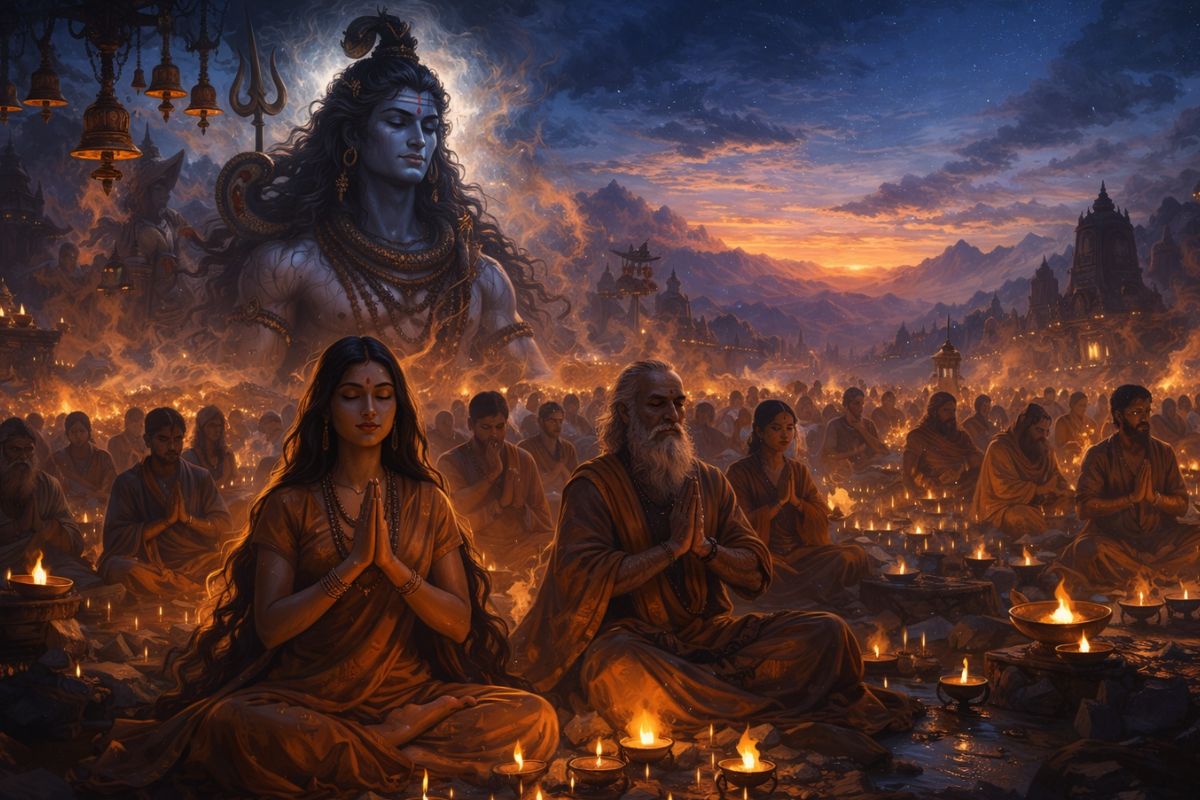
The night vigil and fast recreate this dynamic of selfless offering. Devotees give their wakefulness, their comfort, their nourishment. They receive nothing tangible in return. The fast ends, the night concludes, and ordinary life resumes. Yet something fundamental shifts. The person who can willingly endure discomfort for a higher purpose, who can deny personal needs for collective benefit, who can stay awake when the world sleeps, possesses a strength beyond physical or material power.
This is the gift MahaShivratri offers and demands. Through fasting and vigil, devotees practice renunciation not as abstract philosophy but as embodied discipline. They learn that selflessness is not martyrdom but liberation, that giving creates abundance rather than scarcity, that the night of discipline leads to the bright dawn of understanding.
Also Read:One Rupee Philosophy:Transforming Lives Through Education
You can connect with DNN24 on Facebook, Twitter, and Instagram and subscribe to our YouTube channel.